Showing posts with label Darrell Issa. Show all posts

Saturday, September 28, 2013

Hillary Clinton and the ARB Reporting System Reviewed: More Things You Should Know

According to the Special Review of the Accountability Review Board Process (ISP-I-13-44A), the Permanent Coordinating Committee (PCC)  is the body within the State Department that must convene ASAP after a serious security incident at a U.S. mission abroad and determine whether or not to recommend that the secretary of state convene an Accountability Board Review (ARB).
P 7  ¶ 1 Permanent Coordinating Committee
“The Committee will, as quickly as possible after an incident occurs, review the
available facts and recommend to the Secretary to convene or not convene a Board. (Due to the 1999 revision of the law requiring the Secretary to convene a Board not later than 60 days after the occurrence of an incident, except that such period may be extended for one additional 60-day the Committee will meet within 30 days of the incident, if enough information is available.) In addition, the Committee will meet yearly to review the ARB process, existing policies and procedures, and ensure that any necessary changes are effected.” - 12 Foreign
Affairs Manual 032.1
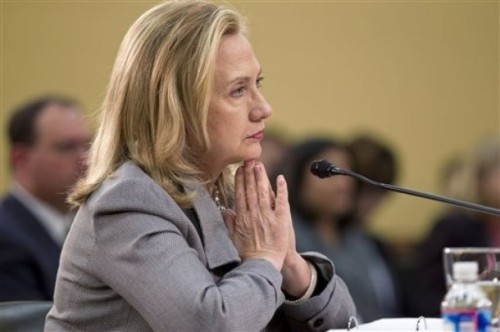
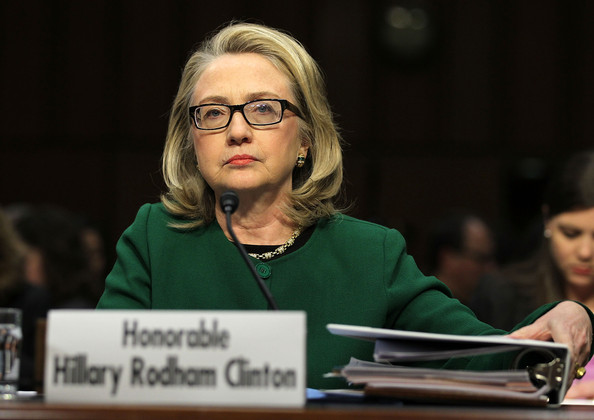
On October 7, 2012 Hillary Clinton announced that not only had the recommendation been made but also the the ARB had been formed and would commence meeting that very week - well within the timeline stated in the Foreign Affairs Manual (FAM). Many of you will remember that the Tea Party was already stridently calling for this review, however it is clear from the FAM directive that this process went a good deal more quickly than was required. 

P 16  ¶ 8  Secretary’s Report to Congress
“Report to Congress: the Secretary will, no later than 90 days after the receipt of a
Board’s program recommendations, submit a report to the Congress on each such
recommendation and the action taken or intended to be taken with respect to that
recommendation.” - 12 Foreign Affairs Manual 036.3a.
The delivery of the completed report along with a cover letter dated December 18, 2012 delineating in detail many steps Hillary had already taken to address weaknesses in security at U.S. missions worldwide also came in well before the deadlines outlined in the FAM.  The cover letter is a brilliant analysis and well worth the read.  If you happen to find yourself in a discussion on the  subject of Benghazi, the events surrounding this attack, and State Department responses to it, you will find valuable points therein.  The letter and reports were addressed and delivered to the chairs and ranking members of the Senate Committee on Foreign Relations and the House Committee on Foreign Affairs.
P 19 ¶ 1  “All of us—from senior Department leadership setting strategic priorities to supervisors evaluating the needs of individual posts to congressional committees appropriating funds and providing oversight—have a responsibility to provide the men and women who serve this country with the best possible security and support. Most of all, it is my responsibility as Secretary of State.” - Secretary Hillary Clinton
One wonders how many times Hillary Clinton needs, orally and in writing, to take responsibility for Benghazi for the Tea Party to stop accusing her of dodging that responsibility.  Breaking news the night before a presidential debate,  on October 17, 2012 was that while traveling in Peru Hillary had stated in an interview that the responsibility was hers.  Her signature is, in perpetuity,  on that letter where she assumed responsibility.    Must she wander the streets with a bell like a town crier declaring, "The buck stops with me?"
P 25 ¶ 1 Regional Bureau Shared Responsibility
ARB Recommendation 3: “As the President’s personal representative, the Chief of Mission bears ‘direct and full responsibility for the security of [his or her] mission and all the personnel for whom [he or she is] responsible,’ and thus for risk management in the country to which he or she is accredited. In Washington, each regional Assistant Secretary has a corresponding responsibility to support the Chief of Mission in executing this duty. Regional bureaus should have augmented support within the bureau on security matters, to include a senior DS officer to
report to the regional Assistant Secretary.”
Not to blame the victim,  but security at Tripoli and Benghazi was a shared responsibility and some of that responsibility fell on Ambassador Stevens.  Of all the players in this tragedy, he, from all indications, was most familiar with the culture of the country and the population in Benghazi in particular.   In his absence, Gregory Hicks shared that responsibility at Embassy Tripoli of which he had been left in charge.

Fortunately, Embassy Tripoli was not subject to an attack, however, the reckless irresponsibility of Hicks's decision to send the remaining two security officers from Tripoli to Benghazi is undeniable.


By Jeremy Herb - 07/31/13 12:59 PM ET

Col. George Bristol, who commanded an Africa-based task force at the time of the terrorist attack, told the House Armed Services Committee that he gave Lt. Col. S.E. Gibson, who led the site security team in Tripoli, initial freedom of action to respond to the attack on the U.S. facility in Benghazi.

Bristol corroborated testimony Gibson provided the committee last month that no “stand down” order was given — contradicting accusations made by critics of the Obama administration’s response to the attack — according to a description of Wednesday’s classified, members-only briefing of the Armed Services Oversight and Investigations subcommittee.

Gibson had testified last month that he was told not to send his team to Benghazi because they needed to remain in Tripoli to defend the U.S. Embassy there in case of additional attacks.


Among the Benghazi recommendations is this one regarding funding.
P ¶ 5 29 Funding
ARB Recommendation 10: “Recalling the recommendations of the Nairobi/Dar es Salaam Accountability Review Boards, the State Department must work with Congress to restore the Capital Security Cost Sharing Program at its full capacity as originally envisioned, adjusted for inflation, of approximately $2.2 billion in fiscal year 2015, including an up to 10-year program addressing that need, prioritized for construction of new facilities in high-risk and high-threat areas. It should also work with Congress to expand utilization of Overseas Contingency Operations funding to respond to emerging security threats and vulnerabilities and operational requirements in high-risk and high-threat posts like Benghazi and Tripoli.”
We do well to remember who stripped the DS funds two years in a row.  There is plenty of responsibility to go around including upon those who clog Hillary Clinton's Twitterfeed with cries of "Benghazi, Benghazi, Benghazi!"  ignoring the role played by tight-fisted Tea Party House members who swear they will recall Hillary Clinton.  If they do, we are certain that she will cooperate and be, as always, eminently well-prepared.
P 31 ¶ 2  Personnel Recommendations
No ARB has ever found “reasonable cause to believe” that a Federal employee or contractor has “breached a duty of that individual” as defined by the Act.
We have yet to hear any mea culpas emanating from Capitol Hill.

Hillary Clinton and the ARB Reporting System Reviewed: Things You Should Know

Following the attack on the U.S. outpost in Benghazi, Libya, Hillary Clinton, then Secretary of State, convened, as required by law, an Accountability Review Board (ARB).   It was the 12th ARB to have been convened since the law was established.   The ARB submitted their report to her, and on December 18, 2013,  Hillary Clinton submitted the board's classified and unclassified reports along with a cover letter to Congress while recovering from serious health issues at home.

Both documents were made available here at the time and remain available in the sidebar on the right.  In the wake of their publication, I posted sections of the report in small portions on Facebook.  Several friends thought that was a good way to make the information available.

Apparently in response to demands from the House Oversight and Reform Committee, the State Department Office of the Inspector General (OIG) recently conducted a review of ARBs and issued that report this week.  Four former secretaries of state, including Hillary Clinton, were interviewed in the process of conducting this review.  As I have been reading through it I have found some items that deserve to be brought to the fore in light of criticisms that have been lodged against Hillary.
Since small portions appear effective, here are a few statements from the Special Review of the Accountability Review Board Process (ISP-I-13-44A) that clarify some issues that some perhaps  have not understood.

As for accusations that the ARB was somehow covering information to protect Secretary Clinton.
P 1 ¶ 1 The Accountability Review Board process operates as intended—independently and without bias—to identify vulnerabilities in the Department of State’s security programs.
01-23-13-Z-36

Then, of course there is the accusation that Hillary, herself, appointed board.
P 6 ¶ 1 ARB membership consists of five individuals. The Secretary names four members, and the Director of National Intelligence names the remaining member.
01-23-13-Z-10

Darrell Issa and his minions have railed and roiled since the ARB did not interview Hillary Clinton.  Here is the record.  The emphasis is mine.
P 14 ¶ 6 None of the 12 ARBs interviewed the Secretary to ascertain her/his role in the events leading up to the incident under review. ARB members interviewed by the OIG team stated that after reviewing documentation, they did not find reason to interview the Secretary; rather, the ARBs focused their inquiries at the operational levels of the Department responsible for implementing and overseeing security policies and programs. ARB members were unanimous in saying that they felt empowered to interview anyone, including the Secretary, as the facts or events warranted.
01-23-13-Z-18

Hillary submitted the ARB reports, both classified and unclassified, and made the unclassified report public.   The day she testified before Congress it appeared that there were those (Republicans) in both houses who had not familiarized themselves with the contents of the reports.  This is  especially egregious negligence on their part since she was not required to submit the actual reports but did so nonetheless.  She,  in fact,  went above and beyond the call of duty in providing the documents since all she was actually required to do was provide her own report to Congress based on these reports.  Instead, she sent them all of the information gathered by the ARB, something she did not have to do.
P 17  ¶ 1The Secretary has a legislated mandate to submit a report to Congress on each recommendation but is not required to forward to Congress a copy of the ARB report itself. The Department submitted the ARB reports on the Nairobi/Dar es Salaam and the Benghazi attacks to Congress in their entirety. Because the recommendations in these reports were so far-reaching and had such significant resource implications, the Secretary considered it important that the findings be shared with both houses of Congress. In the other 10 ARB investigations reviewed, the secretaries’ reports to Congress provided a summary of the key elements of the ARB report, transmitted the ARB’s recommendations for action, and informed Congress of the Department’s response to those recommendations. The OIG team’s review of the secretaries’ reports to Congress over the last 14 years indicated that they accurately conveyed the key elements of the ARB reports.
01-23-13-Z-01

Should I, as I continue reading the report,  find additional information to shed clear light and offer evidence of Hillary's transparency on issues at the center of  the Tea Party Benghazi obsession,  I will be certain to share them.

The bottom line, of course, is that Hillary followed the letter of the law and went beyond by providing the ARB report in two forms when that was not required.  She is above reproach in this review process while the Tea Party Republicans show no respect for law or order in this case or in their current attempts to bring the country to its knees over a law that, while not perfect, is helpful to many and thus good.   Instead of tweaking the imperfections of the law and improving what we have (their job), they would prefer to drive us to insolvency for purely partisan reasons.

Their war against Hillary and their strategy of pulling the emergency brake on the whole country because of a law they do not like although  the country re-elected the president who signed it are shameful and unconscionable.

Thursday, February 16, 2012

Hillary Condemns Female Genital Mutilation While Issa Lets All Male Panel Decide Women's Health Needs

There is an exquisite and terrible irony that Secretary Clinton delivered these words on this day when Representative Issa, Chair of the House Committee on Oversight and Government Reform, refused a single female panelist at today's committee hearing on contraception.

Women, here is the panel Issa believes should decide your access to healthcare.


Here are the words of the Secretary of State.


Remarks at the International Day of Zero Tolerance for Female Genital Mutilation


Remarks
Hillary Rodham Clinton
Secretary of State
Benjamin Franklin Room
Washington, DC
February 16, 2012


Well, good afternoon, everyone. I am so pleased to see all of you here. There are a number of familiar faces who have been working on this and other related issues for a number of years, and a lot of new and young faces, which is especially welcome. I think that the fact that you are gathered here with us to mark the first ever event at the State Department concerning the International Day of Zero Tolerance to Female Genital Mutilation is a great step forward to raise visibility, to create a great movement that will support the brave women and men who understand the need for this practice to stop.
And it’s especially gratifying for me to be on this stage with Ambassador Melanne Verveer, our first ever ambassador on behalf of our country standing up for the rights of women and girls around the world – (applause) – and Joe Crowley, who, as you might gather, is a good friend of mine, has been for many years. He and his wife and his family are very close to me and my family, and I’m very proud that he is here on behalf of his legislation. I think it is also very important that Representative Dent is here as well. And this is the kind of a united front on behalf of an issue that we are extremely proud to see.
When I think about what we are doing, I know it is not the work of this day or this year, but of a generation. But the good news is progress is being made. And through education, through outreach, through advocacy, we see that progress taking place. You will hear in just a few minutes from some of the real leaders in this movement who understand the issues, who have been working in the science, research, health fields, who have been working in the grassroots, in the villages, in the legislatures of countries. And it is, for me, a great honor to have all of our panelists with us. There are a number of people, as Melanne just said, watching us through the miracle of technology far beyond the Ben Franklin Room, and they will have a chance to participate in the discussion later.
I think that the importance of this event is really proven by the quality of the panelists, by the representatives of ambassadors and leaders in so many fields. I am especially pleased to see from UNICEF Geeta Rao Gupta, because UNICEF has a very big role to play in the work to end this very terrible practice that has gone on for too long. I’ve also, though, seen for myself how progress can be made. You’ll hear in a minute from Molly Melching. Molly is a real hero of mine, a friend of mine. She will be talking about the excellent community-based work that the international organization Tostan that she began in Senegal is doing.
I first got to see this work in 1997 when I was in Senegal, and Molly took me to a village where the village elders had really been thinking deeply about what the implications were of FGM on their daughters and their granddaughters. And they were reaching the conclusion by asking a lot of hard questions about what does this do to a girl’s health, what does this do to her future ability to be a mother, what does this do to the quality of life of her family. And what they were learning was leading them to conclude that this practice really had to end, even though it had gone on for as long as anyone could remember.
And what was so striking about my visit with Molly that day in that village was that Tostan and Molly were putting this very impressive discussion into the context of democracy, and there was a wonderful skit that was being performed about what democracy meant and who got to have a voice and what kinds of concerns should be brought to the village. I know Molly reported that one woman said, “What do we do with this democracy,” and what the women decided with the support of the men in the village was to change the custom of cutting their girls. So they organized their arguments and they went to the male leaders and they talked from personal experience about the pain of the procedure, about the lasting psychological damage it causes, about the health complications during childbirth, including the risk of death.
They asked their local mullah to participate, and he then began to study and look to the Qu'ran and to talk with others, concluding there was no religious basis for the practice in Islam. And eventually, the village voted to outlaw it. Then they took to the road and the male leaders went from village to village, starting a discussion about the harm from female cutting, talking to neighbors who, just like them, had accepted it because their parents, grandparents, great-grandparents had accepted it.
And by the time I returned to Senegal a little over a year later, several villages had renounced the practice through this wonderful conversation that was started. It wasn’t somebody coming from the outside pointing fingers, saying how terrible they were. It was people from both outside and inside asking questions about why do we do this, and is it something we should continue to do, and is there another way perhaps to think about giving our girls what they need, like education, to be good mothers when their time comes.
Then they decided to petition Senegal’s president to ask for national legislation outlawing FGM. I remember being so impressed by this grassroots democratic movement that had taken to the road and gotten all the way to the capital of Dakar. And I invited the very first villagers from that village I had visited to come to a meeting, to sit at the same table with powerful officials and representatives of NGOs, and I was so proud to introduce them because they really had walked the walk. They were living the hard work of human rights activism.
All these years later, I am still very proud of the work that I saw and that is being done in so many places. Let’s be clear – this is a deeply entrenched practice in many places. So we have to be both unrelenting in our efforts to end it and understanding about what works and what doesn’t work. And I think you’ll hear that firsthand from the panelists. We enter into this with a lot of humility because we have to empower those people in those villages to make the decisions.
Now we cannot excuse this as a cultural tradition. There are many cultural traditions that used to exist in many parts of the world that are no longer acceptable. We cannot excuse it as a private matter because it has very broad public implications. It has no medical benefits. It is, plain and simply, a human rights violation. And as we think about the rights of young girls to be free from both physical and mental violence, we can understand why this is such an important issue that deserves attention from the United States Congress and from leaders across the globe.
I think that for me, the honest and direct conversation that we are having, especially hearing from those with firsthand experience, is what makes this different. Our partners from the UN will be leading efforts to raise international awareness. We will be looking at laws and resolutions. We will be looking at what can be done in families and villages. We will be making the case, this is not a women’s problem, this is not a women’s issue. This affects the human family, and therefore, we all have a stake in it. When a mother dies in childbirth due to complications caused by FGM, everyone in the family suffers. When women are sick from infections or girls miss out on their education, communities also suffer. And what we have seen in Senegal and elsewhere is that when men understand the trauma that FGC causes, they are among the most effective activists for ending it.
So we're elevating this issue, but it’s part of our overall elevation of the role of women and girls in our foreign policy economically, strategically, politically. Every aspect of our policy is intending to highlight and promote the role of women. And we are funding community-based programs that involve women and men in public awareness campaigns about the dangers of FGC. We're working in refugee camps and other humanitarian settings. Through USAID, the United States cofounded the international Donors Working Group on Female Genital Mutilation/Cutting, which needs continued high-level international support, and we will redouble our efforts.
I’m very proud to announce today that we will join with the University of Nairobi to fund a pan-African Center of Excellence in Kenya, which will advance African research and strategies to address FGC. This center will focus on developing local solutions to end the practice and offer medical training on how to support the women who have been hurt and damaged by it. I hope others in the business and international communities will join the United States in supporting this very important new initiative based in Africa, where we think it needs to be.
Now, Kenya has just passed an outright national ban on FGC, becoming the 18th African country to do so. Last year, the African Union called on the UN General Assembly to adopt a resolution banning it, and we will certainly work in any way we can to support the African Union in that. There is more to be done. We need more advocacy, more interaction between policy makers and those in the field. We need to empower men and women, and especially girls, to speak up for themselves. We need to ultimately overcome the deeply-rooted gender inequalities that, either tacitly or actively, permit and promote such practices.
So this is a very important day here at the State Department, and I’m especially delighted that we can have people here speaking about this, as well as others throughout Africa by means of the internet, so that we can become stronger in numbers and understanding and effectiveness. It is my hope that we can certainly see the abolition of this practice even sooner than within a generation, but no later than within a generation, and that we also do everything we can to create conditions for every child, girl and boy, to have the chance to live up to his or her God-given potential. Thank you all very much. (Applause.)