Showing posts with label Human Rights Council. Show all posts

Monday, October 20, 2014

Hillary Clinton’s ‘Hard Choices’ Retrospective Part Six Chapter 25 Human Rights: Unfinished Business

The Universal Declaration of Human Rights

EleanorRooseveltHumanRights.png

Hillary Rodham Clinton

Remarks to the U.N. 4th World Conference on Women Plenary Session
delivered 5 September 1995, Beijing, China


Hillary Clinton Swears In Melanne Verveer Ambassador-at-Large for Global Women’s Issues

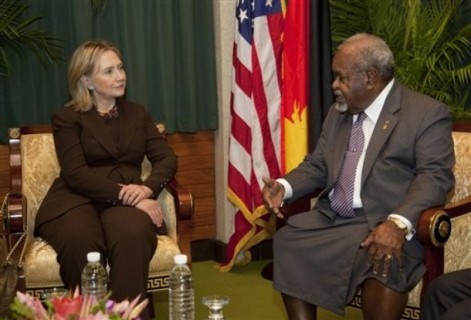
Secretary Clinton’s Remarks With Papua New Guinea Prime Minister Sir Michael Somare

Question: Prime Minister, could you tell us what more your government can do to try to reduce the very high rates of violence against women in your country?
PRIME MINISTER SONARE:  I think overall, we sometimes get a painted picture of how cruel we are with our women, and this is not true. This is a perception from people like yourself and people who write about us. That’s what they like to paint about this country. And I’m telling you that I have been around for a long time and I know that men and the women, sometimes there are fights, arguments do take place, but it’s nothing very brutal about violence against women...
... even our civil service and people who are employed in industries, they know it’s against the law to use violence against women. We have cases where people are drunk, which you know might (inaudible) a person who cannot control when he’s under the influence of liquor. And you find that sometimes (inaudible) it takes place in some places. We cannot deny it....
... we are doing everything possible, and through the education system alone and allowing the women to play a very important role in a society. That’s the only way we can overcome this problem. But all in all, sometimes it’s exaggerated by people who write about us.

Secretary Clinton’s Remarks at Women’s Empowerment Event Papua New Guinea

In Afghanistan, U.S. shifts strategy on women's rights as it eyes wider priorities

By Rajiv Chandrasekaran Washington Post Staff WriterMonday, March 14, 2011
A senior U.S. official involved in Afghanistan policy said changes to the land program also stem from a desire at the top levels of the Obama administration to triage the war and focus on the overriding goal of ending the conflict.
"Gender issues are going to have to take a back seat to other priorities," said the senior official, who spoke on the condition of anonymity to discuss internal policy deliberations. "There's no way we can be successful if we maintain every special interest and pet project. All those pet rocks in our rucksack were taking us down."
Hillary and Melanne began calling Melanne's office the "pet rock office."  Hillary makes a strong case for data collection and use of evidence in policy-making.

Secretary Clinton in San Francisco

Secretary Clinton’s Remarks to the APEC Women and the Economy Summit

... there will be a temptation on the part of those observing or covering this summit, perhaps on the part of those of us attending it as well, to say that our purpose is chiefly to advance the rights of women, to achieve justice and equality on women’s behalf. And that is, of course, a noble cause to be sure and one that is very close to my heart. But at the risk of being somewhat provocative at the outset, I believe our goal is even bolder, one that extends beyond women to all humankind. The big challenge we face in these early years of 21st century is how to grow our economies and ensure shared prosperity for all nations and all people. We want to give every one of our citizens, men and women alike, young and old alike, greater opportunity to find work, to save and spend money, to pursue happiness ultimately to live up to their own God-given potentials.
That is a clear and simple vision to state. But to make it real, to achieve the economic expansion we all seek, we need to unlock a vital source of growth that can power our economies in the decades to come. And that vital source of growth is women. With economic models straining in every corner of the world, none of us can afford to perpetuate the barriers facing women in the workforce.

Secretary Clinton: Women, Peace and Security

Hillary does not mention this speech in this chapter, and I know I have linked to it many times over the years including in this retrospective.  To me it crystallizes the integrity of her thinking on so many issues.  Just in case you have missed this must-read, here it is once more.

Hillary Clinton’s Classic Speech to the Lower Mekong Initiative Womens’ Gender Equality and Empowerment Dialogue

Statement on Presidential Memorandum Promoting Gender Equality

I’m so pleased about the Presidential Memorandum that President Obama signed yesterday, which institutionalizes an elevated focus on global women’s issues at the State Department and USAID and ensures coordination on these issues across the federal government. And it is so important that incoming Secretary of State John Kerry has expressed his support for the continued elevation of these issues in our foreign policy.
01-31-13-Z-06


Secretary Clinton’s Comments on the Special Session of the Human Rights Council on the Situation in Libya


Secretary Clinton’s Remarks at the Human Rights Council

It is time to overcome the false divide that pits religious sensitivities against freedom of expression and pursue a new approach based on concrete steps to fight intolerance wherever it occurs.

U.S. Accomplishments at the UN Human Rights Council

DEFENDING CORE PRINCIPLES
Protecting Freedom of Expression in the Context of Religious Intolerance: The United States was instrumental in galvanizing support for a consensus resolution that marks a sea change in the global dialogue on countering offensive and hateful speech based upon religion or belief. The “Combating Discrimination and Violence” resolution underscores the vital importance of protecting freedom of expression and ends the divisive debate over the highly problematic concept of “defamation of religions.”
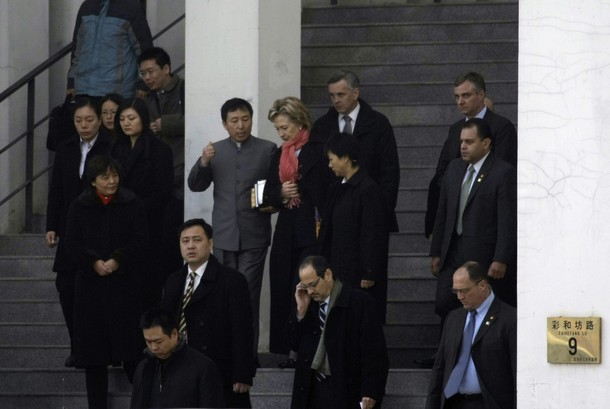
U.S. Secretary of State Clinton listens to clergy as she walks out after Sunday service in Beijing

Hillary Clinton in Egypt: A Background Briefing

... she will be meeting with women civil society activists from a range of walks of life, some who work on democracy and education and health, some who work in the business sector, so a cross-section of women who also reflect the kind of deep diversity of Egypt’s civil society. And then she’ll be meeting with more than a dozen Christian leaders from across Egypt, who represent a variety of denominations – Coptic Christians, but other Christians as well – to hear from them about their concerns and to talk to them about what they plan to do to contribute to the democratic transition and to a new Egypt over time.

Hillary Clinton in Egypt: Day Two

... democracy has to mean more than just elections. It has to mean that the majority will be protecting the rights of the minority. And here in Egypt, we are committed to protecting and advancing the rights of all Egyptians – men and women, Muslim and Christian. Everyone who is a citizen of Egypt deserves the same rights under the law...
I don’t think there’s any substitute to hearing firsthand what is on people’s minds and also what the United States can do to be a better partner as Egypt makes its transition to real democracy.

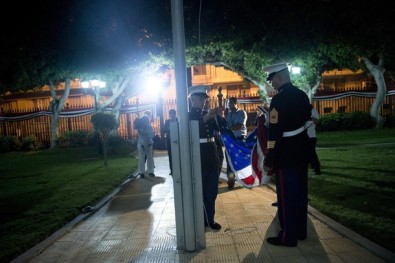
Hillary Clinton at the Consulate Flag-Raising in Alexandria Egypt

... real democracy means that every citizen has the right to live, work, and worship as they choose, whether they are man or woman, Muslim or Christian, or from any other background. Real democracy means that no group or faction or leader can impose their will, their ideology, their religion, their desires on anyone else.


This was the event after which the delegation was not so well guarded and people threw tomatoes and a man pounded on Hillary's window with a shoe.

Secretary Clinton’s Statement on the Murder of Ugandan LGBT Activist David Kato


Everywhere I travel on behalf of our country, I make it a point to meet with young people and activists — people like David — who are trying to build a better, stronger future for their societies. I let them know that America stands with them, and that their ideas and commitment are indispensible to achieving the progress we all seek.
This crime is a reminder of the heroic generosity of the people who advocate for and defend human rights on behalf of the rest of us — and the sacrifices they make. And as we reflect on his life, it is also an occasion to reaffirm that human rights apply to everyone, no exceptions, and that the human rights of LGBT individuals cannot be separated from the human rights of all persons.
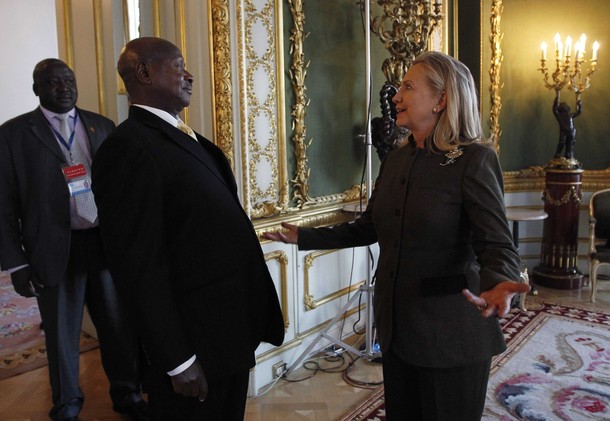
Ugandan President Yoweri Museveni, "Oh, Hillary, here you go again."

U.S. Secretary of State Hillary Clinton meets Uganda's President Yoweri Museveni at the London Conference on Somalia

Hillary Clinton Releases 2008 Country Reports on Human Rights Practices

Secretary Clinton’s Remarks on the Release of the 2009 Annual Report on Human Rights

Secretary Clinton’s Remarks Upon Releasing The 2010 Human Rights Report

Secretary Clinton Releases 2011 Human Rights Report

 Hillary Rodham Clinton

Hillary Clinton Grants Benefits to Same-Sex Domestic Partners of Foreign Service Personnel

Hillary Clinton’s Remarks at the State Department LBGT Pride Celebration

... think about what’s happening to people as we speak today. Men and women are harassed, beaten, subjected to sexual violence, even killed, because of who they are and whom they love. Some are driven from their homes or countries, and many who become refugees confront new threats in their countries of asylum. In some places, violence against the LGBT community is permitted by law and inflamed by public calls to violence; in others, it persists insidiously behind closed doors.
These dangers are not “gay” issues. This is a human rights issue. (Applause.) Just as I was very proud to say the obvious more than 15 years ago in Beijing that human rights are women’s rights and women’s rights are human rights, well, let me say today that human rights are gay rights and gay rights are human rights, once and for all.

Hillary Clinton to LGBT Youth: Tomorrow Will Be Better

Secretary Clinton’s Human Rights Day Speech

Today, I want to talk about the work we have left to do to protect one group of people whose human rights are still denied in too many parts of the world today. In many ways, they are an invisible minority. They are arrested, beaten, terrorized, even executed. Many are treated with contempt and violence by their fellow citizens while authorities empowered to protect them look the other way or, too often, even join in the abuse. They are denied opportunities to work and learn, driven from their homes and countries, and forced to suppress or deny who they are to protect themselves from harm.
I am talking about gay, lesbian, bisexual, and transgender people, human beings born free and given bestowed equality and dignity, who have a right to claim that, which is now one of the remaining human rights challenges of our time.

CGI 2013 Day Two: Women Decision Makers

09-25-13-Z-07

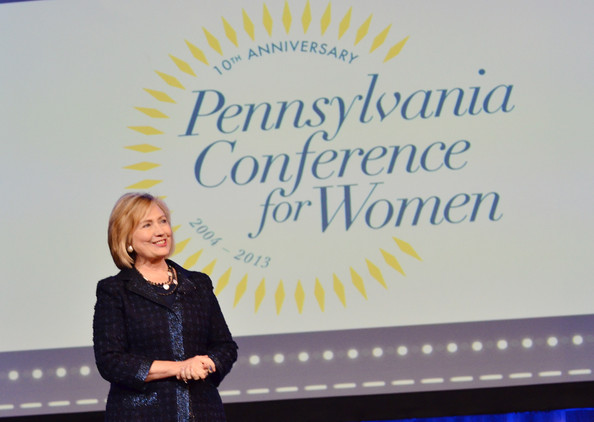
Hillary Clinton Outlines “No Ceilings” Initiative at Pennsylvania Conference for Women


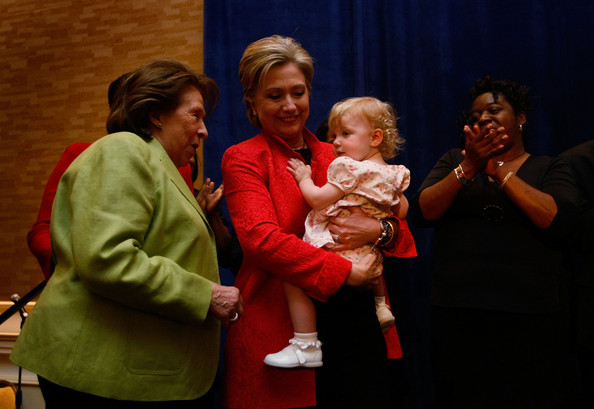
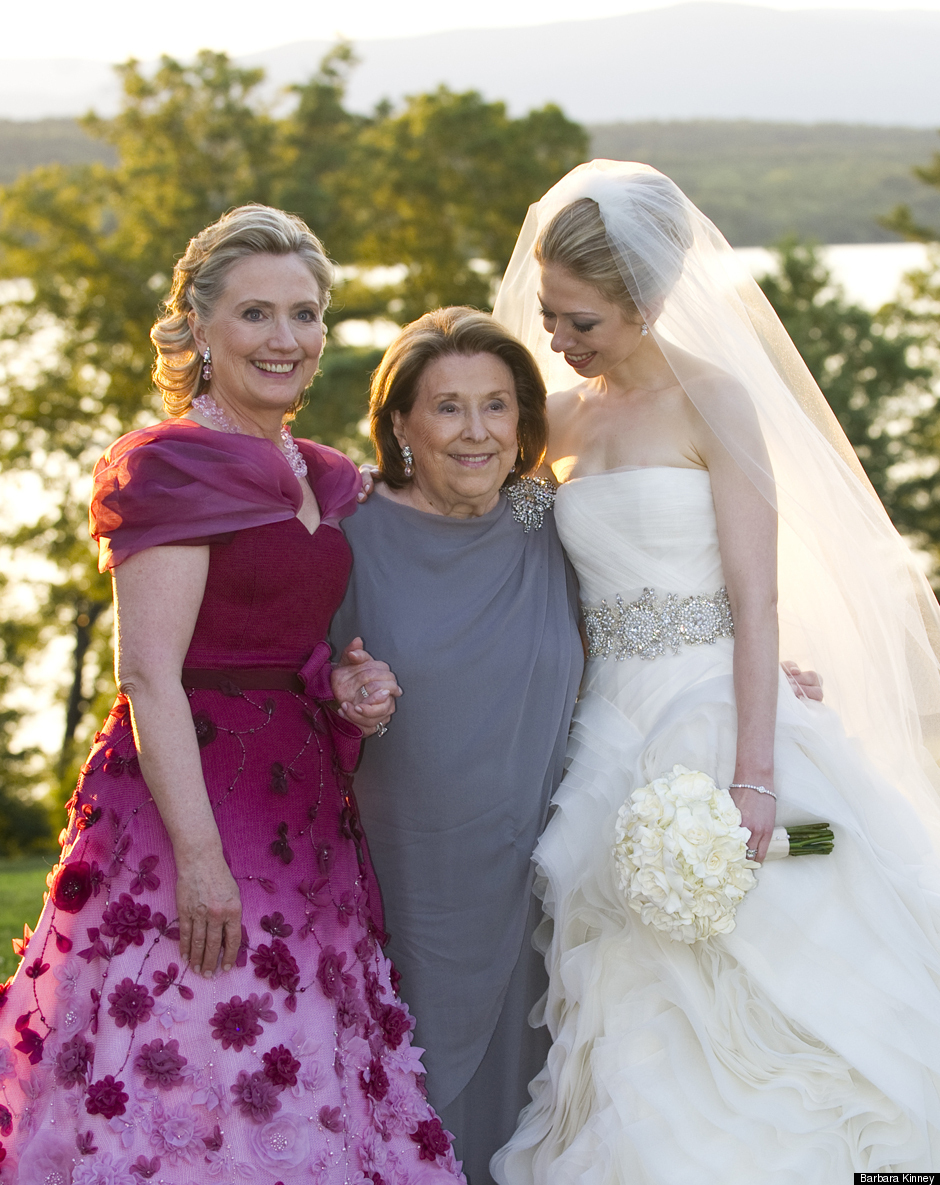
Hillary ends the chapter and her book with reflections about her mother, Dorothy Howell Rodham, who passed away in late 2011.  My heart broke for Hillary when her mother died.  I sat down and wrote a condolence note.  I wrote what was in my heart about her mom and  her loss.  I did not even keep a draft or a copy.  Several weeks later, quite to my astonishment, I received a lovely thank you note from her.

Hillary Clinton: A Daughter’s Duty


Thing is, the business is never finished.  There is always more to do!
__________________________________________________________

Hillary Clinton’s ‘Hard Choices’ Retrospective: Introduction

Access other chapters of this retrospective here >>>>

__________________________________________________________
####

Monday, November 12, 2012

Hillary Clinton: United States Reelection to the Human Rights Council


United States Reelection to the Human Rights Council


Press Statement
Hillary Rodham Clinton
Secretary of State
Washington, DC
November 12, 2012


The United States is pleased to have been elected by the United Nations General Assembly to a second term on the Human Rights Council. We thank the countries that voted for us in what was a highly competitive race among several qualified Western candidates that are all strong champions of human rights. We pledge to continue to work closely with the international community to address urgent and serious human rights concerns worldwide and to strengthen the Council. While much hard work remains to be done, especially ending the Council’s disproportionate and biased focus on Israel, we look forward to cooperating with other Council members to continue to address human rights concerns and to ensure that the Council fully realizes its promise.

Monday, October 1, 2012

Hillary Clinton Welcomes Human Rights Council's Resolution on Freedom of Association and Assembly

Adoption of Human Rights Council Resolution on Freedom of Association and of Assembly


Press Statement
Hillary Rodham Clinton
Secretary of State
Washington, DC
October 1, 2012


On Thursday, the UN Human Rights Council recognized the critical importance of the freedom of peaceful assembly and association. This U.S. sponsored resolution reaffirms a basic truth: civil society plays a central role in promoting and protecting the enjoyment of human rights, but civil society can only serve the common good when the rights to freedom of peaceful assembly and association are protected.
Progress in the 21st century depends on the ability of individuals and organizations to come together around shared goals; harness the power of their convictions; and make societies more productive, transparent and accountable. Over the last 18 months, however, we have seen governments constrict civil society activism and increase their attacks against civic-minded organizations and individuals. These crackdowns mark a disturbing trend that requires global leadership.
The United States was proud to work with fellow Core Group members – the Czech Republic, Indonesia, Lithuania, the Maldives, Mexico, and Nigeria – to advance this important and timely resolution, and we thank them for their leadership and unflagging effort.
In New York last week, the United States was also proud to stand with 15 countries and two foundations that have joined us in supporting Lifeline, a rapid-response assistance mechanism for embattled NGOs that puts the principles endorsed by the resolution into action.
This resolution, and the Lifeline fund, shows that we have many partners around the world alarmed by these recent trends who are willing to support peaceful assembly and association. This is a critical moment to redouble our efforts to stand with civil society in the pursuit of democratic progress.

Tuesday, August 23, 2011

Hillary Clinton's Statement on The Human Rights Council's Special Session on Syria & State Department Update on Libya

The Secretary of State released this statement today.

The Human Rights Council's Special Session on Syria

Press Statement

Hillary Rodham Clinton
Secretary of State
Washington, DC
August 23, 2011

I congratulate the Human Rights Council for its work to create an international independent Commission of Inquiry to investigate the deteriorating human rights situation in Syria and to make clear the world’s concern for the Syrian people. Today, the international community joined together to denounce the Syrian regime’s horrific violence. The United States worked closely with countries from every part of the world – more than 30 members of the Human Rights Council, including key Arab members -- to establish this mandate.

The Commission of Inquiry will investigate all violations of international human rights law by Syrian Authorities and help the international community address the serious human rights abuses in Syria and ensure that those responsible are held to account.

There are credible reports that government forces in Syria have committed numerous gross human rights violations, including torture and summary executions in their crackdown against opposition members. The most recent attack by Syrian security forces on protesters in Homs is as deplorable as it is sadly representative of the Asad regime’s utter disregard for the Syrian people.

The United States condemns in the strongest possible terms the slaughter, arrest, and torture of peaceful protesters taking place in Syria. We continue to urge nations around the world to stand with the Syrian people in their demands for a government that represents the needs and will of its people and protects their universal rights. For the sake of the Syrian people, it is time for Asad to step aside and leave this transition to the Syrians themselves.

The State Department posted today's press briefing in which Victoria Nuland made the following statements about developments in Libya. Once again everything said on the subject of Libya is included along with a little about Syria. Those who would like to read the entire transcript can follow the live link below to the text released by the State Department. All emphasis here is mine.

Victoria Nuland
Spokesperson
Daily Press Briefing
Washington, DC
August 23, 2011

MS. NULAND: I have nothing at the top, so why don’t we go to – directly what’s on your minds.

QUESTION: Right. Okay. So why don’t you enlighten us as to what’s going on in Libya and your understanding? And also, what’s happening in terms of the diplomacy, in terms of what the Secretary is doing and what other officials are doing? As specific as possible, please.

MS. NULAND: Good. Well, obviously, the battle for Tripoli continues and the ground situation is somewhat fluid, but we have seen some amazing images in the last little while. But there is no question that the Qadhafi regime has nearly collapsed. There is also no question that the best thing he could do for his people would be to relinquish power immediately. We stand with the proud people of Libya at this historic time. Their transition has begun. The Transitional National Council, with whom we maintain daily, hourly contact, is preparing to lead the country through its democratic transition. And we support and echo their calls for national unity at this time, for calm, for no retribution, for no reprisals.

The Secretary spoke yesterday to UN Secretary General Ban Ki-moon regarding the next steps that the UN can take in the planning that it is doing to assist the Transitional National Council and the Libyan people as they prepare for the transition. They talked about support in the areas of humanitarian relief, security assistance if it is requested, the support the UN can and will offer in the area of political and democratic transition support, constitution writing, and especially in the area of support for the rule of law. This transition will have to be Libyan led, it must be Libyan led, but both the U.S. and the United Nations will support the Libyan process and will be guided by the principle that this is Libya’s to lead.

We are also working urgently today, as you may have heard Ambassador Rice say just a little while ago, this week to be able to release between $1 billion and $1.5 billion in U.S.-held frozen Libyan assets. We are working in the UN Sanctions Committee to be able to do this. We want to give this money back to the TNC for its use, first and foremost to meet humanitarian needs and to help it establish a secure, stable government and to move on to the next step in its own roadmap. And we hope this process will be complete in the coming days. There’s quite a bit of diplomacy both in New York, here in Washington, out in capitals. And the Secretary has been involved in this herself, of course, to get this work done in coming days.

QUESTION: Before you get to the money, can you say – you said that what the best thing for Qadhafi can do now is to relinquish power immediately. What power does he have that you see that he can now relinquish?

MS. NULAND:Well, that’s a good question. He doesn’t seem to have much control of anything. It’s interesting that he still hasn’t been seen –

QUESTION: Are you sure that he hasn’t --

MS. NULAND: -- are wondering where he’s been --

QUESTION: -- relinquished power? I mean, he doesn’t seem to be leading – making any kind of an attempt to lead a --

MS. NULAND: I think what the --

QUESTION: -- to lead his people.

MS. NULAND: -- what the Libyan people are looking for, what the international community is looking for, is a reliable, affirmative statement not only to the Libyan people and the international community but to his own loyalists that he understands this is over, that he understands that the days of his leadership are over, so that everybody can move on to have the democratic, strong, united Libya that they deserve.

QUESTION: So short of him turning up dead someplace, you would like to see him come out and say, “I give up, I relinquish power,” so that his supporters won’t carry on the fight?

MS. NULAND:Well, that’s certainly what the Libyan people themselves have been asking for.

QUESTION: Well, then that’s what you would like to see.

MS. NULAND: It’s what the Transitional National Council has been asking for. And it’s what the United States has called for, for many, many weeks.

QUESTION: And on the money issue, this between 1 and 1.5 billion, that’s the – part of the liquid assets, right, that are frozen?

MS. NULAND: Correct.

QUESTION: And you said to give back that money to the TNC, but actually isn’t it to give the TNC? It’s not really their money --

MS. NULAND: To give back to the Libyan people, managed by the legitimate governing authority, the Transitional National Council, their own money.

QUESTION: All right. And what’s your understanding of what needs to actually happen at the UN for that? Because yesterday, you were saying that you would prefer not, or you would have preferred not to have to go through the UN. So --

MS. NULAND: Yesterday, I believe what we said here was that we would prefer for the UN Sanctions Committee to take action, but if the UN Sanctions Committee could not act, that we would find ways to do this unilaterally. So the diplomacy goes on. Ideally, the UN Sanctions Committee will make an affirmative decision to allow this money to be released under its own (inaudible).

QUESTION: Can you (inaudible) how you arrived at that $1 to $1.5 billion figure? And would any decision by the Sanctions Committee cover further releases down the line? I mean, is this a point of principle, that they would then sort of roll back that control over the money that would allow you to unfreeze other things as they become liquid?

MS. NULAND: Under the Sanctions Committee’s own rules and regulations, individual participants can appeal, can request of the Sanctions Committee that exceptions be made for extraordinary circumstances – in this case, humanitarian need – and then the Sanctions Committee has to make an affirmative decision. That’s how the committee works. And in the absence of the international community yet having taken the next step, which will obviously be necessary at an appropriate moment, which is to look at, based on what the Libyan people themselves want, what the TNC wants, what aspects of 19 – UNSCR 1973 still make sense, this is the best and fastest route to get relief, to get money, to the TNC, to do it in a way that has the support of the international community.

QUESTION: And the figure, that 1 to 1.5 billion, is that the amount that’s actually liquid in accounts here that could be sent as cash money to them now?

MS. NULAND: It’s a portion. It’s a little less than half of what is liquid. It is our judgment that this is the right amount now to meet immediate humanitarian and governance needs. And again, the question of the onward release of assets will depend on the situation on the ground, will depend on the desires of the Libyan people, what the TNC requests of the UN, et cetera.

QUESTION: So this money --

MS. NULAND: Josh.

QUESTION: Do you believe that – does the Administration believe that this money should be released with the condition of accountability and transparency on the TNC to make sure it’s not diverted for other than humanitarian purposes? And how would that transparency and accountability mechanism work?

MS. NULAND: Absolutely. The TNC has made strong commitments to the United States. It has made strong commitments in support of the UN – U.S. request to the UN Sanctions Committee with regard to the use of the money, with regard to transparency, et cetera. I’m not prepared to go into details here from the podium, but we would not have taken this step if we didn’t have confidence that the money will be used – will get to the people who need it and will be used appropriately.

QUESTION: How do you --

MS. NULAND: And that’s the case --

QUESTION: What gives you that confidence?

MS. NULAND: That’s the case that we’re making to the Sanctions Committee. You know that we’ve been in close contact with the TNC. We have our mission in Benghazi. This has been the subject of discussion at Assistant Secretary Feltman level, at the Secretary’s level in her diplomacy, to ensure before we went to the Sanctions Committee and during this process of convincing members of the Sanctions Committee, that this money would be used properly and would be used for the purposes that we requested its release, namely humanitarian and good governance.

QUESTION: How could you – could you explain to us how this money is released? Does it go to, let’s say, the ministry of finance, the Libyan ministry of finance, or a Libyan bank? Or does it go through an escrow process under supervision?

MS. NULAND: Again, I think this is as far as we can go today on how this might happen, because the discussions continue in New York. The diplomacy continues. So I’m not prepared from the podium today to get into all the nuts and bolts. The most important thing now is that the Sanctions Committee take action in coming days so that this money can get to the Libyan people.

Please.

QUESTION: But your comment seemed to imply that there are some of the Sanctions Committee who are standing in the way of speedy action. Can you – is that true, and who are they?

MS. NULAND: This process is very complicated. It’s very complicated anytime you want to go to the Sanctions Committee and get release, because every individual member of the Sanctions Committee has his or her own national – I mean, each nation has its own laws, has taken the sanctioning action in conformity with its own laws. So the relief has to be reviewed nationally by each country in terms of precedent, in terms of its support for the stated intent. In this case, for its understanding of how the money will be used and whether it’s in keeping with the spirit of the Sanctions Committee relief clauses that you’re trying to exercise.

QUESTION: Madam, just to follow up --

MS. NULAND: Please.

QUESTION:What many people are asking, even within the (inaudible) there in Libya that it has taken too long for the United States to help the opposition or to get Qadhafi out. One, why it took so long because thousands of more people have been killed by Qadhafi regime; and second, now do you believe that you – do you believe and you have confidence in this group now that they will be supporting the fair and free elections and democracy?

MS. NULAND:Well, Goyal, thank you for that opportunity to step back a little bit. As I said, although this situation remains fluid in some neighborhoods of Tripoli, and we all understand that this isn’t over until it’s completely over and until all weapons are laid down and the process of transition completely begins, it’s important to remember that this fight has lasted less than 200 days. It was February 16th, around then, that the protests really began in Libya. Ten days, just a mere 10 days after that, UN Security Council 1970 was passed, which froze the assets of the Qadhafi regime, which imposed the arms embargo and the travel ban, which allowed humanitarian aid to begin to flow. I said yesterday I think that under the President’s leadership, the Secretary, Ambassador Rice at the UN, all of us, have been working to assemble one of the broadest and deepest communities of common action in current memory to address this situation.

So 10 days after the protests begin, you see this first UN Security Council resolution. Thirty days after that, on March 17th, a mere 30 days, UN Security Council 1973, which not only imposed the no-fly zone, but also authorized all necessary means to protect civilians. Just two days after that, the President approved U.S. to begin action to implement that resolution, to use our unique capabilities to take out the air defenses of the regime. And it was just a week after that, March 26th, that the NATO operation was approved and NATO began picking up more and more of this mission. That same week, March 29th, the Secretary proposed, and the international community stood up, the Libya Contact Group. It initially had 20 countries and a number of international organizations. It now has 40 countries, including not only the UN and NATO and the EU, but also the African Union, the GCC, the Arab League, to support the Libyan people, to support the TNC politically, economically, militarily in this fight for transition.

And just a couple of months after this all began, we opened our mission in Benghazi, and then on April 15th you saw the NATO ministers, at the Secretary’s initiative, all call for Qadhafi to go, and that call, obviously, echoed throughout the international community thereafter.

So less than 200 days, one of the broadest coalitions in history – U.S. leadership absolutely essential in galvanizing this community. But again, it’s not over till it’s over. And not only does this community need to help the Libyans finish the job, it’s got to stay with Libya, stay with its government, as it moves through the difficult transition. Because we’ve all seen that sometimes the hardest work starts after liberation when you have to rebuild a state, and in the case of Libya, a state that’s been ruled by a dictator for 40 years.

QUESTION: Can I follow up on the money, please?

QUESTION: You’ve been talking about the credibility of the NTC, and there was an incident last night that undercut that credibility. I know this is military versus financial, but the point is, of course, save Qadhafi, the NTC assuring people that he had been arrested, and then he pops up smilingly after that. So what can you say? I mean, can you trust them if you have information like that? Could you trust it if we take it to the financial part of it? Are they trustworthy?

MS. NULAND: We said yesterday that the situation was fluid, that we were asked by a number of folks whether we could confirm Qadhafi’s location, whether we could confirm the son’s under arrest. We’ve got a little bit of a fog of war situation here, including in some of the reporting on the TNC side that makes – it’s not a surprise given the fact that they are established primarily in Benghazi, they have locations elsewhere in Libya. But until the full leadership of the TNC is able to take root in Tripoli and is able to get its feet under it, I wouldn’t pay too much attention to these fog of war things.

What we are focused on with them is planning for this transition, getting them – working with them as they plan the economic, political, rule of law, security underpinnings of the new Libyan state so that it can lead a transition towards democracy. So in the context of the action that’s going on in New York, our contacts, those of the international community with them have enabled them to think through very systematically how they would use this money. So I think you’re comparing apples and oranges, a stray report in the fog of war, versus real strategic planning that they’ve been doing, that they’ve been doing with a lot of their members on what comes next. That doesn’t mean they’re not going to need our continued support; they are.

QUESTION: Are you briefing members of Congress? Maine Senator Susan Collins says we don’t know enough about the TNC and she expressed concern about their eastern Libyan roots. What are you telling Congress, and how are you assuring them that this is a reliable group?

MS. NULAND: Wendell, we have briefed Congress all the way along. As you know, we’ve had a number of hearings. I don’t have the precise number, but just in the last couple of days, we had a flurry of phone calls with staff and with members, and later on today, there is a broad briefing call with members of Congress so that all of their questions can be answered. But obviously, we want and need members of Congress to have their questions answered, and we’re prepared to work with them. And as we move forward, we hope that they too will have more contacts with the TNC and with members of the Libyan leadership team that has come into Tripoli.

QUESTION: Collins is concerned that the group might be susceptible to extremism in some form. What are you telling them when they express that concern?

MS. NULAND: This has been an issue that the TNC itself has been thinking about and working on from the beginning, and that has been a central subject of our conversation with them from the beginning. We are heartened and encouraged by the fact that the TNC, in all of its public pronouncements, in all of its private commitments to us and other members of the international community, has said that it wants to govern in a transparent, democratic way, that it wants – that it is prepared to meet all of its international human rights commitments, and that it does not want a state led by extremists; it wants a government of national unity that supports the universal human rights of all Libyans. So those are the statements that the TNC themselves have made. That’s what the international community will hold them to going forward.

QUESTION: Can I just follow up on that?

MS. NULAND: Please.

QUESTION: In his remarks on TV a couple days ago, Assistant Secretary Feltman said that the assassination of General Younis highlighted the dangers of Islamist elements in the – among the rebel forces. And I was just wondering, is it the State Department’s conclusion that they were somehow responsible for that assassination, and do you think that that’s a warning sign going forward?

MS. NULAND: I think the fact that the TNC itself decided after that incident that it really needed to conduct an internal audit, that it needed to dissolve its executive committee and refresh its leadership speaks to their commitment to ensure that not only in name, but in action they meet the highest standards of universal human rights and that they present to the Libyan people a governing committee that meets their aspirations for a democratic future, for a future free of extremism and free of any obstacles to the highest standards of universal human rights.

QUESTION: On the financial issue, just a follow-up: I know you said you don’t want to talk in details, but is there a mechanism already in place to monitor where this money is going to to avoid mistakes that happened in Iraq?

MS. NULAND: These are the things that we’re talking about now within the Sanctions Committee. I don’t want to get ahead of decisions there. So I think I’ve said what I can, but clearly, we have worked hard to –with the TNC. They, too, want to learn lessons from Iraq and elsewhere where there have been difficulties in the past, and we have every expectation that if this money is released, it will be used well, and it will get to the people who need it.

QUESTION: My point would be a U.S. committee to oversight or to be in charge of where this money is going.

MS. NULAND: Again, I’ve said what I can on the mechanics of this for today. I think the first thing is to get the action, and then we’ll be prepared to brief a little bit more on the mechanics.

QUESTION: All the assets frozen in U.S. are subject to Sanctions Committee? Because we knew that the total amount of these frozen assets was $30 billion, something like that, and it was a combination of some multilateral sanctions and the United Nations Security Council resolution. So now all this money, $30 billion, are subject to Sanctions Committee only, not a multi – bilateral sanction issue?

MS. NULAND: I didn’t say that. I said simply that in order to release this 1 to 1.5 billion dollars, we would like to do that tranche through the Sanctions Committee. That’s our preferred course. We’re working hard on it in coming days. If we can’t move it through the Sanctions Committee, we’ll have to find other ways to do it.

QUESTION: Wait. Going back to your timeline that you gave in response to Goyal’s question, it was over a month ago that the meeting in Istanbul where the recognition took place, correct?

MS. NULAND: Correct.

QUESTION: So why is it just now that you’re getting around to going to the Sanctions Committee? Because, I mean, at the time the idea was to get that money freed up as soon as possible, and yet it’s taken more than a month to do it. Is it just – were people preoccupied with other developments in other parts of the region? I mean, it seems to me that you could have gone to the Sanctions Committee the Monday after the conference on Friday and said, “Why can’t you do this?”

MS. NULAND: Well, immediately after Istanbul there was some work to get the kinds of assurances that we needed to make the presentation. I would say that the work in the Sanctions Committee has been going on for a couple of weeks, and we’re hoping to bring it to resolution quickly.

QUESTION: But it was just presented today?

MS. NULAND: No. It’s been going on for a couple of weeks.

QUESTION: What was it then that Susan Rice was doing today?

MS. NULAND: Susan Rice simply made a public statement, similar to the statement that I made at the top of the briefing, saying that our hope and expectation is that this Sanctions Committee work will be completed in coming days.

QUESTION: Are you planning direct aid to the TNC, other than frozen assets?

MS. NULAND: If we can get this billion – 1.5 released, that’s a big chunk of money --

QUESTION: I mean, it’s --

MS. NULAND: -- and it’ll do some good. And then we have to see where things go in terms of finishing the work in Tripoli, moving on, and deciding about the future of the 1973 regime, et cetera, and led very much by the desires of the Libyan people.

QUESTION: Do you favor sending – having the United Nations send a UN peacekeeping force?

MS. NULAND: It’s – we talked about this yesterday. It’s premature to talk about any of these kinds of things until the TNC has a chance to evaluate its own needs, until it can come forward to the UN with some proposals. But the UN is preparing for all contingencies.

Please.

QUESTION: You talked yesterday about preservation of Libyan institutions. With this last sweep going on, I mean, are there any signs that anybody might be selling off the assets of Libyan institutions or trying to dip into the bank accounts in Tripoli or elsewhere? Is there any reason for concern?

MS. NULAND: I can’t speak to that here, I think, until the ground situation is a little clearer in Tripoli. One probably couldn’t say one way or the other, but I think the fact that the TNC has called for calm, that we’ve seen calm in the vast majority of the neighborhoods in Tripoli that are under the TNC and the anti-Qadhafi forces control, there has been calm, it gives us hope. But I wouldn’t want to say one way or the other, based on what we know today.

Please, here.

QUESTION: Still on --

MS. NULAND: Still on Libya?

QUESTION: Yeah. The stray report about Saif al-Islam, did – how did you guys find out that he was in fact not in opposition hands?

MS. NULAND: Again, we are not in the business of commenting on every stray rumor in the middle of a ground battle in Tripoli. So I’m not going to get into what we knew when and what we didn’t know, only to say that this kind of stray reporting is not uncommon, as all of you who have covered war zones know. So --

QUESTION: Chris Stevens --

MS. NULAND: I’m looking here at Steve.

Please.

QUESTION: Chris Stevens – I just wondered what – has he made contacts today with the TNC? I mean, what’s been on his agenda today?

MS. NULAND: He has been following up on the Secretary’s call with TNC Chairman Jalil yesterday. He’s been working on all of these issues that we’ve discussed.

Josh.

QUESTION: If the TNC is planning to move its headquarters to Tripoli, will the U.S. team in Benghazi move with it to Tripoli? And what is your thinking about where they will set up? I’m told that the U.S. Embassy in Tripoli is uninhabitable.

MS. NULAND: We have to, obviously, assess this on a daily basis. Looking at the security situation in Tripoli, our understanding is that there is some damage to our building, but I can’t speak to whether it’s habitable until we are able to get an advance team in there. We’ll obviously move the Embassy back to Tripoli as soon as we can, but in the meantime, Benghazi’s fully functional. The bulk of the TNC remains there. They, as you say, have said that they will start moving some of their folks west, so we will look and see how that goes as well.

QUESTION: And then do you plan to have an ambassador to Libya, either Gene Cretz or --

MS. NULAND: We have an ambassador. He never --

QUESTION: In Libya?

MS. NULAND: He never stopped being Ambassador to Libya.

QUESTION: Is he going to return to Libya?

MS. NULAND: And the expectation is that when he can, he will.

QUESTION: Just a follow-up. It was raised yesterday, and I’m just wondering if there’s anything further on it – the suggestions not only from Mitt Romney but now from a number of Congress people that the U.S. should be asking the TNC to extradite somehow Mr. Megrahi of the Lockerbie attack. I’m just wondering if those requests or opinions have been lodged with the State Department and if that’s something that you would consider. Is that something that’s possible to do? Have you made any decisions on that?

MS. NULAND:The Secretary has said many times, you’ve heard her say, that Megrahi would be better off behind bars. The Libyan people, the TNC, will obviously have to look at this when they can. We will be in consultations with them. The Justice Department will have the lead.

QUESTION: Well, I’m – so you’re actually saying that you might – that there might be some case to be made? This guy was convicted and served his sentence.

MS. NULAND: This will be --

QUESTION: You’re suggesting that now that you’re going to – that you, who agreed to the UN – to this international court in the first place, will now say that you want this guy put back – brought to the U.S. to be put in jail? I mean, the Scots let him go. But you --

MS. NULAND:I never said anything about the U.S. The Secretary has made clear this guy should be behind bars. The Department of Justice has the lead on these issues.

QUESTION: Right. Well, the --

MS. NULAND: No decisions have been made. We have to let justice do its job here, and we also have to have a Libyan government back in Tripoli before these conversations could happen.

QUESTION: But I thought that the question was about the – was about extraditing him, bringing him to the States, correct?

MS. NULAND: Andy, was it about extradition?

QUESTION: That’s the demand. That was the demand, but I’m interested in any further steps on the Megrahi case.

MS. NULAND: Yeah. I don't have anything further on details, other than to say that the Secretary thinks he ought to be behind bars and Justice will have the lead.

QUESTION: On Syria?

QUESTION: Can I – I have one more on – you just called – or a little while ago you said that the group of countries that was supporting the opposition was one of the broadest and deepest communities of common action in recent memory. Is that – do I have that right? Yesterday you said it was an unprecedented coalition.

MS. NULAND: I don't think I called it a coalition. I think I’ve called it a community, but coalition works as well.

QUESTION: Well, the word is – unprecedented is what I’m getting at. And I think that was the word used by some people at the White House as well. Is there a reason that you’re no longer calling it unprecedented? Have you discovered that, in fact, it’s not unprecedented, that it’s just one of the broadest and deepest in recent memory?

MS. NULAND:I heard, Matt, that you were comparing it to the Hanseatic League. I think we can take --

QUESTION: No, no, that was NATO.

MS. NULAND: We can take your comparing NATO to Hanseatic League. I don’t think that I can remember a time, certainly in my lifetime, when we had the UN, the EU, NATO, the GCC, the Arab League, and the AU pulling – AU in some of its member-states – all pulling in the same direction, all supporting the same international action politically, economically, militarily. So I stand by unprecedented. That works.

QUESTION: Okay.

QUESTION: Just one quick one on Libya. The planning, I presume, is somehow in place, but aside from the money, when you talk about aid to help write constitutions, nation-forming assistance, is there a plan to use NGOs, or would this be, like, U.S. State Department or AID people who might provide that assistance?

MS. NULAND: You’re talking, Jill, about the 1 to 1.5 or are you talking about humanitarian and other assistance?

QUESTION: No, just humanitarian in addition to perhaps the actual financial aid. You were talking about assistance which would be kind of the NGO world assistance. But would the United States, the State Department actually, provide people on the ground or in some capacity who would work with the NTC on writing a constitution, putting elections together, that type of assistance?

MS. NULAND: First of all, before I get to your question, you’re using NTC. We use TNC.

QUESTION: I know.

MS. NULAND: Just to say that for all of you who might be confused out there, the Libyans themselves have used both in their documents interchangeably, so we’re going to continue to call them the TNC. That’s what trips off our tongues, but it’s all the same entity for the world out there.

I think you’re getting a little bit ahead of the game. What we need now, first, is for the TNC representing the Libyan people to come forward with its set of interests in terms of how the international community can help. Our sense of how this should work – and the Secretary discussed this with Secretary General Ban Ki-moon yesterday – is that the UN should be the lead international organization for providing the humanitarian, political, economic support, that the nation-states of the UN would then support that effort.

And again, until we have the list, we have to – we wouldn’t be able to speak to how we might play our role. But traditionally in transitional countries, whether you’re talking about support now in Egypt or Tunisia, in the past support in other places, there are some programs that the State Department offers, programs in the areas of rule of law, security support, humanitarian assistance. And there are other programs that we contract through NGOs, et cetera. So I think it remains to be seen.

QUESTION: A follow-up on that timeline. How quickly do you expect the TNC will be able to produce this wish list for the United Nations? And without that, what’s going – what’s the political directors meeting in Istanbul going to do? I thought they were also going to be looking at some of these needs. How are they doing that before, or are you expecting them to have the list on hand come Thursday?

MS. NULAND: The first job is obviously to finish the job in Tripoli, so that’s very much the focus of the TNC inside Libya at the moment. And it’s not going to be able to fully evaluate, I would suspect, all of its needs until it’s fully in charge. That said, the planning, the next phase of planning and thinking about these things, goes forward in Istanbul on Thursday.

Yesterday, I told you that the U.S. delegation would be led by Assistant Secretary Gordon. He will be on the delegation. But yesterday, Secretary Clinton asked her deputy, Deputy Secretary Bill Burns, to lead the U.S. delegation, so he will be going as will Assistant Secretary Feltman, Gordon, others.

And indeed, Andy, that meeting will put together the TNC leadership, the UN, the EU, NATO will be represented, the member countries will be represented, so that we can hear the most updated report from the TNC on what it expects. The UN can talk about how it’s organizing, and this coordination can continue in preparation for the day when we have a more formal request and a more formal UN process.

QUESTION: One more on Libya quickly?

MS. NULAND: Please. Wendell.

QUESTION: In February, P.J. said there were still chemical weapons (inaudible) to the Libyan (inaudible) comfortable with their security then. Are you comfortable with their security now, and why?

MS. NULAND: This will obviously be a priority for everybody, and that’s all I’m prepared to say on that one at the moment.

QUESTION: In Libya, Libyan --

MS. NULAND: Are we finished with Libya still? No?

QUESTION: Hold on.

MS. NULAND: One more Libya?

QUESTION: Can you just expand on that just a bit?

MS. NULAND: I can’t, frankly, because we’re getting into areas of intelligence, so I don’t want to go --

QUESTION: No. But what will obviously be a priority for everybody? What? Exactly what?

MS. NULAND: Ensuring that we have a full accounting, and I don’t think it simply speaks to the question of WMD. It also speaks to the larger question of weaponry, et cetera, ensuring that the governing forces in Libya have full command and control and are – of any WMD or any security assets that the state might have had, and are prepared to meet international obligations and international standards of nonproliferation, transparency, et cetera.

Please.

QUESTION: On Libya, you described Qadhafi regime as near collapse. My question is: Do you see any need or are you taking any precautions to protect the Qadhafi loyalist in the case of total collapse of the current regime?

MS. NULAND: The TNC itself has called for calm, has spoken against retribution, point-scoring, score-settling. We are very supportive of that sentiment. We think it’s very important. We want to see Libyans have the government that they deserve – a government of national unity, a government where all Libyan points of view that are in keeping with international best practices and standards are represented, including the fact that the TNC itself has said that it would be willing to have former Qadhafi loyalists who don’t have blood on their hands be considered in the leadership structure.

So we need to see how this goes forward, but clearly, the TNC is saying the right thing, and we are encouraged by the fact that those parts of Tripoli and other parts of the country that they are managing have not seen reprisals.

QUESTION: (Inaudible) the 1970 and 1973 UN Security Council resolutions also can apply to protecting civilians or loyalists? Just to make sure.

MS. NULAND: I think you probably saw today that NATO made a statement that its mission continues until the job is done, until it is confident and has assurances from Libyans that civilians have been fully protected. And we obviously support that.

QUESTION: Syria?

QUESTION: On Syria?

MS. NULAND: Yes.

QUESTION: An Administration official just said that Mr. Asad should learn the lessons of Mr. Qadhafi. What lesson is that?

MS. NULAND: I’m not sure what official you’re talking about or what lesson that --

QUESTION: Well, according to CNN, just a news – breaking news that an Administration official said that Mr. Asad should learn from the fate that Mr. Qadhafi is facing. Could you --

MS. NULAND: Okay. Well, I haven’t seen the report and I don’t know who the official was, but there are any number of lessons that might apply.

QUESTION: Such as --

QUESTION: (Inaudible) opposition formed a national council and another (inaudible). Are you in a position to support them immediately? Do you know who they are? Are you willing to work with them? How does it go forward?

MS. NULAND: We’ve seen these reports that those Syrians in exile, who are meeting in Istanbul, have taken a next step to organize themselves politically. We are, as you know, also watching what’s going on inside Syria with the coordinating committees, and their increasing strength in working together and their commitment to have their own roadmap for Syria’s future. So we support all such efforts, and we also support efforts of Syrians outside and inside to work towards that democratic future.

For the record, the official was Ambassador Rice who spoke to CNN at length from Rome today.

Wednesday, March 30, 2011

U.S. Accomplishments at the UN Human Rights Council

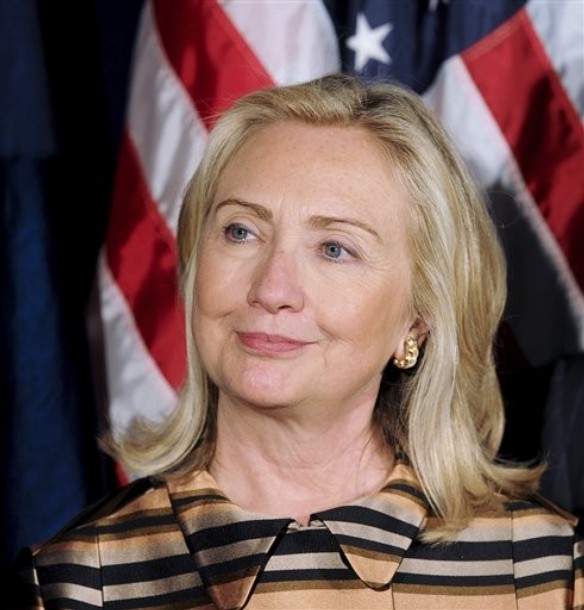
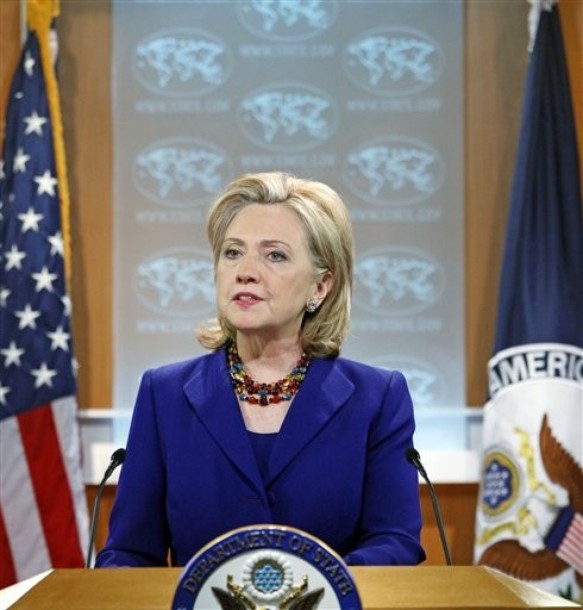
When the U.S. joined the U.N. Human Rights Council, some people were angry that we would sit on a panel where Libya was a member. My, how things change. The State Department released the following statement and a fact sheet marking the second anniversary of U.S. membership. Here is a picture of the SOS just because....


The United Nations Human Rights Council


Press Statement
Mark C. Toner
Acting Deputy SpokesmanOffice of the Spokesman
Washington, DC
March 30, 2011


The United States is pleased to note the landmark achievements of the most recent session of the UN Human Rights Council.

This session included bold, assertive action by the Council to highlight the deteriorating human rights situation in Iran by establishing a new Special Rapporteur on the Human Rights Situation in that country, the first country-specific mandate created by the Council since it came into being. The Council also charted a new course for global efforts to condemn intolerance, discrimination, and violence based on religion or belief while protecting and promoting freedom of expression. The Council established a Commission of Inquiry to examine serious abuses and violations of human rights in Cote d’Ivoire, and extended the Council’s scrutiny of the ongoing serious human rights abuses in Burma. And in conjunction with the session, the United States led a ground-breaking effort to get 85 UN member-states to join a statement supporting the human rights of lesbian, gay, bisexual, and transgender people. Taken collectively, the actions taken by the 16th Human Rights Council represent a significant positive change in the Council’s trajectory.

However, much work remains to be done to ensure that the Council realizes fully its intended purpose. In particular, the United States remains determined to take all possible steps to end the Council’s biased and disproportionate focus on Israel. The United States maintains a vocal, principled stand against this focus, and will continue its robust efforts to end it. We also will continue to work to thwart the efforts to elect as Council members governments that clearly do not merit membership given their own human rights records. And the United States remains determined to continue to push the Council to address a broad range of urgent and serious human rights concerns worldwide. To this end, the United States Government intends to pursue a second term on the Council at the Human Rights Council elections in New York in May 2012.

We believe that U.S. engagement in the Human Rights Council has directly resulted in real progress. In our two years on the Council, we’ve not been happy with every outcome, and have firmly denounced Council actions we disagree with, but the Council has made important strides. Much work remains to be done for the Human Rights Council to sustain the gains of the last two years and to fully realize its potential, and the United States looks forward to continuing our efforts to do so.


Key U.S. Accomplishments at the UN Human Rights Council


Fact Sheet
Washington, DC
March 30, 2011


This September will mark the two-year anniversary of U.S. membership on the United Nations Human Rights Council. U.S. engagement at the Council has led to a number of new mechanisms to spotlight and address serious human rights concerns and focused international attention to some of the world’s most egregious human rights abusers. Much work remains before the Council can fully realize its mandate as the international community’s focal point for the protection and promotion of human rights. The United States will continue to work hard to diminish the Council’s biased disproportionate focus on Israel. The United States maintains a vocal, principled stand against this focus, and will continue its robust efforts to end it.

Key accomplishments over the past two years include:

DEEPENING ENGAGEMENT IN COUNTRY SITUATIONS

Iran: The Council took bold, assertive action to highlight Iran’s deteriorating human rights situation by establishing a Special Rapporteur on the Human Rights Situation in Iran. The rapporteur will investigate and report on abuses in Iran and call out the failure of the Iranian government to meet its human rights obligations.

Cote d’Ivoire: U.S. leadership led to a Special Session on the situation in Cote d’Ivoire, sending Laurent Gbagbo a clear message that the world is watching what he does and that atrocities and human rights violations would not go unnoticed. At its most recent session, the Council established a Commission of Inquiry to investigate these abuses and amplified the international community’s unequivocal message that President Ouattara must be allowed to serve as the elected head of state.

Libya: The United States played a pivotal role in convening the Council’s Special Session in February 2011 during which the Council condemned the recent human rights violations and other acts of violence committed by the Government of Libya, created an independent Commission of Inquiry to investigate those violations, and recommended to the UN General Assembly that it suspend Libya’s membership rights on the Council. The UN General Assembly acted on that recommendation several days later.

Kyrgyzstan: The United States worked with Kyrgyzstan to draft and galvanize support for the first-ever resolution to address human rights violations there in the wake of the killings and abuses that took place in June 2010. It called for a credible investigation by the Government and international assistance for victims and requested the High Commissioner for Human Rights to provide follow-up reporting. The resolution paved the way for a Commission of Inquiry to investigate these events.

Guinea: The United States led the Council to adopt several resolutions on Guinea. The Council condemned the September 2009 violence, welcomed the High Commissioner for Human Rights’ decision to open a country office, and requested technical assistance from the international community for the transition to democracy, which produced concrete results on the ground.

Tunisia: The United States worked with the EU and the interim government of Tunisia to adopt a resolution that welcomed the process of political transition that has started in Tunisia, invited the UN to provide technical assistance to the transitional process in Tunisia, and encouraged the government of Tunisia to implement recommendations of the High Commissioner from its report on its mission earlier this year.

Burma: The United States has worked to ensure the continuation of the Special Rapporteur on the situation of human rights in Burma. The Special Rapporteur plays a critical role in reporting on the ongoing human rights abuses in Burma, including calling for a commission of inquiry into the situation.

North Korea: The United States has worked to ensure the continuation of the Special Rapporteur on the situation of human rights in North Korea. While the government of North Korea strongly opposes this mandate, the number of votes in favor of the resolution increased this year, demonstrating the level of international concern with the situation there.

Sudan: The United States led efforts to renew the mandate of the Independent Expert tasked with monitoring human rights throughout Sudan, including Darfur, over the Sudanese government’s strong opposition.

INITIATING CONCRETE ACTION TO DRIVE HUMAN RIGHTS PRIORITIES

Protecting Freedom of Assembly and Association: The U.S. Government co-sponsored a resolution to create the first-ever Special Rapporteur to protect Freedom of Assembly and Association, to monitor crackdowns on civil society groups and advance protection of the right to free assembly and association through its vigilant exposure of state conduct.

Combating Discrimination Against Women: The United States championed the establishment of a Working Group of Independent Experts to prevent Discrimination Against Women; the five independent experts will address discrimination against women in law and practice. One of the experts is the first Israeli citizen to be appointed by the Human Rights Council President to a special mechanism.

A Strong Statement on LGBT Rights: The United States led a group of 85 countries to sign a statement entitled “Ending Acts of Violence and Related Human Rights Violations Based on Sexual Orientation and Gender Identity.” It represents a landmark moment in UN efforts to highlight human rights abuses faced by lesbian, gay, bisexual, and transgender people around the world.

DEFENDING CORE PRINCIPLES

Protecting Freedom of Expression in the Context of Religious Intolerance: The United States was instrumental in galvanizing support for a consensus resolution that marks a sea change in the global dialogue on countering offensive and hateful speech based upon religion or belief. The “Combating Discrimination and Violence” resolution underscores the vital importance of protecting freedom of expression and ends the divisive debate over the highly problematic concept of “defamation of religions.”

Monday, February 28, 2011

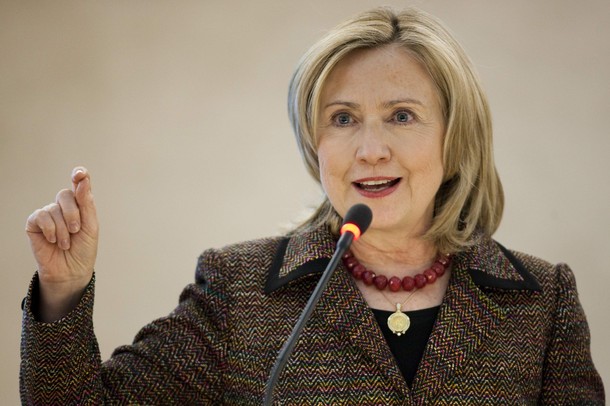
Secretary Clinton's Remarks at the Human Rights Council


Remarks at the Human Rights Council


Remarks
Hillary Rodham Clinton
Secretary of State
Geneva, Switzerland
February 28, 2011


SECRETARY CLINTON: Good afternoon. Thank you, Mr. President, and I want to thank the High Commissioner and all my colleagues for their strong words here today, as well as during the special session on Friday.

Today the world’s eyes are fixed on Libya. We have seen Colonel Qadhafi’s security forces open fire on peaceful protestors again and again. They have used heavy weapons on unarmed civilians. Mercenaries and thugs have been turned loose to attack demonstrators. There are reports of soldiers executed for refusing to turn their guns on their fellow citizens, of indiscriminate killings, arbitrary arrests, and torture.

Colonel Qadhafi and those around him must be held accountable for these acts, which violate international legal obligations and common decency. Through their actions, they have lost the legitimacy to govern. And the people of Libya have made themselves clear: It is time for Qadhafi to go – now, without further violence or delay.

The international community is speaking with one voice and our message is unmistakable. These violations of universal rights are unacceptable and will not be tolerated. This Council took an important first step toward accountability on Friday by establishing an independent commission of inquiry.

On Saturday in New York, the United Nations Security Council unanimously adopted a resolution imposing an arms embargo on Libya, freezing the assets of key human rights violators and other members of the Qadhafi family, and referring the Libyan case to the International Criminal Court.

Tomorrow, the UN General Assembly should vote to accept the recommendation to suspend the Qadhafi government’s participation here in the Human Rights Council. Governments that turn their guns on their own people have no place in this chamber.

The Arab League deserves our praise as the first multilateral organization to suspend Libya's membership -- despite the fact that Libya was serving as the Arab League Chair. We hope to see our friends in the African Union follow suit.

We all need to work together on further steps to hold the Qadhafi government accountable, provide humanitarian assistance to those in need, and support the Libyan people as they pursue a transition to democracy. Today, I’ve had the privilege of consulting with a wide range of colleagues here in Geneva and President Obama is meeting with UN Secretary General Ban Ki-moon in Washington. We will continue coordinating closely with our allies and partners.

The United States has already imposed travel restrictions and financial sanctions on Qadhafi and senior Libyan officials. We have frozen assets to ensure that they are preserved for the Libyan people. And we have halted our very limited defense trade with Libya. We are working with the United Nations, partners, allies, the International Committee of the Red Cross and the Red Crescent, and other NGOs to set up a robust humanitarian response to this crisis.

As we move forward on these fronts, we will continue to explore all possible options for action. As we have said, nothing is off the table so long as the Libyan Government continues to threaten and kill Libyans.

Ultimately, the people of Libya themselves will be the ones to chart their own destiny and shape their own new government. They are now braving the dictator’s bullets and putting their lives on the line to enjoy the freedoms that are the birthright of every man, woman, and child on earth. Like their neighbors in Tunisia and Egypt, they are asserting their rights and claiming their future.

Now, while the circumstances in Egypt, Tunisia, and Libya are each unique, in every case the demand for change has come from within, with people calling for greater civil liberties, economic opportunities’ and a stake in the governance of their own societies.

And the world has been inspired by their courage and their determination. We see in their struggles a universal yearning for dignity and respect. And they remind us that the power of human dignity is always underestimated until the day it finally prevails.

This moment belongs to the people, particularly the young people, of the Middle East. On behalf of President Obama and the American people, let me say that we are inspired by what you are doing and heartened by what it means for your future. The United States supports orderly, peaceful, and irreversible transitions to real democracies that deliver results for their citizens.

On this our values and interests converge. Because supporting these transitions is not simply a matter of ideals. It is also a strategic imperative. Without meaningful steps toward representative, accountable, and transparent governance and open economies, the gap between people and their leaders will only grow, and instability will deepen. What might have been possible in the 20th century, with new technologies and the power that people now have to connect, is no longer possible.

And to hang on to systems that are unaccountable and that do not respond to the legitimate needs of one’s people poses a danger, not only a danger to leaders but a danger to all of our interests. By contrast, history has shown that democracies tend to be more stable, more peaceful, and ultimately more prosperous.

Democratic change must grow from within. It cannot be implanted from the outside. And let me be among the first of many to say the West certainly does not have all of the answers. The first steps of change have come quickly and dramatically. It is, however, proving tragically difficult in Libya. In other nations, change is likely to be more deliberate and methodical. In all cases, the United States will support citizens and governments as they work for progress.

We are well aware of the challenges that come with these kinds of transitions. You cannot create jobs or economic opportunities overnight. These changes can be chaotic. And in the short term, there will be new voices and political competitions emerging for the first time. And as history has shown, these new births of democracy, of freedom, of human rights, can be derailed by autocrats who use violence, deception, and rigged elections to stay in power or to advance an undemocratic agenda. But like Colonel Qadhafi, leaders who deny their people freedom and opportunity will, in the end, fuel the very instability they fear.

So the process of transition must be protected from anti-democratic influences from wherever they come. Political participation must be open to all people across the spectrum who reject violence, uphold equality, and agree to play by the rules of democracy. Those who refuse should not be allowed to subvert the aspirations of the people. And leaders cannot claim democratic legitimacy if they abandon these principles once they are in power.

Free and fair elections are essential to building and maintaining democracy, but elections alone are not sufficient. Sustainable democracies are built on strong institutions, including an independent judiciary that promotes the rule of law and helps ensure official accountability and transparency, and stands against corruption.

Recent days have underscored the importance of the freedom of expression, whether it’s in the public square, through the press, or on the internet. Brave journalists have broadcast images of repression around the world, and the young people of Tunisia and Egypt have shown everyone what a force for democracy, the open exchange of ideas, can be.

A vibrant civil society is also an indispensable building block of democracy. And not only in the Middle East but around the world, citizen activists and civic organizations are emerging as strong voices for progress. They help develop solutions to tough problems. They hold governments accountable. They empower and protect women and minorities. The United States is committed to broadening our own engagement with civil society, and we urge leader and governments to treat civil society, as partners, not adversaries.

There also must be for transitions to thrive a commitment to make economic opportunity available to all. Human rights, democracy, and development are inextricably linked and mutually reinforcing. We have seen how inequity and lack of economic opportunities drive people into the streets. So to earn the confidence of one’s own people, governments have to deliver on the promise of improved lives.

There is no doubt that the most important goal for most people in the world today is a decent life for themselves and their families. At the very least, that must be the goal that we deliver on. It is also particularly important that women and minorities have access to opportunity and participation. Nations cannot flourish if half their population is consigned to the margins or denied their rights. We have seen how women play a vital role in driving social and economic progress when they are accorded their rights and afforded equal opportunity. And in so doing, they lift up not only themselves but their families and their societies.

These are not Western principles or American ideals. They are truly universal, lessons learned by people all over the world who have made the difficult transition to sustainable democracy. And as we look at what’s happening now in the Middle East, of course those changes will be shaped by local circumstances and led by local leaders. And people themselves will determine whether or not the change has worked. But universal principles will be important touchstones along the way.

That is why, as we watch what is happening in Egypt, we hope that there will be a broad array of opposition voices and representatives to ensure that the reform process is inclusive. We want to see concrete steps taken, including enacting constitutional reforms and releasing political detainees and lifting the state of emergency. The United States stands ready to assist, however appropriate, especially through economic assistance that helps promote reform and create greater opportunity.

In Tunisia, we welcome the interim leadership’s efforts to form an inclusive, broad-based government and its desire to hold elections as soon as possible. And we were heartened to hear this morning from Tunisia’s state secretary for foreign affairs that it will welcome the opening of a UN human rights office, and open its doors to all UN special rapporteurs. We are supporting the Tunisian people on this long and difficult road ahead. And as other important partners such as Jordan and Bahrain take steps – sometimes very difficult steps – to open their political space, we will stand behind them and support their efforts because we are convinced that they will help advance all of our shared interests.

But now, there is an alternative vision for the future of the region that only promises more frustration and discord. Extremists and rejectionists across the Middle East argue that they are the ones who champion the rights of the downtrodden. For decades, they have claimed that the only way to achieve change is through violence and conflict. But all they have accomplished is to undermine peace and progress. The success of peaceful protests has discredited the extremists and exposed their bankrupt arguments.

Iran, for example, has consistently pursued policies of violence abroad and tyranny at home. In Tehran, security forces have beaten, detained, and in several recent cases killed peaceful protesters even as Iran’s president has made a show of denouncing the violence in Libya. Iranian authorities have targeted human rights defenders and political activists, ex-government officials and their families, clerics and their children, student leaders and their professors, as well as journalists and bloggers.

Last week, the United States imposed new sanctions on Iranian officials for serious human rights abuses. Here at the Human Rights Council, we are proud to be working with Sweden and other partners to establish a special rapporteur on Iran. Its mandate would be to investigate and report on abuses in Iran, and to speak out when the government there does not meet its human rights obligations. Iranian human rights advocates have demanded this step to raise international pressure on their government.

This will be a seminal moment for this Council, and a test of our ability to work together to advance the goals that it represents. Indeed, every member of this Council should ask him or herself a simple question: Why do people have the right to live free from fear in Tripoli but not Tehran? The denial of human dignity in Iran is an outrage that deserves the condemnation of all who speak out for freedom and justice.

The Human Rights Council was founded because the international community has a responsibility to protect universal rights and to hold violators accountable, both in fast-breaking emergencies such as Libya and Cote d’Ivoire, and in slow motion tragedies of chronic abuse, such as Burma and North Korea. We saw this Council at its best on Friday, when it took decisive action on Libya. We saw it in December’s Special Session on Cote d’Ivoire, where the situation is increasingly dire and there’s been a large spike in violence. We must continue sending a strong message to Laurent Gbagbo that his actions are unacceptable, and the international community must keep up the pressure.

Last fall, this Council also took the important decision to create a Special Rapporteur for Freedom of Assembly and Association, and we have likewise seen a strengthening in the Council’s approach to freedom of expression. But too often, still, we are not seeing a serious enough response, to use this institution to advance human rights. Sometimes, the Council does not act, and its integrity is undermined because it defers to regional relations, diplomatic niceties, and cynical politics. Membership on this Council should be earned through respect for human rights. That is the standard laid out by the General Assembly. This Council’s predecessor, the Human Rights Commission, lost its credibility in part because Libya was allowed to serve as its president. It should not take bloodshed for us to agree that such regimes have no place here.

And I must add, the structural bias against Israel – including a standing agenda item for Israel, whereas all other countries are treated under a common item – is wrong. And it undermines the important work we are trying to do together. As member states, we can take this Council in a better, stronger direction.

In 2009, the United States joined the Human Rights Council because President Obama and I believed we could make a difference by working with you on the inside rather than standing on the outside merely as a critic. And over the past 18 months, we have worked together. We’ve reached across regional lines in an attempt to overcome what hobbles this country[i] more than anything else, our divisions as member states. The unity of purpose we have forged with respect to Libya offers us an opportunity to continue that progress.

As we look ahead, and as the Council completes a review of its own operations, we hope to help set a new agenda, based on three principles. First, the Council must have the capacity to respond to emergencies in real time. And it must demonstrate clearly that it possesses the will to address gross abuses, hold violators accountable, and work with governments, citizens, and civil society organizations genuinely committed to reform.

Second, the Council must apply a single standard to all countries based on the Universal Declaration of Human Rights. It cannot continue to single out and devote disproportionate attention to any one country.

And third, the Council needs to abandon tired rhetorical debates and focus instead on making tangible improvements in people’s lives.

For example, in this session we have an opportunity to move beyond a decade-long debate over whether insults to religion should be banned or criminalized. It is time to overcome the false divide that pits religious sensitivities against freedom of expression and pursue a new approach based on concrete steps to fight intolerance wherever it occurs.

Together, we can and must help this Council live up to its mission and ensure that it plays a constructive role in the days and months ahead. We will face new problems and new challenges, but if we have a firm foundation rooted in the Universal Declaration of Human Rights, we will chart a study course.

Make no mistake, this popular wave for reform is spreading, not receding. Each country is unique, but many of the concerns that drove people into the streets and squares of the Middle East are shared by citizens in other parts of the world. Too many governments are hobbled by corruption and fearful of change. Too many young people cannot find jobs or opportunities. Their prospects are shaped more by who they know than by what they know or what they can dream. But it is not my mother’s or even my world any more. What has happened with new technologies of the 21st century means that young people know everything that is going on everywhere, and they no longer will tolerate a status quo that blocks their aspirations.

Young people in the Middle East have inspired millions around the world, and we celebrate what some are rightly calling the Arab Spring. This is a hopeful season for all humanity because the cause of human rights and human dignity belongs to us all.

So for leaders on every continent, the choice becomes clearer day by day: Embrace your people’s aspirations, have confidence in their potential, help them seize it, or they will lose confidence in you.

Those of you who were here on Friday, and many of us watching on our television screens saw the Libyan representative renounce Qadhafi’s violent rule. He said, “Young people in my country today are with their blood writing a new chapter in the history of struggle and resistance. We in the Libyan mission have categorically decided to serve as representatives of the Libyan people and their free will.”

This is the call we should heed. This is a time for action. Now is the opportunity for us to support all who are willing to stand up on behalf of the rights we claim to cherish. So let us do that and let us do it with the sounds of the young people from the streets of Tripoli to the markets of Tunis and the squares of Cairo echoing in our ears. Thank you very much.


[i] council more than…