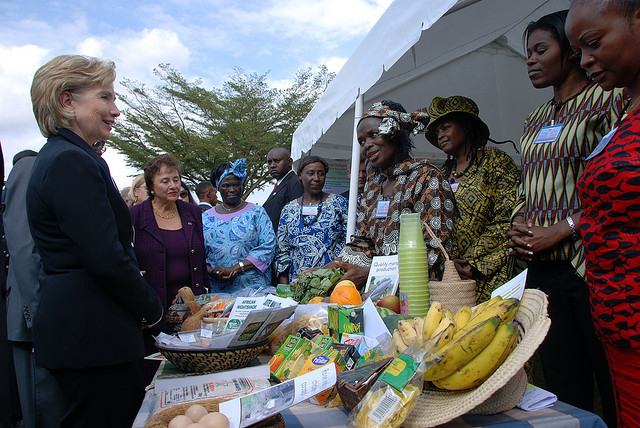
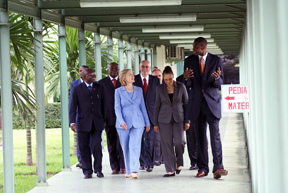
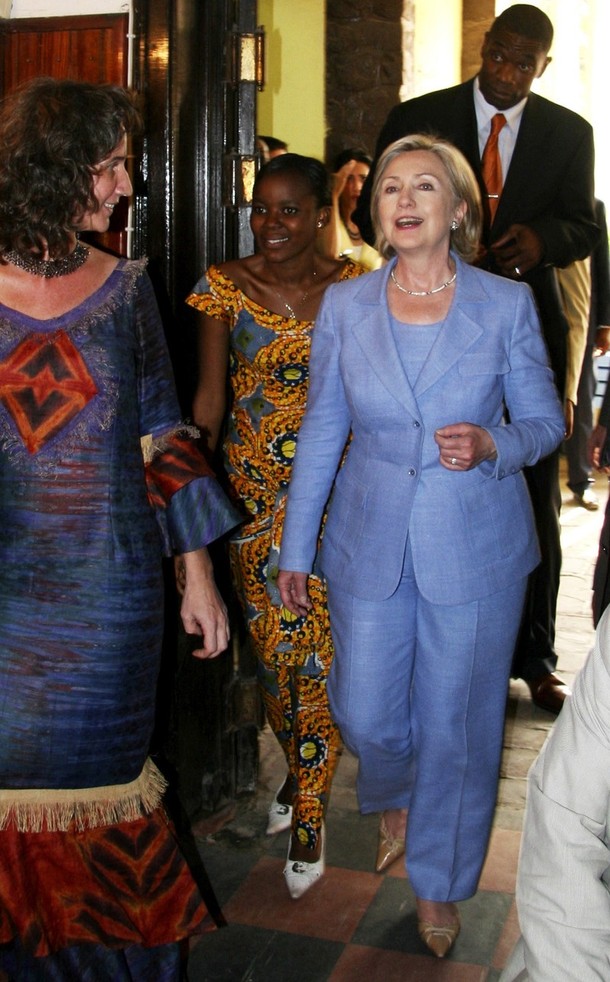
Hillary Clinton describes the Obama Administration's Africa policy in typical Hillary fashion as resting on four pillars.
- Promoting opportunity and development,
- Spurring economic growth, trade, and investment,
- Advancing peace and security,
- Strengthening democratic institutions.
China,
as we know, is heavily invested in Africa. Her description of that
relationship as one of exploitation of natural resources in exchange for
glitzy structure and infrastructure that benefits them and excludes
local labor. Her concern is the damage being inflicted by some foreign
investment.
She quotes her remark to a TV interview question in Zambia in June 2011.
... our view is that over the long run, investments in Africa should be sustainable and for the benefit of the African people.
Confronted
with a suggestion that the Chinese model, basically a hands-off local
government model might serve African nations better than the
good-governance model that could be interpreted as imposed by the west,
responded:
It is easy – and we saw that
during colonial times – it is easy to come in, take out natural
resources, pay off leaders, and leave. And when you leave, you don’t
leave much behind for the people who are there. You don’t improve the
standard of living. You don’t create a ladder of opportunity.
We
don’t want to see a new colonialism in Africa. We want, when people come
to Africa and make investments, we want them to do well, but we also
want them to do good. We don’t want them to undermine good governance.
We don’t want them to basically deal with just the top elites and,
frankly, too often pay for their concessions or their opportunities to
invest.
June 11, 2011 by
still4hill
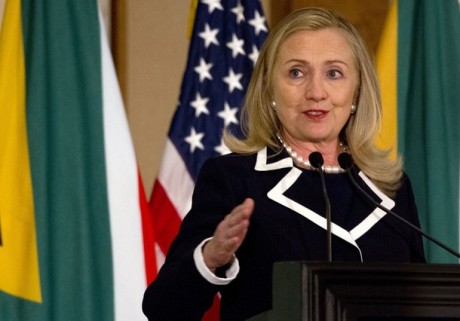
She mentions this speech where she spoke of sustainable partnerships that add rather than subtract value.
August 1, 2012 by
still4hill
On
the subject of the disturbing downward trend in electoral democracies
on the continent she refers to a speech in 2011 at African Union
Headquarters where she warned African leaders that the Arab Spring could
spread. We wondered, viewing the video, why she was speaking in the
dark. It turned out that there was a power outage that occurred while
she spoke that might have been a coincidence. It is a message that
older, entrenched leaders do not want to hear. Hillary remarks upon the
reluctance of some of these leaders, often seen as liberators from
colonialism, to cede power. The phenomenon is endemic on the continent.
She delivered a similar message to Arab elders at
Forum for the Future in Morocco in
November 2009. Neither was that audience particularly receptive to the
message of inclusiveness. The Arab Spring was a reaction to policies
that she knew then, through her interactions with civil society in Arab
countries, would boil over sooner or later boil over. A look at the
slideshow in this post speaks more than 1,000 words.
June 13, 2011 by
still4hill
Putting
forth the example of a grassroots Senegalese movement effectively
defeating Abdoulaye Wade in their 2012 election, she posits that
democratic change is possible in Africa and quotes further from her
sustainable partnerships speech in Dakar.
I know there
is sometimes an argument that democracy is a privilege belonging to
wealthy countries, and that developing economies must put economic
growth first and worry about democracy later. But that’s not the lesson
of history. Over the long run, you can’t have effective economic
liberalization without political liberalization ... the United States
will stand up for democracy and universal human rights, even when it
might be easier or more profitable to look the other way, to keep the
resources flowing. Not every partner makes that choice, but we do and we
will.
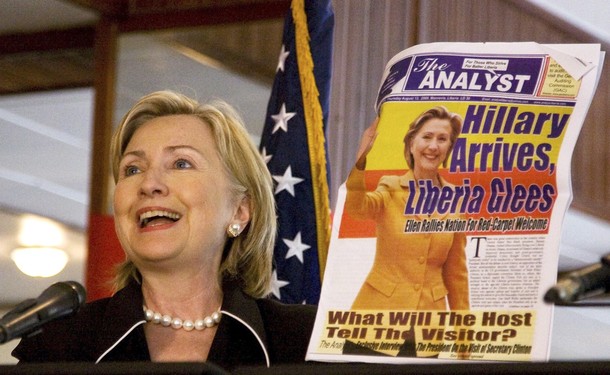
Liberia, today so unfortunately stricken with
the ebola epidemic, stands as a shining example of democracy in Africa
as Hillary points out that former enemies on the field of battle now sit
side by side in the legislative chambers.
August 13, 2009 by
still4hill
Some
of you have seen a film that tells the story of a Liberian woman’s
efforts to end the war. Tired of the killing and the conflict, she
organized women at her church and then other churches and in mosques
until thousands of Liberian women had joined a vocal, public movement
demanding peace ... These were women who woke up one day and said,
“Enough, enough. We’re better than that ... I know that the suffering
of the people of Liberia has been broad and deep. But now, you each have
a chance, both personally and publicly through your service here, to
make a stand against the past and for a future that is worthy of the
sacrifice and the suffering that went on too long. The United States is
proud to support you.
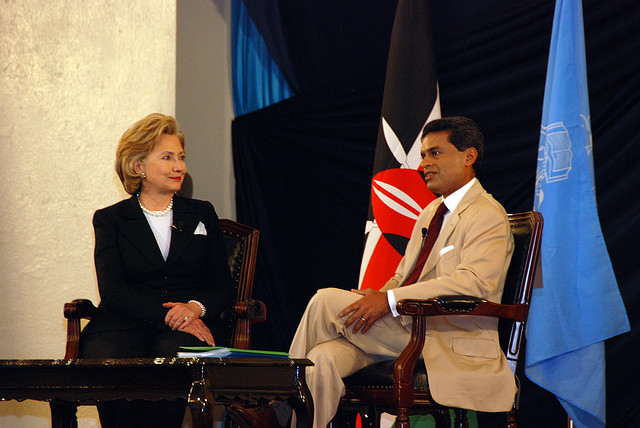
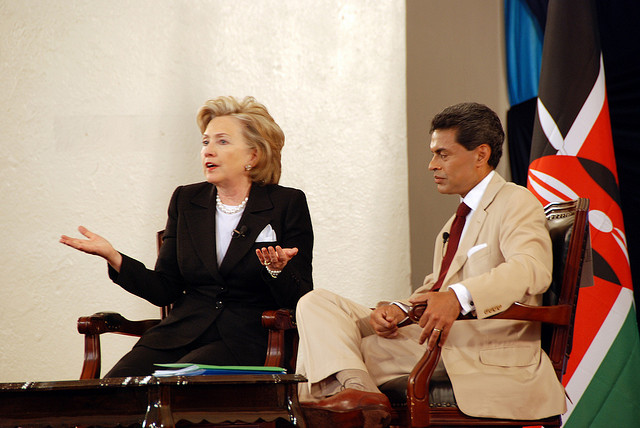
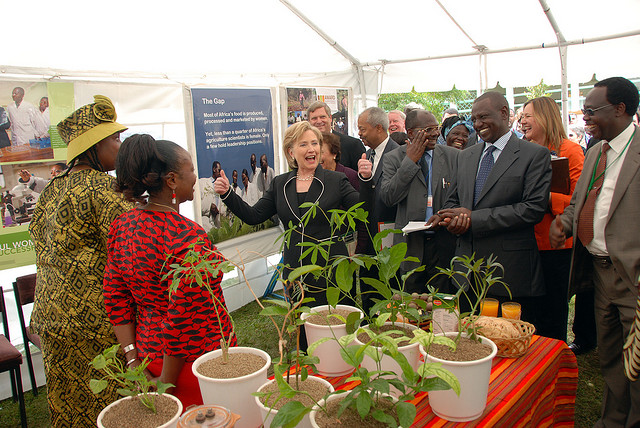
Her 2009 visit to
Kenya comprised several important speaking engagements to which she
refers: The AGOA Forum (Clinton administration legislation), a
"townterview" with Fareed Zakaria, a visit, with Agriculture Secretary
Tom Vilsack, to an agricultural research institute, and the usual
ministerials.
August 5, 2009 by
still4hill
August 7, 2009 by
still4hill
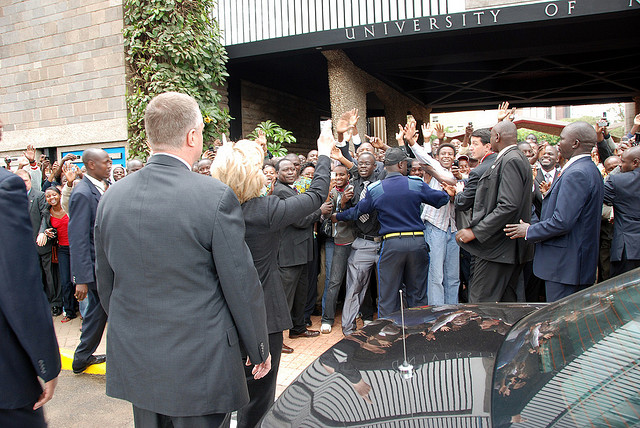
Students
greeted her with signs reading "corruption-free zone." At this event
Hillary shared the stage with Nobel Peace Prize winner Wangari Maathi
who led a reforestation movement in Kenya. The issue of natural
resources being decimated arose. You may recall that in her very
lengthy
confirmation hearing before the Senate Foreign Relations Committee,
Hillary was asked a question about natural resources in Africa (it
might have come from John Kerry, but I am not certain). Immediately she
responded that "Botswana comes to mind." Here she shared the same
example.
Botswana's national trust fund has reinvested profits
from its resources into the population and infrastructure with such
success that both the Peace Corps and USAID pulled out of the country
since their help was no longer needed. Hillary credits Botswana's Five
Ds for the success: Democracy, Development, Dignity, Discipline,
Delivery.
August 5, 2009 by
still4hill
Well-intentio9ned
as they were, she notes that U.S. (and other) gifts of foodstuffs
undercut the market for indigenous agricultural products. She points to
the
Feed the Future Program as one that supports local produce and addresses the challenge of transportation.
August 5, 2009 by
still4hill
She
also met with President Kibaki, Prime Minister Odinga, and the
cabinet. There was tough talk, to which she refers, in this meeting
but no transcript from the State Department. The agreed-upon shared
power in the government was not going smoothly. Her subsequent words
with Foreign Minister Wetangula provide some insight into the tone she
adopted, however.
The United States worked hard last
year with Kofi Annan and the team of African Eminent Persons to support
the Kenyan people to resolve the crisis that afflicted this country.
Unfortunately, resolving that crisis has not yet translated into the
kind of political progress that the Kenyan people deserve. Instead, the
absence of strong and effective democratic institutions has permitted
ongoing corruption, impunity, politically motivated violence, human
rights abuses, and a lack of respect for the rule of law.
These
conditions helped fuel the post-election violence, and they are
continuing to hold Kenya back. The reform agenda agreed to by the
coalition government and discussed in the speech that President Kibaki
and Prime Minister Odinga gave this morning must be fully implemented
not just to avoid a repeat of the previous crisis or worse, but more
importantly, to set the stage for a better future, a future worthy of
the dynamic people of this country, a future of economic growth,
democratic development, social justice, and the opportunity for every
Kenyan child to live up to his or her God-given potential. I wanted the
leaders to know that we respect greatly the way that the Kenyan people
pulled their country back from the brink of disaster once, and the
ongoing connection between the private sector, civil society, and the
government that is the key to resolving these issues.
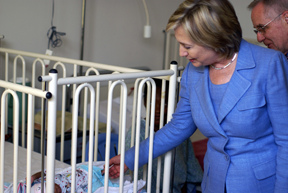
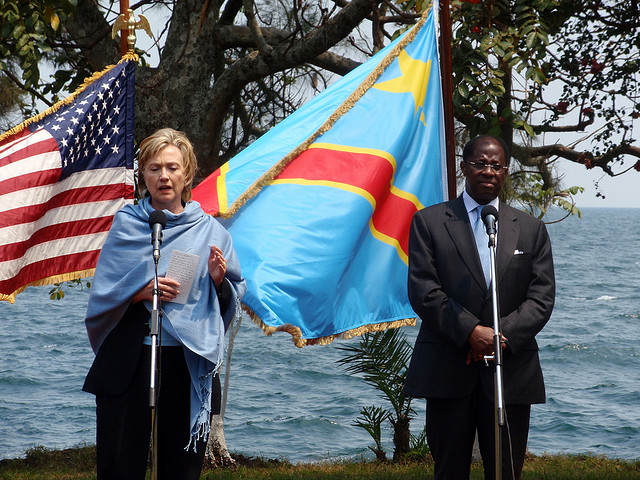
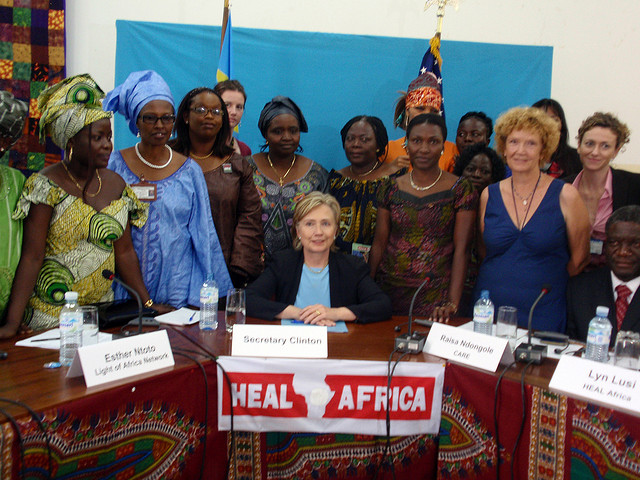
Hillary's
description of her visit to Democratic Republic of Congo (DRC) in
summer 2009 is a contrasting patchwork of horror and hope. She begins
with her visit, with NBA star Dkembe Mutombo to the pediatric unit he
built and named for his mother.
August 10, 2009 by
still4hill
There
were so many bright and lovely moments on this first official State
tour of Africa. Most of those were, sadly, not covered by the media,
but no one missed the "snap in the Congo." In an atmosphere that
Hillary describes as sour with an air of sullen resignation in a stuffy
auditorium at St. Joseph's School. everyone saw her lose patience with a
question, remove her earbuds, and tell a student at a town hall that
she would not be channeling her husband.
August 10, 2009 by
still4hill
In
the book, she explains that the student came to her after the event,
apologized, and explained that he had not meant to ask her President
Clinton's opinion but rather President Obama's.
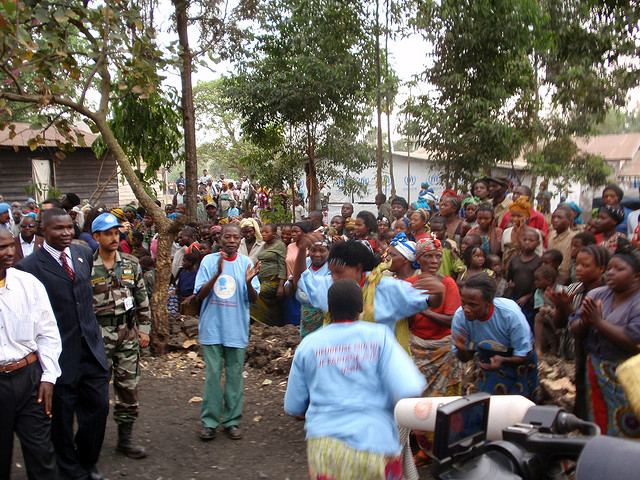
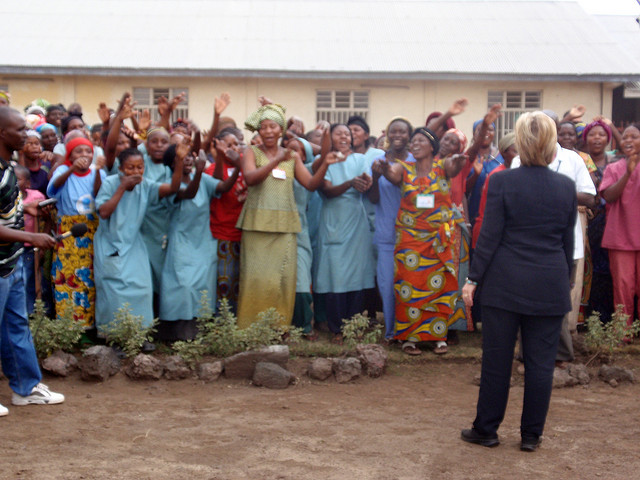
Goma is one of the
the grimmest, most dangerous places on earth, especially for women.
Hillary tells of her visit there and the spirit she encountered among
the residents of the refugee settlement she visited.
August 11, 2009 by still4hill
She
says she witnessed the worst and the best of humanity there. She was
inspired to chair a U.N. Security Council meeting the next month on the
subject of sexual violence in conflict regions.
September 30, 2009 by
still4hill
September 30, 2009 by
still4hill
Hillary
turns at this point to her visit to Africa's and the world's newest
country, South Sudan in August 2012 when a standoff between the breakout
state and Sudan from which it had seceded was festering. South Sudan
had oil and Sudan had the ports and refineries. Clearly some kind of
cooperative agreement would benefit both, but South Sudan had shut down
the pipeline to the North.
August 3, 2012 by
still4hill
August 3, 2012 by
still4hill
The
surface issue was fees charged by Sudan to transport and process the
oil. Hillary used an Op-Ed by one of President Kir's former
comrades-in-arms, Bishop Elias Taban, once a boy soldier. Below the
surface, the dispute rested on old battle wounds. Hillary told him "a
percentage of something is better than a percentage of nothing."
Taban's words moved Kir to accept a compromise. By 2:45 the next
morning, the oil flowed again.
August 4, 2012 by
still4hill
Hillary
writes that South Sudan's future remains uncertain, and indeed, while
this post was being assembled the State Department issued
this statement.
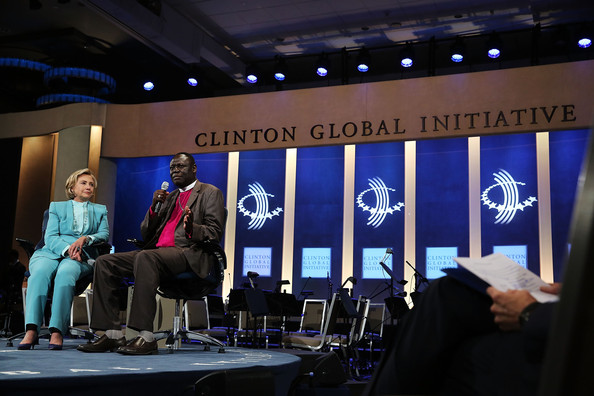
Bishop
Taban, who provided the instrument that convinced President Kir to
budge was her guest at last year's Clinton Global Initiative where she
presented him with the Global Citizen Award.
September 26, 2013 by
still4hill
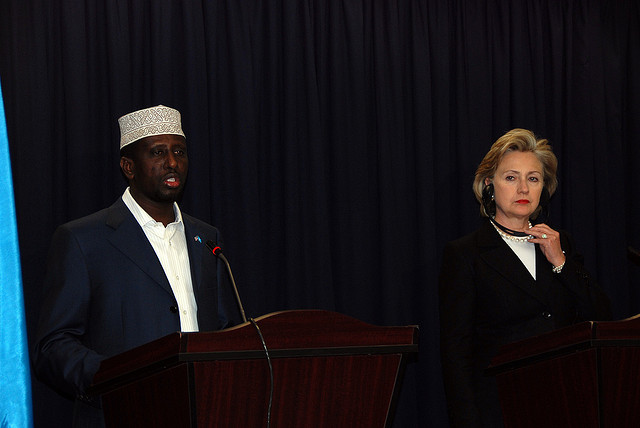
She
reviews Somalia's war-torn, terror-ridden history and our efforts to
assist through several U.S. administrations. In August 2009, the
president of the transitional government traveled to Nairobi to meet
with her. She wondered if he would shake her hand, and he did so very
enthusiastically which was a very big deal all around.
August 7, 2009 by
still4hill
They
met again for a final time in their respective official positions in
August 2012. A new president was elected the next month.
August 4, 2012 by
still4hill
At
a military base in Uganda, U.S. Special Operations advisors showed her a
surveillance drone used in the search for Joseph Kony chief of the
Lord's Resistance Army and elements of Al Shabaab. She notes that it
resembled a child's toy.
August 3, 2012 by
still4hill
She
mentions the September 2013 attack by Al Shabaab on a shopping mall in
Nairobi that killed Elif Yavuz who worked for the Clinton Health Access
Initiative which battles HIV/AIDS and other health challenges.
September 23, 2013 by
still4hill
In
the struggle to conquer HIV/AIDS on the continent, the President's
Emergency Plan for AIDS Relief (PEPFAR) begun by George W. Bush plays a
major role. She recalls this event in Johannesburg in 2009 where she
was accompanied by Eric Goosby, the State Department's Global AIDS
Coordinator, her Congressional Representative, Nita Lowey, and the late,
Honorable Donald Payne who was a friend of this blog.
August 8, 2009 by
still4hill
Hillary declared a goal of an AIDS-free generation on World AIDS Day 2011.
December 1, 2011 by
still4hill
August 3, 2012 by
still4hill
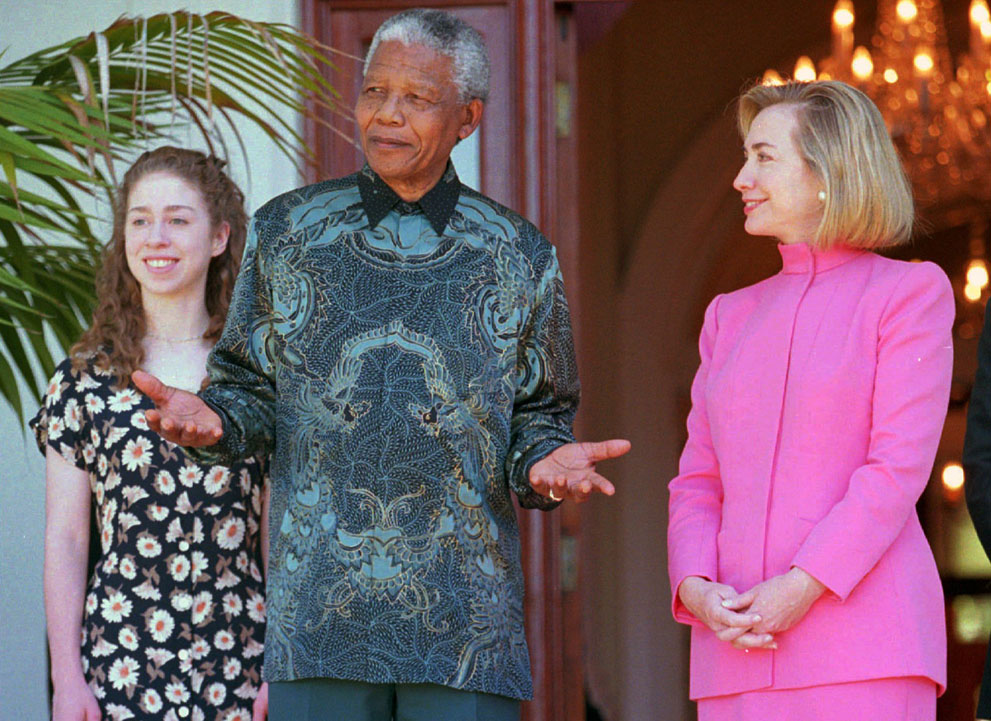
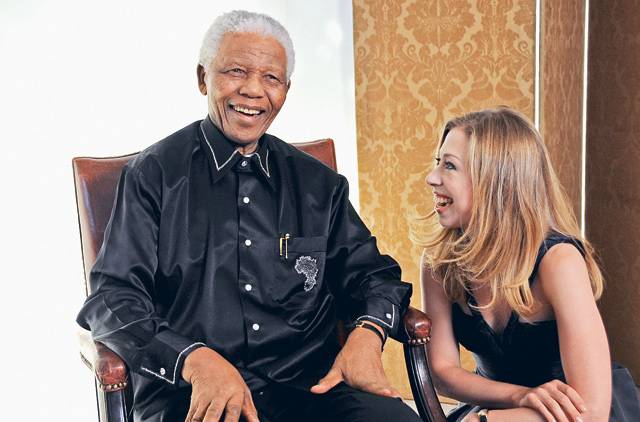
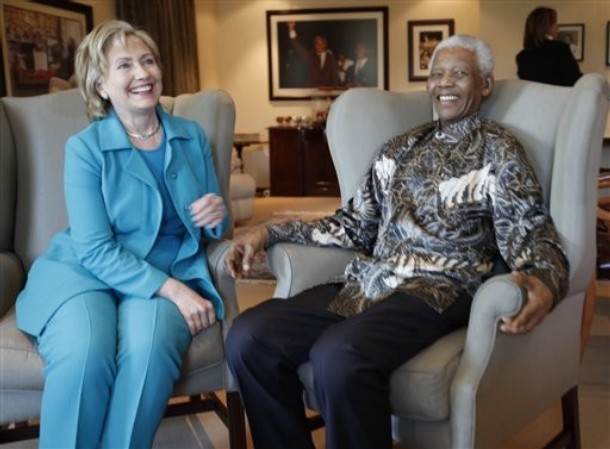
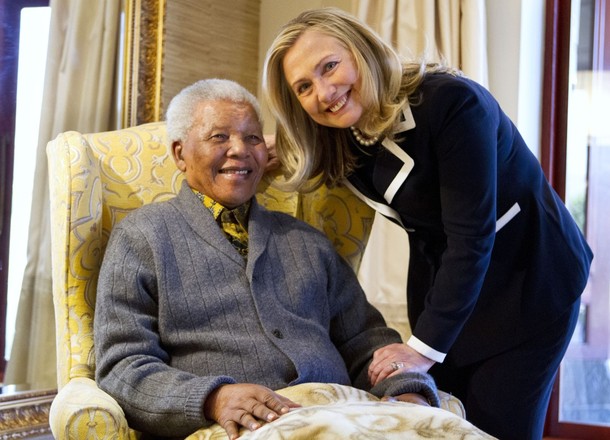
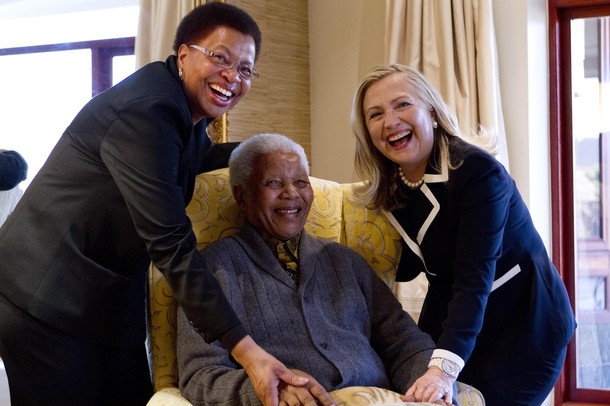
Hillary
begins drawing this Africa chapter to a close in South Africa around
Nelson Mandela beginning with recollections of her visits to South
Africa as First Lady, the second time bringing Chelsea with her. A
lifetime friendship ensued.
August 8, 2009 by
still4hill
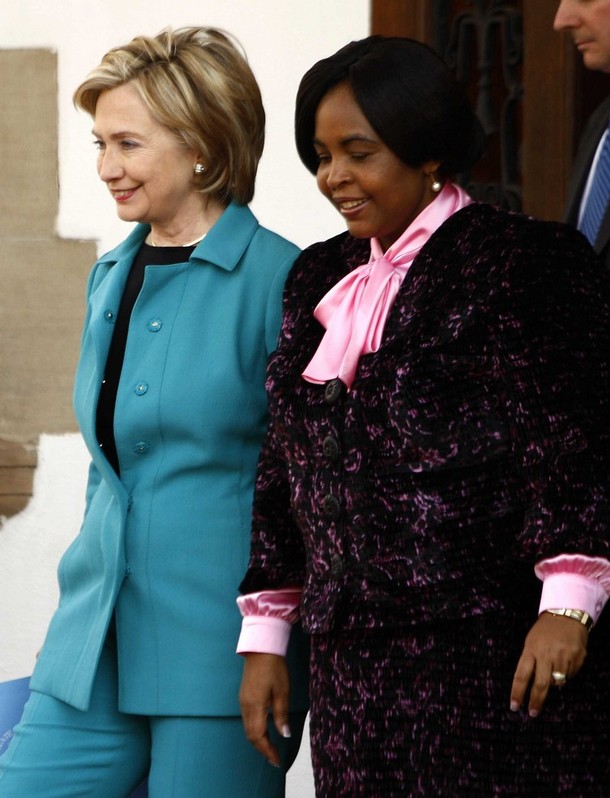
One
working relationship that brought many smiles over the years was her
friendship with South African Foreign Minister Maite Nkoana-Mashabane.
She gave parties for Hillary on both of her visits. There was a rare
snowfall on Hillary's last visit and she was called 'Nimkita' - one who
brings the snow.
August 8, 2009 by
still4hill
August 7, 2012 by
still4hill
August 7, 2012 by
still4hill
August 7, 2012 by
still4hill
Hillary led a delegation of business leaders to this summit. Our friend
Grace Bennett of
Inside Chappaqua accompanied Hillary's traveling press on this trip, and Hillary called her over to meet Maite.
August 6, 2012 by
still4hill
There was one last visit to Nelson Mandela.
August 6, 2012 by
still4hill
August 8, 2012 by
still4hill
She refers to these closing remarks in this speech.
It’s
a burden being an American or a South African, because people expect
you to really live up to those standards. People hold us to a higher set
of standards, don’t they? And we owe it to all who came before, all who
sacrificed and suffered, to do our very best to keep working every
single day to meet those standards. But we mostly owe it to our future.
Many
things have changed since Robert Kennedy came to Cape Town and Nelson
Mandela left Robben’s Island. But some have not. The world we want to
build together still demands the qualities of youth and a predominance
of courage over timidity. So in that spirit, let us work together so
that the values that shaped both our nations may also shape a world that
is more peaceful, more prosperous, and more just.
December 10, 2013 by
still4hill
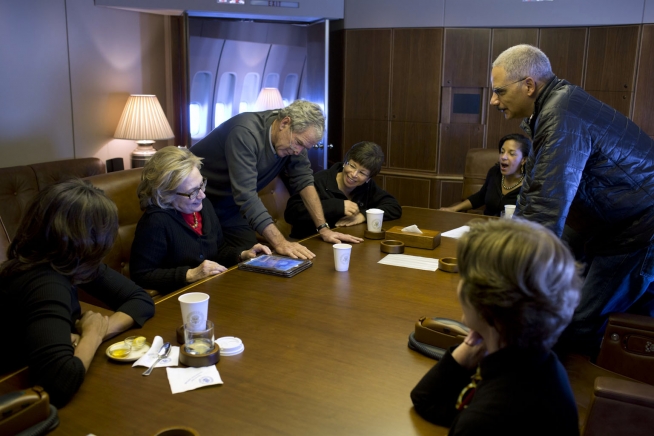
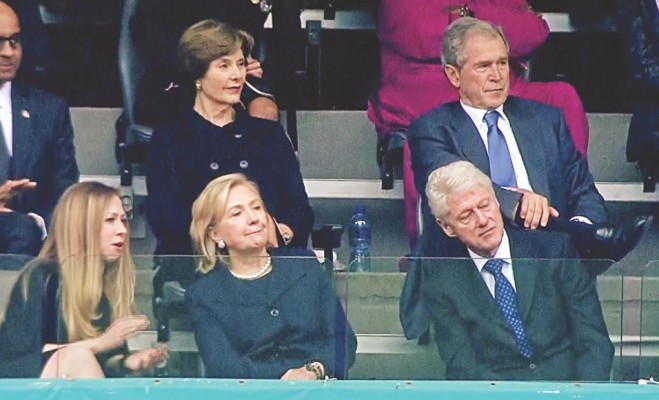
Hillary went on Air Force One with the Obamas and the Bushes. Bill and Chelsea went from Rio.
Hillary ends this chapter with hopes for an Africa worthy of Nelson Mandela's long walk to freedom.
###