The only two people not remaining mindful of the Brussels
attacks, the ongoing police activities, and the implications for
homeland security here in this country are two of the candidates
campaigning to lead us. This should be cause for pause and reflection
on the part of anyone considering voting for them.
After rattling
off, in the wake of the attacks, their slash-and-burn plans for
defeating ISIS, Donald Trump and Ted Cruz moved on to occupy themselves
with attacks that seem, to them, to be much more crucial: personal
accusations that have made their way to tabloids.
To
hear Ted Cruz today, the rhetoric of outrage and indignity indeed
would be appropriate to a terrorist attack - a level we did not hear
from Cruz after the actual bombings. Trump's responses about not
knowing are equally disconcerting.
Someone should do a corpus search of his speeches, interviews, and press conferences for [negatives+know].
It appears Donald Trump knows nothing about anything and represents an
unfortunate throwback to the Know Nothings of the 1840s and 50s who
sought immigration abatement. Why would anyone vote for that?
Hillary
Clinton, meanwhile has delivered a major address and held a round table
on homeland security in the days since the attacks while the two top
Republican guys squabble about personal jabs and tabloid scandals of
questionable sourcing.
Can you imagine what Hillary's campaign would
look like if she concerned herself with tabloid stories? Can you fathom
what critics would be saying about her?
Hillary soldiers on with a
real and doable plan to protect us all and keep us safe from true
danger and terror. Hillary's story is not among the headers on The
Nightly News this evening. The Trump-Cruz story is. What a sad
testament to the duty of the press to inform voters.
Here is Hillary Clinton's response to the true outrage of the week.
“If Mr. Trump gets his way, it will be like Christmas in the Kremlin.”
Tuesday’s
terrorist attacks in Brussels were a horrifying reminder that the fight
against ISIS and radical jihadist terrorism is far from over. Keeping
us safe at home and defeating ISIS and global terrorism abroad are going
to be some of the biggest challenges facing our next
Commander-in-Chief. And that’s why we need to elect a president who’s
prepared to do all parts of the job from day one.
Hillary Clinton
responded to the Brussels attack, explaining her plan to defeat ISIS and
the global terrorist movement, and sharing her vision for the role that
America and our allies must play in the fight against terrorism around
the world. Here’s what you need to know (and you can read her full
remarks here).
1. The threat of terrorism knows no borders—and we aren’t going to stop it with a wall.
In
the past year alone, terrorists have attacked transportation hubs in
Brussels, a nightclub and restaurants in Paris, a office holiday party
in San Bernardino, a hotel in West Africa, a beach resort in Tunisia, a
market in Lebanon, a Russian passenger jet in the Sinai—and too many
other places. The threat of terrorism in the 21st century is real,
urgent, and borderless.
As Hillary said, “Walls won’t protect us from this threat. We can’t contain ISIS—we must defeat ISIS.”
2.
ISIS and terrorist groups like them are constantly adapting and
operating across multiple spaces, so our response needs to be just as
nimble and far-reaching.
Today, ISIS controls a sizable (yet
shrinking) territory in Iraq and Syria—but it also leads a wider network
that reaches across the Middle East and North Africa and into Europe,
Asia, and North America and includes other terrorist groups. To win the
war against global terrorism, Hillary argued that we have to do battle
on each of these fronts.
And she has a plan to do that:
Hillary’s
plan calls for taking out ISIS’s stronghold in Iraq and Syria by
intensifying the current air campaign, stepping up support for local
forces on the ground, and pursuing a diplomatic strategy to resolve
Syria’s civil war and Iraq’s sectarian conflict between Sunnis and
Shias—both of which have contributed to the rise of ISIS.
But we
also have to dismantle the global terror network that supplies money,
arms, propaganda, and fighters. That doesn’t just mean going after
enablers who help jihadist terrorists with things like travel and
document forgery—it also means denying them virtual territory by discrediting their ideology online and stopping their digital recruitment strategies.
And
hardening our defenses and building our resilience at home will help us
discover and disrupt plots before they’re carried out. That requires an
intelligence surge, including partnering with Silicon Valley to track
and analyze ISIS’s social media posts and map jihadist networks online.
As Hillary said, “The tech community and the government have to stop
seeing each other as adversaries and start working together to protect
our safety and our privacy.”
3. Our alliances have been core pillars of American power for decades. They should be reinforced, not abandoned.
America’s
alliances make us stronger. Hillary argued that turning our back on our
European allies who are on the front lines of the war on terror would
be dangerous and foolish, and it would send the wrong signal to our
friends and our foes. “Putin already hopes to divide Europe,” Hilary
said. “If Mr. Trump gets his way, it will be like Christmas in the
Kremlin. It will make America less safe and the world more dangerous.”
What
Republicans like Trump don’t understand is that we need Europe. We need
European intelligence and diplomacy, European banks fighting terrorist
financing, European aircraft flying missions in the Middle East, and
European special forces helping train and equip local forces fighting
ISIS.
In fact, we need Europe to do more—and that’s why
Hillary called on our European partners to take more steps to stop the
flow of foreign fighters to and from the Middle East. Knowing the
identities of every fighter with a European passport who makes the trip,
revoking passports and visas, and sharing information in real time is
essential in this fight. So is a commitment by countries like Belgium to
identify and invest in the neighborhoods, prisons, and schools where
terrorist recruitment happens.
4. Despite what Republican
candidates for president say, we need to rely on what actually works—not
on what makes a catchy sound bite or riles up the base.
Take it
from our nation’s former chief diplomat: Bluster doesn’t work—we can’t
just “carpet bomb” populated areas “into oblivion,” as Ted Cruz has
suggested. Bigotry is also an unacceptable response: Hillary pointed out
that it’s just as dangerous to promote offensive, inflammatory rhetoric
that demonizes all Muslims—the very people who are most likely to
recognize the warning signs of radicalization before it’s too late and
who are in the best position to block it. And torture—a tactic promoted
by Donald Trump—puts our troops and civilians at greater risk. That’s
why Hillary pledged that if she’s elected president, she will never
condone or practice torture anywhere in the world.
So what does
work? Smart, strong, steady leadership from the United States. As
Hillary said, “No other country can rally allies and partners to defeat
ISIS and win the generational struggle against radical jihadist
terrorism. Only the United States can mobilize common action on a global
scale in defense of our peoples and our values. And that’s exactly what
we need to do.” Read more about why Hillary Clinton is the ONLY smart choice >>>>
Voters
need to ask themselves which type of attacks are personal to them: the
verbal kind that target individuals related to a campaign or the
ballistic kind that killed Americans and others in Brussels this week.
Oh, yes he did! I rolled it back just to make sure! Hillary came on
to talk about the terror attacks in Brussels during Blitzer's 1 p.m.
hour today. He called her the "Democratic Presidential Nominee" - so
that happened....
Hillary
called for everyone's cooperation: reminiscent of the "if you see
something say something" campaign in NYC after 9/11. She called for
strong international coalitions to defeat these attacks.
Hillary
is strongly supportive of NATO, and said these attacks are very
personal. She said we have to remain vigilant and that she gives quarter
to nobody.
Meeting With the Staff and Families of the U.S. Missions to the EU and NATO, and U.S. Embassy Brussels
Remarks
Hillary Rodham Clinton Secretary of State
Embassy Brussels, Chief of Mission Residence
Brussels, Belgium
December 4, 2012
AMBASSSADOR GUTMAN: Good
morning. Michelle and I, and actually now that our own son visiting –
Collin is visiting, Collin, we’d like to welcome you all to our home,
which, as all of the Embassy employees know, is your home as well and is
indeed America’s home here in Brussels. And today, I don’t need to tell
you, is truly a special day, a day of thrills. First, it’s always a
thrill when we get together, when we, the members of the tri-missions
all get to be together. It’s a greater thrill to see the families, those
who give so much so that their loved ones can serve our country. And if
you ever want to see the future of a more peaceful and a more secure
planet, you just need to look upon the faces of the kids that were on
the stairs there just taking the pics with the Secretary. You cannot
look at that stair without being encouraged about our future.
And
of course, it’s a thrill whenever I get together with Ambassadors
Kennard and Daalder. I have been very fortunate in the past three years
to get to learn so much from them. As I’ve mentioned previously,
administrations are regarded as successful if 50 percent of their
political selections are top notch. With Bill Kennard and Ivo Daalder,
the Administration is batting 66 percent here in Brussels. (Laughter.)
And
though Ambassador Daalder will introduce the Secretary in just a couple
of moments, it’s an honor and a thrill to welcome Secretary Clinton to
the tri-missions, for it is a true thrill for each of us to have the
opportunity to say thank you, because for you career government and
career State Department employees and for us, those who have been
blessed to serve with you for a few years, and for all of us who work
abroad, we know firsthand what a joy and what an honor it is to
represent the United States of America under President Obama and
Secretary Clinton, what a true source of pride it is for each of us as
people come up to us daily and say once again that they love our
country. For together, President Obama and Secretary Clinton have given
America a new face, a face that shines brightly around the globe, a face
that others now line up to greet and look upon with admiration, with
respect, and with true affection. And it’s not hyperbole, it is the
literal truth, to say there is no country in which that face has made a
bigger difference in the world than here in Belgium, for as many of you
know, of all the countries in the world, Belgium finished first in the
world this year, as of May 2012, with the highest increase in its
favorability rating for the U.S. and for U.S. leadership.
So the
Secretary and all of you have made a powerful team indeed. Through the
transparency and honesty of President Obama and Secretary Clinton and
through your efforts in transmitting that, Belgians have responded like
none other. So we are delighted as surrogates for every tourist who can
now proudly wear their Boston Red Sox and New York Yankees t-shirt in
the Grand Place, for everyone who now carries their guide books face up
and not face down, for every ex-pat who now brags that they have a home
back in the States, for every business who sells more today by
explaining they’re American, we as surrogates thank the Secretary for
changing the face of America, for letting us be ever the more proud once
again.
And now it’s my pleasure to introduce my dear friend, Ambassador Bill Kennard. (Applause.) AMBASSADOR KENNARD:
Thank you, Howard. The Secretary’s time is very short with us today, so
I’m going to be very, very brief. There’s only one thing I want to say,
and that is thank you, thank you, Secretary Clinton, for making time to
be with us here today. And moreover, thank you for the fact that today,
and indeed for the rest of our lives, we will all be proud to be able
to say that we served under the leadership of Secretary Hillary Clinton.
Thank you. (Applause.) AMBASSADOR DAALDER: It’s my great
pleasure and honor to introduce you, Madam Secretary. This is in some
ways a bittersweet moment, a little sad that this is your last visit to
Brussels to the NATO ministerial, but very happy because of all of the
things that you have accomplished for our country, as Bill and Howard
said, but for NATO as well in the last four years.
This is your
ninth NATO ministerial. And when I look back to your first ministerial
four years ago, I can see what an enormous impact you have had on this
alliance. Four years ago, the war in Afghanistan seemed to be going
nowhere, Russia and NATO were not speaking, missile defense in Europe
seemed an impossible dream, and our European allies seemed to be
drifting further and further way from the United States. Today, NATO and
the transatlantic partnership has been revitalized and is more active
than it has ever been before. We’re on a clear timetable to end the war
in Afghanistan, NATO countries are able to ship their supplies to and
from Afghanistan through Russia, and NATO and Russia are talking – not
always the same language, but we’re talking. (Laughter.) NATO missile
defense is a reality, and within NATO our relationship with our European
allies and our non-European partners is closer and more cooperative
than it has ever been.
All of these accomplishments bear your
personal signature and they are a tribute to your perseverance and hard
work and your ability to sleep on airplanes. (Laughter.) I believe
you’ve spent more time in the air than you have on the ground. You’ve
certainly earned more frequent flier miles than all of the air forces of
NATO combined. (Laughter.)
And as you said in your recent speech
at the Brookings Institution in Washington, the United States hasn’t
changed direction; it’s simply come back to its core values. You’ve
spoken up for people and communities who the United States never spoke
up for before. Our foreign policy has become more cooperative, more
thoughtful, and more compassionate. You’ve touched the lives of people
around the world, and all that you’ve done, you’ve done with a smile, a
sense of humor, a kind word, and great, great passion. And no one else
will be able to fill your chair at that big round table at NATO as well
as you have.
I thank you for all you have accomplished and all you
will continue to accomplish after you leave the State Department. Madam
Secretary, it’s a great honor to have you here today. (Applause.) SECRETARY CLINTON:
(Applause.) Thank you. It is truly both an honor and a great pleasure
to be here with all of you in this extraordinary tripartite mission that
has done so much and accomplished such a great deal in the last four
years. I want to begin, of course, to thank our ambassadors here in
Brussels Ivo, Bill, and Howard, or as Howard likes to say, the
intelligent one, the dignified one, and the good-looking one.
(Laughter.) But I’ll leave it to all of you to decide. (Laughter.)
But
I’m sure you will find agreement because the three of these
extraordinary ambassadors have worked so well together. And I also want
to thank Elisa, Deborah, and Michelle because they have been terrific
partners and representatives of our country as well. So I think we
should give a round of applause to our ambassadors and (inaudible).
(Applause.)
Now I am pleased to be back in Brussels. I am sad that
this will be my last official trip, but I am very gratified by the
extraordinary working relationship that all of you have had here in
Brussels and that we have had across the Atlantic. Let me start by
saying a few words about Embassy Brussels because I think Howard was
absolutely right in specifically stating that the work of Embassy
Brussels has fortified our relationship, has built greater mutual
understanding and respect.
In fact, as Howard was referencing, in
2007, only 8 percent of Belgians surveyed had a favorable view of the
United States. Belgian leaders tried to close their ports to U.S. ships
and their airspace to U.S. planes. So this Embassy really went to work,
Americans and Belgians alike. You targeted critical groups, you made
more than one hundred appearances on Belgian TV, and you visited all 589
cities and municipalities – (laughter) – telling the American story
over and over again. So today, that number is at 46 percent. We still
have some ways to go, but that’s a pretty remarkable accomplishment.
Now
of course, we’re not out to win popularity contests. This shift matters
because it produced real results: Belgium agreed to keep its commitment
in Afghanistan until 2014, it supported our having a seat on the UN
Human Rights Council, it was a leader in the mission in Libya. We needed
Belgium as a partner, and that is what’s been accomplished by the work
that all of you have been doing.
Now meanwhile, our NATO team has
been just as busy forging agreement on a new strategic concept for the
future of the alliance, creating consensus among allies on some
especially divisive issues, leading on the conversation about
intervention in Libya. And in the last four years, the number of defense
ministerials, foreign ministerials, and summits have really been
breathtaking. (Laughter.) And through it all, the NATO mission has just
been shining.
I want to take a second to recognize Karen
Pennington, a real star of the Foreign Service. As Ivo says, she is the
true leader of the mission. So Karen, thank you for your hard work.
(Applause.) And of course, the U.S.-EU group, what a tremendous four
years you’ve had. On top of successfully negotiating agreements that
strengthen counterterrorism cooperation, building coalitions that
confront Iran, promoting peace in the Middle East, expanding trade to
our largest economic partner, you have also one of the largest visitor
loads in the Foreign Service. Apparently, I’m told you host state
officials weekly and top officials from all U.S. agencies nonstop,
helping European countries navigate the fiscal crisis. You’ve really
made clear, as President Obama has said, that the United States is here
as a partner, as a friend, to listen as much as to talk.
So I’m
very proud of this extraordinary group of professionals, Americans and
Belgians alike. And I want to recognize the families of those serving in
Afghanistan, Iraq, and Pakistan, along with all of you who have served
in unaccompanied posts. I know it’s difficult, particularly around the
holiday season, but the work you are doing is essential to America’s
security.
And finally, let me thank our incredibly committed and
talented locally employed staff. Will all the Belgians raise your hands?
All of our Belgian partners, colleagues. (Applause.) Well, as you know
very well, ambassadors come and go, secretaries come and go, but you
remain the backbone of this operation, carrying the institutional
knowledge that we need to keep up the good work that has been done. So I
thank you. I thank you for your teamwork, your accomplishments, the
passion and commitment that you bring to each mission here, trying to
build a more just, more prosperous, more free world.
I am really
proud of all of you. I so remember my first trip to Brussels, going to
the EU, going to the Parliament, the Commission. I forget how many other
organizations there are – (laughter) – and then to work with Bill on
the follow-up. And certainly, the memorable day that I walked into NATO
and there was this incredibly positive outpouring of greeting which was
really for our country but which made it clear that people were so happy
that under President Obama, once again, we would be a partner. And of
course, here at the mission, you’ve helped in so many ways to make it
possible for all of us to do our work.
So with that, let me just
shake as many hands as I can before I go off again to NATO, but I hope
each and every one of you have a wonderful holiday season. You are
entitled to a great wheels-up party tomorrow. (Laughter.) This looks
like a pretty good row to have it in. (Laughter.) But know that you have
my gratitude and my great pride in having served with you. Thank you
all very much. (Applause.)
SECRETARY CLINTON:
Good afternoon. I’m very pleased to join Secretary Panetta and our
defense and foreign minister colleagues here in Brussels for this
meeting, the joint ministerial of NATO, to prepare for the upcoming NATO
summit in my birthplace, Chicago. The main focus of our conversations
today was Afghanistan, which I will focus on tomorrow at the meeting of
our ISAF partners. But let me say how grateful the United States is for
the solidarity and steadfastness of our NATO allies and ISAF partners.
As difficult a week as this has been in Kabul and other parts of
Afghanistan, the big picture is clear. The transition is on track, the
Afghans are increasingly standing up for their own security and future,
and NATO remains united in our support for the Lisbon timetable, and an
enduring commitment to Afghanistan. The attacks in Kabul this week show
us that while the threat remains real, the transition can work. The
response by the Afghan National Security forces were fast and effective,
and the attacks failed. Not long ago, this kind of response by Afghans
themselves would not have been possible. So the Afghans are proving
themselves increasingly ready to take control of their own future.
Now by their nature, transitions of any kind are challenging. There
will be setbacks and hard days. But clear progress is happening, and
today, NATO reaffirmed our commitment to stand with the Afghans to
defend stability and security, to protect the gains of the last decade,
and to prevent there ever being a return of al-Qaida or other extremists
operating out of the Afghan territory.
Both Secretary Panetta and I were impressed by how united the NATO
allies are in supporting the Lisbon timetable. We are on track to meet
the December 2014 deadline for completing the security transition.
Already 50 percent of the Afghan people are secured primarily by Afghan
forces, and by this spring, it will be 75 percent. Today, we worked on
the three initiatives for the Chicago summit next month.
First, we will agree on the next phase of transition to support our
2014 goals. Second, we want to be ready to define NATO’s enduring
relationship with Afghanistan after 2014. And third, we are prepared to
work with the Afghans to ensure that the Afghan National Security force
is fully funded. NATO is united behind all these goals, so we are
looking forward to a very productive summit in Chicago.
But let’s keep in mind that the transition and NATO’s mission are
part of a larger enterprise, one that also has political and economic
dimensions. Afghanistan’s neighbors have a central role to play in that
larger enterprise along with the international community. Our common
approach was sharpened when the international community met in Istanbul
and Bonn last year, and will be carried forward when we meet again in
Chicago, Kabul, and Tokyo this year.
So beyond NATO, many nations are invested in Afghanistan’s future and
are providing support for the Afghans to attain self reliance,
stability, and further their democratic future. They have to protect,
however, as they go through this transition, their hard-fought political
and economic and human rights progress. Incidents like the one we heard
of yesterday when 150 Afghan girls became sick after the water at their
school was poisoned, reminds us that there are people who would destroy
Afghanistan’s long-term future in order to restrict the rights of women
and girls. Human rights protections for religious and ethnic minorities
are also still fragile. Universal human rights are critical to
Afghanistan’s security and prosperity, and we will continue to make them
a priority.
While NATO has worked very hard to assist the people of Afghanistan,
NATO has also been changed by this experience. The alliance is now a
leading force for security, not just in the Atlantic region, but
globally. We are steadily deepening and broadening the partnerships NATO
has with dozens of countries around the world, and our partners are
adding valuable capability, legitimacy, and political support to NATO’s
operations and missions from the Mediterranean and Libya to Kosovo and
Afghanistan.
So we believe we are building a stronger, more flexible, more dynamic
alliance enriched by partners from every continent and prepared to meet
the security challenges of our time. With that, let me turn the floor
to Secretary Panetta. SECRETARY PANETTA: Thank you. Good afternoon. It’s a pleasure
to join Secretary Clinton here in Brussels. We had a very good series of
meetings today with our NATO defense and foreign minister counterparts.
Much of our discussion focused on our shared effort in Afghanistan, and
what came out of these meetings was a strong commitment to sticking to
the plan and the strategy that has been laid out by General Allen, and
finishing the job in Afghanistan. Allies and partners have a very clear
vision and a very clear message. Our strategy is right, our strategy is
working, and if we stick to it, we can achieve the mission of
establishing an Afghanistan that can secure and govern itself, and never
again become a safe haven for terrorists to plan attacks on our country
or any other country.
All of us are committed to the goals that were set out in the Lisbon
framework, including continuing the transition to full Afghan security
leadership by the end of 2014. We know there will be continuing
challenges, and we saw some of those challenges over this last weekend.
This is a war. There will be losses, there will be casualties, there
will be incidents of the kind that we have seen in the last few days.
But we must not allow any of that to undermine our commitment to our
strategy.
The fact is, with regards to the events that took place over the
weekend, we saw Afghan security forces do what we have trained them to
do. They responded quickly, professionally, and with great courage,
rendering ineffective those largely symbolic attacks that we saw in and
around Kabul.
General Allen said he visited an Afghan special operations commando
who had been wounded in the insurgent attacks and asked him if he could
do anything for him. The Afghan commando’s response was, and I quote, “I
just want to get back out there with my brother soldiers,” unquote.
That short phrase speaks volumes. As General Allen has made clear,
history proves that insurgencies are best and ultimately defeated not by
foreign troops but by indigenous security forces, forces that know the
ground, that know the territory, that know the culture, that know the
neighborhood. When the Afghans do their job, we are doing our job. When
the Afghans win, we win.
And the Afghans are making progress. They are in the lead now in
areas that encompass more than 50 percent of the population in
Afghanistan. When the third tranche of areas are transferred, we will
have 75 percent of the population under Afghan governance and security.
They have been in the lead for counterterrorism night operations since
December. And now, thanks to a memorandum of understanding that was
recently signed, all of these operations will fall under the authority
of Afghan law. In less than six months’ time, Afghan security forces
will take full leadership of detention operations, thanks again to
another agreement that was signed recognizing Afghan sovereignty.
As I’ve said, 2011 was a real turning point. It was the first time in
five years that we saw a drop in the number of enemy attacks. Over the
past 12 weeks, enemy attacks continue to decrease compared to the same
period in 2011. Taliban has been weakened, Afghan army operations are
progressing, and the reality is that the transition to Afghan security
and governance is continuing and progressing.
We see other signs that we are seriously degrading the insurgency. By
January 2011, 600 Taliban had integrated into the society. This month,
that number topped 4,000. We intend to build on this success. We’re
committed to an enduring presence in Afghanistan post-2014 and a
continuing effort to train, advise, and assist the ANSF in protecting
the Afghan people and denying terrorists a safe haven. We cannot and we
will not abandon Afghanistan. The key to our enduring partnership is
continued international support. We cannot shortchange the security that
must be provided by the Afghan forces now and in the future.
Today, I will also discuss with my NATO counterparts the steps needed
to ensure that the alliance has the right military capabilities for the
future. Across the board, allies are making important commitments to
smart defense, with opportunities for new capabilities in ISR, missile
defense, and air-to-air refueling. While significant progress has been
made, important work lies ahead. The NATO we build is not only the force
of today; it must be the force of 2020.
I’m pleased to announce that earlier today, along with Czech Defense
Minister Vondra, I signed the Reciprocal Defense Procurement Agreement
with the Czech Republic. The agreement reaffirms the importance and
vitality of the U.S.-Czech defense relationship and enhances our
cooperative security relationship. And as you know, this is the last
high-level meeting before the Chicago summit in May. I think Secretary
Clinton and I will take back to President Obama the results of these
discussions. And I believe we have helped lay the groundwork for a very
successful summit, and most importantly, for a strong and enduring NATO
alliance. MS. NULAND: We’ll take three today. Let’s start with Reuters. Arshad Mohammed, please. QUESTION: Madam Secretary, I’m sure that you will have seen
that the violence – the government violence continues in Syria. Homs
continues to be shelled, I think almost every day since the ceasefire
ostensibly took effect. And the Syrian foreign minister has pushed back
against the kind of mission that Kofi Annan would like to insert, saying
that it should be no more than 250 monitors, they don’t need their own
helicopters and mobility, and they should be from friendly countries.
Given this, is it now time for the United States to look harder at
whatever kinds of pressure can be brought to bear against the Assad
government? And specifically, are you giving any more thought to
rethinking your previous opposition to others arming the rebels? And are
you giving any more thought to trying to get the Arabs to impose a more
forceful sanctions regime on Syria? SECRETARY CLINTON: Well, Arshad, first of all, Syria was a
subject of conversation among many of our allies today. Every country in
NATO is watching the situation with concern. I don’t want to prejudge
what does or does not happen with the observers. The first tranche of
the UN monitors is just beginning to deploy. It is, obviously, quite
concerning that while we are deploying these monitors pursuant to a
Security Council resolution that confirms our commitment to Kofi Annan’s
six-point plan, the guns of the Assad regime are once again firing in
Homs, Idlib, and elsewhere, and Syrians continue to die. So we are
certainly cognizant of the very challenging road ahead. We are all here,
united in favor of Kofi Annan’s plan and his urgent call for a robust
monitoring force.
But we are at a crucial turning point. Either we succeed in pushing
forward with Kofi Annan’s plan in accordance with the Security Council
direction, with the help of monitors steadily broadening and deepening a
zone of non-conflict and peace, or we see Assad squandering his last
chance before additional measures have to be considered.
Now, we will continue to increase the pressure on Assad. I spoke with
several ministers about the need to tighten sanctions, tighten pressure
on the regime, on those who support the regime. And we also are going
to continue pressing for a political solution, which remains the goal of
Kofi Annan’s plan and the understandable goal of anyone who wants to
see a peaceful transition occur in Syria.
I also would add that I’ve only spoken for the United States. The
United States is not providing lethal arms, but as I’ve said before, the
United States is providing communications and logistics and other
support for the opposition. And we will continue to do everything we can
to assist the opposition to be perceived as – and in reality become –
the alternative voice for the Syrian people’s future.
And make no mistake about it; this conflict is taking place right on
NATO’s border. We saw, just last week, the shelling across the borders
into Turkey and into Lebanon. Our NATO ally, Turkey, has already
suffered the effects of not only the influx of refugees that it is very
generously housing, but also having two people killed on their side of
the border because of Syrian artillery.
So we will remain in very close touch as events unfold. I look
forward to continuing our consultations tomorrow at the ad-hoc group
meeting that will be hosted by Foreign Minister Juppe in Paris.
But as I have reiterated, we will judge the Assad regime by their
actions, not their words. We have been working to try to reach consensus
in the Security Council, which we did in support of Kofi Annan’s
six-point plan. The burden has shifted, not only to the Assad regime,
but to those who support it to be forced to explain why, after time and
time again stating that they will end the violence, the violence
continues. So obviously, this is going to be a very high priority for
all of us going forward. QUESTION: Is it okay for others to arm any rebels? SECRETARY CLINTON: I’m not speaking for anyone but the United States of America. MODERATOR: The next question will be from Anne Gearan of the Associated Press. QUESTION: Yes. To both of you, please, could I ask you to
comment on publication today of photos purportedly showing U.S. troops
posing with the corpses of Taliban militants? What did you think when
you heard about this? What did you think when you saw the photos? And
doesn’t this sort of undermine all the progress that you claim and the
strategy you laid out just a moment ago?
Secondly, if I could ask each of you to respond to President Karzai’s
remark yesterday that he would like a firm written commitment of 2
billion a year from the United States for security forces. Should he be
concerned that you’re going to renege on that promise? And why doesn’t
he just take your word for it? SECRETARY PANETTA: With regards to the photos, I strongly
condemned what we see in those photos, as has General Allen. That
behavior that was depicted in those photos absolutely violates both our
regulations, and more importantly, our core values. This is not who we
are, and it’s certainly not who we represent when it comes to the great
majority of men and women in uniform who are serving there.
I expect that the matter will be fully investigated. That
investigation has already begun. This is a matter that goes back, I
believe, to 2010, but it needs to be fully investigated, and that
investigation, as I understand, is already underway. And wherever those
facts lead, we will take the appropriate action. If rules and
regulations were found to have been violated, then those individuals
will be held accountable.
Let me also say this: This is war. And I know that war is ugly and
it’s violent. And I know that young people sometimes caught up in the
moment make some very foolish decisions. I am not excusing that. That’s –
I’m not excusing that behavior. But neither do I want these images to
bring further injury to our people or to our relationship with the
Afghan people. We had urged the L.A. Times not to run those
photos, and the reason for that is those kinds of photos are used by the
enemy to incite violence, and lives have been lost as a result of the
publication of similar photos in the past, so we regret that they were
published. But having said that, again, that behavior is unacceptable,
and it will be fully investigated.
With regards to President Karzai’s comment, we – as both the
Secretary of State and I know from our own experience, you have to deal
with Congress when it comes to what funds are going to be provided. And
we don’t, nor do – we do not have the power to lock in money for the
Afghans or anybody else. QUESTION: Did you apologize on behalf of the United States for those photos or the actions depicted in them in your meetings today? SECRETARY PANETTA: I was not asked about it, but obviously, my apology is on behalf of the Department of Defense and the U.S. Government. QUESTION: Thank you. MODERATOR: And the final question will come from Petro Dekurning of NRC Handelsblad, a Dutch newspaper. QUESTION: Madam Secretary, the secretary general told us that
some allies already came up with contributions for the Afghan army after
2014. Are you satisfied with this? And while this was not a pledging
conference, what do you expect? What amounts do you expect from the
allies to come up with? Thank you. SECRETARY CLINTON: Well, we were very encouraged by the
commitment from the NATO allies to the funding of the Afghan National
Security Forces. We believe that we are on the path to ensuring that
these security forces, which, as Leon has just said, made such progress
because of our training and mentoring over the last few years, will have
the resources necessary to protect the Afghan state and the Afghan
people. So I’m going to let individual countries make their own
announcements.
But as we move forward toward the NATO summit, one of the goals is to
ensure that NATO has an enduring relationship with Afghanistan, and in
many ways, not just in terms of financial commitments, but in other ways
as well. A lot of the member countries are stepping up and talking
about what they intend to do. And similarly, tomorrow, we expect to hear
from a number of our ISAF partners about their continuing commitment as
well. So I think both Leon and I were encouraged and believe we’re
making progress. MS. NULAND: Thank you very much.
U.S. DEPARTMENT OF STATE PUBLIC SCHEDULE WEDNESDAY, APRIL 18, 2012
SECRETARY HILLARY RODHAM CLINTON
Secretary Clinton is on foreign travel in Brussels, Belgium to
participate in a joint meeting of NATO foreign and defense ministers.
Secretary Clinton is accompanied by Assistant Secretary Gordon,
Spokesperson Nuland, Director Sullivan, VADM Harry B. Harris, Jr., JCS,
and Special Assistant to the President for National Security Affairs and
Senior Director for European Affairs Liz Sherwood Randall. Please click
here for more information.
12:15 p.m. LOCAL Secretary Clinton holds a bilateral meeting with Belgian Prime Minister Elio Di Rupo, in Belgium, Brussels. (POOLED CAMERA SPRAY PRECEDING BILATERAL MEETING) 1:10 p.m.LOCAL Secretary Clinton attends the NATO Foreign and Defense Ministers luncheon, in Brussels, Belgium. (CLOSED PRESS COVERAGE) 1:50 p.m. LOCAL Secretary
Clinton and Defense Secretary Leon Panetta meet with NATO Secretary
General Anders Fogh Rasmussen, in Brussels, Belgium. (POOLED CAMERA SPRAY PRECEDING MEETING)
2:15 p.m.LOCAL Secretary Clinton participates in the joint meeting of NATO Foreign and Defense Ministers, in Brussels, Belgium. (CLOSED PRESS COVERAGE)
4:00 p.m. LOCAL Secretary Clinton holds a bilateral meeting with Georgian Foreign Minister Grigol Vashadze, in Brussels, Belgium. (POOLED CAMERA SPRAY PRECEDING BILATERAL MEETING)
4:30 p.m. LOCAL Secretary Clinton holds a bilateral meeting with Belgian Foreign Minister Didier Reynders, in Brussels, Belgium. (POOLED CAMERA SPRAY PRECEDING BILATERAL MEETING)
5:00 p.m. LOCAL Secretary Clinton holds a bilateral meeting with Romanian Foreign Minister Cristian Diaconescu, in Brussels, Belgium. (POOLED CAMERA SPRAY PRECEDING BILATERAL MEETING)
6:10 p.m.LOCAL Secretary Clinton holds a joint press availability with Defense Secretary Leon Panetta, in Brussels, Belgium. (OPEN PRESS COVERAGE)
7:00 p.m.LOCAL Secretary Clinton attends a working dinner for the North Atlantic Council, in Brussels, Belgium. (CLOSED PRESS COVERAGE)
SECRETARY CLINTON:
Very much like the logo, a great image of the skyline, which I know
very well. I want to thank the Secretary General as he leaves, for his
outstanding leadership and the opportunity that we’ve had to work
together. And we’ll continue to be working closely together in the
run-up to our summit in Chicago next May.
This year has been one
of great change, and we see democratic transitions under way. We see –
for the United States, troops and diplomats deploying. But some things
never change, including our commitment to this alliance, which has been
the bedrock of our security for more than half a century. And the wide
range of issues that we discussed jointly yesterday and today proves
just how essential this relationship is.
Let me give you a brief
readout. We obviously discussed our plans for the Chicago summit. At the
previous NATO summit in Lisbon, leaders adopted a new strategic concept
to define NATO’s approach to countering 21st century threats
from ballistic missiles to cyber attacks. And in Chicago, appropriately
enough, we will put meat on the bones of this strategic concept,
including ways to pool our resources and spend smartly in an era of
tight budgets. We will also continue to strengthen our ties with NATO’s
partners. Our partnership in Libya proved once again what we can
accomplish together, and we want to build on that progress.
We
also discussed Afghanistan. Coming off of the Bonn conference Monday and
then the ISAF meeting today, we set a clear message that transitioning
security to Afghan lead marks the beginning of a new phase of support -
not the end of our commitment, nor the end of our efforts. And today, I
encouraged our allies to better define NATO’s enduring partnership with
Afghanistan, including its post-2014 mission to support the Afghan
national security forces and to provide a strong base on which
Afghanistan can build a stable, peaceful future. We are hoping that
allies will come to Chicago prepared to pledge long-term funding to
sustain the Afghan national security forces.
We also discussed the
situation in the north of Kosovo. NATO’s troops there, known as KFOR,
have made notable progress in restoring peace. But in recent months,
violence has returned and Serb hardliners have barricaded roads, pushing
the region into a very dangerous position. We deplore violence against
our KFOR troops and reiterated our insistence that freedom of movement
must be restored for KFOR, for the European Union mission known as
EULEX, E-U-L-E-X, and all other parties in the north.
We met with
Foreign Minister Lavrov at the NATO-Russia Council and reviewed the work
we are doing together in Afghanistan on counter-piracy, on
counter-narcotics, just to name a few of the areas. I announced that the
United States will increase our support for the joint NATO-Russia
Counter Narcotics Program, which will allow us to double the training
resources we provide for law enforcement officers in Afghanistan,
Pakistan, and Central Asia. The fight against the drug trade is of
crucial importance, first and foremost to the people of the region, but
then to NATO allies and Russia as well.
Now, of course, it’s
obvious to State that areas of disagreement remain between NATO and
Russia and we maintain a candid dialogue on these tough issues in our
Council. Today we discussed two in particular: First, missile defense. I
made clear that we will proceed with deploying missile defenses to
defend NATO territory, as the alliance agreed to in Lisbon. I also made
clear our hope to find a common approach on missile defense and to build
on practical steps that we have already agreed to, like the missile
defense joint exercise planned for next spring.
And second, we
discussed the need to renew cooperation on conventional arms control. We
have had a profound gap in knowledge and mutual confidence since the
Russian Government unilaterally suspended implementation of its CFE
Treaty obligations in 2007, and we need to close that gap.
So it’s been another productive ministerial, and I look forward to taking your questions. MS. NULAND: We’ll take four today. First one, Reuters, Arshad Mohammed. And we need a microphone. Right here. Thanks. QUESTION:
Secretary Clinton, earlier today, Russian Prime Minister Vladimir Putin
essentially accused you of fomenting the protests in Russia with your
comments earlier this week. How do you respond to that, and what does it
say about US-Russian relations when the Prime Minister would
effectively accuse you of interfering in their domestic politics? SECRETARY CLINTON:
Well, I think it’s important to recognize that we value our
relationship with Russia. We have invested a great deal of effort into
working together, not only bilaterally, but through NATO. And we think
we've made real progress in a number of areas of cooperation.
At
the same time, the United States and many others around the world have a
strong commitment to democracy and human rights. It's part of who we
are. It's our values. And we expressed concerns that we thought were
well-founded about the conduct of the elections. And we are supportive
of the rights and aspirations of the Russian people to be able to make
progress and to realize a better future for themselves, and we hope to
see that unfold in the years ahead. MS. NULAND: Next question, Alexandra Mayer-Hohdahl from DPA. QUESTION:
Hello. The Russian ambassador today again made the link between the
negotiations on missile defense and the Afghanistan supply routes. The
Secretary General yesterday dismissed this kind of rhetoric as an empty
threat. What are your thoughts and how would the U.S. react if the
supply routes were shutdown in the worst-case scenario? SECRETARY CLINTON:
Well, first of all, we’ve had very good cooperation on the supply
routes. The northern distribution network that has been established and
broadened over the last three years is a very good example of Russian –
U.S. and Russian-NATO cooperation and we think it is mutually beneficial
to all of us.
And with missile defense, we recognize that we are
not in agreement and therefore we have to keep working to try to forge
agreement, and we had a healthy airing of views today in the NATO-Russia
council, and I think that’s in keeping with our decision two years ago
to reinstate the council. It was one of the first debates that I was
part of here at NATO. We’ve always said that we wanted it to be an
all-weather forum, so when times are good, we have a chance to share our
views, and when there are issues to be resolved, we will not shy away
from doing so. And I think it was evident today that that’s exactly how
it is functioning.
So, we will continue to press forward on
missile defense. We’ve been open and transparent about our system with
the Russians. We’ve explained through multiple channels that our planned
system will not and cannot threaten Russia’s strategic deterrent. It
does not affect our strategic balance with Russia, and it is certainly
not a cause for military countermeasures.
And that said, no ally
within NATO is going to give any other country outside the alliance, a
veto over whether NATO protects itself by building a missile defense
system, against the threats that we perceive are the most salient.
Ballistic missiles against the territory we are all pledged to protect
are not coming in the future from Russia, in our assessment, but from
other locations. And therefore this is not directed at Russia, it is not
about Russia, it is frankly about Iran, and other state or non-state
actors who are seeking to develop threatening missile technology. So we
will continue to be open, transparent, but also very strongly in support
of both our views and our values. MS. NULAND: Next question, Lachlan Carmichael, AFP. QUESTION:
Hello, Madam Secretary. On Afghanistan, President Karzai has blamed
Lashkar-e-Jhangvi, yet another group, for being responsible for an
attack, this time against Shiites – an unprecedented one. What does this
say about U.S. efforts to have Pakistan curb such militant groups? And
lastly if I may add, President Zardari is apparently in the hospital in
Dubai – there is some concerns that it’s not just health, that he may be
pushed out for political reasons. But at any rate, what does this say
about your efforts to shore up civilian rule, if indeed Zardari does not
return to his leadership role? SECRETARY CLINTON:
Well, on the second question first, Lachlan, we have no reason to
speculate about that. The information that we have is that he has sought
medical treatment for a number of medical challenges and we wish him a
speedy recovery and certainly we expect that he will receive the
treatment he is seeking and then be able to return in full health to his
duties.
We are deeply concerned, as we have been, about the
continuing terrorist threat from Pakistan. And we have expressed to the
leaders of Pakistan, time and again, the importance of our working
together to tackle these terrorist groups, because they threaten, first
and foremost, Pakistan, as well as Afghanistan. And then beyond, if left
unchecked. And we firmly believe that the best way to combat them is
for Pakistan, Afghanistan, NATO, ISAF to all be working together, which
is what we have been doing. And I think by the most objective measures,
we’ve made tremendous progress in bringing security to many parts of
Afghanistan. The Afghan National Security Force has made steady
improvement in being able to take responsibility for security. Now it’s
up to nearly 50 percent of the people in the country who will be
protected by primarily by their own forces. We’ve reversed the momentum
and advance of the Taliban and more Afghans live in security.
But
having said that, we know that these terrorist groups pose a threat to
every country. We spent an enormous amount of time, effort, and
resources, as do our friends in Europe, protecting ourselves against
these plots. So it’s unfortunate that they can get through anywhere and
cause such mayhem, as they have recently in several cities in
Afghanistan, but that is just a continuing challenge that we have to
help the Afghans address. They do not have anything like the resources,
anything like the technology, anything like the networks that we have to
protect ourselves and our other friends and allies in advanced
economies. So of course it’s going to be a greater challenge. But it
needs to be seen in context of the overall security situation in the
country. MS. NULAND: And last question today: Anna Hernandez, Europa Press. QUESTION: Thank you, Secretary Clinton. I’m over here. SECRETARY CLINTON: I’m sorry. QUESTION: I’m over – SECRETARY: Where are you? Oh, there you are. QUESTION: I’m
over here. Thank you so much. Do you agree with the statement that
ex-Russian president Gorbachev, asking for a rerun of the elections,
given the important flaws?
And my second question, if I may, it’s
on the very important summit of the European leaders today and tomorrow
to try and resolve the crisis. U.S. has publicly gone out with
statements really, really stating that Europe needs to solve the crisis
and it needs to do it right now. Are you confidence that this will
happen? Particularly since the rest of the international community – and
I’m thinking particularly of strong International Monetary Fund members
– have not been too willing to help financially Europe, seeing, as they
say, that Europe is rich anyway.
Thank you so much. SECRETARY CLINTON: Well,
with respect to your first question, I think those kinds of decisions
will have to be left up to the government and people of Russia.
Obviously that’s an area that deserves attention. The OSCE monitors, who
were there for the elections, either already have or are about to
submit a report with a number of recommendations, which I think should
also merit attention. So we hope that there will be decisions made that
reflect the significance, having free, fair, credible elections.
On
the issue of the Euro Zone, as you know, Secretary Geithner has been in
Europe this week. He is continuing the close consultation that our
government has had with both individual governments and with the
European leadership, on the Euro Zone crisis. And we are very committed
to and hopeful for decisions coming from Europe’s leaders that will put
forth a way forward that everyone can rally behind. And that includes
the entire world, not just Europe and the United States.
And as
President Obama said during last week’s EU-U.S. summit in Washington,
the United States stands ready to do our part. We want to help you
resolve this crisis because it’s the right thing to do. As we meet here
in NATO headquarters, Europe is at the heart of NATO and the
Transatlantic Alliance, which is critical to our security. Resolution of
Europe’s economic challenges is beneficial to our own economic fortune.
So,
we see ourselves as your partner, your supporter, your friend, going
forward. We have a great stake in Europe’s success. We will continue to
work constructively with our European partners. And we are confident you
will succeed. We have great confidence in Europe. There is absolutely
no doubt about that. But we do need a plan to rally behind, in order to
know the way forward. And so we look forward to hearing the results of
the deliberations that will be coming forth in the next day or two.
Thank you all very much.
Did I have any intention of mounting a slideshow tonight? Not really, but when I finished gathering the pics of the day, I realized that these cry out to be shared. Mme. Secretary began the day in Geneva and continued her busy schedule in Brussels. The pics are in no particular order. We see her surrounded by admiring gents (as usual), but then there is this mysterious frock!
Back in early 2009 when she made her first trip as Secretary of State and disembarked in Japan wearing that coat
(see sidebar) we called it her "Rainbow Tour." I called another trip
"The Rainbow Tour II" That appears to be Ambassador Scobey in the
sidebar where HRC is wearing the beautiful technicolor coat, so that
must have been a trip that included Egypt. Well, to quote Tim Rice,
"Lookout mighty Europe!" The Rainbow is back! This definitely
qualifies as III!
Philip H. Gordon Assistant Secretary, Bureau of European and Eurasian Affairs
Via Teleconference
Washington, DC
October 8, 2010
OPERATOR: Welcome and thank you for standing by. At this time, all participants are in a listen-only mode. During the question-and-answer session, please press *1 on your touchtone phone. Today’s conference is being recorded. If you have any objections, you may disconnect at this time. And now, I’ll turn today’s meeting over to Mr. Mark Toner. You may now begin, sir. MR. TONER: Good morning. Thanks, everyone for joining us, and thanks, especially, to Assistant Secretary Gordon for taking time out of his very busy morning just to walk us through the Secretary’s trip to the Balkans as well as Brussels, next week. Just a reminder, this is on the record and you can use the audio for broadcast as well. And just, if you ask questions, please give your name and media affiliation. And without further ado I’ll hand it over. Phil. ASSISTANT SECRETARY GORDON: Thanks, Mark. Good morning, everybody, and thanks for coming on the call. I’ll be very brief so we can spend our time on your questions. As you know, from October 11 to 14th, Secretary Clinton will travel to Bosnia and Herzegovina, Serbia, Kosovo, and Brussels. She’s going to the Balkans to underscore the continued commitment of the United States to supporting all the Balkan states as they build prosperous, peaceful, and democratic societies and move to take their rightful places as full members of the European and Euro-Atlantic community. Secretary Clinton’s visit follows the important trip that Vice President Biden took in May 2009, as well as several others by Deputy Secretary Steinberg, myself, and others in the Administration over the past year. In the Balkans, the Secretary will meet with a range of government officials, civil society representatives, and she will attend events with citizens of these countries. She will take stock of progress in the region, exchange ideas, and engage with these groups on a range of issues. In Brussels, the Secretary will participate in meetings with EU officials and NATO counterparts to strengthen and cement U.S. partnership with the EU and work with allies on the revitalized NATO. Let me just walk you through what she’s actually going to do. On Tuesday the 12th, in Sarajevo, the Secretary will meet with the Bosnian tri-presidency as well as High Representative Valentin Inzko. She will also dedicate the new embassy compound in Sarajevo which is scheduled to open shortly. On the 12th, in Belgrade, the Secretary will meet with President Tadic, Foreign Minister Jeremic, and Defense Minister Sutanovac. That evening, she will also meet with members of civil society. On Wednesday, October 13th, in Kosovo, the Secretary will meet privately with acting President Krasniqi, Prime Minister Thaci, and Foreign Minister Hyseni. She will then travel to Gracanica, a Serb-majority municipality near Pristina where she will meet with municipal leaders in the Kosovo-Serb community. After she gets back to Pristina, she will hold a meeting with women’s leaders, other civil society leaders, and youth from all ethnic groups. In all of these stops – Sarajevo, Belgrade, and Pristina – the Secretary will participate in various media events as well as embassy meet-and-greet. Continuing on to Brussels, on October 14th, the Secretary will meet with EU Council President Van Rompuy and EU High Representative Baroness Ashton, followed by a meeting with European Parliament President Buzek and other EU Parliamentary leaders. Secretary will then join Secretary Gates for a joint NATO ministerial, bringing together foreign and defense ministers from NATO countries. The ministerial will be an opportunity to review progress on the new strategic concept and in the war in Afghanistan. She will then depart Brussels on the evening of the 14th for Washington. That’s my summary and I’m happy to take your questions.
SECRETARY CLINTON:
Let me start by saying what a pleasure it is for me to be back here in
Brussels again and on my first visit to NATO as Secretary of State. I
came here to deliver a clear message: The United States is firmly
committed to NATO, and the Obama Administration will work vigorously to
renew a real dialogue within this alliance. We look forward to
listening, to consulting, and to working in concert to devise and
deliver smart solutions to our shared challenges. As I said to
my colleagues, this is not only of great importance to my country and
President Obama; it is of great personal importance to me as well. When
NATO expanded in the 1990s, I was privileged to visit many new NATO
nations as well as longstanding ones. I witnessed firsthand the strength
of this alliance, and we in the United States were honored to host the
50th anniversary of NATO. We’ve had a very
productive set of sessions today. Last night at a wonderful dinner
hosted by the Belgian foreign minister, I reported to both NATO and EU
foreign ministers on my visits to Sharm el-Sheikh, Jerusalem, and
Ramallah, and we engaged in a wide-ranging discussion on a number of
issues. Today, we made real progress on key items of our
agenda. First, we expressed a unity of purpose with respect to
Afghanistan, NATO’s most important ongoing operation. In Afghanistan and
in the border regions of Pakistan, we face a common threat, we have a
common challenge, and we share a common responsibility. The
United States is working to complete our strategic review of the way
forward, and today we found broad agreement on some of the basic
elements of a new strategy: first, a regional approach that looks at
Afghanistan and Pakistan together; second, increased and integrated
civilian and military commitments; third, a strong partnership with the
people of Afghanistan to provide security for safe and fair elections in
August; next, intensive development efforts to strengthen governance
and promote economic opportunities; and finally, a closer relationship
working with the people and Government of Pakistan. Now,
today was not a pledging conference, but all of the participants
recognized the need for increased resources and manpower to meet the
challenges we face in the region. Our consultations will continue when
Vice President Biden comes here next week to consult with NATO about not
only how our strategic review is moving, but to solicit last-minute
opinions from all who wish to participate, and to also seek initial
responses with respect to individual countries as well as NATO’s future
contributions. We also today had a vigorous discussion about
Russia. I thought it was absolutely invigorating to have the kind of
true debate that exists among friends and allies over such an important
issue. We emerged with greater unity of purpose about how to build a
constructive relationship with Russia and a stronger consensus about our
relations with the emerging nations of Europe’s east. While
the alliance won’t agree and indeed need not agree on every issue
relating to Russia, we can and do agree that we must find ways to work
constructively with Russia where we share areas of common interest. We
also agree we must find ways to manage our differences with Russia where
they persist, and stand firm where our principles or our vital
interests are at stake. NATO today agreed to restart the
NATO-Russia Council as a mechanism for dialogue on issues both where we
disagree, such as in Georgia, as the Secretary General noted, and a
platform for cooperation that is in our interest, like transit to
Afghanistan or nonproliferation. Tomorrow in Geneva, I will be meeting
with Russian Foreign Minister Lavrov to discuss a wide range of critical
matters where we can cooperate and those where we have differences. Thirdly,
today we laid the groundwork for concluding a declaration of alliance
security at the NATO summit and for launching a longer-term effort to
review NATO’s strategic concept. Our discussions were based on the
premise that we can only succeed in dealing with old problems and new
threats if we are flexible and pragmatic, but united around our common
purpose and principles. Next month’s summit on the occasion of NATO’s 60th
anniversary provides that opportunity not only to reaffirm the values
of the North Atlantic Treaty that brought us together, but to ensure
that the alliance is equipped to meet the different and diverse
challenges of this 21st century. Let me close by
conveying a message from our President. President and Mrs. Obama will
visit the United Kingdom, France, Germany, and the Czech Republic
between March 31st and April 5th. The President
will attend the G-20 summit in London, participate in bilateral programs
with French President Sarkozy and German Chancellor Merkel, attend the
NATO summit events in Strasbourg and Kehl, travel to Prague where the
Czech Government will host leaders of EU member-states and the European
Commission president for a special U.S.-EU summit. President
Obama is committed, as I am, to strengthening the transatlantic
alliance, to supporting a strong Europe that is a strong partner to the
United States, and to energizing our partnerships to confront the common
challenges of our time. Thank you very much and I’d be happy to take some of your questions. MR. WOOD: The first question will go to Michele Kelemen of National Public Radio. QUESTION:
Thank you, Madame Secretary. NPR and ABC News today are appealing to
Iran to release information about this freelancer, Roxana Saberi, who
has been imprisoned in Evin prison. I’m wondering what you’ve learned
through Swiss intermediaries about this. And you know, what can the
State Department really do, given that you have to work through
intermediaries in dealing with Iran? And on a side issue, do
you foresee Iran as being part of that conference on Afghanistan that
you’re suggesting for later this month? SECRETARY CLINTON:
I am very concerned about this young woman. She is an Iranian-American.
She has been living in Iran. She has worked as a journalist, including
for NPR. And she has been in prison in Tehran, or elsewhere in Iran, for
the last month. We have been working through our intermediaries, the
Swiss Government, to request information from the Iranian Government
concerning her well-being, her whereabouts, and the charges that are
being used to confine her. We have pressed very hard. We will continue
to do so. We believe there is only one outcome to this
matter, and that is for her to be released as soon as possible to return
home to her family in North Dakota. And we hope and expect that we will
receive an affirmative response along those lines from the Iranian
Government. It is frustrating since we do not have any direct
contacts with Iran that we must work through intermediaries, but I want
to thank the Swiss for the assistance that they have provided us in this
and other matters. I want to extend my deepest concern to her family and her friends, and hope that this matter will be resolved quickly. With
respect to the meeting that we discussed today at the ministerial, we
presented the idea of what is being called a big tent meeting with all
the parties who have a stake and an interest in Afghanistan. That would
obviously include NATO members, ISAF members – many of whom are not NATO
members – donors, nations that have regional, strategic, and transit
positions vis-à-vis Afghanistan, international organizations. And
we have presented this idea, which is being discussed – nothing has
been decided – as a way of bringing all the stakeholders and interested
parties together. If we move forward with such a meeting, it is expected
that Iran would be invited as a neighbor of Afghanistan. QUESTION:
Madame Secretary, to – about this conference about Afghanistan, I know
that you make a link between Afghanistan and Pakistan, speaking of the
same problem. Are you afraid that somehow both are going to have the
same kind of problems? And the other question is: Why so close visits to
NATO – you, and next week, the Vice President? Are you going to express
different points of view or -- SECRETARY CLINTON: No. We
take this very, very seriously, and it shows our intense commitment not
only to NATO and our partnership with NATO, but to our shared commitment
with respect to Afghanistan.
Today’s ministerial was an
important opportunity for me to represent the United States and express
the direction that we are headed in our policy review about Afghanistan
and Pakistan. But there wasn’t time, and we knew there wouldn’t be time,
for one-on-one meetings with very many of the countries that are here.
In fact, we hardly had time to catch a breath today. We
wanted the Vice President to come immediately after my visit to both
continue the conversations, which are ongoing, but also to be able to
meet in a bilateral way with members, as well as with the NATO
leadership, to explore in depth some of the ideas, some of the questions
– the potential contributions –that could be put on the table leading
up to the summit in April. I think that the whole question
about Afghanistan and Pakistan is one that we’ve given a great deal of
thought to. It is clear that the border areas between the two countries
are the real locus of a lot of the extremist activity. It’s becoming
obvious that Pakistan faces very serious internal threats, and that
Afghanistan faces continuing external threats that emanate out of
Pakistan. Last week I met, along with a number of members of
our Administration, with delegations from both countries in the first of
what will be a continuing trilateral engagement. I believe that both
countries recognize that they share common threats, and even common
adversaries. The tragic events the other day in Lahore with the attack
on the Sri Lanka cricket team, which was a very eerie replica of the
attack in Mumbai, demonstrate the ongoing threats that Pakistan faces. Of
course, we know what Afghanistan confronts, so it made sense to us in
our country to look at both nations’ concerns together. Because we think
that there has to be more cooperation between them, as well as with
NATO and others in order to hopefully tackle successfully – on both a
military and a civilian strategic basis – the threats that they face
that spill over to other countries in a very dangerous way. MR. WOOD: Next question to Nicholas Kralev of The Washington Times. QUESTION:
Thank you. Madame Secretary, as you know, some of the new NATO members
have interpreted your recent overtures to Russia as potentially the U.S.
making deals behind their back. I wonder – I know that you’ve been
emphasizing that you’ll be consulting before any decisions are made
anywhere – in Asia, in Middle East and Europe, everywhere you go. But
what did you do today to give assurances to those allies that you will
not indeed make any deals over their heads, whether it be with the
Lithuanians, the Czechs or the Poles? Thank you. SECRETARY CLINTON:
I think I reiterated that as members of this alliance, we share a
common defense commitment – an Article 5 requirement – that we take very
seriously. We intend to work with and support all of our NATO allies.
We are well aware of the particular concerns that a number of nations in
Europe’s east, who have long experience with Russia, have voiced about
any kind of dialogue with Russia, whether it be NATO-Russia, the United
States-Russia, or any kind of discussion. I certainly have
emphasized, not only today but repeatedly, as have the President, the
Vice President, and others that we support the rights of sovereign
nations to make their own decisions. As Vice President Biden said in his
well-received speech in Munich, the United States will not recognize
any nation having a sphere of influence over any other nation. I
reiterated again today – in our meetings with Ukraine and Georgia – the
United States’ firm commitment to each of those nations moving toward
NATO membership and our equally strong commitment to work with them
along with NATO to make clear that they should not be the subject of
Russian intimidation or aggression. But I think – as we
decided today after lengthy, thoughtful debate – there are benefits to
reenergizing the NATO-Russia Council, just as there are potential
benefits for the discussion that I will begin with Foreign Minister
Lavrov tomorrow in Geneva. We have areas where we believe we not only
can, but must cooperate with Russia – nonproliferation, arms control,
antiterrorism, anti-piracy efforts. There are a number of important
matters that should be discussed between us and Russia. There
are equally serious matters that we need to not stop talking to Russia
about. I don’t think you punish Russia by stopping conversations with
them about matters, whether it be the misuse of energy supplies or the
failure to comply with the requirements set forth by the OSCE and others
concerning their actions in Georgia. I think that what we
have to be is willing to vigorously press the differences that we have
while seeking common ground wherever possible. That’s what we intend to
do. I believe that our allies understand that. They are well aware that
the United States supports them and their national aspirations. We
think that this kind of dialogue with Russia has the potential of
easing tensions and solving problems and we pursue it with our eyes wide
open. We are certainly not in any way speaking for any other nation
whose sovereignty and territorial integrity we respect. We also intend
to stand firmly behind our values and principles. That’s our position
and that’s how we will proceed. MR. WOOD: We’ll take the last question right here. Sir, could you identify yourself? Just wait for the microphone. QUESTION: Yes, Pravo
daily newspaper, the Czech Republic. To the missile defense, there were
some controversies over the letter President Obama sent to President
Medvedev. Will you have any clarification tomorrow with – dealing with
Secretary Lavrov on this issue? SECRETARY CLINTON: Let
me clarify, as I have said before, what has been a constant theme both
by myself and the President and other members of our Administration. We
applaud the decisions by the people of the Czech Republic and their
government – as well as the people and Government of Poland – for
proceeding with missile defense on their soil. And the reason for that
is it has always been the American position that missile defense is
primarily aimed at a nation like Iran or networks of terrorists that
could obtain deliverable nuclear or conventional or biological or
chemical weapons, and the missiles to use that. Our discussion
about missile defense is aimed at determining its feasibility
economically, technologically, and we will continue to explore it with
our allies. We’ve made the case to Russia time and again, and I will
make it once more tomorrow in Geneva, that Europe has a right to defend
itself from the new threats of the 21st century. We happen to
believe in the United States that those threats in the future are more
likely to come from regimes and terrorist networks than from
nation-states in the immediate vicinity. Therefore, we want to
help Europe be prepared and that’s why what Poland and the Czech
Republic have done sets the stage for what will be strategic decisions
going forward. I know that there’s an ongoing debate about what the
status of Iran’s nuclear weapons production capacity is, but I don’t
think there is a credible debate about their intention. Our task is to
dissuade them, deter them, prevent them from acquiring a nuclear weapon,
which given the range of the missiles they currently have access to
threatens Europe and Arab neighbors in the Gulf, not the United States. We
will also raise with Russia their continuing discussions with Iran
about selling longer-range missiles, which we think are a threat to
Russia as well as to Europe and neighbors in the region. We see this in a
broader perspective than it’s usually described, and we have long
offered Russia the opportunity to work with us on missile defense. We
actually think that missile defense is a very important tool in our
defensive arsenal for the future, because there is unfortunately a great
deal of proliferation of weapons of all kinds. We pick up the newspaper
and read of a nation testing a chemical weapon. We pick up another
paper and read about the continuing desire of terrorist groups to obtain
such weapons. Just as we had a defensive posture against the old Soviet Union in the 20th century, we must now have a defensive posture against the new threats of the 21st
century. Therefore, the Czech Republic and Poland –in our view –have
been very visionary in looking over the horizon about what we have to be
prepared for if we’re not successful in preventing the acquisition and
proliferation of these weapons of mass destruction. On that
happy note, let me again express my appreciation to NATO for organizing
this meeting, my pleasure to representing my country and our new
Administration in attending it, and my anticipation looking toward the
summit and the work that lies ahead. Thank you all very much. MR. WOOD: Thank you all.






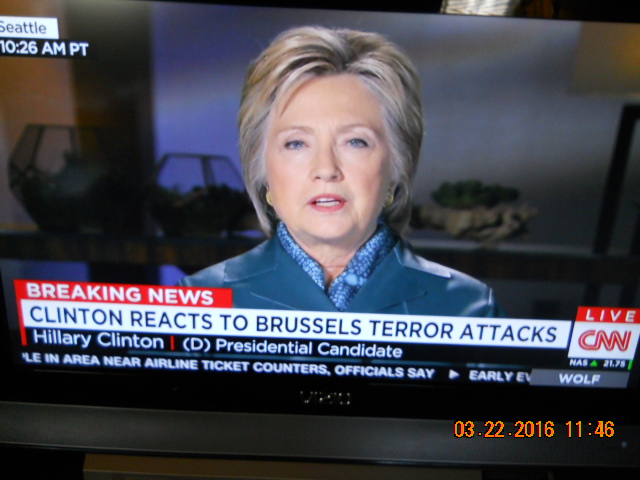
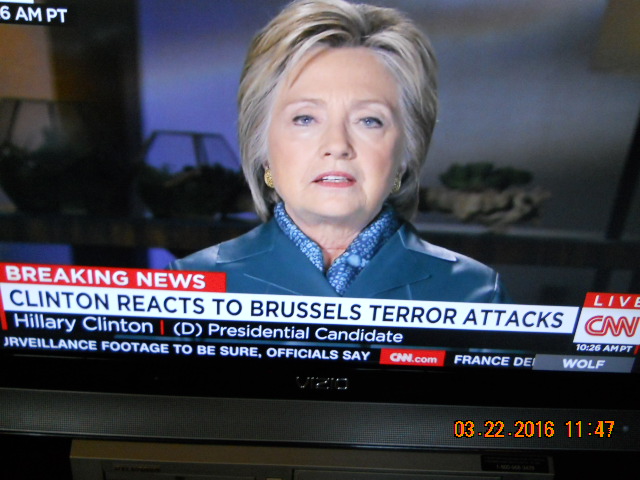


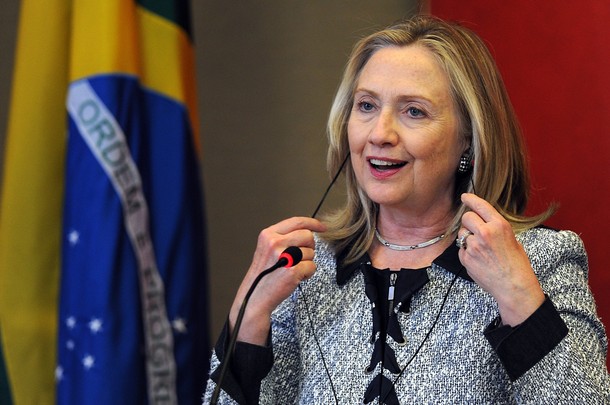


 Now,
today was not a pledging conference, but all of the participants
recognized the need for increased resources and manpower to meet the
challenges we face in the region. Our consultations will continue when
Vice President Biden comes here next week to consult with NATO about not
only how our strategic review is moving, but to solicit last-minute
opinions from all who wish to participate, and to also seek initial
responses with respect to individual countries as well as NATO’s future
contributions.
Now,
today was not a pledging conference, but all of the participants
recognized the need for increased resources and manpower to meet the
challenges we face in the region. Our consultations will continue when
Vice President Biden comes here next week to consult with NATO about not
only how our strategic review is moving, but to solicit last-minute
opinions from all who wish to participate, and to also seek initial
responses with respect to individual countries as well as NATO’s future
contributions.