Showing posts with label Indira Lakshmanan. Show all posts

Monday, September 10, 2012

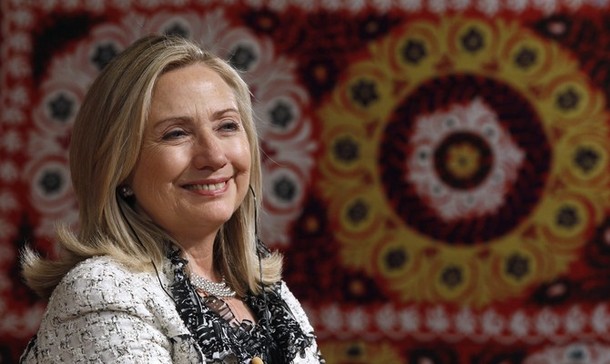
Hillary Clinton With Indira Lakshmanan of Bloomberg News

Inteview With Indira Lakshmanan of Bloomberg News


Interview
Hillary Rodham Clinton
Secretary of State
U.S. Consulate
Vladivostok, Russia
September 9, 2012


QUESTION: Secretary Clinton, thank you so much for joining us today for Bloomberg Radio. I wanted to start out by asking you about the Haqqani Network which you decided to blacklist. The Taliban who harbored al-Qaida in Afghanistan prior to the 9/11 attacks have never been blacklisted. Should they be next?
SECRETARY CLINTON: Well, we do very intensive analysis before we designate someone as a foreign terrorist organization, and I think I’ll let the designation speak for itself. We have reached that conclusion about the Haqqani Network and we think it’s the right decision.
QUESTION: The U.S. already targets the Haqqanis for combat and drone operations, and also the assets of their sanction leaders. So what difference will this blacklist make? And is it about sending a message to Pakistan that they’re not doing enough?
SECRETARY CLINTON: No. It is about squeezing them in the ways that now are available to us under the designation and the Executive Order. It gives us much greater reach into any financial assets or fundraising that they may engage in, gives us better traction against assets that they might own. So we think it adds to the pressure on the Haqqanis, and it’s part of the continuing effort to try to send a message to them – not to anybody else, but to them – because of the really incredibly damaging attacks that they have waged against us, against other targets, and inside Afghanistan. And it’s important that we use every tool at our disposal to go after them.
QUESTION: On Iran, nuclear negotiations have ground to a halt despite increasing noises out of Israel about a possible preemptive military strike. The EU is now talking about new sanctions. What’s the game-changer here? Does the U.S. need to state more explicit redlines to persuade Iran to take the deal that was offered and to reassure Israel to hold off from a military strike?
SECRETARY CLINTON: Well, I think we’ve maintained a steady course of our two-pronged policy. We have always said every option was on the table, but we believe in the negotiation, the diplomatic effort through the P-5+1, but also pressure. And we are working to increase that pressure. The sanctions, we know, are having an effect. The efforts that the P-5+1 have made to pin Iran down on what exactly they are willing to do are still underway, and we will be having some meetings in the next month in New York and elsewhere to take stock of where we are. So I think it’s a very challenging effort to get them to move in a way that complies with their international obligations, but we believe that is still, by far, the best approach to take at this time.
QUESTION: Is there a deadline?
SECRETARY CLINTON: We’re not setting deadlines. We’re watching very carefully about what they do, because it’s always been more about their actions and their words.
QUESTION: Right. The Israelis, of course, have their own timeline and their own deadlines in their mind. What are the latest that you’re hearing from them privately beyond what’s coming out in the media about their willingness to wait for negotiations to have time to work?
SECRETARY CLINTON: I don’t think that there’s any difference in their public and their private concerns. I mean, they feel that it would be an existential threat if Iran were a nuclear-weaponized state. And no nation can abdicate their self-defense if they feel that they’re facing such a threat.
Our message has been very clear, and the Israelis have supported us through the last three and a half years, that we had to unite the international community, we had to put the most intensive sanctions we could possibly get, both through the international community and then unilateral by the United States, by the Europeans, and others. And they really have recognized, in all of our conversations, that these sanctions are making a difference. They’re more anxious about a quick response because they feel that they’re right in the bull’s eye, so to speak, if this doesn’t end up changing Iranian behavior and their nuclear weapons program. But we’re convinced that we have more time to focus on these sanctions, to do everything we can to bring Iran to a good faith negotiation.
QUESTION: You’ve traveled more than any of your predecessors, particularly in Asia, focusing here on new institutional frameworks like TPP, ASEAN, Mekong Delta initiative. Does this reflect a view on your part that U.S. power is changing or has to change? And are there different ways in which it should be wielded?
SECRETARY CLINTON: Well, it reflects a view that I think is rooted in American exercise of power. We have always understood the value of both unilateral and bilateral actions and multilateral actions. And we spent 50 years after the end of the Second World War building the architecture for the global economic community, for the Euro-Atlantic coalition, NATO, and other commitments. We’ve strongly supported the European Union. We spent a lot of diplomatic time and effort creating those institutional arrangements and embedding ourselves in them. And I thought it was time that we did the same in Asia because these countries are increasingly playing a major role – not just China, but Indonesia, as a member of the G-20, as is Japan and South Korea. We’re increasingly working economically, politically, strategically with Singapore and Malaysia. We’re very involved with Australia and New Zealand.
You go down the list and it struck me that we needed to begin to knit together the region and America’s role in it, and there were existing organizations such as ASEAN, the East Asia Summit, that the United States had never really committed to. We’d show up once a year, go to some dinner, do a funny skit, show up again a year later, and I don’t think that’s adequate for the importance of this region and our role in it. And so reasserting our Asia Pacific presence meant making sure that we were involved in both our traditional alliances, but also in the organizations that the countries themselves valued. And I think that has been an important decision and proving itself to be.
QUESTION: Short last question: Getting China policy right, the balance between firmness and friendliness, is something every administration learns on the job. So what have you learned on how to deal with Beijing, and what’s your advice to your successor?
SECRETARY CLINTON: I think you have to be yourself. You have to be America. You have to stand up for American values, interests, and security. You have to look for ways to deepen understanding and to find common ground wherever that’s possible, to work on enhancing the level of cooperation, but also to stand up for what we believe in. I mean, we’ve come a long way doing that, and we can’t in any way subordinate that.
So it’s always – but Indira, that’s true with any country. I mean, we don’t agree on everything with anybody. We just went through a – what was it, a lobster crisis with Canada a few weeks ago. I mean, we’re always balancing, as you say, friendliness and firmness. That’s true with everybody. It’s just China is a very large presence, now the second biggest economy in the world. So what we do with China is always going to be very carefully followed and analyzed. So the methods are not so dissimilar. The challenges at this point in time are much more front and center because of the growing importance of the role that China’s playing economically and politically.
So I think it’s being aware of how you strike the right approach with all of these countries, and so everything we’ve done has been to construct a framework of cooperation in the region with China, ensuring our presence and our position now and into the future. And I think we’ve put the relationship on a firm foundation, and it’s been proven because we’ve had some choppy waters, but we have been resilient, and we have been very clear in expressing concerns that we have. And I think that’s the sign of a maturing relationship.
QUESTION: Thank you so much.
SECRETARY CLINTON: You’re so welcome.

Sunday, July 1, 2012

Hillary Clinton: Interviews from Geneva

Typically, these interviews come in multiples, but they arrive sporadically. These are he first to appear. If more come in I will add them to this post.
U.S. Secretary of State Hillary Rodham Clinton attends a dinner hosted by Swiss authorities after a meeting of the Action Group for Syria at the European headquarters of the United Nations, in Geneva, Switzerland, Saturday, June 30, 2012. (AP Photo/Laurent Gillieron, Pool)


Interview With Michele Kelemen of NPR


Interview
Hillary Rodham Clinton
Secretary of State
Geneva, Switzerland
July 1, 2012

QUESTION: Thank you for joining us here. Kofi Annan called it a serious agreement, this push for a new transitional government, but it seems quite vague. He said that it can include current government officials and opposition figures, as long as there’s mutual consent. But aren’t you worried that this just is a new recipe for more conflict? I mean, how do warring parties come to an agreement on who’s in the government?
SECRETARY CLINTON: Well, the transition plan that we have adopted in this document makes very clear that the Special Envoy will be working to determine who can be in a transitional governing body based on mutual consent, which means people with blood on their hands or jihadi extremists are not going to be at the table.
And I think it’s important to just pause and say – I am familiar, intimately, with a few peace processes, and you do not sit down in the beginning with people that you even want to talk to or see. It was so remarkable this week that Martin McGuinness shook Queen Elizabeth’s hand. He was a commander in the IRA. And so you don’t know how this is going to all play out unless you get started. And my point is: Let’s get started. And we couldn’t get started until we had an agreement of the most interested parties, which of course included Russia and China. We now have such an agreement, and we’re fully behind Kofi Annan’s effort.
QUESTION: You spent a lot of time talking to Russian Foreign Minister Sergey Lavrov when we were in St. Petersburg. Do you get the sense that the Russians are really ready to lean on Bashar al-Assad? And do you think the Russians have influence with him?
SECRETARY CLINTON: I think the answer to the first question is yes, I believe they are ready to lean. They have told me that. They have made clear they have no continuing strategic interest in Assad remaining in power. So I have every reason to believe – both on what I was told by Minister Lavrov yesterday and what he said in our meeting all day today – that they will make the case that there needs to be this transition.
Whether he has influence and leverage to the extent that we would want to see won’t be known until it is tested. But at least now we’re in a position where we can together be pushing the Assad regime and the opposition.
Michele, there are so many terrible things about this violence that has gone on for so long: the fact of the violence, the loss of life, the destruction, the government abusing and killing its own people. But I think today it became very clear that everyone, including Russia and China, is worried about it spreading. So the motivation and the focus today was very clear to me. Now we just have to work to see what we can do with it.
QUESTION: And the fact that Turkey was there, and just had this incident with the Turkish plane being downed, did that influence that aspect of the conversation?
SECRETARY CLINTON: I think it did. Because in my remarks, for example, at the plenary this morning, I was able to point at Iraq sitting there, I was able to point at Turkey sitting there, mentioned Lebanon, Jordan, Israel, the countries in the region that are already dealing with the repercussions of the violence and instability in Syria. And everyone around that table knew that we could – if we didn’t act today and get behind this transition plan – be sitting in six months with a literal war in the region on our hands that was destabilizing country after country. And Turkey was very clear about its worries that that was one of the outcomes if we failed.
QUESTION: But Kofi Annan had very strong words – that history is a somber judge; it will judge us harshly if we prove incapable of taking the right path. How is this crisis weighing on you?
SECRETARY CLINTON: Well, I not only think about it and worry about it, I work on it a lot. I mean, in the last 24 hours, between St. Petersburg and Geneva, it has been the principle focus of all of my efforts. And it’s because I care deeply about the kind of abuses that no people should suffer in the 21st century. That is absolutely one of my highest priorities, is to work as hard as I can to end these kinds of terrible conflicts.
But it’s also because I am very worried that, in the absence of the leading nations that were gathered here today and the others we can bring on board doing everything we can to send a message to both the government and the opposition that they’ve got to begin negotiating about a transition, we will see some really serious and dangerous consequences for the region, for U.S. interests, and in fact, as one of my colleagues said, for the whole world.
QUESTION: Just one quick thing. I mean none of his plan has worked so far, so what makes you think --
SECRETARY CLINTON: I want to be caught trying. I can’t, sitting here today, tell you whether Assad is ready to stop killing his own people. Usually you don’t get to a peace table, negotiate transition, until something happens and those with the guns, on whatever side they are, finally decide that there’s got to be a better way. I mean, we negotiated for more than a year in Yemen. We had former President Ali Abdullah Saleh up to the signing desk three or four times, and he would back off every time. So there’s nobody anywhere that is more aware of all of the problems we have going forward.
But I am 100 percent convinced that we have to begin changing the reality in the minds and on the ground. And having Russia and China sign up to this lengthy list of guidelines and principles will, I believe, give us the opening to do just that.
QUESTION: Thank you so much for your time today.
SECRETARY CLINTON: Thank you, Michele.
_____________________________________________________________

Interview With Indira Lakshmanan of Bloomberg


Interview
Hillary Rodham Clinton
Secretary of State
Geneva, Switzerland
July 1, 2012

QUESTION: Thank you, Secretary Clinton, so much for making the time. I know it’s been a very long day. (Laughter.) All right. Can we get started? Great.
So today in Geneva this political transition plan that has been endorsed didn’t have the strongest language that the U.S. had hoped for. What makes you think that Russia and China are committed to pulling their support for Assad? What makes you think this is going to work?
SECRETARY CLINTON: Well, I believe it did have strong language. We can always, in any document, worry over and argue over words, but the bottom line is that it pledged to support a transitional governing body whose members can only be put on that body by mutual consent. So as I said in the meeting when we were working together, I don’t think you have to be up on current events to know that no member of the opposition is going to have Assad or anyone else with blood on their hands on the transition body.
So I think the important achievement was to get a unified P-5, plus the permanent members of the Security Council, plus other key actors to really endorse Kofi Annan’s guidelines and principles so that he was empowered. He can now go to the Assad regime and say we have to start talking about a transition and not be met with well, we don’t have to do that, because Russia and China don’t agree with us. And I believe that it was a significant step forward in giving him the tools that he needs to test whether it is possible to mediate this very bloody, violent conflict.
QUESTION: So not everything you had hoped for, but better than it could have been?
SECRETARY CLINTON: Oh, I didn’t know that we were going to be able to get anything when we started. There was every reason to believe that we would never get the Russians and the Chinese on board or that we would ever satisfy the legitimate anxieties of the region about what is happening on their doorstep. Turkey, of course, was here today. And I think the fact we did demonstrated a recognition by the Action Group of the high stakes.
I mean, it’s not enough just to wring our hands and make impassioned speeches about how terrible the Assad regime is and how they are deteriorating into a civil war that will have regional consequences. We needed to put some flesh on the bones. And the only way to do that within the existing framework was to empower Kofi Annan. That’s what he was asking for; that’s what he wanted. And I really judge the success by the fact that he believes – and I agree with him – that he now has a stronger hand to play then he did yesterday.
QUESTION: So the challenge, as you said, is in the implementation. Now, you’ve publicly criticized Russia for selling arms to the Syrian regime. So if an arms embargo were agreed to, would Russia abide by it? And could the U.S. force its allies – Saudi Arabia and Qatar – to stop arming the opposition?
SECRETARY CLINTON: I think that’s one of the issues that we’re going to have to be discussing further as we go forward. Clearly, the United States believes that ending the arming of the Assad government is the first order of business. The Russians continue to claim that they are not providing anything that can be used to suppress internal dissent. We beg to differ.
But nevertheless, I think where we are today gives us the basis for going to the UN Security Council to discuss what consequences have to be considered and imposed if after empowering Kofi Annan he comes to the Security Council and reports to us – as he said he will do – that the government’s not cooperating, that other parties are not cooperating, that he’s not making progress. Then I think we will have to act. And I believe we will be building the case as to why the Security Council should take such action.
QUESTION: Well, that’s actually what I wanted to move to. Is the next step proposing a Chapter 7 mandate at the UN Security Council that could mandate sanctions or authorize military force to stop the slaughter? And would China and Russia agree to that?
SECRETARY CLINTON: Well, I think we are going to test first whether we can get the agreement we reached today implemented. And we are certainly going to consider any and all appropriate action through the Security Council as circumstances require. So I don’t want to answer a hypothetical, because we’ve just finished a very long day of very hard negotiations, and the fact that we came out united and determined to empower Kofi Annan has to be given some time to be tested.
But I said – and I said it again in my press avail after the session today – that we, the United States, are perfectly free to propose whatever we believe is necessary in the Security Council, and we will listen closely to Kofi Annan’s reports to us.
QUESTION: Let me just turn for a moment to Iran’s nuclear program. You recently sat for an interview with former Secretary of State James Baker in which he said that at the end of the day, if pressure and talks don’t work, we ought to take them out. You said that the end of the day might be next year. How much time are you giving for diplomacy and sanctions?
SECRETARY CLINTON: Well, what I meant was that we’ve always had a two-track policy. The President’s been very clear on that. The pressure track is our primary focus now, and we believe that the economic sanctions are bringing Iran to the table. They are going to continue to increase and cause economic difficulties for them. But the President has said no option is off the table. We obviously, clearly, prefer that we resolve the international community’s dispute with Iran over their nuclear program through the diplomatic channels that we are pursuing. That is what we’re focused on and that’s what we’re going to do everything we can to make successful.
QUESTION: Last question on Pakistan. It’s been seven months since the accidental attack that killed some Pakistani soldiers and the Pakistanis shut their supply lines. Relations have been frozen since. Why not just apologize and try to move on?
SECRETARY CLINTON: Well, we have a number of issues with the Pakistanis that we are continuing to consult with them over. It goes on constantly. It may not be in the headlines, but there is a constant exchange of military and civilian experts. And I want to look at this comprehensively. And there are a number of issues that are important to the United States, and there are issues that are important to Pakistan, but it has to be negotiated in order to resolve any of them. And we’re still in the process of trying to do that.
QUESTION: Is an apology still possible?
SECRETARY CLINTON: Well, I’m not going to get into the specifics, because there are a lot of things we want from them, and they want things from us, and we’re just going to have to see what is possible to get the relationship moving. As I’ve said many times, I think this is a consequential relationship. I think it has great impact on America’s national security interests, on the regional interests. And so we are continuing to work as hard as we can to try to resolve the ongoing differences between us.
QUESTION: Thank you so much, Madam Secretary.
__________________________________________________________

Interview With Jill Dougherty of CNN


Interview
Hillary Rodham Clinton
Secretary of State
Geneva, Switzerland
July 1, 2012

QUESTION: Secretary Clinton, thank you very much. I know it’s been a very long and intense day.
Let’s begin with that critical point that you’ve talked about so many times, that Assad has to step down, leave. Now, it appears that the Russians won that point. There is no direct demand that Assad go.
SECRETARY CLINTON: Well, Jill, I couldn’t disagree with you more. I think that what the agreement clearly states is that there has to be a transitional governing body that will be constituted of people who are there by the mutual consent of the government and the opposition. Now, unless I am wildly off base, there is no way anyone in the opposition would ever consent to Assad or his inside regime cronies with blood on their hands being on any transitional governing body.

But I said weeks ago that Assad going could be an outcome as well as a precondition, and what was important is that we were on a path with an empowered Special Envoy with the full support of all the P-5 members, including Russia and China, with an approach that absolutely guarantees, if there is a transition that is still the hard work ahead, Assad will not be part of it.
And we’ve had lots of experience in this. I mean, we just went through more than a year with Ali Abdullah Saleh in Yemen, and he kept saying he would go, then he wouldn’t go. And people just kept bearing down and pushing forward and eventually were successful.
But until today, we did not have the kind of roadmap in specifics, with concrete actions, that you could telegraph to Damascus, where I believe they are shocked that Russia and China have signed onto this agreement, which so clearly says goodbye to them in this transition.
QUESTION: But the timing. In other words, this could be down the road; this could be a year from now. What?
SECRETARY CLINTON: Well, of course, making peace is really hard. And when it happens and how it happens is dependent on so many factors. And what we did today was to make clear that, for the first time, we had agreed-upon approach that satisfied the Russians and the Chinese and the neighbors, who are very anxious, for understandable reasons, about what’s going on in Syria.
Jill, there’s no guarantee that we’re going to be successful. I just hate to say that, because it’s the fact. But I am very grateful that we now have a roadmap that has everybody on board with a clear path towards transition, with a clear set of expectations that have to be fulfilled. And now I believe the internal reality within both the regime and elements of the opposition will begin to move in a direction that, I hope, puts us on an inevitable path.
QUESTION: But how do you get to that transitional body? Because people are fighting.
SECRETARY CLINTON: Right.
QUESTION: I mean, isn’t it unrealistic to think that you’re going to get the body that you say will strip him of his power?
SECRETARY CLINTON: No, because I just look at history. I look at the conflicts that I’m familiar with. I have to smile thinking about Queen Elizabeth shaking the hand of Martin McGuinness, an IRA commander, just this past week. Whenever you start with a process like this, number one, there’s neither a guarantee as to the outcome nor as to the timing, but you are beginning to change the international calculations of everybody who is a party to the conflict.
And that’s what I think will really give Kofi Annan the support he needs. Because now when he goes to Damascus and he says, “I have been instructed by all Security Council members, including the Russians and the Chinese, to begin talking to you about appointing an empowered interlocutor to meet with me and meet with representatives of the opposition. Who are you going to appoint?” and they’re not going to be able to say, “Well, there’s division in the international community, and there are a lot of people who are on our side.” They are pretty much left with Iran.
QUESTION: Do you really believe that the Russians can convince Assad?
SECRETARY CLINTON: Jill, I think that’s a great question, because one of the points that became clear, both in my long conversations with Foreign Minister Sergey Lavrov last night in St. Petersburg and then in our larger group today – they have committed to trying, but they’ve also admitted that they may or may not have enough leverage to convince not just one man but a family and a regime that their time is over. But what was important was to get them on board to make this effort on their own, using their leverage, and in support of Kofi Annan. And I think it’s a significant step forward in our efforts to try to figure out the least violent, disruptive, destabilizing way to end this conflict and give the Syrian people a chance at a different future.
QUESTION: So if the Russians are supposed to influence Assad, you are supposed to influence the opposition. How do you do that? What do you say to them?
SECRETARY CLINTON: Well, not just me, but others as well. I mean, we will have an American presence at the meeting of the opposition in Cairo next week. But the Turks, the Qataris, the Arab League, all who were part of our negotiations to reach this agreement today, will all be there. Because what’s the alternative? I mean, what are they going to do? Just continue to have meeting after meeting, or are they going to buckle down to the hard work of choosing someone to – or several people – to represent them in a transitional governing body to engage in the negotiation. And they’re going to have to finally make a decision about what it means to take responsibility for trying to end a conflict and lead a nation.

We went through this in Libya. The Transitional National Council had both members of the Qadhafi regime, who had fairly recently left, along with longtime oppositionists. So we have seen how important it is to have an organizing focus. We now have that. So at the meeting of the opposition in Cairo, they will hear from a number of different voices that you have to make some decisions about how to be part of this process.
QUESTION: There are some people who say that the Russians want to play this out, that they look at the election schedule in the United States, November there’s an election, they realize that there’s little appetite either in Washington or practically any other capital for military action, and so they’re just playing it out, banking on the fact that nobody is going to really take any type of strong military step. What do you say to that?
SECRETARY CLINTON: Well, I’d say that if we were talking a week ago, based on what we were hearing from the Russians, from the very highest levels, from President Putin on down, we would never have even had the meeting in Geneva, they would not have come under any circumstances, and they would not have participated in reaching the agreement that we reached today. So what happened?
I think they have begun to realize that they are trying to ride two horses at the same time, so to speak. They are constantly saying we have no love lost for Assad, we don’t have any stake in him staying, but we are afraid of the violence and what will come after. So the argument I have made to them consistently is that their failure to be part of the solution is the surest way to ensure we have a civil war with sectarian conflict that spills over the borders.
And I can’t speak for them. I can’t put myself into their internal discussions. But I believe, based on my lengthy conversation last night and our discussions today, they’ve decided to get on one horse, and it’s the horse that would back a transition plan that Kofi Annan would be empowered to implement.
QUESTION: Okay. Could I ask you a quick question on Egypt? President – incoming President Morsi wants to ask the United States to extradite Sheikh Omar Abdel Rahman from the World Trade Center attack in 1993 on the basis of – humanitarian basis. What would the U.S. do in that case?
SECRETARY CLINTON: Well, I think it’s very clear that he was given due process. He was tried and convicted for his participation in terrorist activities, most particularly the bombing of the World Trade Center in 1993. The evidence is very clear and convincing, and he was sentenced to life in prison, and we have every reason to back the process and the sentence that he received and will do so.
QUESTION: Madam Secretary, thank you very much.
SECRETARY CLINTON: Thank you, Jill.

Wednesday, May 9, 2012

Secretary Clinton With Indira Lakshmanan of Bloomberg Radio

Interview With Indira Lakshmanan of Bloomberg Radio


Interview
Hillary Rodham Clinton
Secretary of State
Taj Palace Hotel
New Delhi, India
May 8, 2012

QUESTION: Thank you so much, Secretary Clinton, for being with Bloomberg Radio today. We really appreciate it.
SECRETARY CLINTON: Thank you very much, Indira.
QUESTION: I wanted to start out by asking you, last week in China you were involved in a roller coaster ride of backstage negotiations over a blind legal activist, Chen Guangcheng. Take us behind the scenes. Did your talks reach the highest levels of China’s government, and what leverage did you have to convince President Hu Jintao to let a dissident leave for the U.S.?
SECRETARY CLINTON: Well, India, I’m not, at this point, going to be able to go into the details. Right now I’m focused on the here and now, which is, briefly stated, Mr. Chen remains in the hospital obtaining medical treatment, some of which was suggested as being necessary based on examinations that our doctors at the Embassy gave him. We remain in close contact with him. He is meeting with Chinese authorities in order to pursue the necessary steps to be able to leave to pursue his studies in the United States. And we’re also on our end expediting and making all the necessary preparations.
So my goal is to welcome him to the United States to pursue his studies. There’ll be plenty of time in the future for him and others to discuss how we got to the point where we are today.
QUESTION: So you think it’ll be a matter of weeks that he’ll be in the U.S.?
SECRETARY CLINTON: I’m not going to put any timeline on it, because we’re all working very hard. There are a lot of people engaged in both the Chinese and the American governments.
QUESTION: Let’s step back. This was an unusual case. Mr. Chen escaped from house arrest and later was picked up by a U.S. Embassy car that was chased and almost had to abort its mission. Was it you or President Obama who authorized this plan, and do you worry that it might spark a run on U.S. embassies in China and beyond?
SECRETARY CLINTON: Well, first this was an exceptional case with extraordinary circumstances, and I do not anticipate seeing any case like this again. But I am not going to discuss any of the details at this time. There’ll be an opportune moment to do so –
QUESTION: You certainly must have authorized it, or I can’t imagine the Embassy would have done it without you.
SECRETARY CLINTON: Well, we’ll let your statement stand. (Laughter.)
QUESTION: All right. Human rights have been a defining issue of your career. Would you have left China if this case had not been resolved? And did you indicate to the Chinese that you couldn’t leave without a deal?
SECRETARY CLINTON: Well, I’m not going to answer a hypothetical, because thankfully it was resolved. And we actually resolved it twice, but the second resolution was acceptable to Mr. Chen, who, as I said repeatedly, we were working hard to honor both his choices and our values.
QUESTION: What assurances have the Chinese demanded that this case not be repeated? And are you amazed that China even agreed to a second deal after the first one fell through?
SECRETARY CLINTON: Well, I’m not going to characterize our negotiations or any decisions that were made, but I would just underscore that we really have stated clearly that this is an extraordinary case with exceptional circumstances. And it is not something that either we or anyone anticipates occurring again.
QUESTION: What’s different in U.S.-China relations that China actually agreed to this deal? Could you even have imagined something like this being negotiated a couple of years ago?
SECRETARY CLINTON: Well, without really commenting on any understandings that were reached, I will say that the intensive work that I have been doing along with our American team through the mechanism of the Strategic and Economic Dialogues, plus all of the interim meetings and consultations that we have established over the last three and a half years, created a level of personal relationships and understanding between individuals and our government institutions that is absolutely critical for us to be able to discuss the full range of challenges we both face.
As I’ve said, and it was interesting because every high-level Chinese official I met repeated back to me from a speech that I gave at the U.S. Institute of Peace in Washington that what we are trying to do – the United States and China – is unprecedented in world history. We’re trying to find a way for an established power and a rising power to coexist. The United States is going to remain a power, the predominant power economically, politically, militarily, for a long time to come, as far as I can imagine. We recognize that China is a rising power. There will not always be a convergence of our interests or even our perceptions about what is happening in the world. So how we manage this relationship is absolutely critical to peace, security, prosperity, individual freedoms – you name it. And therefore I have invested a lot and argued strongly for combining what were dialogues and meetings on the economic side with disparate dialogues and meetings on the strategic side under an overarching umbrella. Because we have to be working across our governments and we need to be sure that no issue predominates or undermines the potential for reaching agreement on other equally important issues.
QUESTION: I need to switch to South Asia. U.S.-Pakistan talks are stalled over reopening supply lines to Afghanistan and allowing drone strikes. Why is the U.S. ambassador to Pakistan leaving early at such a critical time, and can the U.S. continue counter-terror operations and achieve peace with the Taliban as U.S. troops draw down from Afghanistan even if Pakistan is unwilling to help?
SECRETARY CLINTON: Well, I don’t, as a matter of course, comment on personnel matters. But I will say that the ambassador has served ably and well under very difficult circumstances. And it’s not unusual in these very difficult assignments that we have now – Afghanistan, before that Iraq, Pakistan, others – that the intensity of the work that is required, it leads someone to say I’m going full out for two years and then I am going to need to step off this fast track. So I’m very understanding of that. It was totally his request, and we’re going to honor it.
QUESTION: So the U.S.-Pakistani negotiations which continue over GLOCs and drone strikes, how do you see those playing out and the U.S. getting the vital cooperation it needs? What if Pakistan says no dice? Can we still continue doing what we need to do?
SECRETARY CLINTON: Well, we’ve made clear what our redlines are, and we stand ready to negotiate over areas of concern between Pakistan and the United States. They’ve had, as you know, some difficult political issues. We’ve waited patiently for them to be resolved. There are still some outstanding ones, apparently, that have not yet been so. But we have negotiations from our Embassy and teams going over on a regular basis.
QUESTION: Do you see any breakthrough now?
SECRETARY CLINTON: I think it’s a matter of continuing to persevere.
QUESTION: Here in India you’ve been talking about a range of strategic issues, including cooperation on Iran. Now, Indian Government officials have told me that they are cutting orders for Iranian crude by 20 percent this fiscal year. Did Indian leaders pledge the same specific cuts to you, and will that be enough to win them an exemption from U.S. sanctions?
SECRETARY CLINTON: Well, we are aware that refineries have cut their orders and the actual purchases have been reduced. So we’re encouraged by what India has done. I’m sending my energy coordinator, Ambassador Carlos Pascual, with a team of experts here to India next week, and they will be discussing the full range of energy issues. Because I fully appreciate the Indian Government’s concerns about fueling their economy. They still have an enormous amount of work to do. They still have to extend electricity. They still have to keep it going at affordable and predictable rates. They have a lot of economic challenges they have to address.
So I think what they are doing is certainly noteworthy. We think they can do more, but we think it’s only fair that we sit down and discuss with them how they can meet their legitimate energy needs while supporting the international consensus of which they are part to end Iran’s nuclear weapons program.
QUESTION: Last question on today’s news, the terror plot that has been exposed. When did you know about that, and how does this fit into your view of the continuing U.S. counterterrorism efforts. You mentioned al-Zawahiri, you believe, is hiding in Pakistan. So is that – explain how this fits into U.S. efforts to continue fighting terrorism (inaudible).
SECRETARY CLINTON: Well, I mean, I’ve known about this for some time. I’ve certainly known about the efforts to do something like it even longer. So I’ve been someone who’s followed it closely. Look, I mean, you’re dealing with such evil, perverse human beings, who sit around plotting about ways for people to kill themselves and kill others at the same time. I mean, it is so sick, Indira, truly.
And yet we have to remain vigilant and attentive and quick and agile in our response, which thankfully we continue to be, and working closely with the countries that I visited this week. Counterterrorism is always on the agenda because we have to defeat those who would use this tactic that is just designed to sow death and destruction. It’s not a political agenda really. It’s not intended to provide anybody with a better life. It’s a terrible vestige of an attitude that somehow violence is a substitute for participating in a legitimate political process.
QUESTION: So we can expect a strike on al-Zawahiri next?
SECRETARY CLINTON: Well, I was very sad to see the video produced by al-Qaida of Mr. Weinstein, who was kidnapped, is being held by al-Qaida in Pakistan, we believe in the tribal areas. He was living in Lahore, Pakistan, from which he was abducted. He was there doing development work to help the poor people of Pakistan, and it’s just tragic. But since Zawahiri inherited the mantle of leadership from bin Ladin and we continue to believe he’s in Pakistan, we are going to pursue him and all those who threaten Americans and our friends and allies.
QUESTION: Secretary Clinton, thank you so much for your time.
SECRETARY CLINTON: Thank you, Indira. Good to see you.

Monday, October 24, 2011

Secretary Clinton's Interview With Indira Lakshmanan of Bloomberg News


Interview With Indira Lakshmanan of Bloomberg News


Interview
Hillary Rodham Clinton
Secretary of State
Ismaili Center
Dushanbe, Tajikistan
October 22, 2011


Please attribute the following content to an interview with Bloomberg News
QUESTION: Secretary Clinton, thank you so much for making the time to join us on Bloomberg Radio. You’ve just come from Pakistan, where you, the chairman of the Joint Chiefs, and the CIA director delivered a clear message to the Pakistanis that they have to wipe out terrorist safe havens now. The Pakistanis said that they’ve decided to seek peace talks with militants before expanding military operations. Did you change their minds?
SECRETARY CLINTON: Well, I don’t think there’s a contradiction here, which is why, as you recall, in Afghanistan I said we want to do three things: fight, talk, and build. And we don’t see those as sequenced; we see them as simultaneous. Obviously, the more we talk and we think it’s heading in the right direction, the less we’ll have to fight. So I don’t think that there is any difference in the goals that we share with Pakistan. They have a big set of challenges because over 30 years, these terrorist groups have taken up safe havens inside their country. We have challenges because they launch attacks across the border against Afghans and us. And they know, the Pakistanis, that attacks are launched against them from the Afghan side of the border.
What I wanted to do with a coordinated U.S. Government presence was to make it very clear that we have to heighten and deepen our cooperation and our planning. We do agree on 90 to 95 percent of what needs to be done, but we haven’t really sat down and had the kind of in-depth conversations that we began in Pakistan to say okay, what’s first, second, and third? Now, if you’re in – if you’re sitting in Pakistan, you say we have to prevent the safe havens from being places where attacks are launched against Afghanistan, but we have to figure out a way to do it that doesn’t cause chaos in our own country. We appreciate and respect that. So that’s why we’re trying to work through the details of the next steps we take together.
QUESTION: Well, the U.S. has said, you have said clearly, you want to fight and talk at the same time.
SECRETARY CLINTON: Yes.
QUESTION: The Pakistanis seem to only want to talk, at this point, with the militants. So what’s the price they’re going to pay in Washington if they don’t fight insurgents in tribal areas? Will there be a cutoff in aid, or cross-border attacks from Afghanistan?
SECRETARY CLINTON: But there are different ways of fighting besides overt military action, and I think this is an important point of clarification. We have asked the Pakistanis to squeeze the Taliban and the Haqqani Network. We recognize that, given their resources, it would be difficult for them to launch military action at this time. But what we can do is make sure we are totally synced up on all intelligence, to intercept and prevent attacks from – emanating from these safe havens. We can go after funding. We can go after couriers. We can do a lot together that will interrupt their abilities.
Take what they have helped us do with al-Qaida. Because of intelligence sharing and mutual cooperation, we have targeted three of the top al-Qaida operatives since bin Ladin’s death. That could not have happened without Pakistani cooperation. So fighting is not just about battalions of forces moving. It is about using all of our assets effectively to try to squeeze and shut them down.
QUESTION: Okay. Well, it’s been years that the same the message from the U.S. for the spy services in Pakistan not to support insurgents. You said this time there’s no good terrorists and bad terrorists. So is this Pakistan’s last chance? And what happens to them if they don’t do what the U.S. needs? What’s the price?
SECRETARY CLINTON: Well, I’m not – I have made it clear that there will be dire consequences for Pakistan as well as Afghanistan if this threat from the terrorist networks is not contained, at the very least, because there’s no way that any government in Islamabad can control these groups. This is an opportunity, while we are still with 48 nations across the border in Afghanistan, where we have a lot of assets that we can put at their disposal, for us to work to really limit the threat posed by these groups. They understand that.
Now, I’m not going to go to what consequences or actions we would be taking, because there’s a lot that we’re doing that is not necessarily publicly acknowledged or known. But I will say this: I think, following our conversations and the clarity that I believe was created, there’s a much greater understanding and appreciation of what we can do together to deal with these mutual threats.
QUESTION: Did you tell them that the U.S. might have to launch cross-border attacks from Afghanistan?
SECRETARY CLINTON: There’s a lot going on that is aimed at these safe havens, and we will continue to work with them on that.
QUESTION: Okay. You acknowledged for the first time that the U.S. had a meeting with the Haqqani faction of the Taliban this summer at the request of Pakistan’s spy service to see if there was any hope for reconciliation. A few months later, the same Haqqanis staged a 19-hour assault on the U.S. Embassy in Kabul, attacked a U.S. post in the west of Afghanistan. A suicide bomber killed – posing as a peace negotiator killed Afghanistan’s top peace envoy. Why even bother with peace talks when the efforts have gone nowhere since the U.S. embraced this strategy early last year?
SECRETARY CLINTON: Well, I’m a student of peace processes. And they often go nowhere for a very long time. (Laughter.) And that’s why it takes the level of patience and persistence that we’re willing to invest in order to determine what’s real and what’s not. And from our perspective, we are exploring. We’re not committed on any track or with anyone until we get more bona fides that this is a process worth pursuing. But remember, we have consistently said we will support an Afghan-led and owned process. President Karzai, even after the terrible assassination of Professor Rabbani – which was probably by the Qaeda Shura, not by the Haqqanis, but six of one, half dozen of the others in terms of the death and destruction they try to inflict – but even President Karzai, in my meetings with him in Kabul, has said, look, we have to go forward to explore what is possible, and we cannot do it unless Afghanistan, Pakistan, and the United States are all working together.
So this is going to be a bumpy process. I don’t know any peace process that hasn’t been a bumpy process. So we’re going to test and we’re going to probe, and we’ll see where it leads.
QUESTION: In Libya this week, you urged the new leaders to embrace transitional justice for perpetrators of crimes from the previous regime. You told ordinary Libyans to refrain from score settling. Two days later, Qadhafi was killed in what may have been a summary execution. How can the U.S. celebrate the killing – a killing that goes against American values, that everyone get a fair trial? And what does this say about the future for a democratic Libya under rule of law?
SECRETARY CLINTON: Well, first, I would not accept the word “celebrate.” I think there was an acknowledgement, and certainly a recognition, that this was a pathway to seeing what kind of steps toward democracy the Libyan people will be able to take. I was pleased to hear the TNC say they will launch a full investigation into Qadhafi’s death. I think that’s very important. It sends the right signal that we can’t start on a path toward democracy, rule of law, human rights without trying to understand and hold accountable anyone who acted in a way that violates those precepts. And the international community, too, wants to see the results of such an investigation. So I do appreciate what the TNC said.
QUESTION: Last question, on Iran: What moves is the U.S. taking and pushing its allies to take to punish the regime for the plot against the Saudi ambassador? And what real leverage do you have on a government that you yourself has said is turning into a military dictatorship?
SECRETARY CLINTON: Well, I think this has damaged Iran in the eyes of many countries. There is a real growing awareness that Iranian interference in the internal affairs of many countries, and particularly the actions of the so-called Qods Force, poses threats to individuals and institutions that have to be looked at and evaluated, which is a big step for us because we know that Iran has been trying to gain influence, spread its message, whatever form it takes, around the world. And people have been kind of indifferent. Well, so what if they’re building a big embassy? So what if it’s stocked with Qods forces, spies, and all the rest of that? That’s not about us; that’s about the ongoing conflict between the United States and Iran. No, guess what? It is about you.
QUESTION: You’re talking about Latin America here.
SECRETARY CLINTON: Oh, Latin America, Africa, the Middle East, Asia, you name it. And so we have had a full court diplomatic press to make sure, number one, people know that these are well founded, provable accusations; number two, that they – that everybody needs to be more diligent and vigilant in dealing with Iran because their motives and actions are not always benign, shall I say; and that number three, the sanctions were imposed need to be enforced. And so we are looking to manage this in a way that lays the groundwork for further cooperation in the future.
QUESTION: But we’re not going beyond sanctions at this point?
SECRETARY CLINTON: No. No, I think – and even sanctions, we’ve got a lot of sanctions already in place. What we want to do is convince people that behavior like this is why we need to enforce the sanctions we have. Now, the United States has imposed more sanctions. The European Union has imposed more sanctions. We’re talking to other countries about doing it. But we see this as a part of a long-term effort to raise the alarm about Iranian actions and intentions.
QUESTION: Secretary Clinton, thank you so much for your time today.
SECRETARY CLINTON: Thank you, Indira. Good to see you. Back on the road again.