Showing posts with label Rene Preval. Show all posts

Tuesday, May 10, 2016

A Shakespearean Lesson from a Bumpy Ride

I lived and worked in Haiti for a good portion of my adult life when I was a very sure-of-myself thirty-something who knew my fellow Americans very well.  I knew they would never elect a celebrity to the Oval Office. That was 1980 ... and they did.

When I lived there, Haiti did not have elections. They had a President for Life. I was reminded of this on my way to and from work twice a day by the huge billboard on the Champs-de-Mars across from the National Palace.  Nobody in Haiti voted for him.  His dying father made him president while he was still in his teens. Nobody in Haiti ever called him "Baby Doc" - ever!  Sometimes American tourists would use the term, and we would gently whisper corrections.  You never knew who might be listening. "But I have freedom of speech," they insisted. Nope, not there you didn't.

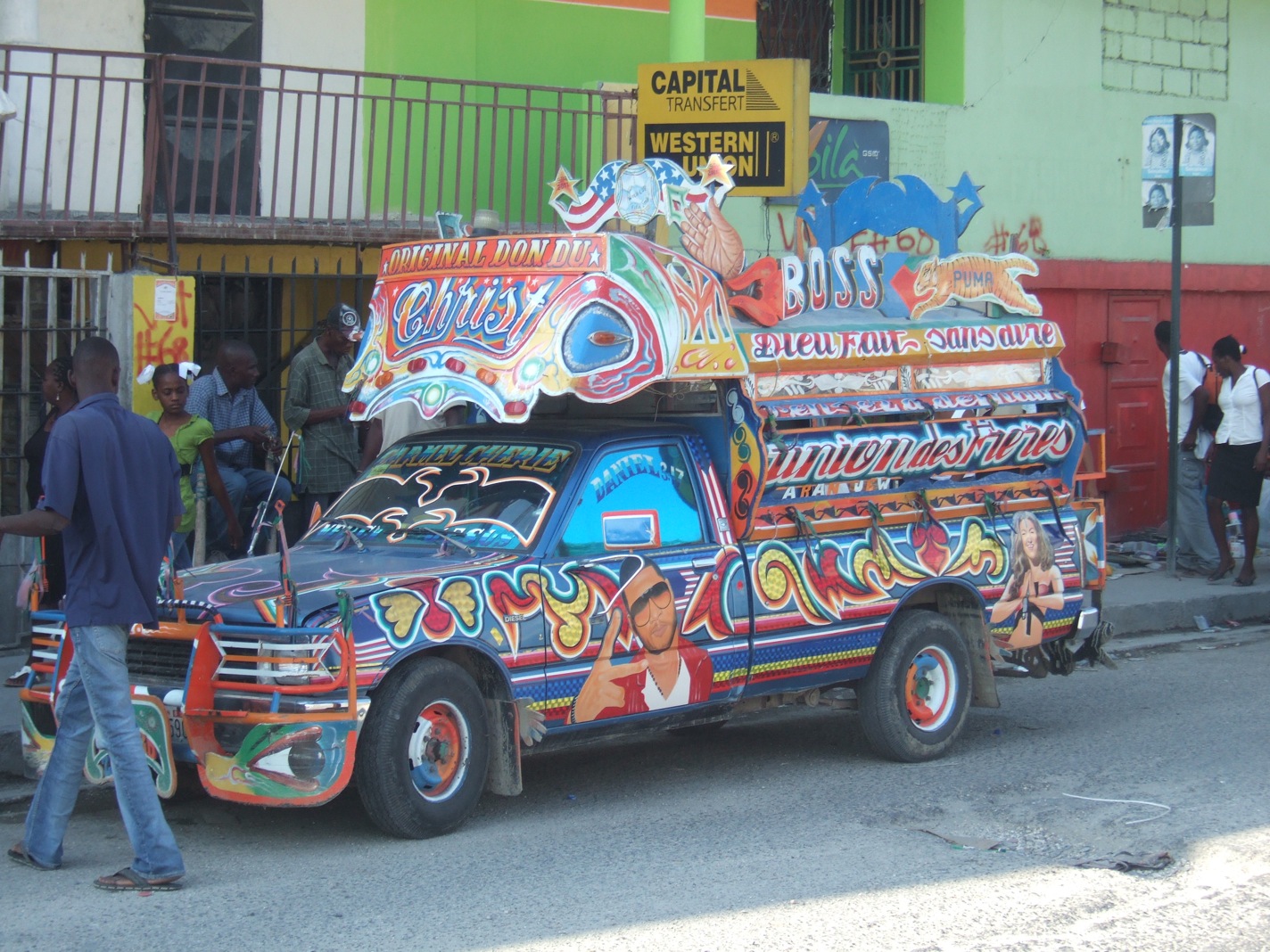
When I sensed trouble coming in the early 80s, I left. In 1986 Jean-Claude Duvalier was overthrown and also left. Haiti embarked on the long, rocky road to democracy. It was and is very bumpy ride - sort of like a ride on a Haitian tap-tap.


A president was elected, then overthrown by the army and exiled, and then returned again to fulfill his elected term.  N.B. We did not install Aristede, and he was not our "puppet."  President Clinton 42 merely restored the elected Haitian president to his rightful post.  Just saying because I have heard that allegation.

On January 12, 2010 a catastrophic earthquake killed more than 200,000 people. Colleagues told me, when they heard early estimates of one-tenth that many, that they did not think that toll was possible and must have been an exaggeration.  They did not know Haiti, and they did not know Port-au-Prince.

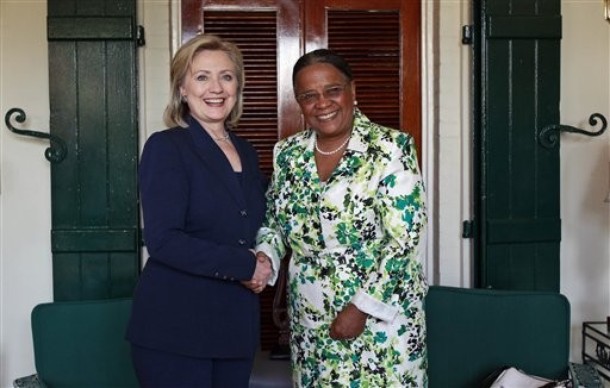
Our Secretary of State at the time, Hillary Clinton was on the ground in Haiti within days, the first foreign official to arrive.  The President at the time, Réné Préval, met with her at the airport. It would take him 12 additional days to finally show his face on the Champs-de-Mars where thousands of homeless Haitians congregated in a makeshift tent city in front of the collapsed National Palace.  It was an astounding abdication of leadership.

Elections were scheduled for later that year. Once again Secretary of State Hillary Clinton paid a visit and met with the three run-off candidates. One of the candidates was a popular performer - a bit of a naughty boy with a distinctive head-style that became shorthand for his candidacy (têt kalé - or "shaved head" meant Martelly during the election season).  Another was a woman with a Sorbonne degree, experience in government, and former First Lady.


Mirlande Manigat was the presidential candidate for the Rally of Progressive National Democrats (RDNP) centre-right party. On October 18, 2010, Dr. Manigat also received the endorsement of the Collectif pour le Renouveau Haïtien (COREH).
Her platform for the presidency includes a focus on education of the youth of Haiti, and lifting the long-standing and restrictive constitutional conditions on dual nationality. She specifically promotes opening government positions for members of the Haitian diaspora. Manigat also aims for a more independent Haitian state, one less reliant upon and subject to foreign governments and NGOs. - Wikipedia
The winner was Michel Martelly with no government credentials or experience.


Martelly's journey to the presidency is documented in the film Sweet Micky for President which is currently available on demand at Showtime. Given my love for and attachment to Haiti, of course I watched.

I was unprepared, however, for the parallels that emerged between the 2010 Haitian election and the election season we are experiencing.  Our democracy is so much older.  Theirs is like a toddler who runs before he can get walking under control.  I never thought our presidential campaign events could resemble some of the anger and violence that erupt during third world elections.  But then we have to look to the candidates and the way they run their campaigns.  That is where the similarities lie.

Older and wiser now, I know that yes, Americans absolutely will elect a celebrity for reasons perhaps very similar to those for which Haitians elected "Micky" Martelly.  I have learned never to underestimate what Americans will do in the privacy of the voting booth, never to trust what they might do with their precious ballots, never to assume.

Martelly fell into disfavor with the populace. It was probably inevitable.  In January 2015 protesters in the streets angrily demanded his resignation.  He resigned office in February of this year.  We will never know what Mirlande Manigat might have done as the first woman president of Haiti. I doubt that she will ever make another run.  I do know that we have a chance make our decisions based not on celebrity and visibility but rather on issues, plans, and policies.  Strutting and fretting your hour on the stage leads to being heard no more, after all, and ending up just a tale told by an idiot signifying nothing.

donate
VOLUNTEER
phone calls

Friday, October 10, 2014

Hillary Clinton’s ‘Hard Choices’ Retrospective Part Six Chapter 23 Haiti: Disaster and Development

This chapter is an intensely personal one for me.  Like anyone who has ever lived there, I remember exactly where I was - sitting in my car at an intersection I was at daily on my way home from work - when I heard the news of the earthquake on the radio.  As soon as I heard the magnitude, I knew what the number 7 meant.  I looked at the Getty station on the corner where I was waiting for the green light and imagined it crumbled.  I knew that many buildings I knew, loved, had been in, had lived, studied, and worked in had been destroyed.  I knew that people I cared for, had taught or studied with were gone. I was not prepared for this.

Haiti_National_Palace_before_after_2010_Haiti_Earthquake

No, I had never been in the National Palace, but like the Getty station I had been next to when I heard the news, it was a building I passed four times daily on my way to and from work at the Haitian-American Institute where I taught English.  That link goes to a whole new building.  The building where I taught was an old mansion on the east end of the Champs-de-Mars on Rue Capois.  Like the National Palace, it had collapsed - probably while evening classes were going on at the busiest time of day there.

original building
On July 4,1942, Haitians and Americans founded a bi-national center to reinforce friendship and cultural ties between their two countries. Located in the heart of Port-au-Prince, the Haitian-American Institute has enjoyed decades of continuous community service and remains faithful to the ideal of its founders.
The Haitian-American Institute itself stands on a landmark site. The original building was the house that once belonged to former Haitian President Elie LESCOT. This building, pictured in the pen and ink drawing at the top of this page, was destroyed in the January 12, 2010 earthquake.
It is a bi-national center run partially by the State Department.  It's great to see this grand new facility!
In the old building,  I loved teaching at six in the morning in the classroom on that very top floor.  You could see the city waking up.  I would walk up the many flights of stairs early just to go out on that balcony and watch for a few minutes before the students arrived.  When Dr. Ainslie Minor was director,  as was his position as Cultural Affairs officer at the embassy, he was often on the front steps to greet me and the arriving students prior to the early morning classes.  We all loved him!  He loved the institute and everything about it.  We teachers were disdained by some subsequent directors until Millie McCoo arrived.  She, too, loved the institute, the students, and the teachers.

Passing the palace, on my way to work, I was usually on foot.   I nodded to the guards in the guardhouse every day - several times a day.  I later learned that the police headquarters adjacent to the palace had also crumbled to the ground.  I was in there regularly on my annual trek through the ministries to renew my visas.

All of those ministries were gone.  So were the people in all of them.  All the people in all of those buildings.  My HAI and all of the government buildings.

It was beyond my imagination, much the way the collapse of the twin towers had been on 9/11.  I heard the news only one traffic light away from where, that September morning, I had heard that a plane had flown into One World Trade.

How could it be?  Who could have survived this?  How on earth could my poor, dear Haïti Chérie recover?

As I had over those "green weekends" in June 2009 when the Iranians were protesting their elections, I took to Twitter.  A girl had texted, trapped in rubble beneath a supermarket that I knew.  One where I had shopped.  Many of us continually retweeted her location (and many others).  24 hours later, on the news,  I saw her pulled out alive and well and wept.  The reporter said they had found her from the tweets.

That tarmac, where I had boarded and disembarked so many, many times was the tarmac where Hillary landed only five days after the worst disaster in memory in that country - the very first high foreign official to set foot on Haiti's shaken soil after the quake.  This was no photo op or campaign junket.  Hillary's visit was from her heart.  It was dangerous, responsive, and crucial.

That, and much more was in my heart as I started reading this chapter and Hillary's words about landing at the airport that, when I lived there,  was named for François Duvalier and had undergone a major upgrade just before I left the country for good.

****************************************************************************************

Hillary was in Hawaii on her way to Asia when the quake - that came to be known as "Haitiquake" - occurred.

Hillary Clinton: “… it is Biblical…”


Hillary had to change her plans.  She flew back to D.C. immediately.

Hillary Headed Home to Manage Help For Haiti


She was at the White House the next morning and the pain was in her face ... the terrible pain.
I  followed her progress to Haiti partially thanks to Greta Van Susteren who tweeted generously from the plane where she sat beside Andrea Mitchell and less so thanks to the old State Department Twitter that went by the handle "Dipnote," which, in retrospect,  was not so bad and pretty democratic.
When Hillary landed I thought of her as really and truly "superwoman."   I am sure the Americans at the airport waiting to be evacuated thought of her that way too - or as an angel of mercy.

She was landing on menacingly shaky ground. People who demand further service from her ought to consider the risks she has already taken, the sacrifices she has already endured,  the time in the air and on sometimes dangerous foreign soil,  away from her family.  When does this "superwoman" get a chance to step back and let someone else take the reins?

Hillary Clinton, Angel of Mercy: Her Press Conference & Details on her trip to stricken Haiti

The guy with the argumentative comment on that post was wrong.  She did come in by military transport, as I had predicted. She brought needed supplies and left the press entourage behind to bring injured Americans out.  The purpose of her visit was to get an agreement from the President of Haiti to allow American military to take over the airport operations so that aid - waiting and blocked - could begin to flow.  Sometimes, in a disaster, you must, judiciously, let one important visitor in for the greater good.  Haiti was no textbook case.  Who knew there was such a thing as a portable airport control tower?  That is what the FAA sent and that would not have happened without Hillary's intervention and visit, i.e.  sometimes more is more.

Video: Hillary Clinton’s Press Briefing about her trip to Haiti

Hillary Clinton is Wheels down in Haiti (MSNBC)

Video: Hillary Clinton Arriving in Haiti

Hillary to the rescue!

Video: Hillary Clinton Speaks to The Haitian People

Over the course of some of those posts I heard from some aircraft experts that I had misidentified the plane as a C-130, but Hillary, in her book, validates me.  Sometimes it takes years to be validated!  My dad was an aircraft expert, not I.  He built them and knew anything that was in the air that was not flapping its own wings.  But once you have been floating on the Hudson River and seen a C-130 over your head on its way to Newburgh, you know one when you see one.  It's sort of like the Queen Mary over your head.

Hillary Clinton in Haiti: Some Images From Today

01-16-10-17

Hillary was accompanied by Cheryl Mills and USAID Director Rajiv Shah (2nd and 1st on the right respectively above).  Cheryl, from what Hillary says, must have been the one who got the "people-finder" set up as well as the text system for sending donations easily from your cell phone.

Rajiv was on the ground at the Champs-de-Mars in front of the collapsed National Palace where it seemed much of the Port-au-Prince population was camping out.  I remember him finding some enterprising young folks who had managed to have two car batteries and one car.  They had set up an enterprise allowing people, for a fee, to charge cell phones off one car battery while another of the crew ran a taxi service to charge the other battery.   It was so Haitian!

Secretary Clinton Announces Launch of State.Gov Person Finder Tool for Those Missing in Haiti

So this is where she starts - on the tarmac which is serving as the seat of government largely because it is flat and open and if you sit in a tent and there is a big aftershock you won't be crushed.  Most roads were impassable and for the first 48 hours, planes could not land at the airport.

Secretary Clinton’s Daily Appointments Schedule for January 15, 2010

Hillary reminisces at this point about her honeymoon trip to Haiti when she and Bill went to one of Max Beauvoir's voudou shows at Le Péristyle in Mariani and saw TonTons Macoutes  (VSN) and Jean-Claude Duvalier en route somewhere.  1975 was the first Christmas that I came back home - well to Florida where my sister was living. -  or maybe I would have met them.
After the earthquake, President Préval told Cheryl Mills that he really needed Hillary and needed her now!  He was Hillary's friend.  He needed help.  I perceived him as a nice guy, but not as a strong leader.

Hillary Clinton is NOT the President of Haiti!

In retrospect and fairness, and after having had my own house blown apart by Sandy, I have to say that at the time I probably did not appreciate Préval's state of mind with his house having collapsed before his eyes (and thankfully not over his head) just as he and his wife were about to enter.  With most of his government officials missing or already known dead, the poor guy must have been in deep shock. When you go through something like that having a buddy like Hillary - well - yes, I would call her, too.  If I needed to pull my country together after something like that - yes, I too would call her.  But Hillary also sees that there was a need for him to go out among the people camping on the Champs-de-Mars and everywhere.   Their question/complaint at the time was "Where is our president?"
When you run for the office, before you even win, you need to consider this kind of situation and how you will react - even if you did just miss having your house fall on top of you.  That is the role you assume as leader of a country.

Try to imagine the White House or the Capitol this way.  This is what happened to Haiti.


When Hillary arrived,  injured Americans were being cared for by a devoted embassy nurse who worked non-stop.  Our Cultural Affairs officer, Victoria DeLong,  had been killed when her house collapsed on her.  I had been in that house several times on very happy occasions.  Dr. Ainslie Minor and his lovely wife, and later Millie McCoo had generously invited the teachers to barbeques and parties.  I had danced the merengue under that roof and met Millie's sister and brother-in-law, Marilyn McCoo and Billy Davis Jr.,  there.  Now that roof had killed a Foreign Service officer.

There was a massive and effective U.S. response. Hillary remarks that U.S. military felt so refreshed at being welcomed somewhere.

One year we had no electricity from the last night of Carnaval in early February until about mid-June.  The lights went out when Carnaval ended at midnight. From then on sectors got one hour of electricity a day on a rotating weekly basis.  If you needed to do anything that required power, you needed to be home at your hour for that week.  If you were working at that time ... too bad.  From Boutillier, the mountaintop above the city, you could see a sector darken and another light up on a clockwork schedule.

Then the United States Marines arrived with generators and I don't know what all else.  I would be leaving my early morning classes at the institute (we taught from 6 -9 a.m. and from 3 - 6 p.m. or 4 - 7 p.m.) and they would be on the steps of the Hotel Plaza waiting to be picked up.  We cheered them every time we passed them.  "Thank you!"  Our electricity was returning.  Nice that after the earthquake the troops got the same reception.  We have a sort of edgy relationship with Haiti as far as troops go. Americans built the best roads there - during the occupation.

In this case, the distrust engendered by the history of the occupation could have been Préval's political enemy.  Yet to unblock the shipments of aid at the airport and seaports,  someone needed to be in charge - not to take over the country - just to lubricate the flow of aid.  Hillary got Préval to sign an agreement that U.S. military would, temporarily in the emergency,  administer the airport and seaports.

Hillary Clinton is Wheels Up!


The plan was to establish camps.  Préval worried that putting displaced people in camps would make camps permanent.  The U.N. contended that camps provided the best efficiency for necessary distribution of aid.

To my mind, and this is just me, the camps were newer, safer, cleaner than the neightborhoods some people had come from,  like Cité Soliel, but many were not from those slums, so there was something to be said on each side of the argument.

For Haiti, the approach would involve both short-term aid and long-term plans for development that had already been in the incubator.

Bill Clinton Arrives on Mission to Haiti (CBS/AP)

On-the-Record Briefing on Consular Services Being Provided to American Citizens in Haiti and in the United States in the Aftermath of the Earthquake

U.S. Government Response to the Haiti Earthquake

Secretary Clinton’s Update on Haiti

The outpouring of support and assistance from around the world has been extraordinary, and I’ve been very proud to see generous Americans from every corner of our country open their hearts in solidarity with the Haitian people. These are the times when we remember our common humanity, when we pull together across cultures and borders to help those suffering and in need.
Hilary Rodham Clinton

Secretary Clinton at the Ministerial Preparatory Conference on Haiti 01.25.2010

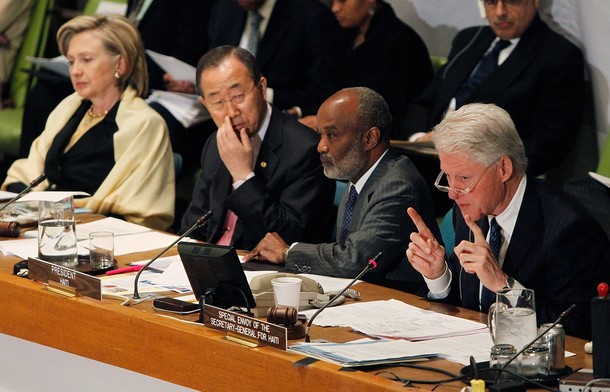
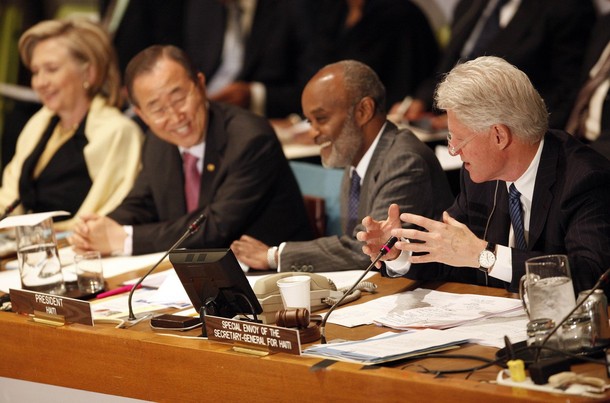
Today, Secretary Clinton announced that she will run an International Haiti Donors Conference in March at the U.N. You may remember her words at the Haiti Donors Conference last April in D.C. That speech was simply spot-on.

Secretary Clinton’s Remarks to Haiti Earthquake Volunteers

From U.S. Department of State: Some Details on the Upcoming International Donors’ Conference Towards a New Future for Haiti

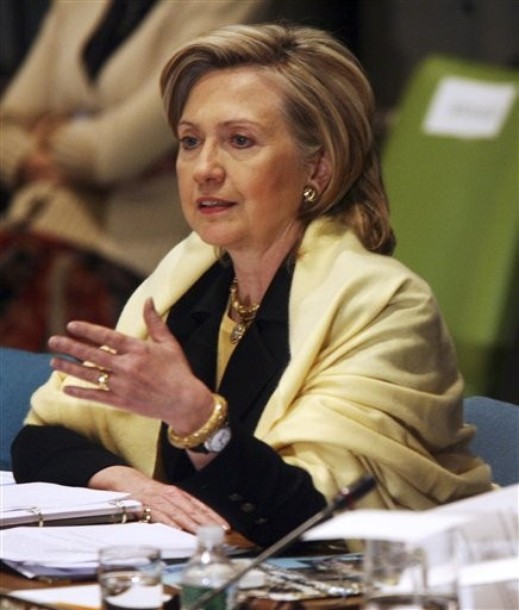
Secretary Clinton’s Remarks at the International Donors’ Conference Towards a New Future for Haiti

We have had over 140 nations working to support the Government of Haiti in delivering food, temporary shelter, and medical care to thousands of survivors. But the emergency relief is only the beginning of what will be a long road to recovery, as the Secretary General just pointed out; one that will require global support.
Some people wonder, “Why Haiti? Why this great outpouring of international humanitarian concern and commitment to Haiti’s future? Why is Haiti’s fate of such consequence to the region and the world that it deserves sustained help? Why should we hope that this time, with our collective assistance, Haiti can achieve a better future?” These are questions that deserve answers and I believe that this conference will begin to do so...
Before the earthquake, Haiti was on a path to progress. The government, led by President Preval, had started enacting critical reforms. Haiti’s economy grew by nearly 3 percent last year. Two international chains launched new hotels, a sign of a rising tourism industry. New factories were opening and others had been contracted to begin production. But with the earthquake, the results of much of this hard work were wiped away. But the people of Haiti never gave up. As they mourn their losses, they gathered the resources they had left and began working around the clock to put their lives and their country back together. They relied on the strength and the spirit that have carried them through tough times before. But they need our help. They cannot succeed without the support of the global community, and we need Haiti to succeed. What happens there has repercussions far beyond its borders.

Hillary sees development as a key component in national security and USAID as an essential agency which played a huge role in addressing long-term plans to assist Haiti.  She recounts the war against USAID waged by Jesse Helms and celebrates this initiative which she and Rajiv Shah initiated in 2011 and she proudly saw launched earlier this year.

Hillary Clinton at U.S. Global Development Lab Inauguration


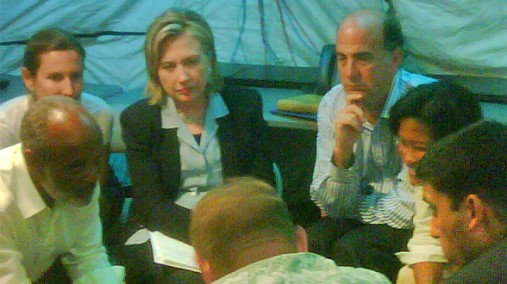
A year after the earthquake, Hillary returned to see the progress of the response (including to the subsequent cholera epidemic) and met with the presidential candidates.   There remained many challenges but things looked greatly improved.

Hillary Clinton in Haiti

"Shifting our focus from aid to development ... The United States was not abandoning traditional aid ... especially as part of an emergency response ... we sought to break the cycle of dependence that aid can create .... Aid chases need; investment chases opportunity." (Hard Choices)

Hillary Clinton’s Remarks at the Caracol Industrial Park Opening Ceremony in Haiti (with Bill Clinton!)


She recounts a personal moment with Préval after the disputed elections and credits him for being the exemplar - the first in Haitian history - to turn over the reins of leadership peacefully to  a successor not of his backing but chosen by the people.  When she speaks of the toughness of democracy, the danger of the running and the peril of the vote,  my memory rewinds to the Aristede election when Haitians literally risked their lives at the polling places and some were, in fact attacked and killed just for trying to vote.  This time, indeed, there was progress, and despite everything Préval might not have been, he, maybe, is their John Adams in some ways.

These images of the former and current presidents, Préval and Martelly, celebrating at the Caracol opening together were historic.

Rene Preval And Michel Martelly At Caracol Industrial Park Inauguration
Haiti - Politic : Martelly gives the brace to René Préval (speech)

In the book,  Hillary provides a thorough and fair accounting of what has worked and what has not in the aftermath of this disaster.  Shortly after she returned to the department following her health crisis in late 2012, this report was issued.

Haiti Three Years After: What Hillary Clinton’s State Department Has Done

Helping other nations build, profit, and rise among the economic powers on the globe is to everyone's advantage, Hillary posits.  Especially our own.  In the case of Haiti's disaster, the U.S. was, it cannot be disputed, the indispensable nation, but we were certainly not alone in the aid or in the investment, and that, Hillary points out, makes all the difference.
__________________________________________________________

Hillary Clinton’s ‘Hard Choices’ Retrospective: Introduction

Access other chapters of this retrospective here >>>>

__________________________________________________________
####

Friday, April 17, 2009

Hillary Clinton in Haiti

Remarks at Interamerican Woven Garment Factory


Remarks
Hillary Rodham Clinton
Secretary of State
Port-au-Prince, Haiti
April 16, 2009


Date: 04/16/2009 Location: Port-au-Prince, Haiti Description: Secretary of State Hillary Rodham Clinton speaks to the workers at the Inter-American Woven factory in Port-au-Prince. Hope II legislation has created 11,000 jobs in Haiti. State Dept Photo SECRETARY CLINTON: Well, I just want to thank the Apaid family and express my appreciation for this visit, because I think what I’m seeing here and the work that’s going on is exactly what needs to happen across Haiti many, many times over.
Inside this factory, nearly 500 women and men are making clothes that will be sold in stores across the United States. Their (inaudible) wages are two to three times the minimum wage. That means a better quality of life for themselves and their families. And it’s exciting because this is a direct result of action that was taken by the United States Congress in passing the HOPE Act in 2006, which builds on the first act that was passed back in the 1990s.
The HOPE Act is based on a few key ideas. First, the Haitian apparel industry, which once was booming – over 100,000 people worked in this industry 20 years ago – it can be booming again. We can put many, many thousands of Haitians back to work.
People of Haiti have the talent and the determination and the work ethic to make this a success across the country. All the people of Haiti need now is the opportunity to work, and work at good jobs with good wages. The HOPE Act has already created approximately 11,000 new jobs. It has been such a success that last October we launched HOPE II that extended trade preferences for Haiti for another decade.
I am here today on behalf of President Obama and myself and the United States to commit that we will work with the people and Government of Haiti to create new jobs. I have just announced that the United States will provide $20 million for Haiti to begin building roads and other important public works.
Many years ago, my husband, Bill Clinton, and I came here right after we were married, and we had a wonderful visit and met so many people here in Haiti. And we have always felt a great sense of affection and commitment to Haiti. So I am going to work both because personally I care about Haiti, but also because now as the Secretary of State for the United States working with President Obama, we want Haiti to grow and prosper again, and for the people of Haiti to have the chance to stay at home, build families, get good jobs, and see their country once again on the right path.
Thank you for letting me come to see you, and I pledge we will do more to create more good jobs for the people of Haiti. Thank you all very much. (Applause.)

Hilary Clinton, Rene Preval Hilary Clinton, Rene Preval Hillary Rodham Clinton, Michele Duvivier Pierre Louis Hilary Clinton, Rene Preval Hillary Clinton Hillary Clinton, Rene Preval Hillary Clinton, Rene Preval Hillary Rodham Clinton, Michele Duvivier Pierre Louis HAITI-US-CLINTON U.S. Secretary of State Clinton meets Haiti's President Preval during her visit at national palace in Port-au-Prince HAITI-US-CLINTON

Remarks With Haitian President Rene Preval


Remarks
Hillary Rodham Clinton
Secretary of State
Port-au-Prince, Haiti
April 16, 2009

PRESIDENT PREVAL: (Via interpreter) It is with great joy that I receive the Secretary of State of the United States today, a personal friend that I have also had the privilege of knowing, senator as well as presidential candidate in the last presidential elections.
So this is your third visit. I find, if I understand correctly, you were here once upon a time as a younger woman and have been here again not too long ago. And this would be your third visit, and I welcome you again for the third time.
The Haitian people are aware of the interest you have always paid to their nation and are very thankful to you for that fact. So I would like to thank you in their name for your continued commitment to our nation. So it is with the sentiment of great gratitude that I offer you the microphone this morning to address this nation of 9 million people who are very eager to hear from you today.
Date: 04/16/2009 Location: Port-au-Prince, Haiti Description: Secretary of State Hillary Rodham Clinton speaks at the National Palace in Port-au-Prince during a press conference, following a private meeting with the President of the Republic of Haiti, Rene Preval. State Dept PhotoSECRETARY CLINTON: I thank you so much, President Preval, for your kind introduction and your hospitality today. It is a pleasure to be back in Haiti. As the president said, this country holds a special place in my heart. I first came here as a newlywed with my husband, Bill, and we spent a wonderful time here exploring the country and meeting many Haitians who shared their homes and their experiences with us.
In fact, we bought some Haitian art, five paintings that have traveled with us in every house we have lived in, including the White House. And I was honored to come back as First Lady after the restoration of democracy in Haiti, and then I was deeply privileged to be the senator from New York, which has a large and thriving Haitian American community.
And I’m delighted to be here as Secretary of State on behalf of President Obama and myself at this critical moment in the history of our nations, our hemisphere, and the world. I also want to acknowledge a number of the dignitaries seated behind the president and thank them for being here with me.
Haiti and the United States share a history of friendship that dates back to the beginning of our nation. In fact, Haiti’s revolt against slavery was an inspiration to people in our own country until we finally also ended slavery. Today, we are connected by many ties, from economic to social and cultural, to the many people we share in common – proud Haitians who live in the United States, many who travel back and forth to this beautiful country and who contribute so much to each of us.
I represented the United States at the donors conference for Haiti, where I made a presentation along with Prime Minister Pierre-Louis. We then met together to talk more specifically about how the Obama Administration will work to support the president, the prime minister, and the Government of Haiti, but more importantly, how we will support the people of Haiti.
We are aware of the extensive damage caused by the four hurricanes last year which interrupted the significant progress that Haiti had been making. And so at the donors conference we looked carefully at the economic recovery strategy put forth by the Government of Haiti and pledged our support.
I announced that the United States will provide $287 million in aid this year, consistent with the priorities outlined by the Haitian Government. We will be funding the creation of jobs to build infrastructure, particularly roads, which we know also must be maintained. And we want to work with the Government of Haiti to come up with a plan to be able to do that.
We will make a significant contribution toward the retirement of Haiti’s debt, which will free up money that Haiti can use on pressing needs for the people of Haiti. We also will provide assistance to the Haitian police, who have been performing so well against the additional challenge posed by the drug traffickers. We wish to support food security and sustainable agriculture. We know Haiti used to be self-sufficient in agriculture, and we want to help Haiti achieve that status again.
I know that there will be an important election in Haiti on Sunday, and I saw many of the campaign posters as I drove in from the airport. I want the people of Haiti to know that the United States’ commitment is to you. We need a good partner, as we have with your president and your prime minister, and we want a plan that will continue moving forward no matter who is elected.
When we start to build roads, we must finish the roads. When we start to help farmers once again make their land rich and cultivatable, we want to be sure they harvest their crops. And when we equip the police force to fight the drug traffickers, we want to work with you so that Haiti can be free of outside influence and intimidation. Because our commitment is to the people of Haiti. The president and I had an excellent conversation, reiterating what is his great hope, that he will see progress begun and finished to give the future back to the people of Haiti.
I know that there’s an old Haitian proverb, Mr. President: Beyond the mountains, there are mountains. Now, some might say, well, that means you never get over the mountains. But what it says to me is you make the journey, and then you see new challenges; you get better and stronger every day. And that is our hope for the people of this wonderful nation.
Thank you very much.
Date: 04/16/2009 Location: Port-au-Prince, Haiti Description: President of the Republic of Haiti, Rene Preval answers questions during a press conference at the National Palace in Port-au-Prince following a private meeting with Secretary of State Hillary Rodham Clinton. State Dept PhotoPRESIDENT PREVAL: (Via interpreter) Thank you, Secretary of State. I would like to ask you to please be seated.
Mrs. Secretary of State and distinguished guests who have accompanied her today, allow me to borrow a phrase of someone who has been coming to Haiti for a very long time, 30 years now, who said that when I look at Haiti I see a glimmer of hope for this nation. Allow me to tell you why this makes clear to us the foundation of what it is that we’re trying to do, this quote from Mr. Bill Clinton. In other words, how did we get here and how – what sacrifices must we make to not lose the things that we’ve accomplished so far?
These results are as a direct result of the continuous dialogue in political arenas and with civil society. After the 2006 elections, I extended my hand to the political parties that were there at that time, and I would like to take this opportunity to do so again with Mr. Victor Benoit, Mr. Paul –
INTERPRETER: I didn’t – I missed some of the names.
PRESIDENT PREVAL: (Via interpreter) They are all here present with us today.
And I would like to take this opportunity here today to publicly thank them and their institutions for the progress and the advancements that they’ve made with their hard work. This political stability has allowed us to attack the problem of insecurity that we face, firstly with armed gangs and then by kidnappings. This success was thanks to the national police force, strongly supported by the United Nations missions here in Haiti.
I would like to publicly congratulate the chief of police, who is here with us today. I am confident to say that today the country can move forward without this threat of armed gangs. So the security having been assured, we can have the stability that is necessary to now move forward with our senatorial elections, which will further ensure the stability that we seek. Mr. Frantz Verret, the president of the electoral council – provisional electoral council, and the members of his team, I would like to thank you and congratulate you as well.
However, Mrs. Secretary of State, despite these advancements that we have made, the stability is still fragile and needs reinforcement. One of the threats to this stability is drug trafficking, which is an enemy of the rule of law, an enemy against the functioning of democratic institutions. As you mentioned in Mexico, Madame Secretary, the demand for drugs in countries such as the United States and Europe is a large concern and factor with these drug dealers. You mentioned this in your statement earlier, and I’m very happy to see that we’re on the same page on this subject. Haiti has reiterated in political arenas its concern that the drug trafficking can negatively impact the rule of law and stability in our country. We await determined and efficient assistance to be able to combat this problem – another issue that is fragilizing the living conditions and the security of the population.
We recognize the importance of the international community in our country. We thank them for the technical and financial assistance they have brought us, especially over the last year. So this assistance, both technical and financial, along with the work that our government is doing, has enabled us to combat inflation by 40 percent, bringing it down to 8.4 percent.
Also, our gross domestic product, which was 3.4 percent, went to, in 2007, to 2.4 percent. And this progress was interrupted in 2008, as you mentioned, by the sharp increase in diesel fuel prices and food on a world scale, and again, of course, by four hurricanes that came through Haiti. The World Bank estimates that more than $1 billion worth of damage was caused by these hurricanes.
Haiti must continue to rely on this foreign aid which constitutes 60 percent of our current budget. This percentage must be gradually decreased as Haiti becomes more able to supplement its own income.
This can only be done with concerted efforts to increase our revenue. This must take place through modernizing our institutions to strengthen the judicial apparatus. We must also encourage private investment and make people willing and trustworthy in order that they may invest here to allow us to increase our revenue. We must improve competitivity by reducing the fees imposed at the Customs Office, by making our collecting of electrical bills more efficient.
And all of this can only be done with the participation of civil society. This is why, aside from the political dialogue, we’ve also initiated dialogue with civil society by setting up working groups. These organizations – these working groups are set up with members of civil society, with professionals, with private investors, and so forth, syndicates, professionals.
As you said in your expression “behind mountains there are mountains,” we must ensure that those of them that are with us while going over the first set of mountains will be there to go with us over the next, and the next, and so on.
We set up about seven working groups, the first of which is on education, and the rector of the university that heads up this working group is here with us today. The group on
increasing competitivity in Haiti, this group is led by Mrs. Gladys Coupet. We have Mr. (inaudible), who is heading up the IT and communications working group. Mr. Micha Gallard is heading up the one on justice. Professor Claude Moise is heading up the working group that is going to review the constitution of 1987 so that it functions more properly and allows us to do the work that we need to do.
Haiti just celebrated the bicentennial of its independence. There is also a group that has been set up to commemorate this bicentennial and so that we don’t forget all of the wonderful things that happened in our history. And Patrick Elie is heading up a reflection group on the insecurity issues that we face here in Haiti.
Why do we have these commissions and what is their purpose? My friend, Jumat, who is a journalist, was asking these very same questions not long ago: Is this just another way of deferring decisions that need to be made? My answer is simple: These working groups are a method for deepening dialogue. There are a means to reflect on themes, to reflect beyond the day-to-day and emergencies. So these working groups will allow us to share. These working groups which are comprised of private sector, public sector, industries, syndicates, professionals, they will allow us to share ideas and figure out how, over the next 10, 15, 20 years, we can move forward to accomplish our goals.
Dialogue is inevitable and essential for us to be able to move forward. It is required that we learn to live together. The United Nations Security Council, the various and sundry groups that we have around the world, the European Union – these are all forums for dialogue that will allow us to move forward. These are consultation venues that will allow us to avoid repeat mistakes.
I will be joining you in Trinidad and Tobago for the Summit of the Americas that will bring together 34 heads of state of the continent. What are we going to do? It’s dialogue, again. The United States recognizes this need for dialogue to arrive at sustainable development and advancement.
We take this opportunity to thank the American Government, the new leadership of, in particular, President Obama and his understanding of how things must be in order for us to move forward.
We hope that in the next Summit of the Americas, Cuba will be with us as well, because this dialogue, this complete and total dialogue, must involve everyone in order for it to be successful. The dialogue of peace is essential for the world.
We would like to thank the United States Government and the American Administration for their role as leaders in this dialogue that is so necessary for the establishment of peace. Welcome, and thank you once again.
We will take four questions, two from foreign journalists and two from Haitian journalists.
PRESIDENT PREVAL: (In French.)
QUESTION: Hello, I am (inaudible). I’m working for Reuters. You know, Mrs. Clinton, a lot of Haitians are living in illegal situation in the United States. And those Haitians are helping so many Haitians back home here in Haiti. Many people in Haiti, including in parts of the country that were most hit by the succession of hurricanes, they rely only on those people to live, to have something to live on to survive. So what the Obama Administration and what yourself intend to do to make sure that the Haitians, the undocumented Haitians over there, could find the TPS, the temporary protected status?
And second, I’d like to ask President (inaudible) Preval. (In French.)
SECRETARY CLINTON: Thank you. I’m well aware of how many Haitians have relatives in the United States who are working there now and providing substantial financial help, particularly because of the hurricanes. We are looking carefully at the policy which we inherited, and we are going to be considering how best to help the people who are here continue to have those resources. But at the same time, we don’t want to encourage other Haitians to make the dangerous journey across the water.
So if we do make any changes in TPS status, it will go back to the beginning of the Obama Administration. So people who were there before President Obama became president would be eligible, people who came after would not be. But we haven’t made a final decision. But we are looking at it very carefully for exactly the reasons, sir, that you described.
PRESIDENT PREVAL: (Via interpreter) I was very encouraged to learn that people at this conference were very much aware of the will of the Haitian people to move forward, not just at the executive level, but also at the level of civil society, public society, peasant groups, syndicates, and so forth. The conference was set up by the various donors, and together we came up with a plan for the financing. I await the details of how this assistance will be presented, but I am sure that it will be instrumental in our moving forward.
The Government of Haiti, the executive branch, and the parliament, in particular, must continue to show their commitment towards working together to accomplish these goals that we’ve set for ourselves.
So I would like to say again what I had said earlier in my previous statement, that it’s not acceptable for Haiti to continue to need to depend on this 60 percent of financial assistance. We must endeavor to increase our own revenue. And I think that is even more important than how the donors conference went.
Second question?
QUESTION: Mark Landler from The New York Times. A question for both Madame Secretary and the president: In a speech in Washington two days ago, I think you said, Madame Secretary, this is a – this small nation of 9 million is on a brink. With the hurricane having wiped out 15 percent of GDP, killed 800 people, and with a donors conference that raised a considerable amount of money but well short of the billion dollars some experts say is needed in totality, are you worried that we’re at a moment where we could have a real backsliding and lose the gains that the country has made? How grave do you think the situation is?
And, Mr. President, if I could just ask one follow up to what you said about Cuba attending the next Summit of the Americas. I wonder whether you would react to the Obama Administration’s announcements earlier this week about the relaxation of travel restrictions and remittances. Some people have said that they were really baby steps and not enough. Would you like to see more? Were you very encouraged by what you did see?
SECRETARY CLINTON: Well, I was very encouraged by the result of the donors conference. I think it was a resounding show of international support for Haiti. I believe that we have work to do, both to demonstrate that, as partners, we can produce the results that the people of Haiti are expecting, and then increase the amount of support that will come once we have demonstrated the results.
My view about where we are today is that Haiti deserves our help. Haiti was on the right track, making progress that everyone remarked on. We have no control over the weather. Four hurricanes in one year was devastating. It would have been to any country. But it knocked Haiti off track, and we have to help Haiti get back on track.
Now, this is not so much about the United States or about any donor. It is about the Haitian people, which is why there must be a commitment no matter who wins elections, no matter whether political society or civil society, everyone is committed to making sure that the money we are investing produces results for the people of Haiti. That’s what this is about for President Obama and for me and for our country. But we were encouraged by the results of the conference, and now, we want to get to work.
PRESIDENT PREVAL: (Via interpreter) Cuba is a friend of Haiti, even though we have different political systems. Cuba has helped us, especially in the arena of medicine. We have about 600 students studying medicine in Cuba and an equivalent number of doctors here in Haiti practicing.
We spoke a lot about dialogue at this conference, and President Obama also spoke of dialogue and openness. I think that dialogue is the path that leads to good cooperation. We would not like to presume to dictate the policies to the United States. We have a wish, and that wish is also the wish at the heart of the United Nations, and that is that the embargo against Cuba be lifted so that they may be permitted to participate in this dialogue that is so important.
QUESTION: (Via interpreter) So the Secretary of State is here with the interest of stability and ensuring security. Okay. So three days from the election, of course, there are people that are manifesting and making noises and parliamentarians as well who are expressing their thoughts. And there are also parliamentarians that feel that the financial aid was not done in a clear and transparent manner. They are threatening not to validate these senators should they be elected. So the population at large is expressing – has expressed worry about this situation.
So what guarantee can you give to the Haitian population that these elections on Sunday will be honest and open and that there will not be any violence?
PRESIDENT PREVAL: (Via interpreter) Elections are the means to establish democracy and ensure the continuity of this democracy beyond the elections. Each person has his role in this game. The political parties present themselves to the people to have their votes, and they are not obliged to do so. People are called upon to vote, and they are not obliged to do that either. Of course, we hope that many people will vote.
The electoral council is the independent entity that organizes these elections. And security is provided by the national police force. We hope that all measures will be taken so that these elections can be carried out without incident. So – and we hope that the senators, once elected, will fulfill their mandates and complete this integral part of our government that is the parliament.
Article 125 is the obligation of the state to financially support these political parties in the election. These candidates are also free to obtain financial assistance from individuals, from private parties. Yesterday, we brought up this issue of Article 125 with the political parties. This question was raised late in the game, even though it is the responsibility of the executive branch to answer this type of question. It’s already Thursday, a couple of days before the elections. So we’re going to see what we can do as a government in the absence of the minister of justice, who is not here, and of the prime minister as well, to work towards ensuring that these events take place without incident.
Your question has an undercurrent to it because you spoke of a poor distribution of investment. We’re doing everything in our power to ensure that the government is neutral in the context of these elections.
As you know, the delegates and the vice delegates play an important role in the carrying out of these elections. We have taken the additional precaution of leaving all the delegates and vice delegates in place. If it so happens that any of these people, delegates and vice delegates, who were also, by the way, present during the interim government, if it becomes obvious that any of them are misusing any of these funds in favor of their party, it is the responsibility of anyone who is aware of such actions to make this known to the provisional electoral council.
QUESTION: Hello? Yes. For Madame Secretary, more questions on Cuba. Is it now in the Cubans’ court, is the ball now in their court after President Obama relaxed travel and transfer restrictions? I’ll do better, there it is. (Laughter.) And what steps would you like to see them take, including what people have called for in the past, such as releasing political prisoners? And over what timeline would you like to see that happen?
And finally, President Preval, you answered most of my questions on Cuba, but you did mention – you called for a lifting of the embargo. But would you expect Cuba to take some steps, specific steps before the U.S. does that?
SECRETARY CLINTON: Well, I think it is very significant that within the first 100 days of his presidency, President Obama has relaxed the regulations concerning family remittances and travel, as well as expanding telecommunications investment opportunity between the United States and Cuba. I agree with the overall emphasis on moving toward dialogue and openness throughout our hemisphere.
We stand ready to discuss with Cuba additional steps that could be taken. I think that’s very clear from President Obama and my statements and actions during the last several months. But we do expect Cuba to reciprocate. President Preval just gave a very thorough explanation of the election process here in Haiti. People are out running for office because they choose to, not because they have to. People vote because they choose to, not because they are required to. That is a democracy, and it is vibrant and very important. We would like to see Cuba open up its society, release political prisoners, open up to outside opinions and media, have the kind of society that we all know would improve the opportunities for the Cuban people and for their nation.
So I think it is fair to say, as the President said himself yesterday, I believe, that we would like to see some reciprocal recognition by the Cuban Government for us to continue to engage in this dialogue and take further steps.
PRESIDENT PREVAL: (Via interpreter) I enthusiastically salute the endeavors of President Obama towards Cuba. And I am not here to dictate to the United States by what criteria they wish to carry out their dialogue with Cuba. Everybody knows that this embargo that has lasted more than half of a century has not done anything to advance things. The Cuban diaspora has shown its will, its desire for this dialogue to be open and free with Cuba. Members of the American Government have gone to Cuba to begin this process of opening up dialogue with Cuba. Many international resolutions have been taken asking for the lifting of this embargo. My conviction is that more openness would enable more dialogue, regardless of the political regimes involved.
You have similar rapports to the one that you have with Cuba; for example, China and –
PRESIDENT PREVAL: Vietnam.
INTERPRETER: Vietnam, thank you.
PRESIDENT PREVAL: (Via interpreter) I think that, once again, I would like to reiterate that I am not here to dictate any form of policies to the United States Government, but I would like to say again that I believe that dialogue will be easier and more free if we are open to it and if we allow it to occur – not just with Cuba, but for the – several other countries in the world, as is already the case.
Thank you very much to the journalists for the questions they have asked. Thank you, Mrs. Clinton, as well.