Showing posts with label Jill Dougherty. Show all posts

Tuesday, January 29, 2013

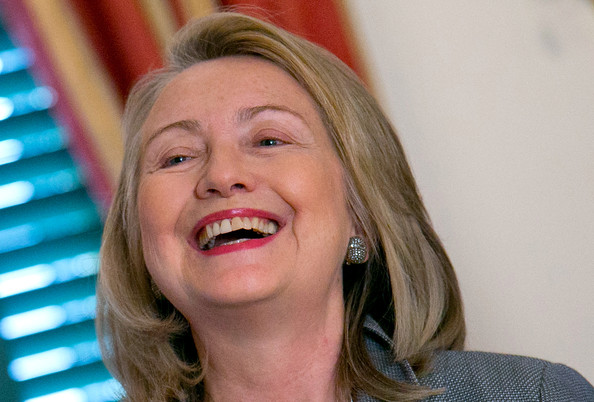
Hillary Clinton with Elise Labott and Jill Dougherty of CNN


Interview With Elise Labott and Jill Dougherty of CNN


Interview

Hillary Rodham Clinton
Secretary of State
Washington, DC
January 29, 2013


QUESTION: Madam Secretary, thank you very much for talking with CNN. I was thinking I’ve been following you around for 20 years reporting on you.
SECRETARY CLINTON: Goodness, Jill.
QUESTION: And Elise and I have been on the plane flying around with you for four years, so it’s very nice to be here to talk with you at this turning point in your life.
SECRETARY CLINTON: Thank you. And thanks to both of you. I’ve enjoyed having you be part of the flying circus and traverse the globe, and appreciate the attention that CNN pays to international news stories. It makes a big difference.
QUESTION: It’s great to hear that.
QUESTION: Thanks for coming on.
QUESTION: Well, in typical CNN style, let’s begin with the news. Egypt.
SECRETARY CLINTON: Yes.
QUESTION: Turmoil.
SECRETARY CLINTON: Yes.
QUESTION: Sixteen people approximately, dead. The head of the army says that the state could actually fall apart, disintegrate. Is he right?
SECRETARY CLINTON: Well, I hope not because I think that would lead to incredible chaos and violence on a scale that would be devastating for Egypt and the region. But there has to be some understanding by the new government that the aspirations that the people were expressing during the revolution in Egypt have to be taken seriously. And it cannot in any way be overlooked that there is a large number of Egyptians who are not satisfied with the direction of the economy and the political reform.
This is not an easy task. I have to jump in and say that we can sit here and talk about it from a distance. It’s very difficult going from a closed regime and essentially one-man rule to a democracy that is trying to be born and learn to walk. But there are some clear lessons. You have to represent all of the people, and the people have to believe that. You have to have the rule of law that applies to everyone, not just to some of the people. You have to have a constitution that respects and recognizes the rights of all people and doesn’t in any way marginalize any group. So I think the messages and the actions coming from the leadership have to be changed in order to give people confidence that they’re on the right path to the kind of future they seek.
QUESTION: Let’s move to Benghazi. There have been a lot of questions. You’ve answered a lot of questions, but there’s one in particular. The signs were there. The British Ambassador had been attacked. The walls of the Embassy had been breached. Why didn’t you connect the dots, ask the question: Wasn’t it too dangerous for Chris Stevens, the ambassador who was one of the most valuable people you had in that region? Why didn’t you ask those questions?
SECRETARY CLINTON: Well, we were certainly aware of the increasing threat environment. I not only was briefed on that, I testified to that effect. And there were constant evaluations going on. But no one – not the Ambassador, security professionals, the intelligence community – ever recommended closing that mission. And the reason they didn’t was because the ongoing threat environment had, up until the spring before our terrible attack in Benghazi, been a result of post-conflict conditions. That is something that we’re familiar with all over the world. Yes, there were some attacks, as you have said, but our evaluation of them and the recommendation by the security professionals was that those were all manageable, because we have a lot of that around the world. I mean, there is a long list of attacks that have been foiled, assassination plots that have been prevented. So this is not some one-off event. This is considered in an atmosphere of a lot of threats and dangers.
And at the end of the day, there was a decision made that this would be evaluated but it would not be closed. And unfortunately, we know what happened.
QUESTION: Quick question on the Middle East peace process. Kerry, the new – who will soon be taking your place, is saying that there should be a new approach. What could he possibly do? I mean, that almost sounds like it’s a criticism of the given policy that you have right now.
SECRETARY CLINTON: Oh, I don’t think that’s at all what John Kerry was referring to. First of all, there was just an election in Israel where the makeup of the government is likely to change. Certainly the makeup of the Knesset has changed. What new opportunities does that present? There is constant pressure on the Palestinian Authority. There are continuing threats to Israel’s security from Hamas. There is Syria right on the border that is a very dangerous environment. There is a new regime in Egypt that is constantly being evaluated. So you have to always say to yourself: What can we do and what opportunities are there? And I think if you look at the potential list of changes, it certainly is appropriate for soon-to-be Secretary Kerry to go test that out, to try to figure out is there some other way forward.
And I fully support that. I’m someone who believes strongly that no matter how difficult the road is to try to bring the Israelis and the Palestinians together, you must always try. And if there are new on-ramps and off-ramps and opportunities, use them and see whether you can make even incremental progress, which would be very important to send a message to those Palestinians that still believe in the two-state solution, they are the ones who should be listened to, and send a message to Israelis that their security and stability is paramount and there are ways that they can enhance it by engaging with the Palestinians.
QUESTION: Madam Secretary, I want to read you the headline of an article in the LA Times today. It said, “Hillary Clinton’s Legacy at State: Splendid but not Spectacular.” (Laughter.) That you were hugely popular in this Administration and around the world, but some of these big-ticket items that we’ve been mentioning, particularly the Middle East, Iran, North Korea, not solved, still intractable, and maybe even worse in some instances. Is that how you see your legacy, hugely popular but didn’t solve these horrible issues?
SECRETARY CLINTON: Well, I think that could be said about nearly every administration and certainly every Secretary of State, because when you come into office you inherit the world that it is in reality, not the way you wish it would be. And I think we have to go back to my beginning in January of 2009 to remember how poorly perceived the United States was, how badly damaged our reputation was, how our leadership was in question, how the economic crisis had really shaken people’s confidence in our government, our economic system, our country. Part of my job in the very beginning was to get around the world and restore confidence in American leadership, sometimes against some pretty tough odds because there were a lot of people pointing fingers at us, particularly over the financial crisis.
But it was important to stabilize the situation, which I think we did. I know the President was talking about that in an interview we did the other day, that – let’s be realistic here about what the conditions were. We had the war in Iraq that had to be wound down. We had a troop request for 30,000 troops sitting on the President’s desk the first day he walked into office. We had so many serious problems.
QUESTION: You had a full plate.
SECRETARY CLINTON: And I don’t think anybody can argue with what we did to try to set the table. And then what did we do with that? You can go down the list, and whether it’s how we handled the Arab Spring and the work that had to be done in order to try to prevent even more serious challenges, how we put together an international coalition to inflict the toughest sanctions on Iran and North Korea, not that those are solved. But diplomacy is sometimes building on steps one after the other – opening to Burma, pivoting to Asia, working to really strengthen our ties in Europe and Latin America and Africa. I’m very proud of what we’ve done.
But equally so, we began to practice diplomacy in a different way – not that we jettisoned everything that had been done before, but we added new tools in the toolbox. We also expanded the aperture. Let’s look at what technology can do for us. Don’t forget women and girls; they’re half the population, right?
QUESTION: Well, let me ask you about women, Madam Secretary. You broke a lot of glass ceilings. You brought women a lot in leadership to the State Department. You’ve said this is your life cause to end the double standard. You’ve leaving office – four top positions in this Administration in the cabinet, none of them are women. Is that a problem?
SECRETARY CLINTON: Well, I think you have to wait to see the entire makeup of the cabinet --
QUESTION: Top four positions though. The top four secretaries that are considered crucial to this Administration, particularly in national security.
SECRETARY CLINTON: Well, I’m not going to pass any judgments. I think that what we have to do is take a look at the broad picture. But clearly, from my perspective, we have to keep providing opportunities for young women to get into that pipeline so that they are ready.
QUESTION: There are no women out there for these top positions?
SECRETARY CLINTON: Oh, no. Obviously, I think there are. But I think there is still a ways to go until we have the kind of critical mass that I want to see. And we made progress in the number of women in the Senate, but it is still abysmally small. There are so many – on the one hand this, on the other hand, that. We make progress, there’s no denying that, but we haven’t firmly institutionalized that progress. And as much as we have done here, I look around the world, and my goodness, there is so much to be done.
QUESTION: Well, there are lot of women leaders around the world. In April, you told Wolf Blitzer for 2016, “That’s not in my future.” But you seem to be – I don’t know – (laughter) – like maybe some wiggle room there. Have you decided?
SECRETARY CLINTON: No, no. I am so looking forward to Monday, when I have no schedule, no office to go to --
QUESTION: You know the field --
SECRETARY CLINTON: -- no responsibilities.
QUESTION: I’m sorry, Madam Secretary, you know the party says the field is clear and open for you until you make your decision. Have you decided that you absolutely will not run?
SECRETARY CLINTON: Well, I have absolutely no plans to run.
QUESTION: But look at – (laughter) – you’re not saying – this is not a Shermanesque statement, “I will not run.” We heard this morning all of these people asking you if you can run. There’s a PAC just registered Ready for Hillary.
SECRETARY CLINTON: Is there really?
QUESTION: Are you going to tell these people to stand down?
SECRETARY CLINTON: Well --
QUESTION: Everyone is waiting for that --
SECRETARY CLINTON: Right now, I am trying to finish my term as Secretary of State. And the President and I had a good laugh the other night because I am out of politics right now. And I don’t know everything I’ll be doing. I’ll be working on behalf of women and girls, I’ll be hopefully writing and speaking. Those are the things that I’m planning to do right now.
QUESTION: Let’s talk about when you said “that Monday morning” – we presume next week.
SECRETARY CLINTON: Yes, yes.
QUESTION: Okay, you wake up. (Laughter.) Maybe you stay in your pajamas. What do you do?
SECRETARY CLINTON: (Laughter.) Jill. I don’t know. It’s been my whole life. I mean, I’ve had a job ever since I was 13 years old. When I wasn’t in school, I was working, so --
QUESTION: But is it going to be traumatic? I mean – your Blackberry, are you going to check --
SECRETARY CLINTON: I don’t know. This is – I think it’s going to take some adjustment. I’ve been talking to colleagues who left the government earlier. And the most common thing they say to me is, “Don’t make any decisions. You have no idea how tired you are.” And I think there’s truth to that. Your viewers know, because they’re interested in these issues, this is a 24/7 job because there’s no part of the world we can ignore. Maybe four years, eight years, twelve years, certainly twenty, thirty, forty years, there were big chunks of the world that were not of direct interest to our security or other matters that we were concerned about.
QUESTION: But how did you get the energy – I mean, are you going to be able to stop? Are you going to be able to stop?
SECRETARY CLINTON: Well, you’ll have to talk to me in a few weeks to see how I’m doing. I think that – I’m really looking forward to it. I know it sounds vague, because I have never done this before in my life. So when I wake up, Monday, Tuesday, Wednesday to have the luxury of nowhere to go, nothing to do, no frantic call about calling some leader about some impending crisis, I’m actually interested to see how that goes.
QUESTION: Now, what about your health? Because I do have to ask you this. We talked with a couple doctors, and they say that if you have had one blood clot, there is two times the chance that you will have another one. I mean, is this something that you’re going to have to deal with for –
SECRETARY CLINTON: Well, millions of people do. I mean, it’s very common. It’s not --
QUESTION: Will you take medication?
SECRETARY CLINTON: Well, that’s what people do when they have blood clots. And then you get evaluated after the blood clot has resolved because, as you say, I experienced this before. But I am lucky because I’ve been very healthy. I feel great. I’ve got enormous amounts of energy that have to be harnessed and focused. So I’m very fortunate, and I’m looking forward to this next chapter in my life, whatever it is.
QUESTION: Before you leave --
QUESTION: Jill.
QUESTION: Before you leave --
SECRETARY CLINTON: (Laughter.) Yeah, be subtle, but persistent about it.
QUESTION: (Laughter.) Before you leave, normally a secretary leaves a gift for the next secretary coming in. Can we – can you tell everybody in the world what you --
SECRETARY CLINTON: No, I’m not going to tell you. I’m going to let that be between John and me. John and I have been friends and colleagues for a very long time. And he’s extremely well-prepared, as you know, for this job. And I think he doesn’t need very much gifting, but I’ve got something that might help.
QUESTION: Just one last question about the family. You’ve got President Clinton, international health, you have Chelsea, who studied international health.
SECRETARY CLINTON: Right.
QUESTION: You’re interested in women development, health issues.
SECRETARY CLINTON: Mm-hmm.
QUESTION: So what do you do? Are you – is there a chance that you will all work together?
SECRETARY CLINTON: I hope so. I mean, that’s one of the things we have to really work out, is – I’m very proud of what my husband has done in the last ten years. I mean, his foundation, his entrepreneurial philanthropy with the Clinton Global Initiative, his great work on getting the price of AIDs drugs down so that more people could get treatment, and so much else. And he is also focused on the health of children here in this country through the Healthy Alliance. So he’s doing things that resonate with me as well as with him. And we’re going to look to see how we can join our efforts together.
QUESTION: What about Chelsea?
SECRETARY CLINTON: She’s great.
QUESTION: She says she wants to lead a life of public service.
SECRETARY CLINTON: Yes, she does.
QUESTION: That makes you proud. Is she going to run?
SECRETARY CLINTON: She – no, I don’t know about that.
QUESTION: Family business?
SECRETARY CLINTON: I think she is really focused on the philanthropy. She did a great service after Hurricane Sandy. She took a large group, about 1,000 people that were put together through our foundation and through CGI, to go and do a lot of difficult manual work for people who had been just devastated. She and Bill and I, we are – we just have public service in our DNA. That doesn’t have to be political service. It can be what we’re doing now, and what Bill has been doing now. So I think we’ll work all that out. It’s going to be fun to talk it through and figure out what our next adventures might be.
QUESTION: Well, Madam Secretary, thank you very much.
QUESTION: Thank you, Madam Secretary. Good luck.
QUESTION: We wish you a lot of good luck.
SECRETARY CLINTON: Thank you, thank you.
QUESTION: And a lot of adventures.
SECRETARY CLINTON: I think we’ll have some adventures and maybe the two of you can come along again some time.
QUESTION: We’d love that. We’d love that.
QUESTION: It’s a deal.
SECRETARY CLINTON: Thank you.
QUESTION: Thank you.


Monday, January 14, 2013

Update on Hillary Clinton's Schedule: Testimony on The Hill and Visiting Dignitaries

During today's press briefing, Victoria Nuland deferred to the Congressional committees to announce the schedules for Secretary Clinton's testimony on Benghazi and offered some insight as to what her testimony will include. In addition, she provided a peek at some of Mme. Secretary's bilaterals this week.  Here is a snip of the transcript.
01-09-13-Z-01
QUESTION: Do you have any update on when the Secretary might testify? And could you also tell us how her preparation is going, what she’s doing to prepare for that testimony on Capitol Hill?
MS. NULAND: Well, with regard to the consultations that we’ve had with the Congress on the timing, I’m going to defer to the two committees to announce the hearings when they’re ready to do so. But we did talk about these happening after both houses come back into session next week. So we will defer to them on any formal announcements.
Secretary is doing what she always does. She is going through all the steps that this Department is taking to implement the recommendations of the Accountability Review Board. I think you’re aware that – well, first and foremost, as you know, she’s made a commitment that all 29 recommendations will be implemented and that the implementation should be well in train before she finishes here. So I think she’ll want to update the committees on implementation.
As you know, Deputy Secretary Nides is leading an implementation process here in the building. I think he’s having his 11th meeting with the various stakeholders this week to get that work – as many of the short-term recommendations completed as possible, the medium-term ones well underway, and the longer-term ones well set up. So I think you’ll hear a good accounting from her on all those things when she testifies.
QUESTION: And this is an important week because it’s the week before the inauguration. I think you were mentioning that perhaps we might see some meetings that she would have with foreign visitors. Can you – is there any schedule information that you can share with us at this point about what the Secretary will do this week?
MS. NULAND: I think we did put out some scheduled things over the course of the week.
QUESTION: Yeah, you did, but I mean anything --
MS. NULAND: She’s going to see Ellen Sirleaf Johnson of Liberia tomorrow. She’s also seeing her Colombian counterpart. I think that one is tomorrow as well. As we said, the Somali President will be here on Thursday. We’ve already announced the visit of the new Foreign Minister – Foreign Secretary of Japan – Mr. Kishida will be here on Friday. So it’s a busy diplomatic week.
QUESTION: So these would be more – let’s call them working on the relationship issues in the relationship, as opposed to farewell, right?
MS. NULAND: Oh, all of these are working visits of foreign ministers or heads of state continuing the bilateral and regional work that we do together, yes.


Edited to add:
Apparently Congress was willing to accommodate the State Department by not waiting to be back in session.  CNN’s Jill Dougherty just posted this on Facebook.
Rep. Ed Royce (R-CA), Chairman of the House Foreign Affairs Committee, announced that Secretary of State Hillary Clinton will testify before the Committee on Wednesday, January 23 to answer questions about the September 11, 2012 terrorist attack on U.S. diplomatic facilities in Benghazi, Libya. In the attack, terrorists killed Ambassador Chris Stevens, Sean Smith, Tyrone Woods, and Glen Doherty.

Sunday, November 25, 2012

Hillary Clinton and the Gaza Cease-Fire


As she was  completing her first year of service at the State Department, a senior official expressed surprise that Mme. Secretary had not adopted a signature issue.  Many of us, observing from a distance as opposed to within the pea soup of Foggy Bottom, were surprised that a senior staffer could not see what was so eminently clear to us:  That women and girls, their safety, education, place in society and in the economy were her central  issue.  Over the past nearly four years her persistence on these issues and her inclusion of the LGBT community under the umbrella could not possibly be missed.

Why is it that the officials who work closely with her do not trust or "get" what faithful Hillary followers immediately grasp?

An unidentified official told CNN's Jill Dougherty of the behind-the-scenes doings during last week's Middle East shuttle mission in this excellent article: Behind the scenes of Clinton’s “shuttle diplomacy”.

Most Hillary loyalists will not be surprised to read that the deal was far from wrapped up by the time the wheels of her "Big Blue Bird" hit the tarmac in Israel.  We didn't think it was.   It was hands-on and very specific work.
“You could not have a more textbook case of on-the-ground diplomacy, where she is literally word-smithing the final cease-fire documents with both the prime minister of Israel and the president of Egypt,” the State Department official says.
She was “sitting there with the paper, with a pen in her hand, making small edits, underlining things, passing words back and forth, debating phrases. And all the while, also stepping back and saying ‘What’s the larger strategic picture here? Why is it so important for you, Prime Minister Netanyahu, to close this out? Why is it important for you, President Morsy, to close this out?’”
By the same token I expect many will, like me, be shaking their heads that her senior officials still do not have faith in her resolve when she is meticulously negotiating the verbiage between the parties.
“We were taking a risk in doing this,” this official says. “We were putting both her credibility on the line and the United States’ credibility on the line, and ultimately we decided the stakes were too high not to do it, but there was a very real risk that this would not succeed.”
Amid the nail-biting by her staff, Clinton was “resolute,” the  official says. “She thought this was the right course of action for Israel’s interest, for regional stability. She felt at the end of the day that would shine through if you could get people focused on the big picture, and that’s what she was trying to do.”
That she managed, at  the end of the day, to accomplish  what she had set out to do may have surprised some,  but for those of us accustomed to seeing Hillary Clinton with a look of determination on her pretty face and a pen in her hand, it came as no surprise.   We knew she would do it.  We had faith.

Tuesday, May 8, 2012

Hillary Clinton with CNN's Jill Dougherty


Interview With Jill Dougherty of CNN


Interview
Hillary Rodham Clinton
Secretary of State
Taj Palace Hotel
Delhi, India
May 8, 2012

QUESTION: Secretary Clinton, thank you very much for being with us. This has been quite a trip, and I want to begin at the beginning, in China. Mr. Chen, Chen Guangcheng, is still in the hospital. Do you believe that China will follow through on this agreement and allow him to get out, come to the United States?
SECRETARY CLINTON: Well, Jill, I think that we’re looking forward to welcoming him to the United States. He is still in the hospital receiving medical treatment, some of which was recommended by the Embassy doctors who examined him. We remain in close contact with him. We know that Chinese officials have visited him in the hospital in order to begin processing necessary papers, and we’re doing the same in order to prepare the way so that he can come here and pursue his studies.
QUESTION: But do you believe that the government will follow through on what it promised?
SECRETARY CLINTON: Well, we’re looking forward to welcoming him and seeing him have the chance to pursue the studies that he has said he’s interested in doing.
QUESTION: Right now there is a smear campaign against him. Some of his relatives and friends are being picked up by the police. Some apparently have been beaten up. What, if anything, can the United States do? Are you going to be talking about this?
SECRETARY CLINTON: Well, we talk about the full range of human rights issues, the specific cases that are part of our ongoing dialogue and the more general concerns that we have. So I think it’s fair to say that any issue will be addressed. It is for us, though, principally the focus of our efforts now to do what we can to bring Mr. Chen and his family to the United States.
QUESTION: Now, Mitt Romney, in the middle of this, made some comments, some critical comments. Was it correct for him to do that?
SECRETARY CLINTON: Well, I’m not going to get into domestic American politics. That’s something that I am staying out of for all the obvious reasons. But I think that the work that was done in this exceptionally unusual case with extraordinary circumstances was a very important demonstration of both American values and Mr. Chen’s wishes. And I think that it was in the best tradition of what American diplomacy is about.
QUESTION: Now, here in India, one of the big issues is Iranian sanctions. And of course, we have the deadline getting closer for countries that should cut back on imports of Iranian oil. One of those countries happens to be India. What are they saying to you – the Indians – about this? Will they meet those targets?
SECRETARY CLINTON: Well, India has reduced its dependence on Iranian oil. I know their refineries have stopped asking for orders to purchase Iranian oil. So they certainly have taken steps. We are working with them to help them in any way that we can offer technical assistance, and next week my energy coordinator, Ambassador Carlos Pascual, will be here in India with a team of experts. Because we know that this is hard for India, just like it’s been hard for some of the European countries that were very dependent upon Iranian oil, for Japan. And we have worked with them and offered suggestions about alternative sources of supply at an affordable cost. So we appreciate the steps that India has taken, and we’re continuing to consult with them.
QUESTION: But it does place friends in a difficult situation.
SECRETARY CLINTON: Well, India shares exactly our goal. Their goal is our goal, and that is to prevent Iran from becoming a nuclear weapons nation, which we think would be greatly destabilizing of the region and the world, and in fact could lead to greater disruptions of oil supply which would also be damaging to India.
So everything in this high-stakes diplomacy that we’re engaged in is an exercise in calculations. The Indians and the United States are on exactly the same side as the international consensus that Iran cannot, should not, must not, have a nuclear weapon. I don’t think Iran would be at the table discussing this with the so-called P-5+1 nations if we hadn’t implemented very tough sanctions. We want to keep the sanctions pressure on, which requires – yes – our friends, nations with whom we have great areas of agreement, to have to make some tough choices.
QUESTION: I want to ask you about Alan Gross. CNN’s Wolf Blitzer did an interview with him. He, of course, is the American who has been held in Cuba. And he – Blitzer, Mr. Blitzer, got an answer from the ambassador, the Cuban ambassador, at the Interests Section saying, look, we have the Cuban Five who are being held in just as if not worse circumstances than Mr. Gross, but we are willing to solve this on a reciprocal basis.
What would have to be done in order to free Alan Gross?
SECRETARY CLINTON: Well, first of all, Mr. Gross should not even be incarcerated in Cuba. Mr. Gross was not a spy. Mr. Gross was not an intelligence agent. Mr. Gross worked for a development group that was helping Cubans, principally in their small Jewish community in Cuba, to have access to the internet. And Mr. Gross, in our view, is being held without justification and has been detained already far too long. So there should be a decision by the Cuban Government to release him, and we would like to see that happen as soon as possible.
Now, we are well aware that the Cuban Government wants to see the release of their intelligence agents, five Cuban spies who were lawfully arrested, tried, and convicted for espionage. One has already served his sentence in prison. He’s continuing to finish out his parole. Another will be up for parole – all within the regular order of our system, a system that provides due process, rule of law protections. It does not have a record of arbitrary arrests or detentions like the Cuban Government does.
I am deeply distressed and unhappy for the Gross family. I’ve met with Judy Gross. People in the State Department stay in close touch with her and with her family. They have been incredibly brave in the face of this injustice. But the Cuban Government has released political prisoners, which is something we’d like to see them do with Mr. Gross.
QUESTION: The French election brought in Mssr. Francois Hollande, who I’d like to get your opinion on how this might affect things, specifically let’s say in the use of military action or a harder approach when it comes to international action, let’s say areas like Libya. Certainly, under Mr. Sarkozy, he was quite strong in terms of using military action. What are you anticipating? What would be your hopes with the incoming president?
SECRETARY CLINTON: Well, first we’re looking forward to receiving the new French president, and he’ll be coming to the United States for a visit, attending the G-8 summit, the NATO summit in Chicago. So there’s a lot of anticipation on the part of our government and I think our nation, because France is our oldest ally. We have a deep, long, enduring relationship with France, with the government of France, with the people of France. So until we’ve had a chance to actually consult and hear his views and have a chance to express our own, we’re going to be waiting eagerly to do that.
QUESTION: Have you been following the demonstrations in Moscow, the crackdown on those demonstrations?
SECRETARY CLINTON: Right. Well, certainly from the TV coverage I have seen the extent of the demonstrations. And I think it goes to the hope that all Russians have and that everyone who cares about Russia has that with the new term that President Putin is about to begin, Russia will be able to continue democratizing, protecting and respecting the rights of all Russian citizens, ensuring that there is a level playing field for political and economic participation. And I think that for those of us watching from afar on television who have such great respect for Russia, as I know you do, having lived there and studied and really become quite knowledgeable about Russia, we want Russia to fulfill its own potential. And that, of course, means giving people the chance to express themselves.
QUESTION: I know you have to catch a plane, so let me just ask you a quick question. Vice President Biden made an interesting comment. He was asked about 2016, and he said – I think he said you and he could be a team, and then he said, “I don’t know whether I want to run and Hillary doesn’t know whether she wants to run.” So I was wondering if he knows something about you that you don’t know. (Laughter.)
SECRETARY CLINTON: I don’t think so. We’ve been friends for a long time and we’ve been on the same team. We’ve been on the same team in the Senate. We’re on the same team now for President Obama. And no matter what I do in the future, I’d love to have Joe be on my team, because he is a great and effective person who cares deeply about our country.
QUESTION: And just one last question. When you were at that town hall in Kolkata, and almost every town hall, there are always personal questions about you. And you went on at some length about the glass ceiling, the double standards about women. And right after that, now in the blogosphere there is a big thing about Hillary Au Naturel; in other words, you without makeup, you wearing glasses. (Laughter.) What can I say? But this is exactly what you were saying, that it’s either the hair or it’s something like that.
SECRETARY CLINTON: I feel so relieved to be at the stage I’m at in my life right now, Jill, because if I want to wear my glasses, I’m wearing my glasses. If I want to pull my hair back, I’m pulling my hair back. And at some point it’s just not something that deserves a whole lot of time and attention, and if others want to worry about it, I’ll let them do the worrying for a change.
QUESTION: So it doesn’t drive you crazy?
SECRETARY CLINTON: It doesn’t drive me crazy at all. It’s just not something that I think is that important anymore. (Laughter.)
QUESTION: I agree. (Laughter.) Okay, well, thank you very much, Secretary Clinton.
SECRETARY CLINTON: Thank you.

Monday, April 2, 2012

Video: Secretary Clinton's Interview With Jill Dougherty of CNN


Interview With Jill Dougherty of CNN


Interview
Hillary Rodham Clinton
Secretary of State
Istanbul Congress Center
Istanbul, Turkey
April 1, 2012


QUESTION: Madam Secretary, thank you very much for doing this. I want to start with the sanctions, with the pressure. If you look at all of this pressure, something doesn’t seem to be working because Assad is still there, and notably, you don’t have any major defections from the key top leadership, the people who are close to him. Why is that? Could one of the factors be that the United States and others are saying “we don’t want military action, and that could be emboldening him?”
SECRETARY CLINTON: Well, Jill, I think the sanctions are beginning to have an effect, but we have to do more to implement them, and that’s why we formed a sanctions committee today. And the United States will be working with the Arab countries, the European countries, North African, and others to have them understand the most effective way to implement sanctions. Because, as one of them said to me, “The Americans have a lot of experience in doing sanctions. We don’t.” So we’re making progress.
Also the individual sanctions – the travel bans, the visa bans, the kinds of direct personal sanctions – are beginning to really wake people up. They’re looking around thinking for the rest of my life, I’m only going to be able maybe to go to Iran; that doesn’t sound like a great idea. So we hear a lot from the inside that these sanctions are happening in a timely way. Also, the reserves of the country are being drawn down, marketplaces are not as full of goods as they once were. So this does take time. We’re well aware that time is going by, people are being killed, it just is absolutely horrific what’s happening. But the Istanbul meeting today was quite consequential in terms of the outcomes, and really increasing the enforcement of sanctions was one of the best.
QUESTION: Let’s look at the opposition. A number of them are expats, people who have lived out of the country for years and years. Why should anybody who’s inside Syria right now trust them? And do they actually know the real situation on the ground?
SECRETARY CLINTON: Well, what’s happening is that the Syrian National Council is expanding. I just met with four representatives, including a young woman who just escaped from Homs. I mean, she is someone who is bearing witness to the horrors of what the Assad regime did to the neighborhoods of her city. And she had very poignant stories of close friends who were tortured and are in hospital, and if they’re discovered as having been in the opposition, will be killed. I mean, it’s a terrible human tragedy, but she is a witness.
So I think, along with the people who started the Syrian National Council, who are in a position to do so – because they had been driven out by the Assads, father and son, over the course of many years – they’re now being joined and, frankly, their credibility is being enhanced by both civilian and military defections. And we think that’s significant.
QUESTION: If you stand back and look at this, you have right now – you talked about those broken promises, the broken promises – if you stand back and look at it, there’s kind of a pattern emerging. And you could say Syria, broken promises by President Assad, you would assert. You have broken promises, you also would assert, from Iran on the nuclear program. And you have North Korea, which also has broken promises.
So in this pattern, what explains that pattern? It’s similar to what I was asking first off, which is: Is there something that this Administration is doing, which is kind of standing back, not being as aggressive as some people might want you to be, that is emboldening them, allowing them to say we’ll just play out the clock?
SECRETARY CLINTON: Well, I don’t think so. I think if you look at what this Administration did, we put together an international coalition – a consensus, really, against both Iran and North Korea that had not existed before with UN Security Council resolutions, very tough sanctions enforcements. But you’re dealing with two regimes that are very difficult to reign in because they have no regard for even their own promises and obligations. With North Korea, that goes back decades. It’s been a constant challenge, and it’s been a process of really trying to prevent them from going too far with their provocative actions that could cause another war in the Korean Peninsula, which – you go to the memorial in Washington and you know what that cost the United States and our allies.
With Iran, we are very carefully building on and then acting on the pressure that we have put in place. We will begin to know, with the resumption of the P-5+1 talks, whether or not there is a deal to be had here. This is something that has to be explored. I think one of the reasons that the Iranians are even coming back to talk is because of the sanctions. But as President Obama has said, all options are on the table. Our policy is not containment with Iran. It is prevention of their getting a nuclear weapon.
QUESTION: But there is that “All options are on the table” that continues to be the mantra, but nothing happens.
SECRETARY CLINTON: Well, but Jill, I don’t think you want to rush to some of the options that are on the table. I think it’s very important and it’s a requirement of responsible leadership that you exhaust every diplomatic pathway. That is what we are doing. We are very clear about that. We want to have a peaceful resolution. We want Iran to begin to reenter the international community, to stop threatening their neighbors. As you know, I was in Riyadh yesterday. They’re not only worried about the nuclear program; they’re worried about Iran destabilizing countries, they’re worried about it exporting terrorism. And we’re going to test all of that just as hard as we can. I can’t, sitting here today, exactly predict to you what the outcome will be, except I know that we have to keep trying the diplomatic route, knowing that our policy is clear about no nuclear weapons.
QUESTION: And speaking of Iran, are you nervous that Israel will, on its own, take some action, but leave it to the United States to finish that action?
SECRETARY CLINTON: Well, I think Israel understands why we think it’s important to pursue the diplomatic route as far as we possibly can in a timely way. We’re not going to enter into endless talks that never see any kind of outcome. But we do want, with the full backing of the international community – because remember the P-5+1 include China and Russia. And they are on record publicly as saying they don’t want to see Iran with a nuclear weapon. So I think Israel understands that there is a necessity for us to pursue the P-5+1, and we have certainly made it clear that – to them that all options are on the table, and we would be pursuing the diplomatic option.
QUESTION: I want to turn the corner to Russia. I was just there covering the election, in fact. And you have these interesting comments coming out from a candidate for president, Mr. Romney, who says that Russia is the biggest – the worst geopolitical foe the United States has. I don’t – let’s – I know you don’t like to talk politics.
SECRETARY CLINTON: (Laughter.)
QUESTION: But what do you think of that?
SECRETARY CLINTON: Well, without getting into the political campaign, because that’s for others to comment on, I think if you take a look at the world today, we have a lot of problems that are not leftovers from the past, but are of the moment. We’ve just been talking about one, namely Iran. And in many of the areas where we are working to solve problems, Russia has been an ally. They’re in the P-5+1 talks with us, they have worked with us in Afghanistan and have been very helpful in the Northern Distribution Network and in other ways. So I think it’s somewhat dated to be looking backwards instead of being realistic about where we agree, where we don’t agree, but looking for ways to bridge the disagreements and then to maximize the cooperation.
QUESTION: Mr. Putin, soon to be President Putin again, accused you personally of sending some type of signal to the Russians to bring them out onto the streets.
SECRETARY CLINTON: (Laughter.)
QUESTION: And now, you have the United States – this Administration – pushing to release, I think, it is $50 million in democracy support funds, which is guaranteed, of course, not to go over well in Moscow. Why shouldn’t they look at this money and say that the United States – that maybe Hillary Clinton wants to send another signal? In other words, you’re stirring up trouble.
SECRETARY CLINTON: Well, I have to say I was a little perplexed that I would be imputed such power that a mere signal, a mere word, would cause thousands of people to turn out. In fact, I think the demonstrators in the street got it right. They laughed at that. I mean, they knew why there were there. They want democracy, they want freedom, they want a voice in their affairs, and we all support that. And we hope that in the years to come, there will be greater openness in Russia. The Russian people are so smart. You lived there. You know what incredibly talented people, well educated, the ability to really help shape the 21st century – stop the brain drain. Create an environment in which Russians are made to feel that they can build their own country, make a real stake in the future there. And that has nothing to do with us. It has to do everything with the Russian people themselves.
And we in the United States believe that every country would be better off if there were greater freedom of expression, freedom of religion, freedom of assembly, because I think we represent that. We have had a great run, and I want it always to continue. I want the United States always to represent these values and to live them. And therefore, we’re going to continue to promote them around the world.
QUESTION: Quick question on Pakistan. The United States apparently is agreeing to a different way of using drones, a very controversial issue. When that happens, could that be to the detriment of the national security of the United States?
SECRETARY CLINTON: Well, Jill, I’m not going to comment on any intelligence matter. That would not be appropriate. But I can assure you that the Obama Administration will not enter into any agreement that would be to the detriment of the national security of our country. I think this President has demonstrated conclusively that he’s ready to take the tough decisions when America’s security is at stake.
QUESTION: One last question. You were just in Burma not too long ago, historic elections. What are your thoughts as you look at that?
SECRETARY CLINTON: Well, I’m very hopeful for the people. The early reports are mostly positive. We want to see these elections conducted in a free, fair manner that is validated by the international community, and we want to see continuing progress. I was very touched by the visit that I made and the commitments that I received from members of the government who were quite sincere in their desire to move their country forward.
I know how difficult it is. I know that there are some who don’t agree with it, who will try to undermine it. That seems to be human nature everywhere in the world. But if this election goes as well as it is reported to have from the early reports, that will be a significant step. And I promised, when I was there meeting with leaders in Nay Pyi Taw, that the United States would match action for action. And we will do that.
QUESTION: Well, thank you very much Madam Secretary.
SECRETARY CLINTON: Thank you.

Friday, December 2, 2011

Hillary Clinton: Interviews from Rangoon with Jill Dougherty (CNN) and Wyatt Andrews (CBS)


Interview With Jill Dougherty of CNN

Interview
Hillary Rodham Clinton
Secretary of State
Rangoon, Burma
December 2, 2011

QUESTION: Secretary Clinton, thank you very much for taking time out. This is a busy trip, historic, really. I wanted to start with Aung San Suu Kyi. It must – I would like to know what it was like to see her face to face. There was obviously a lot of chemistry between you. But I also wanted to ask: Right now, is American policy too focused on her? Dare I say does she have a veto on U.S. policy toward Myanmar?
SECRETARY CLINTON: Well, Jill, let me start by saying that it was just an extraordinary personal privilege for me finally to meet her. I felt like I had known her for years because of all of the information that I had about her and the interactions that friends of mine had with her who carried messages back and forth, and I just really felt like it was meeting an old friend, even though it was our first time. And I deeply admire and appreciate everything that she's done over the years to stand steadfastly for democracy and freedom and to be someone who people in her country look up to and know that she has their best interests at heart, and they want to follow her because of that.
She is someone who we talk to and rely on about policy advice, and certainly we were very gratified that she encouraged us to engage, encouraged my trip, as she said publicly today, thought that we were proceeding appropriately, cautiously to determine whether or not these reforms were for real.
But she's not the only person we talk to. For the past two and a half years, ever since I asked that we do a review of our Burma policy, because I didn't think we were making the kind of progress we all had hoped to for the people here, we've had about 20 or more high-level visits from our assistant secretary, our special representative and others. They have fanned out across the country meeting with all kinds of people. Our Embassy here has been deeply consulting with people.
So of course we highly respect the opinions of Aung San Suu Kyi, for all the obvious reasons, but this was a consensus that developed that there was a great desire to encourage this reform and to validate the reformers so that they would feel acknowledged in the outside world and, frankly, encouraged to go even further.
QUESTION: You've talked a lot about political reform, but then you have, of course, mentioned economic reform. And one of the key issues there is that the military controls a lot of the economy. Are you convinced that this government is sincere in wanting to really restructure, reform, invite investment from the outside, which could threaten the military?
SECRETARY CLINTON: Well, I can only report on what they asked me. They asked that I personally follow through on a request for the World Bank to send an assessment team, that we try to offer technical advice about how they can and should reform their economy. There are a lot of vested interests. You always find that when you move from an authoritarian regime to a more open one. But we've seen it work elsewhere. There does have to be a lot of changes in the economy here. They need exchange rate reform. There’s all kinds of basic questions they have to answer. So again, we're at the very beginning. Where we'll be in one year, five years, or ten, I can't sit here and predict. But there was a great desire on the part of the leadership in Nay Pyi Taw to have assistance in reforming the economy, and we will encourage that.
QUESTION: And I know we don’t have a lot of time, but just very briefly, North Korea, big issue here. What is your understanding in brief about what Myanmar was/is doing with North Korea in terms of nuclear or missile technology?
SECRETARY CLINTON: Well, there has been a military-to-military relationship in the past around missile technology in particular. But we've been pressing very hard on that, and we had a receptive audience yesterday in talking about the need to end that relationship if the country expects, under this current government, to have any deeper engagement with us, politically or economically, or with South Korea, which has a great deal to offer in terms of development assistance and the like. So we've made it clear that it would be difficult for us to pursue our engagement unless that relationship was once and for all ended.
QUESTION: And one question on Iran. Right now there's a lot of extreme behavior by Iran. We've had the Saudi Arabia plot; we had the attack on the British Embassy; there are other reports about Germany against U.S. interests still being investigated. What is going on? I mean, is Iran and the leadership becoming unhinged, or is this some deliberate policy of destabilization?
SECRETARY CLINTON: Jill, we have observed the leadership in Iran engaged in a very serious power struggle between the supreme leader and those around him, the presidency and those around it. So we think there's a lot of jockeying going on. We believe that the military, the Iranian Revolutionary Guard, particularly the so-called Qods Force, is gaining in authority, and that's a dangerous signal, because they seem to be quite reckless. There's a long history of provocative actions stretching from Saudi Arabia to Argentina that they have precipitated. And it goes with our constant warning to the international community that we're dealing with a dangerous regime, one that is unpredictable, that seems to be almost irrational from time to time as to the actions they’re taking.
I mean, what did it do for them to unleash mobs against the British Embassy, other than harden the resolve of so many people against them? Their plot against the Saudi Ambassador to the United States seems unbelievably reckless. So it is a sign of desperation, whether it's because of their internal power struggles, their personality conflicts, the fact that we know the sanctions are really having an impact on them. I can't predict all of the reasons or the directions that it will go, but it underscores the policy that we've been following in the face of their refusal to change their behavior.
QUESTION: But it doesn't seem to be leading to anything. It's not stopping their program.
SECRETARY CLINTON: Well, we think that the sanctions have had a quite serious effect on them. Now, we know that there's more to be done, which is why Secretary Geithner and I announced more sanctions about a week ago, and you just saw the European Union adopt more sanctions. So the vice is getting tighter.
QUESTION: Well, thank you very much, Madam Secretary.
SECRETARY CLINTON: Thank you, Jill.


Interview With Wyatt Andrews of CBS


Interview
Hillary Rodham Clinton
Secretary of State
Rangoon, Burma
December 2, 2011


QUESTION: Madam Secretary, thanks for your time this afternoon.
SECRETARY CLINTON: Thank you, Wyatt.
QUESTION: You have said several times you’ve come here to test the Burmese leadership on whether they’re serious about reform. So the question is: Did they pass the test?
SECRETARY CLINTON: Well, it’s incomplete at this moment, because we saw some positive changes, we've heard some encouraging commitments, but there's still so much to be done, starting with the unconditional complete release of all the political prisoners, that were are still in an engaging mode. We want to follow closely what they actually do, and as I’ve said, when they start to take actions that further the momentum for reform and democratization, we will, too.
QUESTION: When you were sitting in these meetings with them, though, did you have the sense that they meant it?
SECRETARY CLINTON: You know what? I'm going to judge their actions. They certainly said a lot of the right things that we found promising. But we also are aware, as with any of these transitions, there will be those who want to hurry reform, and there will be those who want to stymie it, and then there will be a lot of people in the middle who will be kind of fence-sitting until they see how it turns out.
And one of the reasons for my coming was to send a very clear signal that the United States would welcome this reform process, deepening, continuing, and taking on the hard issues – the political prisoners, the elections, their free, fair, credible nature, the difficult work of trying to end these conflicts in ethnic areas that have gone on for 60 years in some cases, but without which being resolved, the country cannot be unified, cannot be secure and at peace, and there will always be then an excuse for the military to have to assert itself on security grounds.
So there are some very promising steps, and it wasn't for me to jump to any conclusions based on this one trip, but to come away having delivered a set of clear messages, having heard what I did, and then being in a position back in Washington to continue supporting the reformers.
QUESTION: You are dealing, though, with a military, an entrenched military establishment here. They're intertwined still in the government, they're intertwined in big business, industry, every aspect of society. Is it even possible that an entrenched military like this would give up power, support free elections? Is that possible?
SECRETARY CLINTON: It is possible, and it's happened in other places in this region. We have the history in Korea, where over the years after the Korean War it was a rocky road to democracy and prosperity, and there were a lot of bumps and detours on the way with coups and assassinations and military authoritarianism, but they stayed with it. In Indonesia we have a democracy run by a former general who took off the uniform that is now 11, 12 years old, but looks like it's really settling in and sustainable. We have examples from Latin America, from Africa, and elsewhere.
So we know it can be done. It's a question of whether the leadership and the rank and file will accept that there is an important, essential role in any society for a military under civilian rule. And if that can be inculcated by some of the civilian leadership that were formally leaders of the military, then there's a fighting chance that the attitudes will change and the appropriate delegation of responsibility between a military within a democracy and the democratic leadership can begin to take hold.
QUESTION: When you were in the capital the other day, I'll bet you asked yourself this question. And the question is: Why is this happening, and why is it happening now?
SECRETARY CLINTON: Yeah. I've talked to a lot of experts, both inside the country and outside, and there are a number of explanations. There was a growing sense among the military leaders and some of their allies in the private sector that Burma was increasingly isolated. They looked around and watched the rising standard of living in East Asia and Southeast Asia in particular. They're a member of ASEAN. They see the progress that is being made in their neighboring countries, and they started to say, "Well, what's happening to us? Why aren't we also progressing?"
And they, I think, concluded that they might miss out on the economic prosperity and the growth that is possible, and having seen that because they were traveling – there was an increase in the opportunities for a lot of the military leaders to get out and see what was happening elsewhere – they said, "Well, what are the ingredients as to what we need to do?" And I know that the Indonesians, because I have talked to President Yudhoyono about this, had reached out to the military leadership and talked about the transition from military to civilian government. So I think there are a lot of trends, sort of economic, strategic trends, and personal experiences that together has created the impetus for these changes.
QUESTION: Tell me a little bit about Aung San Suu Kyi, your impressions of her. And do you think this would be happening without her?
SECRETARY CLINTON: I doubt that very much. I mean, I can't look back on history and say, "What if? What if?" But her steadfastness, her determination, her dignity in representing a better future, a democratic future for the people of this country, has inspired so many of her fellow citizens. And the fact that she has been generous in sharing her thoughts and her hopes on an ongoing basis with several generations now of her fellow citizens has created a broad-based expectation. I met with a number of civil society activists, democracy activists, human rights activists, ethnic minority representatives, and the vast majority mentioned what she meant to them.
QUESTION: Did her 20 years of resistance to this regime lead to this moment?
SECRETARY CLINTON: I think it contributed to it. I have no doubt about that. I think it was one of a number of important factors. But what is so remarkable about her witness, because really that's what it was over all those years, is that no matter how oppressive the regime became, no matter how violent, she continued to embody that quiet, peaceful strength that says to any authoritarian or dictator, "I'm still here. I'm still as committed as I ever was, because what I'm standing for is more eternal than what you are standing for." And that's a powerful message, particularly in this society.
QUESTION: There are a lot of people back home who say you should not be here, that by being here you're rewarding a horrible regime that hasn't really proven itself on the world stage.
SECRETARY CLINTON: Well, of course I know there are those who are skeptical. So am I. I want to be shown what they’re going to do. But it was remarkable to me, Wyatt, how everyone that I met with in the opposition inside society, starting with Aung San Suu Kyi, thanked me for coming, expressed great appreciation for America's engagement. They think is exactly the right time for me to be here, for me to be saying what I'm saying both privately and publicly.
And with all due respect, I think the people who have been imprisoned, who have watched their loved ones and their colleagues be beaten or even killed, who have suffered so much are better judges about what's possible than any of us who are so far away, who are certainly hoping for a good outcome but have no stake in it. And therefore, I'm going to be guided by the advice I received from Aung San Suu Kyi and others. And as she said publicly today, we have closely coordinated with her every step that we have taken, and she has been fully supportive.
QUESTION: Madam Secretary, thank you.
SECRETARY CLINTON: Thank you.