Showing posts with label Netanyahu. Show all posts

Sunday, September 26, 2010

Sunday Morning Prayers


In August, 1999 I landed in Tel Aviv late on a Sunday afternoon having been sent by my dean and assured that my credit card would be good. By the time I got to the hotel it was early evening, and I discovered that to Israelis, Discover is not a credit card. I was shocked, almost distrustful of my own ears when the hotel clerk told me to go down to the bank and use my ATM card. "It's open. Go down the block." A bank open on a Sunday night? Shalom! Welcome to Israel! In Israel, Saturday is the Sabbath, and Sunday is the equivalent of Monday here - first day of the work week.

If I remember correctly, during daylight savings time, there is a seven-hour difference between Tel Aviv time and EDT. It is going on 6 p.m. there now. The moratorium of the settlement freeze expires in about six hours. I can tell you that Israel is finishing off an active work day. There are a few possibilities.
1. Cranes are back in place for building to continue.
2. The moratorium expires, and building does not continue.
3. There is a political dust-up in Israel, with Foreign Minister Avigdor Leiberman inappropriately leading the movement to continue the building. In my opinion this domestic issue is not his purview unless he is willing to go ahead and admit he is advocating the confiscation of Palestinian land.

If that last happens, speculation is that Netanyahu loses his majority but joins forces with Tzipi Livni's Likud party. I admit, I do not understand much about how these parliamentary democracies work.

Anyway, this lovely Sunday, Bill Clinton is making a whirlwind tour of campaign stops in New England for friends of Hillary. He will be in Connecticut for Blumenthal, Massachusetts for Barney Frank, Maine for Libby Mitchell. If you think the turbo-Secretary is kicking back this Sunday, most assuredly, she is not. She might be home, but she is certainly working the phones. She met with Mahmoud Abbas on Friday and is doing her best to keep him at the table. I honestly do think Bibi wants to make this work as well. But there is no doubt that right in the middle is a pretty little angel of peace, and all of our prayers are with her and with all of them

Sunday, March 28, 2010

The Letter: Two Takes

Since last night I have tried to keep my fingers duct-taped against writing about this subject at all, but it is a big wedge of Hillary Clinton's foreign policy pie, and conflicting articles are flying all over the internet like a swarm of killer bees, so I guess I have no choice.


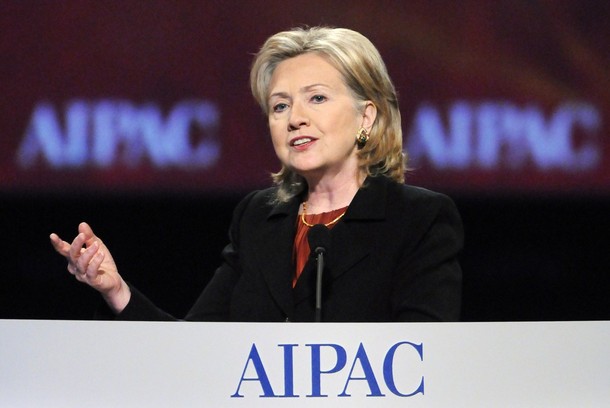
As you know, and saw here earlier this week, Secretary Clinton addressed the AIPAC Conference on Monday reiterating the administration position on the issue of building settlements in East Jerusalem, a position that mirrors that of The Quartet, of which the United States is a member, and which the previous Friday issued its own policy statement on the same issue posted here. The evening of the same day Secretary Clinton spoke to AIPAC, Prime Minister Netanyahu also spoke to the same audience and rejected the U.S. position.

He met with Preident Obama the next day, at length, and all through the time that has followed, there has been no indication that the U.S. has shifted its position. I really cannot see how we can since we are signatories of the Quartet statement. Yet, this weekend, news is breaking that there is a letter circulating in Congress (and a similar letter in the Senate) asking the administration to revise its position.

Conflicting reports abound. I have two examples to offer. MJ Rosenberg at HuffPo appears to believe the letter is addressed to President Obama. He offers a quotation from George Washington on the issue of favored states. It is a quote that is read in Congress every year on Washington's birthday. A link at the bottom of the article provides a list of Representatives who have signed said letter.

Heckuva Job, AIPAC ++ Names of Members of Congress Backing Netanyahu

He also states the following:

...the 7,800 delegates were warned in advance not to boo or hiss Secretary of State Hillary Clinton when she discussed achieving peace with the Palestinians -- and they didn't.

My goodness!

This article, however, has the letter addressed to Secretary Clinton, with a header that just put me in the Hot Tub Time Machine right back to the 2008 primaries when remarks were made about her temperament.

House Majority to Clinton: Calm Down on Israel

(IsraelNN.com) More than 75 percent of Congressmen in the U.S.House of Representatives have signed a letter to U.S. Secretary of State Hillary Clinton expressing support for Israel and demanding an end to the highly-publicized state of tensions with Israel.

I admit that I am not familiar with this source, but that really is not important. I watched Secretary Clinton's AIPAC speech, and I believe it is irrefutable that she was very calm and reasoned. She has been throughout this entire dust-up, including her remarks to the media about the insulting nature of the announcement while VP Biden was on the ground seeking a way to get a peace process off the ground. She has been most even-tempered. We have not seen flashing anger (yet).

According to Rosenberg:

300 House Members have signed the letter which contains not one word of criticism of Israel -- not one -- while calling on the President to keep differences with the Israeli government quiet and away from public scrutiny.

It quotes AIPAC's mantra (actually uttered by Biden in Israel before he understood the trap that Netanyahu had set for him):

"Progress occurs in the Middle East when everyone knows there is simply no space between the U.S. and Israel when it comes to security, none. No space."

The Arutz Sheva article states:

Obama's One-Sided Demands on Israel
Obama demands that Netanyahu stop building in eastern Jerusalem and make a series of other gestures to the Palestinian Authority, while not demanding anything from the other side.

This is not true, as a signatory of the Quartet Statement, we endorse demands on the Palestinians as well.

It is unclear to whom this letter is addressed. I looked at the list of Reps who signed, and my guy is there. *sigh* I guess I will have to send him a letter. We cannot have Congress undermining foreign policy set in agreements we sign with our allies and friends. All of the parties in the Quartet want peace in the Middle East and a two-state solution. Bibi is not at odds with the U.S. alone with his intransigence. He is at odds with Russia, the European Union, and the United Nations, as well as the 4th member, the United States. That AIPAC has the ability to influence Congress against American foreign policy feels really wrong when you read that quotation from George Washington. Of course we are Israel's friend. Sometimes, though, your friend does something that is not helpful or smart, like dating the wrong guy or talking on the cell phone while driving. Then you do want to say something.


Monday, March 22, 2010

SECRETARY OF STATE CLINTON Daily Appointments Schedule for March 22, 2010

I waited patiently for the schedule. Now I am waiting patiently for the AIPAC speech which I could not watch. There (obviously - this one is from this morning) are pictures up, but no text or video yet.

Daily Appointments Schedule for March 22, 2010


Washington, DC
March 22, 2010


SECRETARY OF STATE CLINTON

9:00 a.m. Secretary Clinton delivers Remarks to the 2010 AIPAC Policy Conference, at the Washington Convention Center.
(OPEN PRESS COVERAGE)

10:00 a.m. Secretary Clinton delivers Remarks on World Water Day, at the National Geographic Society.
(OPEN PRESS COVERAGE)

11:00 a.m.
Secretary Clinton attends a Principals Committee Meeting, at the White House.
(MEDIA TO BE DETERMINED BY WHITE HOUSE)

12:10 p.m. Secretary Clinton holds a Swearing-In Ceremony for Ambassador Carmen Lomellin, Permanent Representative to the Organization of American States, at the Department of State.
(CLOSED PRESS COVERAGE)

1:30 p.m. Secretary Clinton meets with President Obama, at the White House.
(MEDIA TO BE DETERMINED BY WHITE HOUSE)

2:45 p.m. Secretary Clinton holds a Bilateral Meeting with Israeli Prime Minister Benjamin Netanyahu, at the Department of State.
(CAMERA SPRAY PRECEDING BILATERAL MEETING IN TREATY ROOM)

4:00 p.m.
Secretary Clinton holds a Secure Video Conference with the staffs and families of Embassy Mexico City and the Nine Consulates in Mexico, at the Department of State.
(CLOSED PRESS COVERAGE)

Thursday, March 18, 2010

MORE Breaking News: Netanyahu Finally Called Secretary Clinton *UPDATED*

Well, we really do not get a lot of detail out of this. In a earlier post today, there was a tweet from Andrea Mitchell saying that Joe Biden had called Netanyahu and told him to call Hillary. Oh this is so complex I could get a migraine.

Let me get this straight. The settlement announcement occurred while VP Biden was in Israel. The State Department regarded it as an insult. SOS Clinton called Netanyahu a week ago tomorrow and taled to him for almost 45 minutes and from that moment on we have been waiting for a "formal response" which, as the week rolled on we were more or less led to expect would come in the form of a phone call. So now this. Clearly he does not have her on speed dial.


Prime Minister Netanyahu's Call to Secretary Clinton

Philip J. Crowley
Assistant Secretary, Bureau of Public Affairs
Washington, DC
March 18, 2010


Israeli Prime Minister Netanyahu called Secretary Clinton to follow up on their conversation last Friday. They discussed the specific actions that might be taken to improve the atmosphere for progress toward peace. We are going to review the Prime Minister’s response and continue our discussions with both sides to keep proximity talks moving forward. Senator Mitchell will visit the region later this weekend to meet with President Abbas and Prime Minister Netanyahu.

# # #


**UPDATE**
OK, then! On the heels of this a report from the BBC provides some details released by Netanyahu's office. To be sure this is framed so as to put Bibi in the best possible light and Crowley's Bureau of Public Affairs has confirmed nothing. Here is some of the BBC article including what Bibi purportedly put forth.

Netanyahu offers Clinton 'trust-building measures'

In a telephone call last Friday, Mrs Clinton asked Israel's prime minister to agree to a number of US demands, reportedly including a halt to construction in East Jerusalem and a commitment to substantive negotiations with the Palestinians.

Mr Netanyahu did not respond until Thursday evening, when he is said to have "clarified" Israel's position on Jerusalem and conveyed a detailed list of steps he was willing to take in order to revive the peace process.

Mr Netanyahu's office said the steps represented "a real effort by Israel to aid the US administration in renewing negotiations though trust-building measures with the Palestinian Authority".

Read the article here>>>


I still think he only called because all the men were trembling about the foot-tapping, "I'm waiting!" on Hillary's part. Andrea Mitchell said Biden called Bibi yesterday and said "Call her!" Yikes! I do not know how much substance she got from him, but I hope that this time we stick to our guns on the freeze. Bibi is slippery, but Hillary can be pretty firm.

Two things I want from Bibi: stop buiding in East Jerusalem, more importantly, and secondly, stop swaggering like you just screwed Hillary Clinton. You don't have a snowball's chance in Hell!


Video & Text: Secrtary Clinton's Remarks with Russian FM Lavrov

Aha! Here is the press briefing Andrea Mitchell was referring to!


Remarks With Russian Foreign Minister Sergey Lavrov


Hillary Rodham Clinton
Secretary of State
Moscow, Russia
March 18, 2010

FOREIGN MINISTER LAVROV: (In Russian.)
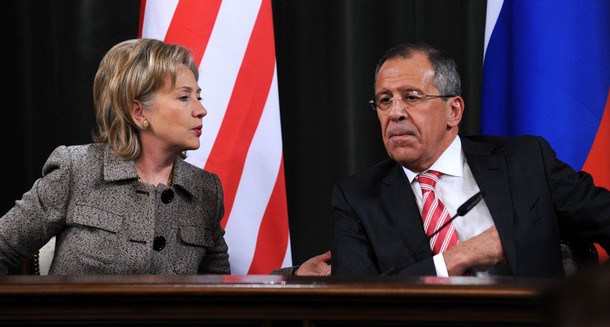
SECRETARY CLINTON: Thank you very much, Sergey. Thank you for hosting me and my delegation today in Moscow and thanks to the Russian Government for hosting the Quartet meeting that we will be attending.
Since our first meeting in Geneva, a little more than a year ago, Minister Lavrov and I, along with our respective governments under the leadership of both President Medvedev and President Obama, have worked toward a new beginning in the relationship between the United States and Russia. We believe that this reset of the relationship has led to much greater cooperation, coordination, and a constructive ongoing consultation on numerous issues that are important to our bilateral relationship and to the global issues that we both are facing.

I think it’s critical that Minister Lavrov is hosting the Middle East Quartet. When we begin our meetings with Quartet members this evening, we’ll have the chance to explore in depth the way forward in the Middle East, but these talks are yet another reminder that the United States and Russia, together, face global challenges, and that there are many people not only in Russia and the United States, but, literally, throughout the world who depend upon the ability of the U.S. and Russia to work together.
We discussed the upcoming nuclear security summit. Fifty heads of state, including President Medvedev, will be in Washington. And it especially is important for the United States and Russia, who bear the responsibility, to continue the way forward on nonproliferation and to work as partners in the global effort to secure fissile materials and counter the threat of nuclear terrorism. So this is another initiative that both President Obama, who suggested it, and President Medvedev, who embraced it, can see the cooperation between us. We are making substantial progress on the new START treaty; that’s the word from our negotiators in Geneva. And the results from the latest negotiating rounds lead us to believe we will be reaching a final agreement soon.

We discussed at length Iran’s nuclear program, which remains an issue of grave concern for the international community. We are still committed, as we have been, to a diplomatic solution, but there must be a solution. Iran is not living up to its international obligations and, therefore, we’re working together with our other partners in the P-5+1 to bring together a very clear international consensus in the Security Council that gives Iran the message it needs to hear that its behavior does have consequences and that its pursuit of nuclear weapons poses a direct threat both to regional and global security.
I thanked Sergey for the cooperation between the United States and Russia with respect to Afghanistan. The transit agreement that our two presidents announced has resulted in troops and material now moving across Russia in support of coalition operations in Afghanistan. As of this week, 111 flights have ferried more than 15,000 soldiers. And we have also increased our cooperation and launched a joint exercise to share financial intelligence related to the flow of narcotics into Russia, an issue that is very important to the Russian people, and that we have pledged to work with the Russian Government to address.
We are also looking for ways to increase our cooperation on disaster response. The devastating earthquake in Haiti was a clear indication of why we need to be working more closely together. Russian emergency relief teams were among the very first on the ground in Haiti after that disaster. This is a particular concern of Minister Lavrov’s, and I believe it’s another area where we should deepen and broaden our working together.
The Bilateral Commission that our two presidents established is working well, and we’re pleased by the results of the efforts of the working groups. This goes far beyond traditional foreign issues. We are exploring new opportunities for collaboration in the fields of energy efficiency and nanotechnology. A United States delegation made up of executives from the information technology companies recently visited Russia to explore joint private sector-led initiatives in education, e-government, and other fields. We’re increasing partnerships between Russian and American universities. And there are growing interactions between American and Russian people, including an upcoming sports exchange for young people using basketball as the means of communications.
Now, there are differences in our relationship. We know that. We’ve raised them and we have had very frank conversations about them. But they are raised within the context of an overall approach that looks for ways to narrow the areas of difference and disagreement, that looks to enhance the cooperation and partnership between our two countries that we are building.
So let me conclude by saying that we have made real strides in the relationship over the past year, but we still have a lot to do. And many of the challenges facing the world today can only be addressed through greater cooperation between Russia and the United States. That’s the commitment of our two presidents. That’s the commitment that Sergey and I have made over and over again. And we look forward to continuing to work together in the months ahead.

MODERATOR: (In Russian.)
QUESTION: (In Russian.)
SECRETARY CLINTON: Well, we have a saying in the United States – “Don’t count your chickens before they hatch.” And that means that we are beginning our discussions about where and when our two presidents will sign the START agreement. But we don’t want to get ahead of ourselves. First, our negotiators have to sign on the dotted line, so to speak, that they have completed the negotiations. And we’re looking forward to getting that word soon and then we will move on to setting a time and a place for this very important event.
MODERATOR: (In Russian.)
QUESTION: Good evening. Bob Burns from Associated Press. Madam Secretary, the first part of my question is premised on an assumption that you have not spoken to Prime Minister Netanyahu today. Would that be correct?
SECRETARY CLINTON: And what’s the second part of your question? (Laughter.)

QUESTION: It depends on what your answer is.
SECRETARY CLINTON: We are engaged in ongoing conversations between our two governments. And when there is something to announce, Bob, you’ll be the first to hear.
QUESTION: I was going to follow up by saying that it’s now been about a week, nearly a week since you spoke to him and expressed your unhappiness with what happened when Vice President Biden was there. And you’re now here to speak to your Quartet colleagues this evening and tomorrow, and I’m wondering if you could tell us what you are able to tell your partners about what Israel needs to do and what the U.S. next steps will be, including George Mitchell’s plans. Thank you.
SECRETARY CLINTON: Well, certainly, we intend to have a very broad-ranging discussion with our Quartet partners. Our goals remain the same. It is to re-launch negotiations between the Israelis and the Palestinians on a path that will lead to a two-state solution. Nothing has happened that in any way affects our commitment to pursuing that. Senator Mitchell arrived here in Moscow just a few hours ago to join the Quartet meeting. And as we have seen not only over this past year, but over years past, there are some challenges along the way. We meet them as they come.
And we continue to move forward because we believe it is in the best interests of both the Palestinian and the Israeli people for the Palestinians to have a state of their own that fulfills their aspirations, and for the Israelis to have the security that they deserve to have within their own state. It is also within the regional and global best interests to pursue this, and that’s what we intend to do.
MODERATOR: (In Russian.)
QUESTION: (In Russian.)
FOREIGN MINISTER LAVROV: (In Russian.)
SECRETARY CLINTON: We are very committed to working with Russia, other countries, and international organizations like the United Nations to stop the flow of illicit drugs from Afghanistan, along with the criminal activity that accompanies it, particularly the narco-traffickers and the drug cartels. We have made that commitment of cooperation to Russia and we intend to work closely with them. And as Sergey said, we have some new mechanisms that we are developing and new ways of cooperating between our two countries that we hope will even add to our efforts and limit the amount of illicit drugs that gets out of Afghanistan and gets into any country, including Russia.
MODERATOR: (In Russian.)
QUESTION: Thank you. Secretary Clinton, just to make sure I understood correctly, so you have spoken to Prime Minister Netanyahu?

SECRETARY CLINTON: When I have something to report, I will report it to you too, Mary Beth.
QUESTION: Okay. On Iran, Minister Lavrov, clearly, Russia has a certain amount of influence with the Chinese. And I’m wondering what message you’re giving the Chinese about how urgent it is to have a new round of sanctions on Iran. And a second question: What type of sanctions do you think are appropriate? Would you consider economic sanctions, for example, on, you know, insurance and banking and so on?
And Secretary Clinton, in a related question, the Russians announced today that they will start up the Bushehr – their nuclear reactor, Bushehr, this summer. Are you concerned about the signal that sends? Thank you.
FOREIGN MINISTER LAVROV: (In Russian.)
SECRETARY CLINTON: With respect to your question to me, that is something that we will be discussing not only with Russia, but with our other partners. But we have consistently said that Iran is entitled to civil nuclear power. It is a nuclear weapons program that it is not entitled to. And if it reassures the world, or if its behavior is changed because of international sanctions, then they can pursue peaceful, civil nuclear power. In the absence of those reassurances, we think it would be premature to go forward with any project at this time, because we want to send an unequivocal message to the Iranians.
FOREIGN MINISTER LAVROV: (In Russian.)
MODERATOR: (In Russian.)

Secretary Clinton: Tapping Her Toe And Waiting

I was looking through my Hillary Clinton news feeds and found this from MSNBC.


Waiting for that phone call
Posted: Thursday, March 18, 2010 12:42 PM by Domenico Montanaro

Filed Under: Andrea Mitchell, State Dept.

From NBC's Andrea Mitchell and Courtney Kube


Secretary of State Hillary Clinton TWICE brushed off questions about whether Israeli Prime Minister Benjamin Netanyahu has called her yet with a response to U.S. objections to a new housing development in East Jerusalem.

Asked whether Netanyahu has called yet, Clinton said, "When there is something to announce ... you'll be the first to hear."

Despite the fact that Netanyahu continues to brush off Clinton, she said that the ongoing disagreement between the U.S. and Israel will not impact her end goal at the quartet meeting.

"Our goals remain the same, it is to re-launch negotiations between the Israelis and the Palestinians on a path that will lead to a two-state solution," she said, adding, "nothing has happened that in any way effects out commitment to pursuing that."

I went to Andrea Mitchell's Twitter feed and found this thread from this morning.

# Clinton holds newser in Moscow this morning, might try to dial down tensions with Israel. U.S needs to get mideast talks back on track about 5 hours ago via web


# Maybe PM's too embarrassed after his brother in law called Obama an "anti-semite" on radio?Netanyahu apologized for his kin yesty about 5 hours ago via web


# #SecState asked Netanyahu last week abt settlements/ Biden called Bibi yesty said:call her! As of Clinton flight to Moscow last nt no call about 5 hours ago via web


# How long does #SecClinton have to wait for Bibi to return her call? clock's running: she's in Moscow talking mideast and Iran, no call yet about 5 hours ago via web


Well, I am not finding anything from the newser except what Andrea filed, but I have to say that I feel relieved. All through Tuesday and Wednesday I was seeing reports that SHE was going to call HIM before leaving for Moscow. That made no sense to me and would have weakened her position exponentially. What an idea! She is the one waiting for a response. Why on earth would she then be calling him?

According to Andrea's tweets (I am now following her), not only is Secretary Clinton NOT going to go bowing and scraping after Bibi, she is still tapping her kitten-heeled foot and waiting.

Sunday, November 1, 2009

Secretary Clinton's Remarks With Israeli Prime Minister Binyamin Netanyahu


Hillary Rodham Clinton
Secretary of State
Jerusalem
October 31, 2009

MODERATOR: Good evening, and we welcome Secretary of State Clinton. We shall start with a few words, and then we’ll take two questions from each side. Prime Minister, please.

PRIME MINISTER NETANYAHU: It’s my pleasure to welcome Secretary of State of the United States Hillary Clinton to Jerusalem. Welcome, Hillary. You are a great friend and a great champion of peace. I think that we owe a vote of thanks to you, to George Mitchell, to your staffs, and of course, to President Obama and the entire Obama Administration for the tireless efforts to re-launch the peace process – the peace process between us and the Palestinians, and between us and the Arab world – following the President’s vision of a regional peace.

We are eager to advance on both. We think that the place to resolve outstanding issues and differences of opinion is around a negotiating table. We think we should sit around that negotiating table right away. We’re prepared to start peace talks immediately. I think what we should do on the path to peace is to simply get on it and get with it. So I’m sure we’ll discuss these things and other things in the spirit of friendship between us and you, between Israel and the United States. Welcome to Jerusalem.

SECRETARY CLINTON: Thank you so much, Prime Minister. It is a great personal pleasure for me to be back in Jerusalem and a great honor to be here as Secretary of State once again. And I look forward to our discussion, and I appreciate the very positive words about the need to get back into a negotiation that would be in the best interests of Israel and Israel’s security, as well as create a state for the Palestinian people. Both President Obama and I are committed to a comprehensive peace agreement because we do believe that it holds out the best promise for the security and future of Israel, and for the aspirations of the Palestinians.

So I’m looking forward to our discussion tonight. I know you’re someone who is indefatigable, so even though we’re starting our meeting so late, I have no doubt that it will be intense and cover a lot of ground. And I’m very much eager to begin those discussions.

QUESTION: Madame Secretary, do you think both sides should re-launch the peace process without any preconditions?

SECRETARY CLINTON: I want to see both sides begin as soon as possible in negotiations. We have worked – and of course, Senator Mitchell has worked tirelessly – in setting forth what are the approaches that each side wishes to pursue in order to get into those negotiations, so I’m not going to express my opinion as to whether or not there should be conditions. The important thing, as the prime minister just said, is to get into the negotiations. I gave the same message today when I met with President Abbas.

We know that negotiations often take positions that then have to be worked through once the actual process starts. I think the best way to determine the way forward is, as the prime minister said, get on the path.

MODERATOR: Mark.

QUESTION: Mark Landler, New York Times. Madame Secretary, when you were here in March on the first visit, you issued a strong statement condemning the demolition of housing units in East Jerusalem. Yet, that demolition has continued unabated, and indeed, a few days ago, the mayor of the city of Jerusalem issued a new order for demolition. How would you characterize this policy today?

For the prime minister, sir, there’s been increasing tension, as you know, around – surrounding the Temple Mount, some civil unrest in the streets. Every time the peace process has lagged, often matters have been settled through violence. Are you worried that we are heading into that phase?

And then a last question, if I may. (Laughter.)

SECRETARY CLINTON: That’s the New York Times, for you. (Laughter.)

QUESTION: Dr. Abdullah’s aides in Kabul have confirmed that he’s not going to take part in the runoff. Are you concerned that a Karzai government elected without the benefit of a runoff, given all the fraud in the first round, will be lacking in legitimacy?

SECRETARY CLINTON: Well, let me say I have nothing to add to my statement in March. I continue to stand by what I said then.

With respect to Afghanistan and Dr. Abdullah’s decision, I think that it is his decision to make. Whatever went into that determination is obviously his choice. But I do not think it affects the legitimacy. There have been other situations in our own country as well as around the world where, in a runoff election, one of the parties decides, for whatever reason, that they are not going to go on. I do not think that that in any way affects the legitimacy. And I would just add that when President Karzai accepted the second round without knowing what the consequences and outcome would be, that bestowed legitimacy from that moment forward, and Dr. Abdullah’s decision does not in any way take away from that.

PRIME MINISTER NETANYAHU: I’m concerned with the attempts to create provocations around the issue of the Temple Mount. There are parties who are trying to do that. I assure you that the Government of Israel is not one of them. There are also extraordinary falsifications. My staff decided to have a meeting, a free evening, a few weeks ago. They decided to have it in the Old City. In the David City there’s a little restaurant there. They said, “Could you come for dessert,” because I worked long hours. I said, “Sure, I’ll see what I can do. I don’t promise, but we’ll make the arrangements.”

Our security people went there. Within an hour, Palestinian news agencies carried the story that Netanyahu was coming to the Old City to burrow a new tunnel under the Temple Mount. So help me God, this became an issue of great consequence. There were rumors that the violence would break out, exactly as you said. Now, this is entirely false. I give that as one example. There are daily examples of this and daily actions by militants, particularly the militant Islamic radicals who are trying to stir up trouble on the Temple Mount.

We are going to continue our efforts to keep Jerusalem safe, open, quiet, accessible to all three great faiths – Judaism, Islam, and Christianity. And the city is now very robust. It’s got a lot of tourism, as you see in the entire area. And the best way to see what is happening there is to go for yourself. Go take a look. You’ll see. And you’ll see our actual policy in place. We want a peaceful Jerusalem without provocations on the Temple Mount or anywhere else.

QUESTION: Madame Secretary, you went to Abu Dhabi, and I believe you came up with not much from Abu Mazen, who is actually presenting Israel and the United States with lots of no’s. Also, United States is encountering many no’s from Iran. At the moment, it doesn't look like some arrangement is being made at the moment. What is your reaction to what – receiving the no’s from the Arab world?

And the same question, please, to Prime Minister Netanyahu.

SECRETARY CLINTON: Well, first of all, I believe that strategic patience is a necessary part of my job, and I view the conversations that we had this morning with President Abbas and his team as being very constructive and useful in continuing the move toward engagement that leads to negotiations. So if Senator Mitchell and I appear to be patient and persistent, it’s because we are. We think it’s worth being both.

With respect to Iran, there is not yet a final decision with respect to the Tehran research reactor. The important matter that I would underscore is the unity among the P-5+1, which includes not only the United States but the United Kingdom, France, Germany, Russia, China, and also the EU, in putting forth and in staying firm with this. The world is united in a view that Iran should not have or acquire nuclear weapons capacity. And our view is that we are willing to work toward creative outcomes like shipping out the low-enriched uranium to be reprocessed outside of Iran. But we’re not going to wait forever. Patience does have, finally, its limits. And it is time for Iran to fulfill its obligations and responsibilities to the international community, and accepting this deal would be a good beginning.

PRIME MINISTER NETANYAHU: You asked two questions, one on Iran and the other on the peace process. On Iran, I want to express our appreciation for the very clear stance adopted by President Obama that has united, as Secretary Clinton has just said, an international consensus that Iran must cease its efforts to become a nuclear military power. I think the fact that there has been unity that has not been seen for a long time on this position is something very valuable, very important. And I think it’s important not only for Israel, I think it’s important for the Middle East, for our region, for the peace of the world. So I want to commend the efforts of you and President Obama and the Western and other leaders have taken here to – on this issue that I think is central to the future of the world, to the future of peace.

As far as the question about the peace process is concerned, look, first let me, before you talk about the no’s, talk about the yes. And I want to put rhetoric aside and talk about facts. It’s a fact that since my government took office, we dismantled hundreds of earth blocks, checkpoints, facilitated movement in the Allenby Bridge, and eliminated a lot of bureaucratic hurdles to daily life and economic activity in the Palestinian Authority’s areas. And as a result, there’s been a Palestinian economic boom. That is a fact.

The second fact is that I gave a speech at Bar Ilan University in which I said that Israel will accept the vision of two states for two peoples, a demilitarized Palestinian state that recognizes the Jewish state of Israel. It wasn’t easy to do, but we did it. That is a fact.

The third fact is that we’ve been talking earnestly, openly, and transparently to the American Administration, and we’ve talked about measures that we can take to facilitate further the launching – the re-launching of the peace process. That is a fact.

The simple fact is this: We are willing to engage in peace talks immediately without preconditions. The other fact is that, unfortunately, the other side is not. It is asking and piling on preconditions that it never put on in the 16 years that we’ve had that the peace process since the annunciation of the Oslo Accords. There have not been these preconditions. It’s a change of Palestinian policy, and I hope they change back to the right thing, which is to get into the negotiating tent. We’re eager and sincere in our desire to reach an agreement to end this conflict. I happen to think that we’re able to do this, contrary to all the pessimists around us. But the only way we can get to an agreement is to begin negotiating, and that is something that we are prepared to do. That is a fact.

MODERATOR: Finally, Joe Klein from Time Magazine. Yes.

QUESTION: I’m tempted to ask why is this night different from all other nights --

SECRETARY CLINTON: Do you want us to burst into song? (Laughter.)

QUESTION: Yes. For 40 years, we’ve seen American secretaries of state and Israeli prime ministers in a similar situation. Despite the prime minister’s optimism, the talks are stalled. The prospect of talks is stalled. And while you’ve said yes without preconditions to talks, so many of your – you’ve said no to a settlement freeze. And I wonder whether that would be open to negotiation.

And Madame Secretary, is the Obama Administration still in favor of a total freeze? And if not, what’s plan b?

PRIME MINISTER NETANYAHU: Joe, the specific question you asked about the settlements also has to be fully factual. The fact of the matter is that we – I said we would not build new settlements, not expropriate land for addition for the existing settlements, and that we were prepared to adopt a policy of restraint on the existing settlements, but also one that would still enable normal life for the residents who are living there.

Now, there has not been in the last 16 years – not 40 years but 16 years, since the beginning of the peace negotiations between Israel and the Palestinians – any demand every put not on restraint, but on any limitation on settlement activity as a precondition for entering negotiations. This is a new thing. Now, it’s true that you can take a new thing and you can repeat it ad nauseum for a few weeks and a few months, and it becomes something that is obvious and has been there all the time. It’s not been there all the time.

QUESTION: It was there in the first Bush Administration, right?

PRIME MINISTER NETANYAHU: No, there has not been a precondition for entering or continuing with the peace process between us and the Palestinians. There’s not been a demand coming from the Palestinians that said we will not negotiate with you unless you freeze all activity – something that is problematic in so many ways, judicial and in other ways. I won’t get into that. But this is a new demand. It’s a change of policy, the Palestinian policy. And it doesn't do much for peace. It doesn't work to advance negotiations. It actually – this uses a pretext, or at least does something as an obstacle that prevents the reestablishment of negotiations.

Now, mind you, the issue of settlements, the issue of territories, the issue of borders – these will be engaged in the negotiations, and they’ll have to be resolved for a peace agreement to be achieved. But you can’t resolve it in advance of the negotiations, and you certainly shouldn’t pile it on as a precondition.

SECRETARY CLINTON: Well, I would add just for context that what the prime minister is saying is historically accurate. There has never been a precondition. It’s always been an issue within the negotiations. What the prime minister has offered in specifics of a restraint on the policy of settlements, which he has just described – no new starts, for example – is unprecedented in the context of the prior two negotiations. It’s also the fact that for 40 years, presidents of both parties have questioned the legitimacy of settlements.

But I think that where we are right now is to try to get into the negotiations. The prime minister will be able to present his government’s proposal about what they are doing regarding settlements, which I think when fully explained will be seen as being not only unprecedented but in response to many of the concerns that have been expressed. There are always demands made in any negotiation that are not going to be fully realized. I mean, negotiation, by its very definition, is a process of trying to meet the other’s needs while protecting your core interests. And on settlements, there’s never been a precondition, there’s never been such an offer from any Israeli government. And we hope that we’ll be able to move in to the negotiations where all the issues that President Obama mentioned in his speech at the United Nations will be on the table for the parties to begin to resolve.

PRIME MINISTER NETANYAHU: Thank you very much.