Showing posts with label Lebanon. Show all posts

Friday, October 19, 2012

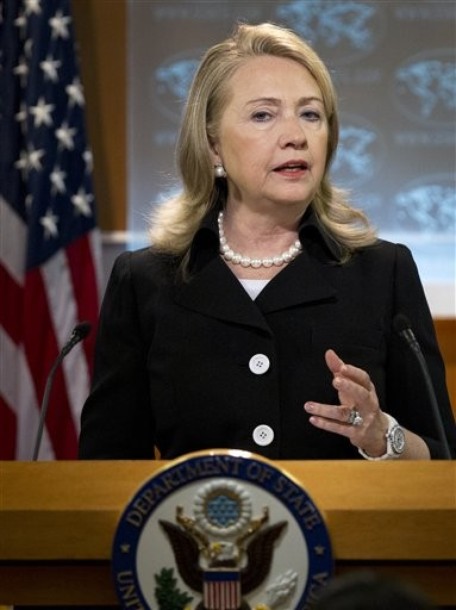
Hillary Clinton Condemns Acts of Terrorism in Beirut in Strongest Terms


Acts of Terrorism in Beirut


Remarks
Hillary Rodham Clinton
Secretary of State
Washington, DC
October 19, 2012


The United States condemns in the strongest terms the acts of terrorism that took place in Beirut’s Achrafieh neighborhood today. We extend our deepest sympathies to the families and loved ones of those who were killed.
The assassination of the Brigadier General Wissam al-Hassan, who was a strong defender of Lebanon’s security and its people, is a dangerous sign that there are those who continue to seek to undermine Lebanon’s stability. Lebanon must close the chapter of its past and bring an end to impunity for political assassinations and other politically motivated violence. We call on all parties to exercise restraint and respect for Lebanon’s stability and security.
The United States remains committed to an independent, sovereign, and stable Lebanon. We will continue to work with our partners to preserve Lebanon’s security and stability.

Friday, May 25, 2012

Syria Violence Could Have Domino Effect In Lebanon, Clinton Warns

The Situation in Lebanon


Press Statement
Hillary Rodham Clinton
Secretary of State
Washington, DC
May 25, 2012

The United States is concerned that developments in Syria are contributing to instability in Lebanon. We encourage all parties to exercise restraint and demonstrate respect for Lebanon’s security and stability, consistent with United Nations Security Council Resolutions 1559 and 1701. We call on the Syrian regime to stop the violence against its own people and fully implement the Annan Plan. The regime needs to institute a peaceful, democratic transition now. We remain committed to a unified, stable, sovereign, and independent Lebanon.

Monday, September 26, 2011

Pics: Secretary Clinton @ UNGA Today

Mme. Secretary's day at UNGA today was packed with bilaterals. We see her in these pictures with Lebanese Prime Minister Najib Mikati, Chinese Foreign Minister Yang Jiechi, Vietnamese Foreign Minister Pham Binh Minh, Brunei's Crown Prince Al-Muhtadee Billah, and Colombian Foreign Minister Angela Holguin. It was a productive day, but much too busy for her to make any press statements. For those who would like details, please see the following links.

Memorandum of Understanding with Ukraine on Nuclear Security Cooperation

Background Briefing on China, Lebanon, and Georgia

Background Briefing: Secretary's Bilateral Meetings on Colombia, Vietnam, and the Ukraine

Here are the pics. Enjoy!


Monday, February 14, 2011

Secretary Clinton's Interview With Hisham Melhem of Al Arabiya

Interview With Hisham Melhem of Al Arabiya


Interview
Hillary Rodham Clinton
Secretary of State
Washington, DC
February 14, 2011


QUESTION: Okay. Madam Secretary, I really appreciate this opportunity.

SECRETARY CLINTON: Thank you.

QUESTION: We have very little time. Let me start. There was conflicting messages coming from the White House and the State Department. The White House initially said (inaudible) now – and now means yesterday – then in the second week, (inaudible) said that change may take time, then try to – Frank Wisner (inaudible) policy. Surely, your audiences in this country and abroad were kind of confused. Why the disconnect?

SECRETARY CLINTON: Well, first, I don’t think there was a disconnect. I think there was a consistent message that, from beginning to end, was very clear. Number one, we were against violence, and we said that to everyone. We sent that message very directly to the Government of Egypt and to the military. Number two, that we respected the universal human rights and the aspirations of the Egyptian people, and thought that they needed to be responded to and recognized by their own government. And number three, that we were supporting political change.

Now, I think that it is clear that as we went through the week – the weeks leading up to the rather dramatic departure of President Mubarak, the United States – no outside power or influence was determining what happened inside Egypt. This was all about the Egyptian people, and I think the Egyptian people themselves made it clear that they wanted no violence, they wanted their human rights respected, and they wanted a transition to democracy, which is pretty much in line with what we’ve been advocating.

So now, we are at a point where we see this historic, heroic effort by the Egyptian people, which we are very much in support of.

QUESTION: Okay. Some people are wondering that – kind of particular messages that (inaudible), that this was in part maybe a function of what you’ve been hearing, the anxiety that you heard from your friends in the region, the Arabs and Israelis who would caution you not to hasten the departure of Mubarak. To what extent did the views of your friends and allies in the region – were a factor in your decisions?

SECRETARY CLINTON: Well, we have been saying for some time, and the President said it in his speech in Cairo in 2009, I said it many times, most recently in Doha --

QUESTION: Right.

SECRETARY CLINTON: -- that there had to be change in the Arab world, that the foundations were not stable, that they were sinking. And therefore, we wanted to urge our friends and partners to respond to the economic and political demands of their people. I don’t think anybody could have predicted we’d be sitting here talking about the end of the Mubarak presidency at the time that this all started.

But because we tried very hard to be a friend and partner to the Egyptian people during this, we told our many other friends in the region that change was inevitable. It was a question as to whether it would be positive change that would lead to a better outcome for the people, or negative, where these aspirations would be denied and the process would be hijacked. So we did our best to try to explain to our friends that there had to be some commitment to reform.

QUESTION: Our time is running out. Quickly, in (inaudible), you expressed concern that some groups within the Egyptian society may (inaudible) it’s taking place, insert their own parochial agenda. This was understood as a reference to the Muslim Brotherhood. Is the Brotherhood welcome at the table as President Obama hinted last week?

SECRETARY CLINTON: That is up to the Egyptian people. They have to decide how they’re going to organize themselves. And I wasn’t just talking about internal --

QUESTION: Sure.

SECRETARY CLINTON: -- challenges, but external challenges as well. We’ve seen this ironic hypocrisy coming from the Iranian regime that was trumpeting what was going on in Egypt and is now oppressing their own people. So it was an expression of what we’ve heard from – within Egypt and around the region, that – don’t let this process be hijacked by anyone. This must be in response to the Egyptian people’s desires.

QUESTION: The Egyptian military said now that they are lifting the emergency laws (inaudible) parliament free elections in a period of time. What guarantees do you have that they will deliver on their promises, given the track record of other militaries it should not (inaudible)?

SECRETARY CLINTON: Well, again, this is going to be left to the Egyptian people. We have offered whatever aid and assistance we can provide, any that is appropriate and requested. But this is an ongoing effort and there have been some good steps taken so far. But as you point out, the end of the road is what matters – where will this lead. And clearly, we hope and we are encouraging that the commitment to move toward a democratic transition with free and fair elections is not wavered from.

QUESTION: You are challenging the Iranian Government to allow the people to demonstrate and express themselves like the Egyptians. Would this be (inaudible) position of the American Government now, to allow – I mean, if you say the same thing, whether those who are demonstrating are Algerians or (inaudible) or Jordanians asking for their freedom or, for that matter, the Palestinians demonstrating and asking for their own (inaudible)?

SECRETARY CLINTON: Well, we believe in peaceful demonstrations. We believe that politics should be influenced by nonviolence, and what we saw in Egypt proves that point, the extraordinary reaction of the young people in the streets. And so we are for basic human rights – freedom of expression, freedom of assembly.

At the same time, we do not want to see any interference with the rights of people to be able to express themselves. And we had said to our friends, you must respond to the needs of people. We are all connected up now. Young people are communicating across every boundary one can imagine. We’ve saw that in real time in Egypt, and we think that many of our friends are responding to these calls for reform, and we support that.

QUESTION: In your speech in Doha, you said that if there’s no reform, (inaudible) said that the foundation (inaudible) sinking in the sand. (Inaudible) the Algerians and the Yemenis and the Jordanians (inaudible). Those governments are under pressure now from (inaudible) public opinion. And a lot of people say that they don’t get it. What do you say?

SECRETARY CLINTON: Well, I think that a lot of the leaders are trying to get it and trying to understand how to move forward on an economic and political reform agenda, and we support that. Change is always challenging. It doesn’t matter where it occurs. I mean, we have it in our own country where advocating for change and then translating it into reality takes time, and it can be a frustrating process. But in a democratic political system or in a reforming system, one has to be focused on the outcome, and stay with nonviolence, stay with the political process, be a partner in getting the reform agenda put into place. And that’s what we’re encouraging.

QUESTION: Okay. One final question. Lebanon received the (inaudible), essentially on nonpolitical, non-state actors, certainly (inaudible) support (inaudible). What would you say to that? What would your (inaudible) send a message to the (inaudible) on the sixth anniversary of the assassination of Prime Minister Hariri? What would you say?

SECRETARY CLINTON: Well, that there are many ways that a democracy can be hijacked. And having armed militias within a democratic state should not be permitted. And this has been a consistent American position that the state should be the guarantor of the integrity and authority of the state, and should have a monopoly on military power. So the situation unfortunately in Lebanon has developed so that there is this counterforce for the state in Hezbollah.

And it’s a great concern to us because the Lebanese people deserve better. They are such a vibrant, incredibly dynamic society, and they deserve to have their democracy respected and their voices heard, and not have one element of their society using the threat of force and the potential of violence to try to achieve political ends. And we strongly support the continuing investigation into the murder of Prime Minister Hariri and 22 others. We want to see the murderers brought to justice. There should be no impunity; there should be accountability and transparency. And we know that there is great pressure against that, which raises questions about what people have to fear. I mean, if you’re going to participate in a democracy, then you should want to enforce the law. So we will continue to strongly support the tribunal.

QUESTION: Unfortunately, our time is up. Secretary Clinton, I really appreciate it. Thanks again.

SECRETARY CLINTON: Always good to talk to you, thank you.

Sunday, February 13, 2011

Secretary Clinton's Statement on the Anniversary of Former Lebanese Prime Minister Hariri's Assassination


Anniversary of Former Lebanese Prime Minister Hariri's Assassination


Press Statement
Hillary Rodham Clinton
Secretary of State
Washington, DC
February 13, 2011


The February 14, 2005 assassinations of former Lebanese Prime Minister Rafiq Hariri and 22 others with a car bomb in downtown Beirut changed Lebanon forever. The assassination of "Mr. Lebanon" reminded all Lebanese of the fragility of their pluralistic system. Rafiq Hariri was not only a symbol for Lebanon; he was a husband, father, brother, and friend. He transcended sect and stood with the people of Lebanon, giving hope to his country after 15 years of ruinous civil war.

For decades, the people of Lebanon have fought for their inherent right to live free from fear of murder for political reasons. We call on the next Lebanese government to provide stability and promote justice for the people of Lebanon by honoring its obligations to the Tribunal. This is a decisive moment for Lebanon. No more Lebanese families should ever have to mourn the deaths of loved ones at the hand of cowardly assassins. Those who would try to block Lebanon's cooperation should desist and show a measure of human decency. Ultimately, without justice, there can be no peace and stability for Lebanon.

The United States continues its unwavering support for the full implementation of UN Security Council Resolutions 1701, 1680 and 1559. These resolutions are testaments to Lebanon’s sovereignty and independence. The United States and the international community stand solidly behind the people of Lebanon as they observe this day of sorrow. We remain committed to working together for a peaceful, prosperous, and sovereign Lebanon.

Monday, January 17, 2011

Secretary Clinton's Statement On Indictment Filed By Prosecutor for Special Tribunal for Lebanon


Prosecutor for Special Tribunal for Lebanon Files Indictment for Confirmation by Pre-Trial Judge


Press Statement
Hillary Rodham Clinton
Secretary of State
Washington, DC
January 17, 2011


Today’s action by the Prosecutor for the Special Tribunal for Lebanon is an important step toward justice and ending impunity for murder. Those who oppose the Tribunal seek to create a false choice between justice and stability in Lebanon; we reject this.

We are confident that the Tribunal will continue to operate according to the highest standards of judicial independence and integrity. We call on all parties to promote calm and continue to respect the Tribunal as it carries out its duties in a professional and apolitical manner.

The United States and all friends of Lebanon stand together in support of its sovereignty and independence. While great progress has been made since this deadly attack in 2005, it will be impossible to achieve the peace and stability that the people of Lebanon deserve unless and until the era of impunity for political assassinations in Lebanon is brought to an end.

Sunday, January 16, 2011

On the Phone: Hillary Clinton

We know that the post of Secretary of State is a 24/7 job, and no one takes that reality more seriously than our current dedicated and assiduous SOS as the following glimpses into her weekend attest. With governments in flux and collapse in three key countries: Pakistan, Lebanon, and now Tunisia, here is how Secretary Clinton spent part of her day yesterday.


Secretary Clinton Calls Tunisian Foreign Minister


Media Note
Washington, DC
January 16, 2011


Secretary Clinton called Tunisian Foreign Minister Kamel Morjane today to express support for the people of Tunisia as they and their government go through a period of significant transition. She urged that the Government work to re-establish order in the country in a responsible manner as quickly as possible. She also underscored the importance of addressing popular concerns about the lack of civil liberties and economic opportunities, and the need to move forward with credible democratic elections. She noted that the United States is encouraged by recent remarks by Prime Minister Ghannouchi and Interim President Mabazza indicating a willingness to work with Tunisians across the political spectrum and within civil society to build a truly representative government. Lastly, the Secretary offered the assistance of the United States in helping Tunisians to meet these challenges, and assured the Foreign Minister that the United States will stand with Tunisia as it moves forward to address them.

This, not from the State Department, but from a news outlet further testifies.

Suleiman to Clinton: Lebanese Will be Able to Solve Crisis Through Dialogue


President Michel Suleiman informed U.S. Secretary of State Hillary Clinton during a phone conversation late Saturday that the Lebanese will be able to solve their crisis through dialogue and consensus.


Read more>>>>
Madame Secretary, we appreciate all of the hard work you do and that you dive into the teeming waters whenever necessary even on weekends and holidays. Thank you for your unflagging service!

Saturday, January 8, 2011

Secretary Clinton and Escort Meet Saudi King Abdullah and Lebanese PM Hariri

Last night, Secretary Clinton met with Lebanese Prime Minister Saad Hariri and Saudi Kig Abdullah at the Plaza in New York City. My kind and generous readers Lilly and Rachel shared an article and some pictures that I could not make visible on the thread. Since the Secretary was accompanied on this visit by her best fella, (and also because posting the pictures here is the only way I can make them visible), I decided they merited a post of their own. Enjoy. As I type, Mme. Secretary is en route to the Persian Gulf.


Here is the article Rachel shared.

Clintons congratulate king


Here is another that I found.

Clinton meets Lebanon PM, Saudi king in New York


Thank you, Lilly and Rachel!

Friday, November 12, 2010

Secretary Clinton's Interview With Hisham Melhem of An-Nahar

Interview With Hisham Melhem of An-Nahar

Hillary Rodham Clinton
Secretary of State
Department of State
Washington, DC
November 10, 2010


QUESTION: Madam Secretary, recently, we have seen increased American focus on Lebanon, including your call to Prime Minister Hariri, additional funds for the STL, and stepped up criticism of Syria, Iran and Hezbollah. Is this driven mainly by the visit of Iranian president Ahmadinejad as some Lebanese are alleging, or caused by concern that Lebanon could unravel?

SECRETARY CLINTON: Thank you for the question. First, let me say that America’s support for a sovereign, independent, and stable Lebanon is rock solid and unwavering. We are committed to a strong partnership with Lebanon and to Lebanon’s future, and we stay in close contact with Lebanon’s leaders and consult with them regularly. That is also why the United States will continue to speak out against those who would undermine Lebanon’s stability and its sovereignty.

We will continue to encourage actors within Lebanon and across the region to act responsibly and in the best interests of the Lebanese people. When a party makes inflammatory statements or violates international norms, we feel it is important to say, publicly, what we believe to be true: responsible actors on the international stage should work to help resolve conflicts, not reignite them. They need to uphold their commitments and responsibilities, not seek to evade them. And responsible actors in Lebanon need to pursue their political agendas through peaceful means, not via intimidation or threats.

Of course, the President and I also respect the leadership demonstrated by President Suleiman and Prime Minister Hariri, especially during this challenging period. And I have reaffirmed this recently in conversations I have had with both the President and the Prime Minister.

QUESTION: What can the U.S. do in practical terms to help the Lebanese government fend off the campaign waged by Hezbollah and Syria to undermine and discredit the STL as an Israeli-American plot, now that Hezbollah is using "the multitudes" against the STL's investigators as we have seen recently.

SECRETARY CLINTON: The recent assault on Tribunal investigators, which you alluded to, should be of grave concern to all Lebanon’s friends and supporters. Strong statements were made at the UN and elsewhere condemning any actions that attempt to frustrate or undermine the Tribunal and its work. Intimidation and interference should not be tolerated.

The problem in Lebanon is not the Special Tribunal for Lebanon. The problem is that some are threatening violence in order to try to stop justice. The Special Tribunal is an independent judicial entity, established in response to a terrible time in Lebanon’s history by an agreement between the Lebanese government and the United Nations, and brought into force by a UN Security Council Resolution with wide international support. Its work is legitimate and necessary.

We should not lose sight of the fact that the Tribunal symbolizes something larger than the investigation into the assassination of former Prime Minister Rafiq Hariri. It represents a chance for Lebanon to begin moving beyond its long history of political violence. Tragically, Lebanese of all communities and confessions have been plagued for years by violence and threats. And yet very few have ever been held accountable for their crimes. This history is a major source of instability and the tension that people in Lebanon feel today. They deserve a return to the rule of law and justice for all – these are crucial building blocks for stability and peace in Lebanon.

QUESTION: There is concern in Lebanon and the region, that if the STL issued indictments against some Hezbollah operatives or leaders, that Hezbollah would resort to force as it did in 2008 to create new facts on the ground. What would the US do in this case?

SECRETARY CLINTON: First, it bears repeating that no one knows what the Special Tribunal is going to do, who it might indict, or when it might choose to move forward. This is an independent process. Hezbollah should know that resorting once again to violence in Lebanon runs completely counter to the interests of the Lebanese people, the interests of the region, and of the United States. They should also know that if the goal of violence is to stop the tribunal, it won’t work. And more importantly, there is simply no justification or excuse for more political violence. That is the position of the United States and it will not change.

QUESTION: There is concern in Lebanon that the country could pay a steep price if it became an arena for renewed regional and international conflicts, and that the U.S. may not appreciate fully the inherent danger in such a situation.

SECRETARY CLINTON: We know this is not the first time Lebanon has faced real challenges and rising tensions. The Lebanese people have shed too many tears and buried too many loved ones. They deserve lasting peace and an end to political violence once and for all. The United States is committed to that goal, and we will continue supporting the Lebanese Armed Forces to ensure they have the capacity to protect Lebanon’s security from threats both internal and external. We also work hard to avoid actions or statements that would raise temperatures higher or inflame tensions further.

Lebanon has many friends, in addition to the United States, who are strong supporters of its sovereignty and security. We are in frequent contact with our friends and allies about how we can work together to support the Lebanese people and their elected government.

President Suleiman, of course, came to power after the Doha Agreement of 2008, and as his election showed, he has widespread support in Lebanon. He is in a position to help unify Lebanon and maintain the country’s peace and stability.

QUESTION: Where is the policy of engaging Syria heading? After almost 20 months, Syria's behavior and policies in Lebanon, Palestine and Iraq have not been altered, and its alliance with Iran is as strong as ever. It seems that the Syrians believe that there are no disincentives or consequences for them to desist.

SECRETARY CLINTON: Syria’s behavior has not met our hopes and expectations over the past 20 months – and Syria’s actions have not met its international obligations. Syria can still choose another path and we hope that it does.

Let me be clear – we are not engaging for engagement’s sake. We are engaging to advance our interests and to find areas where cooperation can promote mutual interests. Our engagement with Syria will never come at Lebanon’s expense. Nor will it come at the expense of holding Syria accountable for its behavior.

We have had some useful conversations – for example, Special Envoy George Mitchell has engaged with Syria on the Middle East peace progress, and my Assistant Secretary Jeff Feltman has had good consultations with Syrian officials about Iraq. And our engagement has enabled us to present Syria’s leaders, and the Syrian people, with a more balanced and optimistic vision for the region’s future than the messages of war and destruction carried by Iran and Hezbollah.

But we have also had some very difficult discussions with Damascus about its actions in Lebanon and elsewhere. Syria lives with consequences of pursuing policies that are outside established international norms – which is largely why the region’s economic development of the past decade has left Syria behind. So again, as I said, the choice is up to Syria – and we hope that it chooses to embrace its responsibilities.

QUESTION: What is the status of your contacts with Congress, regarding lifting the hold on supplying U.S weapons to the Lebanese Armed Forces? Do you expect the “lame duck” Congress will do that, and are you concern that the Republican House will continue the hold?

SECRETARY CLINTON: It has been our longstanding policy to support the Lebanese Armed Forces. The LAF helps to ensure stability and protect the people of Lebanon. It is a truly national institution and a strong symbol of national unity, which includes members of all of Lebanon’s diverse faiths and communities. It is representative and accountable. We look forward to continuing to work with Congress to maintain this support, which we believe is in the best interests of the Lebanese people and contributes to stability in Lebanon and in the region.

QUESTION: The U.S. and Syria have been exchanging accusations of meddling in domestic Lebanese affairs, but Syria's friends in Lebanon always claim that the U.S talks the talk but it does not walk the walk, and that its allies in Lebanon cannot be sure it will not enter into bargains, including with Syria at their expense.

SECRETARY CLINTON: America’s support for a sovereign, independent Lebanon is a key element of our policy in the region. It is non-negotiable. It is not something we are prepared to bargain with or exchange. It is as simple as that. We have been clear about this commitment and transparent in our relations with the Lebanese government. That stands in stark contrast to others, including certain internal actors in Lebanon, whose actions are neither transparent nor accountable to the proper national authorities.

We will continue our policy of supporting the independence of the Lebanese state and strengthening Lebanese institutions, and we will raise our concerns about Syrian interference in Lebanon during our continuing discussions with Damascus.

QUESTION: To what extent could Syria's behavior in Lebanon influence America's efforts to revive the Syrian-Israeli track? Can Syria expect to re-engage in peace negotiations without altering its posture vis-à-vis Iran, and or Hezbollah in Lebanon?

SECRETARY CLINTON: The Obama administration is deeply committed to achieving comprehensive regional peace in the Middle East, including peace between Israel and Syria and Israel and Lebanon and the full normalization of relations between Israel and its neighbors. That is also the vision of the Arab Peace Initiative, which was announced in Beirut. The United States firmly believes that the various tracks are mutually reinforcing. Syria itself has said that it wants to have its territorial expectations met through a peace deal with Israel. So we are going to keep working to get there.

More broadly, we welcome Lebanon and Syria having a positive, normal bilateral relationship. When Syria and Lebanon have had bad relations, there have been negative consequences not just for Lebanon but for the wider region. But a positive and constructive bilateral relationship is built on mutual interests and mutual respect, on international norms, and must be based on the idea you don't interfere in the sovereignty of the other country.

QUESTION: What can you tell us about persistent media reports regarding continued Syrian provisions of missiles, including scuds to Hezbollah, and joint training on these missiles in Syria?

SECRETARY CLINTON: Reports of the transfer of increasingly sophisticated weapons from Syria to Hezbollah is of serious concern to the United States and to the international community. It threatens regional security. It threatens Lebanon’s security. It destabilizes the region in a way that serves no one’s interests. Let’s not forget that Hezbollah, in 2008, did just what it swore it would never do: turn its weapons against the Lebanese people—the very people it swore to defend—and that’s something that should never be encouraged, enabled, or repeated.

We have been warning everyone, including Syria, about the dangers of miscalculation and the dangers associated with the transfer of sophisticated technologies and weaponry.

Related story>>>>>

Friday, September 24, 2010

Secretary Clinton's Remarks With Lebanese President Michel Suleiman Before Their Meeting

Awww ... she's tired! She is also cute and funny. I wish I had the video of this.

Remarks With Lebanese President Michel Suleiman Before Their Meeting


Hillary Rodham Clinton
Secretary of State
Palace Hotel
New York City
September 24, 2010


SECRETARY CLINTON: I always start off this week full of energy and by Friday I’m so tired. (Laughter.) Too many meetings, events, (inaudible). It’s – everything is packed into one place in one week. So there’s a lot to do.

QUESTION: Madam Secretary, do you think – do you think a compromise is possible on settlements before Sunday?

SECRETARY CLINTON: Well, I’m looking forward to talking to the President. And there are so many important issues that Lebanon is facing and the United States wants to be a very good friend and partner to Lebanon and the Lebanese people.

QUESTION: Thank you.

QUESTION: Do you think you’ll discuss the Lebanese track of the peace process. Obviously, you’ve said that that’ s a very important aspect of all of this.

SECRETARY CLINTON: Well, we’re going to be talking about whatever the President and I choose to talk about.

STAFF: Thank you, everybody. (Laughter.)

Sunday, April 26, 2009

HIllary Clinton With Lebanese President Michel Sleiman


Remarks After Meeting With Lebanese President Michel Sleiman


Remarks

Hillary Rodham Clinton
Secretary of State
Beirut, Lebanon
April 26, 2009


Date: 04/26/2009 Description: Secretary Clinton with Lebanese President Michel Sleiman. State Dept Photo SECRETARY CLINTON: Let me begin by saying how pleased I am to be here in Lebanon on a beautiful day. I appreciated the opportunity that I had to meet with the president, with the minister, and other members of the government. I am grateful for this chance to deliver a letter to President Sleiman from President Obama, expressing the Obama administration's strong support for a free, sovereign, and independent Lebanon.
And it is important that I stress this special bond that exists between the United States and Lebanon. My country has been enriched by the contributions of many Lebanese Americans. And, even more than that, we have been enriched by a diversity of communities. I know how diverse Lebanon is, and I know that that diversity is a source of strength as it is in my own country.
Over the past several years, Lebanon has gone through many challenges. And I want to commend the many courageous citizens from all different groups who have worked to build an independent and democratic nation. The parliamentary elections that are coming up in June will mark another milestone.
We believe strongly that the people of Lebanon must be able to choose their own representatives in open and fair elections without the specter of violence and intimidation, and certainly free of outside interference. And we join the international community in supporting the Lebanese government's efforts to achieve that goal. We will continue to support the voices of moderation in Lebanon and the responsible institutions of the Lebanese state that they are working to build. Our ongoing support for the Lebanese armed forces remains a pillar of our bilateral cooperation.
The United Nations Security Council resolutions make clear that the Lebanese armed forces is the only legitimate armed force in Lebanon, the only force that is accountable to all of the Lebanese people. And I want to commend the Lebanese armed forces for its efforts to defend Lebanon's borders to fight terrorism and fully implement Security Council Resolution 1701.
I also am here to pledge our continuing support for the special tribunal for Lebanon. I will go from here to pay a call of respect at the memorial of former Prime Minister Hariri. There needs to be an absolute end to an era of impunity for political assassinations in Lebanon. It cannot, must not, be used as a bargaining chip. When I visit former Prime Minister Rafik Hariri's memorial, I will honor his memory, and pay my respects to all those who have been killed while defending Lebanon's sovereignty and independence.
The guiding principles from the Cedar Revolution that followed his death, sovereignty and freedom for the Lebanese people, is a core value that we respect and will honor and work to translate into a perpetual reality.
I believe that Lebanon has a key role to play in the long-term efforts to build lasting peace and stability in this region. And President Obama and I and the administration that I represent, as well as the government and people of the United States look forward to ongoing partnership and cooperation.
Thank you very much, and I will happy to take your questions.
QUESTION: You mentioned the forces of moderation and your visit happens two months before the elections and on the very anniversary day of the Syrian withdrawal. I was wondering, coming here today, if you intend to express your support for the current majority.
SECRETARY CLINTON: I intend to express my support and President Obama's support for the people of Lebanon, and for a free, independent, and sovereign Lebanon, and for elections that will be free of any intimidation and outside interference, so that the people of Lebanon are able to peacefully make their decisions in these upcoming elections.
QUESTION: How can you (inaudible) is going to deal with the new Lebanese government in case the opposition or Hezbollah wins the election?
SECRETARY CLINTON: Well, I am not going to speculate on the outcome of your election. That is for the people of Lebanon to decide. The Lebanese people have a lot at stake in this election. And I know how seriously all of the candidates are campaigning throughout the country.
But we certainly hope that the election will be free of intimidation and outside interference, and that the results of the election will continue a moderate, positive direction that will benefit all the people of Lebanon. That is our hope. We want to see a strong, independent, free, and sovereign Lebanon. And we believe that this election will be, obviously, an important milestone on that path.
QUESTION: Madam Secretary, welcome to Lebanon. (Inaudible) on this question. I know you don't want to speculate about the results of the elections, but it does look likely that Syria’s allies, including Hezbollah, will make a strong come-back. How will that affect your support for the Lebanese army that you just discussed, you said it was a pillar of cooperation between the two countries? Would you re-evaluate that cooperation with the Lebanese army?
SECRETARY CLINTON: Well, Kim, first let me say that it's a great delight to have you with me on this trip. As some of you know, Kim is Lebanese, and has been so excited about coming back to a country that she loves, and I am pleased that I could be the reason she got to come back at this particular time.
I don't want to speculate about the outcome of the elections. Obviously, as an outsider, which is all that I am, and representing our President and our government, we hope that the election is free and fair of intimidation, we hope that the people of Lebanon make a decision that will continue the progress that we have seen over the last several years.
It won't surprise you to hear that I think moderation is important in the affairs of states, because that gives people from all backgrounds, and all different beliefs and convictions, an opportunity to participate. So that is up to the Lebanese people to decide, but we certainly look forward to working with and cooperating with the next Lebanese government.
QUESTION: Any settlement with Syria - that Lebanon could be paying the price for – especially regarding the international tribunal and why you don’t meeting (inaudible)?
SECRETARY CLINTON: Well, first, with respect to my schedule, this was a very short trip, because of the necessity that I have to turn around and get back to Washington after having been in Iraq and Kuwait. But I really was here to send a very strong signal of our support for the free, fair elections, and of the state of Lebanon, symbolized by the president. And, therefore, I met with the president. I was very honored to be received by him and other ministers in the government of Lebanon.
I hope to return. I told the president that I feel very unhappy that I could come for such a short period of time. It's like seeing this great banquet laid out, and all I am permitted to do is eat a tiny little appetizer. Because I have heard so much about this beautiful country, I have so many Lebanese-American friends that have told me about the beauty of Lebanon and the hospitality of the people. So I do hope to come back and spend more time here.
With respect to Syria, we are heartened by the exchange of ambassadors that was agreed to between Lebanon and Syria. Obviously we think it's important that Lebanon have good relations with their neighbors, including Syria, but that Lebanon is an independent, free, sovereign nation. And there is nothing that we will do in any way that would undermine Lebanon's sovereignty. We don't have a right to do that, and we don't believe that would be the right thing to do.
So, I want to assure any Lebanese citizens, that the United States will never make any deal with Syria that sells out Lebanon and the Lebanese people. You have been through too much, and it is only right that you are given a chance to make your own decisions, however they turn out, amongst the people who call Lebanon home, who love this country, who are committed to it, who have stayed here and done what you can to navigate through these difficult years. It's a complicated neighborhood you live in, and you have a right to have your own future. And we believe that very strongly.
Thank you very much.

Sunday in Lebanon

Hillary spent Sunday in Lebanon.


US Secretary of State Hillary Clinton shakes hands with Lebanese parliamentary majority leader Saad Hariri as they visit the tomb of his father, slain former premier Rafiq Hariri (picture), in Beirut on April 26, 2009. Clinton made an unannounced visit to Lebanon as the country readies for parliamentary elections that could see the militant group Hezbollah and its allies emerge victorious. Clinton's hours-long trip is seen as a bid to bolster the current pro-US majority in parliament ahead of the June 7 vote.


A handout picture released by the Lebanese photo agency Dalati and Nohra shows US Secretary of State Hillary Clinton signing the guestbook during a visit to the tomb of Lebanon's slain former premier Rafiq Hariri (picture) in Beirut on April 26, 2009. Clinton made an unannounced visit to Lebanon as the country readies for parliamentary elections that could see the militant group Hezbollah and its allies emerge victorious. Clinton's hours-long trip is seen as a bid to bolster the current pro-US majority in parliament ahead of the June 7 vote.


Wednesday, April 8, 2009

Hillary Clinton's Bilaterals Today

Remarks With Panamanian Foreign Minister Samuel Lewis Navarro Before Their Meeting


Remarks
Hillary Rodham Clinton
Secretary of State
Treaty Room
Washington, DC
April 8, 2009

Date: 04/08/2009 Description: Remarks by Secretary Clinton and Panamanian Foreign Minister Samuel Lewis Navarro before their meeting.  State Dept Photo SECRETARY CLINTON: Well, good afternoon. Today, I’m very privileged to be meeting with First Vice President of Panama Sam Lewis, and I want to express how pleased we are to have you here and have this opportunity to discuss a range of important issues that not only matter to our two countries, but to the broader region.
FOREIGN MINISTER NAVARRO: Thank you very much. I want to thank the Secretary of State, Secretary Clinton, for this opportunity. As you’ve mentioned, we’ll discuss both bilateral and hemispheric issues, especially in light of the upcoming Summit of the Americas. Panama and the United States have enjoyed a very special relationship, historically, which has helped us tackle very – many issues in the past. And we are sure that that is what will continue to happen. Thank you very much.
SECRETARY CLINTON: Thank you. Thank you so much.
FOREIGN MINISTER NAVARRO: Thank you.
SECRETARY CLINTON: Thank you.
QUESTION: Madame Secretary, why is now the time to invite Iran to engage in direct relations?
SECRETARY CLINTON: Well, the – you’re referring to the P-5+1 meeting. And as we speak, Under Secretary Bill Burns is now participating in the P-5+1 as a full participant, not just as an observer. And obviously, we believe that, you know, pursuing very careful engagement on a range of issues that affect our interests and the interests of the world with Iran makes sense, and there’s nothing more important than trying to convince Iran to cease its efforts to obtain a nuclear weapon.

Remarks With Moroccan Foreign Minister Dr. Taieb Fassi Fihri Before Their Meeting


Remarks
Hillary Rodham Clinton
Secretary of State
Treaty Room
Washington, DC
April 8, 2009

Date: 04/08/2009 Description: Remarks by Secretary Clinton and Moroccan Foreign Minister Dr. Taieb Fassi Fihri before their meeting.  State Dept Photo SECRETARY CLINTON: Well, it’s wonderful to welcome Minister Fihri here today on behalf of Morocco. We are so committed to our relationship and have very high regard for the extraordinary progress that has taken place in Morocco over the last years, and we look forward to deepening and strengthening our relationship.
FOREIGN MINISTER FIHRI: Me, too. I’m very happy to be here and to have the opportunity for this meeting with Madame Secretary. As you know, USA and Morocco have a longstanding relationship, and we will continue to work together to defend peace and stability, mainly in the Middle East, in Africa. And we in Morocco really appreciate the statement made by the President and then Madame Secretary about new dialogue with Muslim countries and also how to reach the peace in the Middle East.
SECRETARY CLINTON: Thank you so much, Minister.
FOREIGN MINISTER FIHRI: Thank you.
QUESTION: Madame Secretary, do you have any clarity on the Somali piracy situation?
SECRETARY CLINTON: Well, we’re deeply concerned and we’re following it very closely. Specifically, we are now focused on this particular act of piracy and the seizure of a ship that carries 21 American citizens. More generally, we think the world must come together to end the scourge of piracy.
I think Morocco was the very first country that recognized us, going back a long time. And we worked together to end piracy off of the coast of Morocco all those years ago, and we’re going to work together to end this kind of criminal activity anywhere on the high seas. Thank you.
# # #

Remarks With Lebanese Defense Minister Elias Murr Before Their Meeting


Remarks
Hillary Rodham Clinton
Secretary of State
Treaty Room
Washington, DC
April 8, 2009

Date: 04/08/2009 Description: Remarks by Secretary Clinton and Lebanese Defense Minister Elias Murr before their meeting. State Dept Photo SECRETARY CLINTON: Well, I am very pleased to welcome Defense Minister Murr from Lebanon to the State Department. He has been in Washington for the last several days speaking with a number of officials. It is very important that the United States stand firmly and strongly on behalf of Lebanese democracy. We are very supportive of what the Lebanese Government is doing in its efforts to make sure that the upcoming elections are free and fair.
And we are very encouraged by the efforts that the Lebanese Government has been making to comply with international obligations and to continue to make progress on a whole range of issues which I’m looking forward to discussing with the defense minister.
DEFENSE MINISTER MURR: Thank you. I want to thank Mrs. Clinton for receiving me, for the backup that the State of Department and the U.S. Administration is giving to Lebanon, to the Government of Lebanon, and to the Lebanese army. And I hope that for the next coming time, the U.S. policy – and this is what I heard, and I can confirm it today – the U.S. policy will remain the same concerning Lebanon. Thank you.
SECRETARY CLINTON: Thank you all very much.
# # #

Remarks With Bulgarian Deputy Prime Minister and Minister of Foreign Affairs Ivailo Kalfin Before Their Meeting


Remarks
Hillary Rodham Clinton
Secretary of State
Treaty Room
Washington, DC
April 8, 2009

Date: 04/08/2009 Description: Remarks by Secretary Clinton and Bulgarian Deputy Prime Minister and Minister of Foreign Affairs Ivailo Kalfin before their meeting. State Dept Photo SECRETARY CLINTON: Good morning. I’ve had the great pleasure of getting to know the minister over the last few weeks at the various meetings we have attended together. And now we have this opportunity to have an in-depth discussion about the issues that are of great concern to Bulgaria and the United States, not only between our two countries, but regionally and globally. So, thank you for being here.
DEPUTY PRIME MINISTER KALFIN: Thank you very much, Madame Secretary. It’s my pleasure to be here and to reconfirm the interest of Bulgaria for what we have been doing for the last years to base our relationship on a very long-term strategic basis and again discussing broad bilateral issues. We are allies in a number of international operations. We are sharing very same values in terms of promoting democracy, human rights protection. And I would like to continue this excellent tradition we have in the past to start a very new era (inaudible) cooperation with the new Administration. Thank you very much for hosting me and for being able to do that.
SECRETARY CLINTON: Thank you, sir. You’re welcome.
FOREIGN MINISTER KALFIN: Thank you.
QUESTION: Madame Secretary, one question (inaudible) from Bulgaria?
QUESTION: Madame Secretary, Roxana Saberi (inaudible)?
SECRETARY CLINTON: We are deeply concerned by the news that we’re hearing. We have asked the Swiss, who, as you know, are our protectorate in Iran, to obtain the most accurate, up-to-date information. I will, as will the rest of the Department, continue to follow this very closely. And we wish for her speedy release and return to her family.
FOREIGN MINISTER KALFIN: Thank you.
# # #

Remarks With Australian Foreign Minister Stephen Smith Before Their Meeting


Remarks
Hillary Rodham Clinton
Secretary of State
Treaty Room
Washington, DC
April 8, 2009

Date: 04/08/2009 Description: Remarks by Secretary Clinton and Australian Foreign Minister Stephen Smith before their meeting. State Dept Photo SECRETARY CLINTON: Hello, everyone. Well, I am very pleased that we’re going to have a bilateral meeting this afternoon with the minister. And then tomorrow, we’ll have our Australian-U.S. ministerial meeting which will cover, in depth, a wide range of both bilateral, regional, and global issues. But we have few better friends in the world than Australia. And it is such a joy to work with the Australian Government. We have a lot of common values and common interests and common causes that we pursue.
So, Mr. Minister, thank you for being here.
FOREIGN MINISTER SMITH: Well, Madame Secretary, thanks very much. It’s great to be back in Washington. I’m very pleased to conduct a formal bilateral meeting with you and very pleased that tomorrow we do the AUSMIN meeting with our respective defense colleagues. The AUSMIN meeting underpins the alliance. It’s an alliance that’s served us very well for over 60 years. It’s an indispensible part of our strategic security and defense arrangements. And you’re quite right; we see our alliance as a growing asset where we deal not just with bilateral and regional matters, but with global issues as well.
SECRETARY CLINTON: Exactly. Well, thank you very much.
FOREIGN MINISTER SMITH: So I’m very pleased to be here.
SECRETARY CLINTON: Thank you all.
FOREIGN MINISTER SMITH: Thank you.
# # #