Showing posts with label Foreign Affairs. Show all posts

Sunday, April 10, 2016

Oops! Nope! It Wasn't the Pope!


Barbie Latza Nadeau

UH OH

04.10.16

Vatican: Pope Didn't Invite Bernie Sanders

The Vatican spokesman Father Federico Lombardi told The Daily Beast that it wasn’t the pope who personally invited the politician. “The invitation was made on behalf of the Pontifical Academy of Social Sciences, not by Pope Francis,” he said.  “There is no expectation that the pope will meet Mr. Sanders.” He then added that he could not completely exclude the possibility, but that nothing was on the agenda at the moment. 


Margaret Archer, president of Pontifical Academy of Social Sciences, said that Sanders invited himself. “Sanders made the first move, for the obvious reasons,” Archer told Bloomberg. “He may be going for the Catholic vote but this is not the Catholic vote and he should remember that and act accordingly -- not that he will.”


Not long after, Monsignor Marcelo Sanchez Sorondo, chancellor of the Pontifical Academy of Social Sciences stepped in to dispute Archer’s statements. “"I deny that. It was not that way," Sorondo told Reuters “This is not true and she knows it. I invited him with her consensus.”


Sorondo later toned down his initial comments telling CNN the invitation should not be seen as an endorsement of the senator’s nomination. “It does not signify any support of the campaign," Sorondo said. "We want to establish a dialogue between North America and South America so we thought to invite a [U.S.] politician. The President of Bolivia will also be there. Perhaps the others (candidates) would have been interested but they did not request to come."


As the nuns used to say, Jesus, Mary, and Joseph, Monsignor!  Where have you been?  Secretary of State Hillary Clinton spent good chunks of her tenure at the State Department re-establishing ties and friendships that the previous administration had allowed to deteriorate and falter, among them South American relations.

Here are Secretary Clinton's South American visits.  I have left off the Central American visits because Msgr. Sanchez Sorondo specified South America, not, more broadly, Latin America. Also not included are the many summits, conferences, strategic partnerships, and visits that occurred in Washington DC.

Tour March 2010 Beginning here >>>>

Tour June 2010 Beginning here >>>>

This, January 1, 2011 >>>>

Tour April 2012  Beginning >>>>

Since he specifically referred to Rafael Correa, here is a reminder of how well Correa and Hillary hit it off in 2010.

The bottom line appears to be that Bernie Sanders actively sought this invitation, and Msgr. Sanchez Solondo overstepped his role and that of the conference which is not tasked with establishing diplomatic relations between nations. Bernie's primary opponent, former Secretary of State Hillary Clinton,  knows the South American leaders very well and has a great working relationship with them.

Certainly her campaign became aware of this conference at some point.  That she did not request an invitation is evidence that 1) This visit relates to the election in only the most tangential way - the Catholic vote which, as Archer said, this is not; and 2) - and this is perhaps central - Hillary does not need foreign relations creds which the sly monsignor seemed to think this junket would afford Bernie.

No, monsignor, and no senator, a photo op of Bernie with Correa will never outdo this one.


And, yes, monsignor, you are messing around with our internal affairs.  Imagine the reaction if it were Hillary accepting an invitation from the Patriarchy in Istanbul to discuss the refugee situation!

Finally, one speech during a short trip to Rome is not even a drop in the bucket compared to hundreds of addresses delivered all over the world by Secretary Clinton and this:
  • Total Travel Time:
    2084.21 Hours / 86.8 Days
  • Total Mileage:
    956,733 Miles
  • Countries Visited:
    112
  • Travel Days:
    401
Nor will any of this amount to the depth and breadth of foreign policy experience Hillary Clinton has accumulated.

The motives are transparent with diminishing returns.  It was not an invitation from Pope Francis or even, really, from the Vatican.  Hillary is untrustworthy?  Let him who is without sin etc. etc. etc.


donate
VOLUNTEER
phone calls

Wednesday, December 17, 2014

Alan Gross Released with U.S. - Cuba Normalization to Follow

Throughout her tenure as Secretary of State, Hillary Clinton advocated for an end to the embargo on Cuba which she regarded as providing the Castro regime with a foil for its domestic failures.

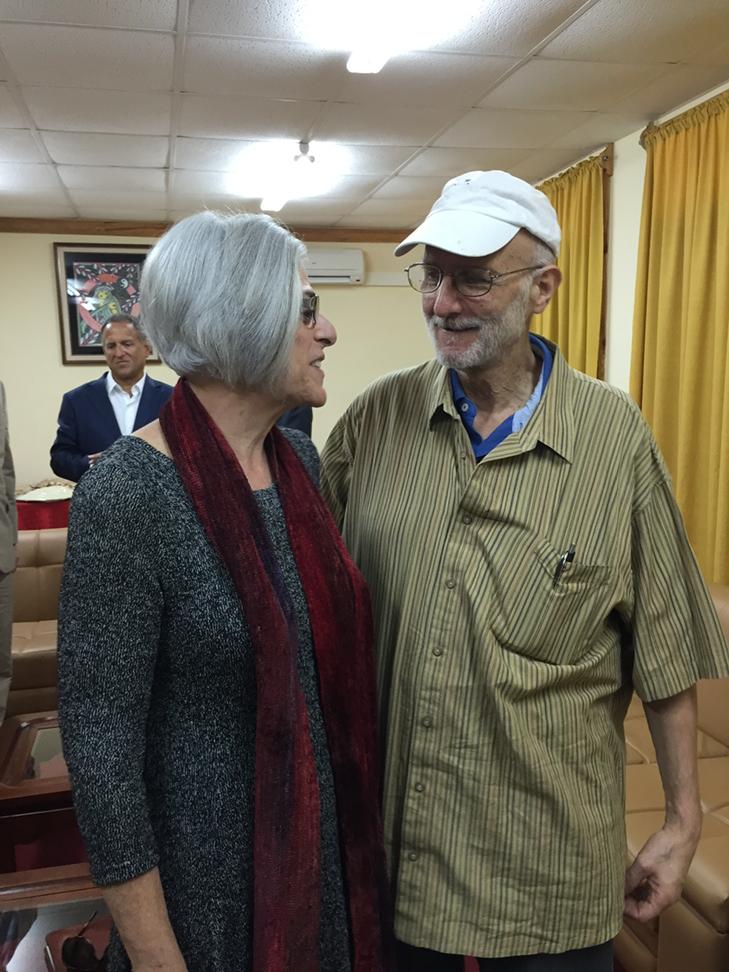
When Alan Gross, a U.S.A.I.D. contractor, was detained in Cuba in December 2009, Hillary commenced a long-term effort to procure his release via direct engagement with Cuban officials as well as third party efforts. In her memoir, Hard Choices, Hillary states, "One of my regrets as Secretary was our failure to bring Alan home."  Alan Gross left Cuba today, released on humanitarian grounds due to health issues,  accompanied by his wife, Judy,  with whom Secretary Clinton remained in close touch during her tenure.

View image on Twitter

In Hard Choices, Hillary noted that a condition Cuban officials levied on Gross's release was our release of five convicted Cuban spies.  Three of those individuals have been freed in exchange for Gross's freedom.  Two others were released earlier upon completing their sentences.

The exchange signals a thaw in U.S. - Cuba relations that will include re-establishment of diplomatic ties.   As Secretary of State, Hillary visited 112 countries.  Cuba was not among them.  Perhaps she will soon have the opportunity to visit as a private citizen.    One of Hillary's last acts as Secretary was to pen a letter to President Obama containing the recommendation that the Cuban embargo be re-examined.  Today it appears likely that the embargo will be terminated sooner rather than later.

U.S., Cuba Seek To Normalize Relations

Posted: 12/17/2014
WASHINGTON (AP) — The United States and Cuba will start talks on normalizing full diplomatic relations, marking the most significant shift in U.S. policy toward the communist island in decades, American officials said Wednesday. The announcement comes amid a series of new confidence-building measures between the longtime foes, including the release of American Alan Gross and the freeing of three Cubans jailed in the U.S.
Welcome home, Alan!

*************************************************
Given the chapter on Latin America in her memoir (pages 266 - 289), a statement supporting the action she suggested, encouraged, and actively pursued really was not necessary. Hillary released one nevertheless.  Anyone who has read her book knows that she campaigned for lifting the embargo right from the start and was a major force  in the effort to revise the Cuba policy.

Hillary Clinton backs Obama move on Cuba

WASHINGTON Wed Dec 17, 2014
(Reuters) - Former U.S. Secretary of State and potential presidential contender Hillary Clinton said on Wednesday she supported President Barack Obama's move to establish diplomatic ties with Cuba after more than 50 years of hostile relations.
"Despite good intentions, our decades-long policy of isolation has only strengthened the Castro regime's grip on power," Clinton said in a statement. "As I have said, the best way to bring change to Cuba is to expose its people to the values, information and material comforts of the outside world."
She added: "I support President Obama’s decision to change course on Cuba policy, while keeping the focus on our principal objective - supporting the aspirations of the Cuban people for freedom."

 ************************************************************
Secretary Kerry's statement on Cuba policy changes.

Announcement of Cuba Policy Changes

Press Statement
John Kerry
Secretary of State
Washington, DC
December 17, 2014

I was a seventeen year old kid watching on a black and white television set when I first heard an American President talk of Cuba as an "imprisoned island.”
For five and a half decades since, our policy toward Cuba has remained virtually frozen, and done little to promote a prosperous, democratic and stable Cuba. Not only has this policy failed to advance America's goals, it has actually isolated the United States instead of isolating Cuba.
Since 2009, President Obama has taken steps forward to change our relationship and improve the lives of the Cuban people by easing restrictions on remittances and family travel. With this new opening, the President has committed the United States to begin to chart an even more ambitious course forward.
Beginning more than twenty years ago, I have seen firsthand as three presidents -- one Republican and two Democrats -- have undertaken a similar effort to change the United States' relationship with Vietnam. It wasn't easy. It isn't complete still today. But it had to start somewhere, and it has worked.
As we did with Vietnam, changing our relationship with Cuba will require an investment of time, energy and resources. Today’s step also reflects our firm belief that the risk and the cost of trying to turn the tide is far lower than the risk and cost of remaining stuck in an ideological cement of our own making.
This new course will not be without challenges, but it is based not on a leap of faith but on a conviction that it's the best way to help bring freedom and opportunity to the Cuban people, and to promote America's national security interests in the Americas, including greater regional stability and economic opportunities for American businesses.
In January, as part of the President’s directive to discuss moving toward re-establishment of diplomatic relations, my Assistant Secretary for the Western Hemisphere Roberta Jacobson will travel to Cuba to lead the U.S. Delegation to the next round of U.S.-Cuba Migration Talks. I look forward to being the first Secretary of State in 60 years to visit Cuba. At President Obama’s request, I have also asked my team to initiate a review of Cuba’s designation as a State Sponsor of Terrorism.
Going forward, a critical focus of our increased engagement will continue to be on improving the Cuban Government’s respect for human rights and advocating for democratic reforms within Cuba. Promoting freedom of speech and entrepreneurship and an active civil society will only strengthen Cuban society and help to reintegrate Cuba into the international community.
********************************************************
Other news emanating from the State Department today includes the forthcoming departure of U.S.A.I.D. Administrator, Dr. Rajiv Shah.  Some will remember the "infinite frustration" Hillary expressed early in her term in filling that post.  Dr. Shah has done a magnificent job.  We should all be grateful for his dedicated service.

See Dr. Shah's statement here >>>>

For Immediate Release

Wednesday, December 17, 2014
USAID Press Office

Tuesday, January 15, 2013

What Your State Department Does For You

As Mme. Secretary prepares to turn over the reins of State to Senator Kerry, this fact sheet, a handy list of what the State Department does, arrives as a concise reminder of the bang the citizens of the U.S. get for their buck.  I am sure I saw something similar when our girl was preparing to step onto this world stage.  Regrettably (and no I have never been a "no regrets" person - I have my regrets), during the first six months of her tenure at State, I was somewhat negligent about posting here on this blog, wasting some of my time and some information at the now defunct Hillary's Village Forum.  I did follow her travels pretty regularly then, but could have been more responsible posting her D.C. activities here rather than at the forum. 


It is water under the bridge now.  Fortunately for me and for the blog, those first six months at Foggy Bottom were the days when, in true HRC fashion, she was keeping a low profile with her nose to the grindstone learning as much as she could about the department, so there was not a lot to share anyway.  Her presence was so rare that you might remember voices clamoring to know where she was, why Obama was keeping her "in the shadows," and suggesting she was being hidden. In those days I argued that she was studying briefs, treaties, MOUs, and essentially "eating the paper off the walls."  Turned out I was right about that and by the time she emerged the forum had gone down for good and this blog is where I shared all that came to my inbox. 

So, as she pulls up stakes and moves on (as will we from State to wherever she goes next) here is one of my favorite pictures from that first year along with a reminder for all who think we spend too much on foreign aid, of all that the State Department does for a little more than one percent of our budget.  Annie Liebowitz posed her perfectly in this ruffly pantsuit that I have always loved on her.

annie_liebowitz2009

Ten Things You Should Know About the State Department


Fact Sheet
Bureau of Public Affairs
January 10, 2013


What do the U.S. Department of State and the U.S. Agency for International Development (USAID) do for the American people? With just over one percent of the entire federal budget, we have a huge impact on how Americans live and how the rest of the world engages America. For example:
1. We create American jobs. We directly support 20 million U.S. jobs by promoting new and open markets for U.S. firms, protecting intellectual property, negotiating new U.S. airline routes worldwide, and competing for foreign government and private contracts.
2. We support American citizens abroad. In 2011, we provided emergency assistance to U.S. citizens in countries experiencing natural disasters or civil unrest. We assisted in 9,393 international adoptions and worked on more than 1,700 child abduction cases -- resulting in the return of over 660 American children.
3. We promote democracy and foster stability around the world. Stable democracies are less likely to pose a threat to their neighbors or to the United States. In South Sudan, Libya and many other countries we worked through various means to foster democracy and peace.
4. We help to make the world a safer place. Together with Russia, under the New START Treaty, we are reducing the number of deployed nuclear weapons to levels not seen since the 1950s. Our nonproliferation programs have destroyed stockpiles of missiles, munitions and material that can be used to make a nuclear weapon. The State Department has helped more than 40 countries clear millions of square meters of landmines.
5. We save lives. Strong bipartisan support for U.S. global health investments has led to worldwide progress against HIV/AIDS, tuberculosis, malaria, smallpox and polio. Better health abroad reduces the risk of instability and enhances our national security.
6. We help countries feed themselves. We help other countries plant the right seeds in the right way and get crops to markets to feed more people. Strong agricultural sectors lead to more stable countries.
7. We help in times of crisis. From earthquakes in Haiti, Japan and Chile to famine in the Horn of Africa, our dedicated emergency professionals deliver assistance to those who need it most.
8. We promote the rule of law and protect human dignity. We help people in other countries find freedom and shape their own destinies. Reflecting U.S. values, we advocate for the release of prisoners of conscience, prevent political activists from suffering abuse, train police officers to combat sex trafficking and equip journalists to hold their governments accountable.
9. We help Americans see the world. In 2011, we issued 12.6 million passports and passport cards for Americans to travel abroad. We facilitate the lawful travel of international students, tourists and business people to the U.S., adding greatly to our economy. We keep Americans apprised of dangers or difficulties abroad through our travel warnings.
10. We are the face of America overseas. Our diplomats, development experts, and the programs they implement are the source of American leadership around the world. They are the embodiments of our American values abroad. They are a force for good in the world.
For a very small investment the State Department and USAID yield a large return by advancing U.S. national security, promoting our economic interests, and reaffirming our country’s exceptional role in the world.

Tuesday, March 6, 2012

In Fond Memory of Donald Payne

Reuters Pictures Former Sudanese child slave Simon Deng (C) laughs with U.S. Senator Hillary Clinton (R) (D-NY) and Rep. Donald Payne (D-NJ) after Deng completed his 300-mile (483 km) walk from the United Nations in New York to the Capitol Building in Washington, in this April 5, 2006 file photo. Payne, 77, New Jersey's first and only African American congressman, died on March 6, 2012, after battling colon cancer, his brother said.
Although he never commented, Representative Payne was a frequent visitor to this blog, and I considered him a friend of ours.  He will be sorely missed by his family, friends, colleagues, constituents, and all who benefited  from his long years of service.  Rest in peace, dear friend.  I will miss seeing you here.

Wednesday, February 29, 2012

Hillary Clinton at House Foreign Affairs

Mme. Secretary testified before the House Foreign Affairs Committee today to explain the rationale for her 2013 budget proposals.  When she is before this committee, it always seems that time it at a premium,  and so she ends up submitting much of what she would like to say and explain as text.  Apparently that was the case today regarding her opening remarks. 

Assessing U.S. Foreign Policy Priorities Amidst Economic Challenges: The Foreign Relations Budget for Fiscal Year 2013


Testimony
Hillary Rodham Clinton
Secretary of State
Opening Remarks Before the House Foreign Affairs Committee
Washington, DC
February 29, 2012


Thank you very much, Madam Chairman and Ranking Member, and it is very good to be back here. I am grateful to your committee and the members for the support and consultation that we’ve enjoyed over these past three years. I look forward to your questions. I will submit my entire statement to the record and look forward to having a chance to exchange views with you today. Thank you.

Monday, October 24, 2011

Here she goes again!

US Secretary of State Hillary Clinton (R) poses with House Foreign Affairs Committee Chairman Ileana Ros-Lehtinen,R-FL, before testifying to the committee on assessing US foreign policy priorities and needs March 1, 2011 in the Rayburn House Office building on Capitol Hill in Washington, DC. Clinton on Tuesday warned Republicans to reverse plans to cut the US foreign aid budget or undermine US efforts to stabilize a North Africa and Middle East in turmoil. Clinton also told Republican lawmakers that their proposed cuts for 2012 would hurt US efforts to roll back the insurgency in Afghanistan, build a stable, democratic Iraq and contain Iran's nuclear ambitions. AFP PHOTO/Mandel NGAN (Photo credit should read MANDEL NGAN/AFP/Getty Images)
The picture above was taken last March 1 on the occasion of Secretary Clinton's testimony before the House Foreign Affairs Committee.  She had just flown in from Geneva where she was meeting with the Libya contact group on events unfolding there.  The woman with Mme. Secretary, Florida's Ileana Ros-Lehtinen, became chair of that committee when then majority Republican Congress was seated in January.  In her new position only weeks, Ileana had the brilliant idea of involving the public in congressional hearings via the internet.  Days before the hearing she solicited questions from the public via electronic communications. These questions would be read by committee members to the secretary for her to answer.

If you were around here then, you might also remember that discourse found and shared a Rachel Maddow clip of the result of this 21st century legislature endeavor.  What you do not hear here are the awkward struggles of the committee members reading questions that appeared to have been handed to them,  hastily and at random,  moments before the hearing.  What you do see, beginning around 4:00, is Secretary Clinton being repeatedly interrupted by Mrs. Ros-Lehtinen who requested additional responses in writing.  Hillary Clinton, as always,  maintained grace and good humor, but the entire operation was a poorly managed fiasco.


So!  What is Mrs. Ros-Lehtinen planning for Secretary Clinton's testimony on Thursday?   Right you are!
By Pete Kasperowicz - 10/24/11 01:49 PM ET
House Foreign Affairs Committee Chairwoman Ileana Ros-Lehtinen (R-Fla.) on Monday invited the public to submit questions for Secretary of State Hillary Clinton, which could be asked by members of the committee when the secretary testifies Thursday on issues surrounding U.S. involvement in Afghanistan and Pakistan.
"I would like to encourage members of the public to visit our Committee website and utilize our 'You Ask a Question' feature, so that they can suggest questions for our Members to ask Secretary Clinton," Ros-Lehtinen said. "We want to know what's on your mind, and what’s important to you."
Read more >>>>
Suggestion, Mme. Chairwoman:  Why not forward the chosen questions to Mme. Secretary's staff so they can begin their essay assignments early?  She has enough tech staff with blackberries to zip the answers to the committee's website.  Matter of fact,  why bother dragging the secretary to the Hill at all?  Why not just do it like an online class?  (It was never explained how the people who sent the questions were informed of the secretary's answers last time around - if they were.)

Tuesday, June 7, 2011

Slideshow: Hillary Clinton at Chancellor Angela Merkel's State Visit Today

In case you cannot see the gift Dr. Merkel presented to Secretary Clinton at atoday's luncheon at the State Department, it is a framed newspaper page with a picture of the two of them side by side in pantsuits but without showing their heads. The question was, "Which is which?" Mme. Secretary thoroughly enjoyed it!

Tuesday, March 1, 2011

Video: Secretary Clinton's Opening Remarks Before the House Foreign Affairs Committee


Opening Remarks Before the House Foreign Affairs Committee

Testimony

Hillary Rodham Clinton
Secretary of State
Washington, DC
March 1, 2011


Thank you very much, Madame Chairman, and congratulations on your assuming this post. And I want to thank you publicly for traveling to Haiti with our team on behalf of the efforts that the United States is pursuing there. And I also want to thank the Ranking Member for his leadership and support over these last years.

Late last night, I came back from round-the-clock meetings in Geneva to discuss the unfolding events in Libya. And I’d like to begin by offering a quick update.

We have joined the Libyan people in demanding that Qaddafi must go – now, without further violence or delay – and we are working to translate the world’s outrage into action and results.

Marathon diplomacy at the United Nations and with our allies has yielded quick, aggressive steps to pressure and isolate Libya’s leaders. USAID is focused on Libya’s food and medical supplies and is dispatching two expert humanitarian teams to help those fleeing the violence and who are moving into Tunisia and Egypt, which is posing tremendous burdens on those two countries. Our combatant commands are positioning assets to prepare to support these critical civilian humanitarian missions. And we are taking no options off the table so long as the Libyan Government continues to turn its guns on its own people.

The entire region is changing, and a strong and strategic American response is essential. In the years ahead, Libya could become a peaceful democracy, or it could face protracted civil war, or it could descend into chaos. The stakes are high. And this is an unfolding example of using the combined assets of smart power – diplomacy, development, and defense – to protect American security and interests and advance our values. This integrated approach is not just how we respond to the crisis of the moment. It is the most effective – and most cost-effective – way to sustain and advance our security across the world. And it is only possible with a budget that supports all the tools in our national security arsenal – which is what we are here to discuss.

The American people are justifiably concerned about our national debt. I share that concern. But they also want responsible investments in our future that will make us stronger at home and continuing our leadership abroad. Just two years after President Obama and I first asked you to renew our investment in development and diplomacy, we are already seeing tangible returns for our national security:

In Iraq, almost 100,000 troops have come home, and civilians are poised to keep the peace. In Afghanistan, integrated military and civilian surges have helped set the stage for our diplomatic surge to support Afghan-led reconciliation that can end the conflict and put al-Qaida on the run. We have imposed the toughest ever sanctions to rein in Iran’s nuclear ambitions. We have reengaged as a leader in the Pacific and in our own hemisphere. We have signed trade deals to promote American jobs and nuclear weapons treaties to protect our people. We have worked with Northern and Southern Sudanese to achieve a peaceful referendum and prevent a return to civil war. We are working to open up political systems, economies, and societies at a remarkable moment in the history of the Middle East, and to support peaceful, orderly, irreversible democratic transitions in Egypt and Tunisia.

Our progress is significant, but our work is far from over. These missions are vital to our national security, and I believe with all my heart now would be the wrong time to pull back.

The FY 2012 budget we discuss today will allow us to keep pressing ahead. It is a lean budget for lean times. I did launch the first-ever Quadrennial Diplomacy and Development Review to help us maximize the impact of every dollar we spend. We scrubbed this budget and made painful but responsible cuts. We cut economic assistance to Central and Eastern Europe, the Caucasus, and Central Asia by 15 percent. We cut development assistance to over 20 countries by more than half.

And this year, for the first time, our request is divided into two parts. Our core budget request of $47 billion supports programs and partnerships in every country but North Korea. It is essentially flat from 2010 levels. The second part of our request funds the extraordinary, temporary portion of our war effort the same way that the Pentagon’s request is funded: in a separate Overseas Contingency Operations account known as OCO. Instead of covering our war expenses through supplemental appropriations, we are now taking a more transparent approach that reflects our fully integrated civilian-military efforts on the ground. Our share of the President’s $126 billion request for these exceptional wartime costs in the frontline states is 8.7 billion.

Let me walk you through a few of our key investments. First, this budget funds vital civilian missions in Afghanistan, Pakistan, and Iraq. In Afghanistan and Pakistan, al-Qaida is under pressure as never before. Alongside our military offensive, we are engaged in a major civilian effort that is helping to build up the governments, economies, and civil societies of both countries and undercut the insurgency.

Now, these two surges, the military and civilian surge, set the stage for a third: a diplomatic push in support of an Afghan process to split the Taliban from al-Qaida, bring the conflict to an end, and help stabilize the region. Our military commanders are emphatic they cannot succeed without a strong civilian partner. Retreating from our civilian surge in Afghanistan with our troops still in the field would be a grave mistake.

Equally important is our assistance to Pakistan, a nuclear-armed nation with strong ties and interests in Afghanistan. We are working to deepen our partnership and keep it focused on addressing Pakistan’s political and economic challenges as well as our shared threats.

And as to Iraq, after so much sacrifice, we do have a chance to help the Iraqi people build a stable, democratic country in the heart of the Middle East. As troops come home, our civilians are taking the lead, helping Iraqis resolve conflicts peacefully and training their police.

Shifting responsibilities from soldiers to civilians actually saves taxpayers a great deal of money. For example, the military’s total OCO request worldwide will drop by $45 billion from 2010 as our troops come home. Our costs, the State Department and USAID, will increase by less than 4 billion. Every business owner I know would gladly invest $4 to save $45.

Second, even as our civilians help bring today’s wars to a close, we are working to prevent tomorrow’s. This budget devotes over $4 billion to sustaining a strong U.S. presence in volatile places where our security and interests are at stake. In Yemen, it provides security, development, and humanitarian assistance to deny al-Qaida in the Arabian Peninsula a safe haven and to promote the kind of stability that can lead to a better outcome than what might otherwise occur. It focuses on these same goals in Somalia. It helps Northern and Southern Sudan chart a peaceful future. It helps Haiti rebuild. And it proposes a new Global Security Contingency Fund that would pool resources and expertise with the Defense Department to respond quickly as new challenges emerge.

This budget also strengthens our allies and partners. It trains Mexican police to take on violent cartels and secure our southern border. It provides nearly $3.1 billion for Israel and supports Jordan and the Palestinians. It helps Egypt and Tunisia build stable and credible democracy, and it supports security assistance to over 130 nations.

Now, some may say, well, what does this get us in America? Let me give you one example. Over the years, these funds have created valuable ties with foreign militaries and trained, in Egypt, a generation of officers who refused to fire on their own people. And that was not something that happened overnight. It was something that happened because of relationships that had been built over decades. Across the board, we are working to ensure that all who share the benefits of our spending also share the burdens of addressing common challenges.

Third, we are making targeted investments in human security. We have focused on hunger, disease, climate change, and humanitarian emergencies because these challenges not only threaten the security of individuals – they are the seeds of future conflicts. If we want to lighten the burden on future generations, we have to make investments that makes our world more secure for them.

Our largest investment is in global health programs, including those launched by former President George W. Bush. These programs stabilize entire societies that have been and are being devastated by HIV, malaria, and other diseases. They save the lives of mothers and children and halt the spread of deadly diseases.

Global food prices are approaching an all-time high. Three years ago, this led to protests and riots in dozens of countries. Food security is a cornerstone of global stability, and we are helping farmers grow more food, drive economic growth, and turn aid recipients into trading partners.

Climate change threatens food security, human security, and national security. Our budget builds resilience against droughts, floods, and other weather disasters; promotes clean energy and preserves tropical forests. It also gives us leverage to persuade China, India, and other nations to do their essential part in meeting this urgent threat.

Fourth, we are committed to making our foreign policy a force for domestic economic renewal and creating jobs here at home. We are working aggressively to promote sustained economic growth, level the playing fields, and open markets. To give just one example, the eight Open Skies Agreements that we have signed over the last two years will open dozens of new markets to American carriers. The Miami International Airport, Madam Chairman, which supports nearly 300[i] jobs –including many in your district – will see a great deal of new business thanks to agreements with Miami’s top trading partners, Brazil and Colombia.

Fifth and finally, this budget funds the people and the platforms that make possible everything I’ve described. It allows us to sustain diplomatic relations with 190 countries. It funds political officers who are literally, right now, out working to defuse political crises and promote our values; development officers who are spreading opportunity and promoting stability; and economic officers who wake up every day thinking about how to help put Americans back to work.

Several of you have already asked our Department about the safety of your constituents in the Middle East. Well, this budget also helps fund the consular officers who evacuated over 2,600 people thus far from Egypt and Libya – and nearly 17,000 from Haiti. They issued 14 million passports last year and served as our first line of defense against would-be terrorists seeking visas to enter our country.

I’d like to say just a few words about the funding for the rest of 2011. As I told Speaker Boehner, Chairman Rogers, and many others, the 16 percent cut for State and USAID that passed the House last month would be devastating for our national security. It would force us to scale back dramatically on critical missions in Iraq, Afghanistan, and Pakistan.

And as Secretary Gates, Admiral Mullen, General Petraeus have all emphasized to the Congress, we need a fully engaged and fully funded national security team, and that includes State and USAID.

Now, there have always been moments of temptation in our country to resist obligations beyond our borders. But each time we have shrunk from global leadership, events have summoned us back, often cruelly, to reality. We saved money in the short term when we walked away from Afghanistan after the Cold War. But those savings came at an unspeakable cost – one we are still paying, ten years later, in money and lives.

Generations of Americans, including my own, have grown up successful and safe because we chose to lead the world in tackling the greatest challenges. We invested the resources to build up democratic allies and vibrant trading partners. And we did not shy away from defending our values, promoting our interests, and seizing the opportunities of each new era.

I have now traveled more than any Secretary of State in the last two years, and I can tell you from firsthand experience the world has never been in greater need of the qualities that distinguish us: our openness and innovation, our determination, our devotion to universal values. Everywhere I travel, I see people looking to us for leadership. Sometimes I see them after they have condemned us publicly on their television channels and then come to us privately and say we can’t do this without America.

This is a source of great strength, a point of pride, and I believe an unbelievable opportunity for the American people. But it is an achievement. It is not a birthright. It requires resolve and it requires resources.

I look forward to working closely together with you to do what is necessary to keep our country safe and maintain American leadership in this fast-changing world. Thank you, Madam Chairman.


[i] 300,000 jobs

Saturday, July 24, 2010

Hillary Clinton v. NK via Newsy.com

The folks at Newsy.com were nice enough to send me this video, so I thought I would share it. Interesting point raised here is how the US/SK alliance (specifically the military exercises) affects US - China relations. My guess, not much. They got over our sale of weapons to Taiwan. They will get over this, too. Exercises are scheduled for Sunday through Wednesday of this week.


Multisource political news, world news, and entertainment news analysis by Newsy.com

Friday, July 23, 2010

SECRETARY OF STATE HILLARY RODHAM CLINTON: Daily Appointments Schedule for July 23, 2010

Wow! Here is something completely different. BPA sent out an actual schedule of the day instead of saying she is "on foreign travel" Works for me!

Daily Appointments Schedule for July 23, 2010


Washington, DC
July 23, 2010


SECRETARY OF STATE HILLARY RODHAM CLINTON

Secretary Clinton is on foreign travel, accompanied by Counselor Cheryl Mills, Assistant Secretary Kurt Campbell and Deputy Director of Policy Planning Derek Chollet. For more information, click here.


9:15 a.m. LOCAL Secretary Clinton attends session one of the ASEAN Regional Forum Retreat, in Hanoi, Vietnam. Also attending the meeting is Assistant Secretary Campbell.
(POOLED CAMERA SPRAY)

10:35 a.m. LOCAL Secretary Clinton holds a bilateral meeting with Russian Foreign Minister Sergey Lavrov, in Hanoi, Vietnam. Also attending the meeting is Mr. Chollet.
(POOLED CAMERA SPRAY)

11:20 a.m. LOCAL Secretary Clinton attends session two of the ASEAN Regional Forum Retreat, in Hanoi, Vietnam. Also attending the meeting is Assistant Secretary Campbell.
(CLOSED PRESS COVERAGE)

12:30 p.m. LOCAL Secretary Clinton attends the ASEAN Regional Forum lunch for ministers, in Hanoi, Vietnam.
(CLOSED PRESS COVERAGE)

2:00 p.m. LOCAL Secretary Clinton holds a bilateral meeting with Japanese Foreign Minister Katsuya Okada, in Hanoi, Vietnam. Also attending the meeting are Assistant Secretary Campbell, Ambassador Sung Kim and Mr. Chollet.
(POOLED CAMERA SPRAY)

2:35 p.m. LOCAL Secretary Clinton attends the ASEAN Regional Forum Plenary Session, in Hanoi, Vietnam.
(POOLED CAMERA SPRAY)

3:00 p.m. LOCAL Secretary Clinton holds a bilateral meeting with Chinese Foreign Minister Yang Jiechi, in Hanoi, Vietnam. Also attending the meeting are Assistant Secretary Campbell, Ambassador Sung Kim and Mr. Chollet.
(POOLED CAMERA SPRAY)

3:45 p.m. LOCAL Secretary Clinton participates in a signing ceremony for the Treaty of Amity and Cooperation, in Hanoi, Vietnam.
(POOLED PRESS COVERAGE)

4:20 p.m. LOCAL Secretary Clinton holds a press availability, in Hanoi, Vietnam.
(OPEN PRESS COVERAGE)

5:35 p.m. LOCAL Secretary Clinton participates in a repatriation ceremony for remains of U.S. soldiers, in Hanoi, Vietnam.
(OPEN PRESS COVERAGE)

PM LOCAL Secretary Clinton returns from foreign travel.

Thursday, July 22, 2010

SECRETARY OF STATE HILLARY RODHAM CLINTON: Daily Appointments Schedule for July 22, 2010

Daily Appointments Schedule for July 22, 2010


Washington, DC
July 22, 2010


SECRETARY OF STATE HILLARY RODHAM CLINTON:
Secretary Clinton is on foreign travel, accompanied by Counselor Cheryl Mills, Assistant Secretary Kurt Campbell and Deputy Director of Policy Planning Derek Chollet. For more information, click here.

Tuesday, July 20, 2010

Secretary Clinton's Remarks at Meeting With Embassy Kabul's Civilian and Military Staff

Well we see Mme. Secretary leave the AfPak region quite hopeful about progress being made. In addition, we have seen that preparations for these visits and the tight security were very effective (as was Mme. Secretary re: her agenda). Thankfully, although apparently some incidents were planned, they were neutralized. As is her signature, our SOS made time to speak with the folks at Embassy Kabul who helped keep her visit so positive and smooth. These people serve in a very dangerous place, as I do not have to tell you. Here are her words to them today.

(If you work at Embassy Kabul and are reading this, thank you and bless you!

N.B. I know I used this picture earlier today, but it is so apropriate here. We applaud you!)

Remarks at Meeting With Embassy Kabul's Civilian and Military Staff


Hillary Rodham Clinton
Secretary of State
Embassy Kabul, Ambassador's Terrace
Kabul, Afghanistan
July 20, 2010


SECRETARY CLINTON: Well, it is good to be back and it’s wonderful to see all of you. I apologize for keeping you waiting. I understand you had to come in early because of security, but it’s cool – (laughter) – and so it’s a mixed blessing. And it’s really a privilege and honor to be here. I want to thank Ambassador and Mrs. Eikenberry. Once again, they were very gracious hosts in putting all of us up as we made this trip here for the Kabul conference. I want to thank Ambassador James Keith, Ambassador Bill Todd, Ambassador Hans Klemm, Ambassador Tony Wayne – just a lot of ambassadors. (Laughter.) Yeah, we got a whole stable full of ambassadors.
But mostly, I want to thank all of you. We have a tremendous team here and I know that each and every one of you are doing your very best to fulfill the mission that we have set for ourselves. And I am so proud that I get to work with you. You are truly on the front lines of American foreign policy and your efforts to strengthen the government and people of Afghanistan so that they are able to chart their own course toward a future they choose is especially important today in this world where there are so many who doubt whether it’s possible or not.
I said earlier at the conference that I know that there are many of our citizens back home who wonder whether this can be a success. Well, I have two answers to that. First of all, yes it can. And secondly, it has to. This is in America’s vital national security interest for us to work with the people and Government of to secure a stable, prosperous future.
And in the past year, we have done so much to try to make good on that promise. We have fulfilled our pledge to trip our civilian capacity on the ground in Afghanistan, and as you know, we are still growing. I am well aware we’ve had a lot of growing pains – (laughter) – and a lot of cramped quarters, and I thank you for your indulgence as we try to catch up with the movement of people here for this important work. We’re building additional facilities as quickly as possible, and while we all look forward to having an improved complex for you, you’re going to have to endure some construction and noise in the meantime, which is, I hope, a small price to pay.
I appreciate your patience and I appreciate your dedication, and I’m devoted to your safety and security, which is why we are improving the facilities as well as expanding them. Your security is a primary concern to me and our team back in Washington, as it is to the ambassador and the team here. I know that this is a high-stress, high-pressure, high-exposure, high-stakes environment, and there is no way to fully catalog the sacrifice that you are making with a more restricted lifestyle in order to serve our country. I know many of you have left families back at home this past Christmas. I had a Christmas party for children of the unaccompanied officers serving in Afghanistan and Iraq, and there was more than one little boy or girl who proudly told me that their mom or dad was here in Afghanistan. But I recognize that that puts a lot of pressure on you, being so far away – thanks for Skype and other things that make it a little better – but also for those who stay behind.
As the summer wears on, we move with our military engagement into the southern provinces, and obviously, that requires even more vigilance and precautions. There was a rocket attack on the airport last night and one of the press asked me if I thought that was a welcome for me. And I said no, I think it’s just recognizing that the people who are launching the rockets don’t want the kind of Afghanistan we all do and they don’t know what to do about it other than to engage in violent activity.
We have a great civilian-military leadership team here, and both Ambassador Eikenberry and General Petraeus, Special Representative Holbrooke, all of us, are working hard to try to chart the way forward in this very difficult assignment. And I’m aware too that we have a diverse staff. It’s not just State and AID, although that’s the bulk of the people here in this complex, but military personnel, agricultural experts, specialists in subjects ranging from crisis stabilization to rule of law to women’s rights. Even some former retirees who just couldn't bear being on the sidelines have come back into the action.
And each and every one of you makes a very important contribution. We see it all the time in the reports that we are given. And I think that for me, this Kabul conference was a real milestone. I couple of the foreign ministers referred to it as a turning point, and I hope they’re right, because it was clearly Afghan-led. I know how much work many of you did in order to make it successful today. But the Afghan Government pulled together a very specific, detail-oriented plan. We, along with our international partners, will be working to operationalize it and to inject accountability measures into it. The long extra hours that you put in, I think really paid off.
I am also aware that as we look at the road ahead, there is a lot of concern about how we maintain a presence here when you have to be so restricted. For some of you who are Foreign Service officers or development experts, that’s just not the way you usually operate. And I understand that and I hope that as the security situation improves, your mobility will improve as well. But I am very conscious of how important it is that we bring you home safely, and that’s part of my commitment to you.
The Kabul conference today was not only very well attended, but notably had a large number of representatives at the foreign minister level from Muslim-majority countries and Arab countries who are really recognizing the significance of their involvement here. And at the end of the conference, President Karzai thanked everyone for coming and he especially thanked the representatives of Muslim countries, because he said we are showing the true face of Islam, not the extremists, not the radicals, not the haters, but we are. And I thought that was a good summary, because what was apparent today was the unity of purpose among people from across the world.
I want to recognize our brave locally engaged staff members. I am well aware local staff members form the backbone of our embassies around the world, and their service is not just critical; it’s essential. We couldn't open our doors without you. And often, because you live in the community, the risks for you are even greater than for our American staff. Many of our locally engaged staff continued working at the Embassy during the years of Taliban rule. I understand that Saed Rahman has been with us since 1983, and I remember meeting you when I was here so many years ago. (Applause.)
I also want to welcome back Hameed Sultani from the INL team, who was wounded in a terrorist attack last year but has returned to work for us once again. (Applause.)
And of course, we remember our fallen colleagues, civilian and military, who are not with us today because of the sacrifice that they made. We honor their memories, and the work we do now and tomorrow is one of the best ways we can fulfill their hopes and see the realization of the cause that they died for even as we mourn their loss.
So all of you – civilian, military, locally engaged staff – please know how proud we are of you, take encouragement from the fact that we value the work that you are doing. As President Obama said to you when he was here, think about you all the time, even though we are half a world away. I know some of you are getting ready to leave and I thank you for your service, and some of you are newly arrived with more to come and I welcome you to Kabul. And I ask you to serve with the same level of dedication that those who have gone before you have set as a very high standard.
So thank you for everything you’re doing for the United States, for the American people, for Afghanistan, and the Afghan people. I am on my way to Seoul, South Korea, to meet Secretary Gates for a meeting there, and I will take with me the image of all of you and the memories of this day along with my many other memories of Afghanistan. My very first trip here back – oh my goodness, I think it was 2003 – I went into downtown Kabul, went to a restaurant for dinner. I visited the library and a museum that was just reopening. And it is my hope and prayer that on one of my future visits, either as Secretary of State or private citizen, I will be able to do the same again.
Thank you all very much. (Applause.)


Hillary Clinton Wheels Up for Seoul

Thank God for the tweets of BBC's Kim Ghattas, traveling with Secretary of State Clinton, who tweeted this a little while ago:


Get on Chinook to #Kabul airport then 8hr long trip to Seoul #hillarytravel


So for the readers who expressed anxiety regarding reports we heard and read here about attempts by terrorists to target her or the conference, with any luck she is already wheels up and on her sparkly little multitasking way.

Great work Mme. Secretary! We saw/heard you on TV! Thanks for the wonderful work! ESPECIALLY for explaining how the Taliban came to be! Excellent! Continue your journey safely.


SECRETARY OF STATE HILLARY RODHAM CLINTON: Daily Appointments Schedule for July 20, 2010

Daily Appointments Schedule for July 20, 2010


Washington, DC
July 20, 2010

SECRETARY OF STATE HILLARY RODHAM CLINTON:
ON FOREIGN TRAVEL

**UPDATED** VIDEO & Slideshow: Hillary Clinton at Afghanistan Conference

Lots of pictures, so little time. Sharing these the quickest way possible. Familiar faces: William Hague, Cathy Ashton, Guido Westerwelle among the many.

Lilly provided the video. Thank you, Lilly!


Mme. Secretary you are doing a great job, very effectively! Stay safe, please!


Secretary Clinton Briefs the Traveling Press

Briefs the Traveling Press


Hillary Rodham Clinton
Secretary of State
En Route Kabul, Afghanistan
July 19, 2010


SECRETARY CLINTON: (Inaudible) appreciably better in tone and substance. I was really pleased by the progress that I see we’re making on not only the Strategic Dialogue but on the building of relationships. So I was very encouraged by the day, and coming on the heels of finally getting the transit trade agreement done, which is a huge breakthrough and speaks volumes about the willingness of both countries to work together. It was, all in all, a very good visit.
QUESTION: What are you hoping to (inaudible) President Karzai in terms of (inaudible)? What is your goal going into Kabul?
SECRETARY CLINTON: Well, I think we have to put this conference into context. This is probably the first time in more than maybe 40 years where there’s been any kind of international gathering in Kabul, and it’s part of a sequence of actions that include our policy, the inauguration, the London conference, President Karzai’s visit. And an enormous amount of work has been done by the Afghans in preparation for this conference. At last count, there were going to be 60 countries represented, plus the United Nations and other multilateral organizations. And we’ve really worked hard with the Afghans and they’ve worked really hard themselves to present their proposals, their plans, at the conference on everything from improving governance to transition to reconciliation and so much else.
So it’s been very well-prepared. They’ve had a good team working on it. And I’m looking forward to meeting with Ambassador Eikenberry, General Petraeus, and Staffan di Mistura tonight and then having dinner with President Karzai and having a one-on-one with him. And then tomorrow I’ll start my day with a meeting with Afghan women because I am absolutely determined that they’re going to be part of this future in Afghanistan. And so we’ll be meeting with people – with women along with the Danish foreign minister and the high representative from EU, Cathy Ashton, and Mrs. Espersen. And I wanted to start my day that way deliberately so that I can reference back to this during the conference.
And we’ll then go to the conference and I’ll participate in the conference but also have a number of bilateral meetings on a range of matters.
But all in all, it’s been well-prepared and I think it’s going to be very substantive and it’s going to demonstrate more Afghan ownership and leadership, which is something we’ve been pushing for.
QUESTION: (Inaudible.)
SECRETARY CLINTON: I’ve had a number of very long, substantive meetings with General Kayani and today was the latest. We have very frank and open exchanges. I understand the challenges that they are facing and have a lot of appreciation for how they’re addressing them. We have said repeatedly that we want to work with them to do even more together, and we went into some detail about that today. We discussed the Strategic Dialogue because it obviously has a significant security component. And the work that the Pakistanis returned to us today was very substantial and we kind of – we reviewed that.
So we had a very broad discussion about Afghanistan, what the best way – ways to secure peace and stability in Afghanistan. We talked about the recent dialogue between India and Pakistan and got their views on that. It was a really broad, comprehensive discussion.
QUESTION: You said you had talked about what more we could do to assist them, presumably on a military basis because that’s what he does. What kinds of things (inaudible) talk about? I mean, I think we all have a list of things that they would like to have and there’s some additional things that we would like to be able to do, so can you give us some sense of where there was a meeting of the minds (inaudible)?
SECRETARY CLINTON: Well, Karen, we talked about the status of American aid going forward. We’ve been working on a multi-year package with the Pakistanis. We talked about their request for excess defense assets, something that we think makes a lot of sense and that we’ll be pursuing. We talked about the challenges that they confront militarily in the areas where they’re fighting and how we can better exchange intelligence, support the non-military aspect of this. When I was here in October, General Kayani asked if I could expedite assistance that would go into South Waziristan so that people could see very tangible results of the clearing and holding part of the action and try to demonstrate building and then eventually transition. He thanked me for the expedited work that we’re doing.
So it was a very good exchange of what’s working, what we can do better, and I have a list of things that I’m working on (inaudible).
QUESTION: (Inaudible) frank and open (inaudible)?
SECRETARY CLINTON: Those are diplomatic terms, Karen. (Laughter.)
QUESTION: (Inaudible.)
SECRETARY CLINTON: You can imagine. We covered the waterfront.
QUESTION: At tomorrow’s conference, are you expecting that the result will be something that can begin to address the concerns that have been expressed by Representative Lowey and Senator Kerry and others on the Hill? (Inaudible) the direction and the (inaudible)?
SECRETARY CLINTON: I hope so. I mean, that certainly is one of my goals, because we’ve been working with the Afghan Government and we have a process of certifying ministries so that we can increase the amount of the direct aid that’s going to the government. And we’ve asked for certain steps to be taken and representations made. We’ll see more about that tonight and tomorrow. And we also have to take a hard look at ourselves, because it’s very clear that our presence, all of our contracting, has fed this problem. This is not just an Afghan problem. It’s an international issue.
And we have to do a better job of trying to more carefully channel and monitor our own aid. If you remember the article that got Congresswoman Lowey so agitated with good reason, it wasn’t on the civilian side, it was on our military side, because the military was looking for ways to give safe passage for convoys, and obviously, they want to get things done, they want to move goods and people. So the article basically detailed what the consequences of doing that in a way that basically buys protection. Yet at the same time, look, this is a very challenging environment and I can understand why people make some of the decisions. But that’s no excuse. We have to do better.
And so while we’re pressing the Afghan Government at all levels to be more accountable, to go after corruption, we also have to do an equal job of managing our own presence there.
QUESTION: On that --
QUESTION: (Inaudible.)
QUESTION: I’m sorry, just to follow up on that same thing. The military has got a number of task forces that they’ve launched in order to examine on their side these kinds of contracts. What is the State Department doing?
SECRETARY CLINTON: Same thing. I mean, we have an ongoing scrubbing of issues. I mean, as many of you know, Jack Lew has been heading up our internal efforts to really ask all the hard questions, to force decisions to be made, to implement measures of accountability. And we will continue that as Jack moves on to OMB. But between State and AID we have a – we don’t have a task force. We have a directive in the Department and the Agency about what’s expected and then we have oversight of that.
QUESTION: Madam Secretary, did you detect in the town hall and the interviews you did with Pakistani journalists any sign that you were beginning to move the needle on attitudes of Pakistanis towards (inaudible)?
SECRETARY CLINTON: Well, that was my impression. It was the impression of people who were with me in October, people from our Embassy, people who follow this very closely.
QUESTION: Vis-à-vis October?
SECRETARY CLINTON: Yeah, vis-à-vis October. Yes, I do. And I mean, in fact, one of the journalists after the roundtable said, well, that wasn’t so bad, that was really substantive, don’t you think? The temperature was much lower. And I (inaudible). Yeah, I thought that it was. I thought that there – there was a seriousness about it. There’s going to be the hot-button issues. That’s just what you guys do. I understand that. But in addition to those, there were a lot of substantive concerns. And similarly at the town hall, the range of questions was much broader than I answered last October.
And the government officials also believe that we are moving the needle. Now, I don’t want to overstate this, but (inaudible) President Zardari or Prime Minister Gillani or Foreign Minister Qureshi or General Kiyani, they all said we really believe that the people are understanding that the United States wants to be a real partner to us, that it’s not just about killing terrorists. And I happen to think one of the best ways to kill terrorists is by being a good partner and by creating an atmosphere in which people have trust and confidence that what you are doing is in their interest as well and therefore they are prepared to support their own government in those efforts.
So I thought – I could – I can feel a change and I think our guys who were with me in October remarked on it as well.
QUESTION: Madam Secretary, (inaudible) what struck me was that a lot of questions were more about asking the U.S. for help – how can you help us solve this problem, how can you help us solve that problem . I wonder whether you ever get tired of being asked for help.
SECRETARY CLINTON: Well --
QUESTION: (Inaudible.)
SECRETARY CLINTON: But I often try to turn it around, Kim, because I understand the impetus behind that. In our Strategic Dialogue today – the finance minister is very impressive – Minister Shaikh gave a kind of 30-second rundown of American-Pakistani modern history. He said you’ve been with us whenever there’s been a war – 1960s the Cold War, 1980s the war against the Soviet Union in Afghanistan, post 9/11. He said we want to know that you actually care about us beyond times when there is conflict.
That’s a general attitude on the part of Pakistanis. They really are not prepared to believe that we want to make a long-term commitment and work together. So when they say, well, what about this and what about that, I will come back and say, look, you have to have tax reform, you’ve got to tax yourselves, people have to get to be entrepreneurs, you’ve got to do more for women. So I kind of push back and I think it’s a good, honest dialogue between us.
QUESTION: How about funding the production of South Pacific?
QUESTION: Of what?
SECRETARY CLINTON: Of South Pacific.
QUESTION: No, no, Nanette? Did you suspect she had an ulterior motive in asking that question? (Laughter.)
SECRETARY CLINTON: Only you would have really picked up on that, Matt. No, but I – for example, there’s a lot of money in Pakistan. Why don’t they have a law that encourages private donations to their culture activities? And I bit my tongue. I didn’t say, well, of course, a tax-deductible charitable contribution assumes you pay taxes against which you can deduct it. (Laughter.) But --
QUESTION: Are you aware that while you were at those meetings and the dialogue today that the North Korean ambassador was meeting with others – were you or anybody in your delegation aware of that and was there any connection to your upcoming (inaudible)?
SECRETARY CLINTON: No. I mean, they --
QUESTION: (Inaudible.) The Pakistanis are not serving as mutual --
SECRETARY CLINTON: No, no, that’s totally unconnected.
QUESTION: But you were aware?
SECRETARY CLINTON: I knew, but I mean, it was not anything that we had any involvement in.
QUESTION: There are reports – or actually, there was an investigation by the (inaudible) that showed that government offices in Pakistan and the army have unpaid bills worth (inaudible). When you talked to them about pouring money into projects to help their energy sector, do you tell them perhaps (inaudible) pay for the (inaudible)?
SECRETARY CLINTON: Well, of course, their response to that, because this is part of our intensive analysis, is, well, we’re government offices; if we don’t have the money, how can we pay the bills? And that’s part of the financial problem that the finance minister and others are trying to sort out.
And the energy sector is particularly complicated because they have subsidized electricity for so long that now that they’re, I think, quite rightly removing those subsidies, they can begin to see what kind of market exists. And obviously, the army and the government are big users of energy.
STAFF: We’re about to take a very steep descent, so --
SECRETARY CLINTON: Oh yes, don’t forget we have to go down like that.
QUESTION: Did you get any confirmation that the Iranian foreign minister was going to be in Kabul tomorrow?
SECRETARY CLINTON: I heard that. What did you hear?
QUESTION: I mean, they’ve said that before and then they don’t show.
SECRETARY CLINTON: Why don’t you guys go try to interview him?
QUESTION: Why don’t you meet with him?
QUESTION: So you’ve heard it, but no confirmation?
SECRETARY CLINTON: No, I’ve definitely heard that he was coming, but I have no confirmation.
QUESTION: How concerned are they about security (inaudible)?
QUESTION: Do you want (inaudible)?
SECRETARY CLINTON: Very concerned. Very. Obviously, everybody is concerned about security.
QUESTION: (Inaudible.)
SECRETARY CLINTON: I think that it’s something that can be sequenced. I mean, we want to be able to certify agencies so that we can put money through them. We’ve certified, I think, four now. We want to certify more of them, but there are certain criteria that have to be met.
QUESTION: Thank you.

Monday, July 19, 2010

Hillary Clinton, On the Fly, Responds to the Senators

Today was one of those whirlwind, two country days. After an evidently busy day in Islamabad, Hillary Clinton hopped on her big, blue plane and literally hopped off onto a tarmac in Afghanistan to be greeted by Ambassador Eikenberry and General Petraeus.


Also there to greet her was President Karzai with whom she met at the presidential palace. Those of us who watch her closely are not surprised by the bounding energy, the sparkling smile, or the multitasking implied by P.J. Crowley's remark last week that she would also be seeing UK Foreign Minister William Hague in Kabul.

With UK Prime Minister David Cameron due in DC, the menu on that plate is the release of convicted murderer Abdelbaset Al Megrahi last year and the possible role of BP in negotiating that release. Al Megrahi was convicted in Scotland of 270 counts of murder for the bombing, over Lockerbie Scotland of Pan Am flight 103. If BP was involved, Americans, who have reason not to feel soft and fuzzy toward BP, would like to know.

It was for that reason that Secretary Clinton spoke by phone with Hague last week, and it was for that reason that three former colleagues in the Senate Menendez, Lautenberg (NJ) and Schumer (NY) as well as her successor Kirsten Gillibrand wrote to the SOS asking her to look further into this and request that the UK do this as well. Certainly, with the PM in DC, this issue would be brought up.

So today, among her many other tasks and activities, she released her response to the Senators, all of whom are close to her.

Response to U.S. Senators on the Release of Abdelbasset al-Megrahi


Office of the Spokesman
Washington, DC
July 19, 2010


The following is the text of the response from Secretary Clinton to Senators Schumer, Gillibrand, Lautenberg and Menendez regarding the release of Abdelbasset al-Megrahi.


Thank you for your letters of July 12 and 13 regarding the release in August 2009 of convicted PanAm 103 bomber Abdelbasset al-Megrahi.

I and other senior U.S. officials strongly and consistently expressed to Scottish authorities and the then-British government our longstanding position that al-Megrahi should serve out the entirety of his sentence in Scotland for his role in the bombing of PanAm 103. We strongly opposed his release last year, regardless of life expectancy or any other factor, and continue to maintain that position today.

We are aware of media reports suggesting a link between BP’s commercial interests in Libya and al-Megrahi’s deeply regrettable release from a Scottish prison on compassionate grounds last year. As you are likely aware, BP’s position favoring a Prisoner Transfer Agreement (PTA) between the United Kingdom and Libya is a matter of public record. The then-British government undertook to conclude the PTA in 2007-2008 as part of its broader reengagement with Libya. In 2009, the decision of whether to release al-Megrahi from prison fell exclusively to the Scottish government under local law, and specifically, to the Scottish Justice Minister, Kenny MacAskill.

While Mr. MacAskill ultimately rejected the application for al-Megrahi’s transfer under the UK-Libya PTA, al-Megrahi also petitioned for release on compassionate grounds, as permitted under Scottish law. According to the Scottish government, Mr. MacAskill decided to release al-Megrahi on these grounds based on the medical prognosis of the Scottish Prison Service and a range of medical specialists (which Scottish officials have advised us did not include the doctor references in recent media reports).

Whatever the rationale, we do not believe the decision to release al-Megrahi and permit his return to Libya was in the interest of justice, and we continue to believe his freedom is not in the interest of justice. The new British government has expressed its view his release and return to Libya was “wrong” and “a mistake.” That al-Megrahi is living out his remaining days outside of Scottish custody is an affront to the victims’ families, the memories of those killed in the Lockerbie bombing, and to all of those who worked tirelessly to ensure justice was served. While any decision to review or reconsider the decision to release al-Megrahi remains a matter for the Scottish authorities, we have maintained and will continue to maintain in our exchanges with Scottish officials our unshakable conviction that al-Megrahi should not be a free man.

To that end, we are encouraging the Scottish and British authorities to review again the underlying facts and circumstances leading to the release of al-Megrahi and to consider any new information that has come to light since his release. I have also asked British Foreign Secretary Hague to review and address the issues raised in your letters and to respond directly to the Congress, which he has advised me he will do.

Please do not hesitate to contact me if I can be of further assistance on this or any other issue.

Readers here will remember that last August, when she left on a three-day vacation in Bermuda, she did so having exchanged a few shots across each other's bows with then UK FM David Miliband. Her gripe was Al Megrahi's release, Miliband's was the release of the Uighurs from Gitmo to Bermuda. She was already IN Bermuda when the statement was released. Bill golfed where the Uighurs now work as groundskeepers. That, by the way, was the last time she took a vacation. Clearly she was working as it began. Hurricane Bill chased them off the island early. She has not taken a vacation since.

There are people who think Hillary Clinton is Superwoman and can do anything. We who watch her know that is not true. By her own admission, she is neither a good driver nor a good cook. Many are ear-witnesses to the reasons why she should not sing. Neither is she any good at taking vacations or sitting still. She can certainly pack a lot into a day and an agenda. The President gave her a plane, and we cannot keep her tied down. Even on the plane, she tears through paper and e-screens, and then hops off and it's on to the next thing - with sparkling eyes!