Showing posts with label Women Leaders. Show all posts

Saturday, January 27, 2018

Hillary Clinton and Julia Gillard to Work Together


EXCLUSIVE
Julia Gillard and Hillary Clinton plan to work together to challenge negative stereotypes of females who aspire to be political leaders and to encourage more women to nominate for public office.

The pair have discussed the impact of gender on their political careers and plan to collaborate in changing the perceptions of female leaders as unlikeable, selfish and ruthless.

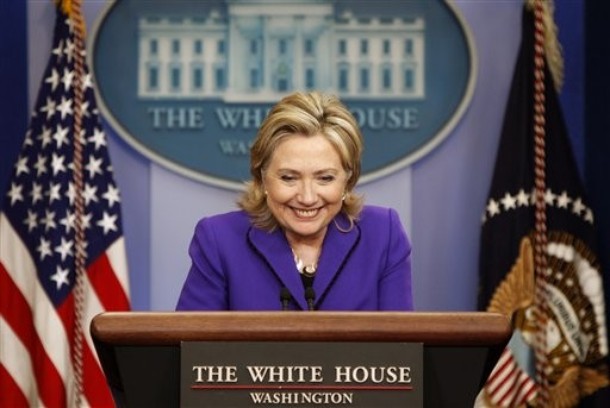
Hillary Clinton and Julia Gillard plan to change perceptions of female leaders. Hillary Clinton and Julia Gillard plan to change perceptions of female leaders. Photo: AP

"I'm hopeful there are some things we can do together in the future on these questions of leadership and gender, bringing to that possibility some of our shared experiences," Ms Gillard said in an exclusive interview.

"Personally, I think there's a need to deepen the evidence base about women in leadership," she added, saying there was already much research on the role of 'unconscious bias' in attitudes to female political leaders.

Read more >>>>

Don't assume she isn't working just because you don't see her. 

Wednesday, February 8, 2017

Battling the Trump Cabinet Nominations

We are bloody but unbowed. Yesterday, after massive efforts of letter writing, phone calling, emailing, and petition signing, Betsy DeVos was confirmed as Secretary of Education by an historic tie-breaking vote by VP and Senate President Mike Pence.

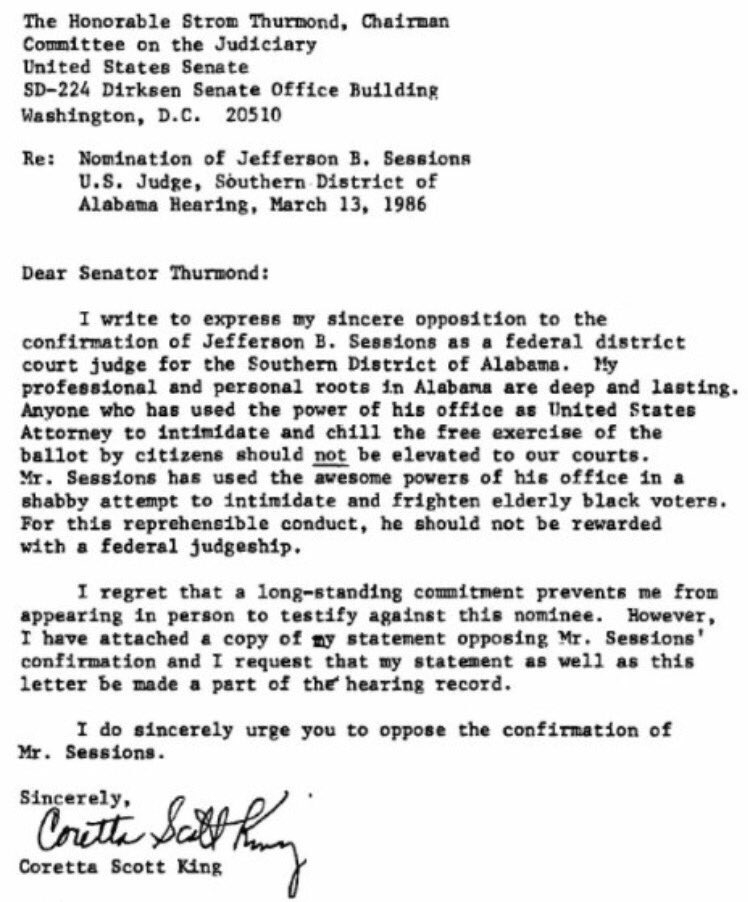
Not long afterward, the effort to confirm Jeff Sessions, noted bigot, as Attorney General ran into an effort by Elizabeth Warren (D-MA) to read a letter penned in 1986 by Coretta Scott King in opposition to Sessions being appointed a federal district judge in Alabama.


We see how this is going.

Here are the Twitter hashtags.

"Silencing Elizabeth Warren"
#LetLizSpeak
#ShePersists
#ShePersisted

Here is the exchange on the Senate floor.

The swamp gases in DC are toxic.

Stay battle-ready. This is just the beginning.

Thank you, Liz!

Here is the letter.

My Senator, Cory Booker.
From Hillary Clinton:

Happy Black History Month!

Cross-posted at The Department of Homegirl Security.

Saturday, June 28, 2014

Tweets from Hillary Clinton: Sad News

twitter_banner

Heartbreaking news: a vital voice for justice is silenced.

Prominent Rights Activist Assassinated

June 26, 2014


(Tripoli) – Human Rights Watch today issued the following tribute to Salwa Bughaighis, a prominent human rights and women’s rights activist who was assassinated in Libya on June 25, 2014.
SNIP 
On Wednesday, following countless threats against her and her family, Salwa was assassinated, shortly after she voted in Libya’s parliamentary election. With Salwa’s death, the original idealism of the 2011 uprising that overthrew Gaddafi’s tyranny has received another crushing blow, and many Libyan women have lost a role model.

Friday, July 13, 2012

Hillary Clinton's Classic Speech to the Lower Mekong Initiative Womens' Gender Equality and Empowerment Dialogue

Classic HRC with many quotable quotes!  These are not "soft" issues!

Remarks to the Lower Mekong Initiative Womens' Gender Equality and Empowerment Dialogue

Remarks
Hillary Rodham Clinton
Secretary of State
Sofitel Hotel
Siem Reap, Cambodia
July 13, 2012

SECRETARY CLINTON: Thank you very much, Minister Phavi, for that introduction and also for describing the results of what has been, by all reports, an excellent meeting. And I thank all the heads of delegations who are here and all of the attendees. I want to welcome all our partners from the Lower Mekong nation and from the Friends of the Lower Mekong. And I want to commend the Government of Cambodia for its leadership in the Lower Mekong Initiative and for co-hosting this conference.
We launched this organization three years ago to expand cooperation on issues that affect the daily lives of people across the region. And I’m getting some feedback. I’m hearing the Cambodian translation at the same time. (Laughter.) I wish I spoke Cambodian, but I don’t. So I was having a little trouble, but thank you for that.
We launched this organization three years ago to expand cooperation on issues that affect the daily lives of the people across the region, from protecting the environment to managing water resources to improving infrastructure, education, and public health. And now with the inclusion of the government in Nay Pyi Taw we are poised to make even greater progress together.
Yesterday in Phnom Penh, I announced that the United States is easing sanctions to allow American businesses to invest there. And today I am pleased to add that we are also launching a new partnership with the nonprofit Abbott Fund to invest one million dollars in the health and education for women and girls.
I am delighted that the Lower Mekong Initiative is now also focusing on the rights and opportunities of women. At the ministerial meeting in Phnom Penh this morning, we adopted a joint statement by all of the countries represented that will integrate gender equality and women’s empowerment through the LMI agenda. I like what the Minister said about how we came together to care to share and dare to dream, and I think that’s a very good description of what you have been doing here.
As Secretary of State, I make these issues about women and girls a priority everywhere I go. Because when women have the chance to participate in the economic and political lives of their communities, not only do their lives improve, but the lives of their families do as well. Commerce flourishes, instability declines, and you see a general uplifting of societies and nations. And I have met women all over this region who are living this truth every day – educators in Hanoi, entrepreneurs in Bangkok, democracy activists in Yangon, garment workers here in Siem Reap, women like all of you who are working hard for progress throughout the Mekong region.
Unfortunately, as you know so well, outdated legal and social barriers continue to limit women’s participation in business and politics. According to the World Bank, more than 100 countries have laws that restrict women’s economic activity, whether it is opening a bank account on their own, signing a contract, owning land, or pursuing the profession of their choice. And millions of women here in Southeast Asia are trapped in the informal economy, laboring in fields and factories for very low wages with very few protections. And of course, some have it even worse – victims of forced labor, forced prostitution, or other forms of modern day slavery.
Now, too often, discussions of these issues are on the margins of international debate. We have separate parallel conversations about women’s rights, about alleviating poverty, and then we have another conversation about international economics. But I once asked an economist in Africa, after spending the day traveling through an African country seeing women working in the fields, women working in the markets, women fetching fuel, women carrying water, women tending children – I asked, “Don’t you think it’s time we count women contributions to the economy in some way.” And he responded, “No, what they do is not part of the economy.” And I said, “Well, if every woman working in the field, in the markets, in the homes were to stop working for a week, I think every economist would learn they are definitely part of the economy.” (Applause.)
All these issues are related, and we need to start thinking about them in an integrated way, because in the end, what is an economy for? An economy is a means to an end. It is not an end in itself. An economy is to enable people to make more out of their own lives as well as to make a living. And therefore, the best economic systems are ones which give the most opportunity to the greatest number of people. And what we have to do in the 21st century is to take a hard look about what we can do, not just in Southeast Asia but around the world, to make sure that economies are working for people and not just people at the top, but people throughout society. Because, after all, most people don’t live at the highest, elite level of any society. That’s a very small group. And if the results of people’s hard work in any society is not spread across all the people but instead goes up to the top, you will not see the kind of progress that is possible.
So as I traveled across Asia this week – from Japan to Mongolia, to Vietnam, to Laos, and now Cambodia – I’ve been talking about the mutually reinforcing role that economics and human rights play in not only your lives, but in America’s engagement in the region – what is sometimes called our pivot to Asia. Labor issues promoting workers rights, improving labor conditions, supporting women’s economic participation, protecting people from modern day slavery is all part about how you build prosperous, peaceful societies.
And so today, I want to focus on the rights of workers here in Southeast Asia and in our modern global economy. It’s important that we understand fair labor standards for men and women can spur economic growth and widen the circle of prosperity. And governments, businesses, and workers all have a responsibility to make that happen.
So let’s begin with rights. The international community and international law recognize that workers everywhere, regardless of income or status, are entitled to certain universal rights, including the right to form and join a union and to bargain collectively. Child labor, forced labor, discrimination based on gender, race, ethnicity, religion, or other factors, should be universally prohibited.
So defending these labor rights and improving working conditions is a smart economic investment, but it’s also a very important value. Now back in 1999, my husband was president of the United States and the entire world was fiercely debating what we should be doing to deal with what is called globalization. Well, my husband gave speeches at both the World Trade Organization and the International Labor Organization. And he delivered the same message to each audience: To deny the importance of core labor issues in a global economy is to deny the dignity of work. The belief that honest labor fairly compensated gives meaning and structure to our lives.
Well, that was true then; it was true when I was a little girl and I watched my mother working in our home, and I watched my father working in his small business; and it is true today. Standing up for workers’ rights and high labor standards is both right and moral, but it is also smart and strategic. Just look at the progress that has taken place here in Cambodia.
In the late 1990s, this country was emerging out of years of war and economic ruin. Nearly 80 percent of Cambodians made a very meager living by subsistence farming. And the new government was looking for ways to boost growth and connect to the global economy. In the United States, my husband’s administration was convinced that trade incentives could be used to strengthen workers’ rights around the world. The result was an agreement – an agreement between the United States and Cambodia that opened American markets to Cambodian textiles in return for tough new monitoring programs in local garment factories. Now that agreement wasn’t perfect – no agreement ever is – and there are certainly, as I have heard, problems in garment factories across the country. But compare where Cambodia was in 1999 and where it is today. Working conditions have improved. Wages have risen. It has become easier to form a union, and instead of scaring off investors, the fact of these reforms actually attracted them.
Multinational clothing companies saw a chance to clean up their supply chains and improve their reputation. So they started buying more and more Cambodian products, and exports soared. Where there was once just a handful of state-owned textile and apparel factories employing only a few thousand people, within 10 years there were hundreds of new factories providing jobs for more than 350,000 Cambodians – mostly young women, who migrated from poor rural communities to earn wages far above the average of what otherwise would have been available to them.
Research conducted by the International Labor Organization and other institutions tell us that this is not an isolated example. Respecting workers’ rights leads to positive, long-term economic outcomes, including higher levels of foreign direct investment. And bringing workers, especially women, into the formal economy has ripple effects: Inequality declines while mobility increases, taxes are paid, countries and communities are stronger and better able to meet the rising expectations of their people.
Now the flip side of that is also true. Denying workers their universal rights costs society dearly in lost productivity, innovation, and growth, as well as undermining the rule of law and creating instability. So we should pay attention to these findings.
I do hope that decision makers around the world, including in my own country, actually look at evidence, because evidence matters. Whether you’re a scientist looking at research or a government official looking at analysis, look at the evidence. Here in Southeast Asia, economies have grown rapidly by attracting foreign investors looking for low-cost labor and material and by exporting affordable goods to more developed markets. But this export-driven model can only take a country and a region so far.
In the wake of the global financial crisis and worldwide recession, Asian countries can no longer count on endless demands from Europe and the United States. And by the same token, American manufacturers may be looking for new customers in new markets, especially in Asia. That’s why developed nations, like the United States, will need to build more at home and sell more abroad. And developing countries, in Asia and elsewhere, will need to grow a larger middle class that will fuel demand for both domestic and imported goods and services. Henry Ford, back at the beginning of the 20th century, when he started building cars in Detroit, Michigan back in the United States, paid his workers the unheard salary of $5 a day. And all of the other employers came to him and they complained that he was paying his workers too much and that would raise the wages of all the other workers in all the other businesses. And Henry Ford said, “If I don’t pay my workers, who will buy the cars that I am making?”
So if you begin to pay your workers more, they then buy more goods, which actually helps more businesses. And that is the next phase of growth in Asia, as well as the future of the global economy. We should not be in a race to the bottom. We should be in a race to see how we raise income, raise standards of living, and raise the sharing of prosperity. So for this to happen, we will have to make sure that women have the opportunity to move from the informal economy to the formal economy with employment. We will have to make sure that migrant workers are respected and protected, that people in modern-day slavery are free and rehabilitated. In effect, how do we transform the workforce to create more opportunities?
Well to begin with, governments will have to modernize labor laws to respect workers’ rights and ensure that men and women have fair, safe working conditions and can earn a living wage. And governments will have to get serious about enforcement, cracking down on unscrupulous recruiters, criminal traffickers, and abusive employers.
Now, strengthening the rule of law will not just protect workers, it will also attract investors and make it easier for everyone to do business. And multinational corporations, like those in America, will have to insist that every link in their supply chain meets international labor standards. Now, of course, I know there’s a price tag that comes with that. But it is an investment, and it’s an investment that will pay dividends, because it can be very attractive to consumers in my country, in Europe, and elsewhere to know that the goods they buy are being produced in conditions that really help people improve their own lives. And then, of course, workers will have to keep pushing for their own rights, organizing and advocating.
Now, it took decades of struggle for workers in America to form unions strong enough to protect their rights and secure changes like the eight-hour day and the minimum wage, but it helped to create the great American middle class. And we are now adjusting our economy to the new challenges, but we certainly were advantaged by all of the changes over the last one hundred years.
I think the nations of Southeast Asia are at the beginning of your own journey. I know that there are still many problems and a lot of poverty. And I have been now in every country in the region, and I know there’s a (inaudible). There are still too many people who are terribly poor, too many children who don’t get the healthcare and the education they need, too many government officials that are not really serving the people. But there is good news as well.
And I want to commend the Government of Cambodia for their draft new trade law that could be a model for the region. It would extend rights and protection to domestic workers. It would allow people to join unions. And if this law is passed and enforced, it will set a very strong standard for the rest of the region.
Similarly in Vietnam, where I was a few days ago, there is still – there is also encouragement despite continuing problems. At the start of the year, a new anti-trafficking law came into effect. After reports of abuses on coffee plantations in Lam Dong Province, officials called for greater inspections and stricter punishment for illegal labor brokers. And Vietnam is working with the International Labor Organization to improve conditions in garment factories.
And the prospects for progress are even more dramatic in Burma, which for many years was one of the most repressive and closed societies in the world. I saw with great interest reports of the government in Nay Pyi Taw rolling back the restrictive and exploitative labor rules. Workers are beginning to organize, although they still face penalties for joining unregistered unions. There will be a lot of challenges, but I hope that we see continuing progress there.
Now, for our part, the United States is putting in place protections to ensure that the increased investment we would like to see advances the reform process. Because after all, what we want to do is make workers rights, rising wages, fair working conditions the norm everywhere. And we will be working with all of the countries represented here.
We’ve also made workers rights a centerpiece of a new far-reaching trade agreement called the Trans-Pacific Partnership. We are working with Vietnam, Malaysia, Australia, Canada, Mexico, and others in these negotiations.
We are also throughout Southeast Asia supporting training and workshops on international labor standards for union organizers, employers and government officials. We’re sponsoring exchanges so labor academics can learn from each other, and we’re helping police and prosecutors go after trafficking and other abuses.
We’re working with ASEAN to deal with the migrant worker problem. We have so many people across borders looking for better opportunities and are often exploited and abused. Now, after visa requirements among ASEAN countries becomes easier, then we need a framework on the rights of migrant workers by 2015.
We’re also working with labor ministries, and we’ve signed agreements with Vietnam and China that provide exchanges and technical assistance on a range of labor issues, from mine safety to social security.
America is a Pacific nation, and our futures and our fortunes are bound up with each other. So we want to work with all of you, and particularly on behalf of women and workers, because we think that holds the key. The World Bank has done some excellent research showing that if the barriers to women’s participation in the formal economy were eliminated, growth rates in every country would rise, and some would rise dramatically.
So when I talk to government officials who I can tell are not really interested in women, which I do from time to time – not women officials but the other kind, as you know – (laughter) – and I make the case that women’s rights should be protected and women’s opportunities should be advanced, sometimes I see their eyes glaze over. (Laughter.) And they say to themselves, I’m thinking as I look at them, well, she says that all the time. She goes around in the world talking about women’s rights, and that’s fine and I’ll listen to her, but I’m not really that interested.
But when I say if you will change your laws so women can open up bank accounts or women can have access to credit, so women can start new businesses as easily as men, so that women can have fair wages when they move into the formal economy, your GDP will rise, all of a sudden I see them waking up. (Laughter.) Because it’s true that I have spent many years of my life talking about how important it is that women be given the same rights as men and the same dignity so that they can fulfill their own God-given potential.
But the argument I’m making today and I’m making around the world is that you are losing out if you do not empower women as economic beings. Because I’ll go back to the experience I had in Africa. Now, I don’t think the economist I was talking to was prejudiced against women. I just don’t think he thought of all the things women do without being paid, that all of us do, have done, and continue to do to keep families and communities and societies and economies going.
And so therefore any country that wants to maximize their economic growth in a sustainable, inclusive way will be leaving money on the table if they don’t include women and do everything they can to show respect for what women can do for themselves as well as their countries.
So this is an exciting time to be a woman in Southeast Asia, because if we work over the next years to realize the potential that this conference demonstrated with all of the excellent recommendations that the ministers have told us about, then we will see Asia grow even faster and more successfully, and most importantly we will see more girls and boys having the opportunity to fulfill their own God-given potential.
Because after all, I think as a mother, what we want for each of our children and what we should want for every child is that chance to be all he or she can be. Because talent is universal, but opportunity is not. So for every child who is not educated, we may be losing a scientist who would solve multi drug-resistant malaria. We may be losing a great activist. We may be losing a great academic. Who knows? But one way for sure to maximize the chance of every society to do even better is to be sure we give women the chance to compete and to demonstrate what they can contribute to us all.
Thank you very much. (Applause.)


Sunday, February 5, 2012

Secretary Clinton at Munich Women's Breakfast

Remarks at Women's Breakfast


Remarks
Hillary Rodham Clinton
Secretary of State
Prinz Carl Palais
Munich, Germany
February 5, 2012


SECRETARY CLINTON: (Applause.) Well, thank you so much. Thanks to the Bavarian State Chancellery, which is hosting us, especially to Minister Merk, for organizing this breakfast, and to all of you for getting up so early on a Sunday morning in the cold to come out to show solidarity and support for women in international security. I wanted to make just a few brief comments and then if anyone has something they want to say or ask before I have to go to Bulgaria, I would be very pleased to respond.
I wanted to just focus our attention on an area that is of critical importance in which we are making some, but not enough, progress. And that was the passage of the historic UN Security Council Resolution 1325. We recognize that when we think about peacemaking, which is, after all, one of the critical tasks of any of us in international security, that something is missing. And that is women. There are not enough women at the table, not enough women's voices being heard. And when the Security Council passed Resolution 1325, we tried to make a very clear statement, that women are still largely shut out of the negotiations that seek to end conflicts, even though women and children are the primary victims of 21st century conflict.
And this is not just a faraway problem. Where I was sitting up on the stage at the Munich conference, I was trying to count what looked to be the heads of women. And there were not enough, I have to tell you. (Applause.)
PARTICIPANT: Thirty-seven.
SECRETARY CLINTON: I don't know. Thirty-seven? Thirty-seven. Well, I didn't get that high a number, but I take your word for it.
And in the last two decades, dozens of conflicts have persisted because peace efforts were unsuccessful. Talks broke down, agreements were broken, parties found it easier to fight than to negotiate. And far too often in these failed efforts women were marginalized, making up, by one estimate, just eight percent of all peace negotiators. And when you look around the world, as a number of us are privileged to do in the positions that we hold now, or that we have held in the past, you see how hard it is to make peace under any circumstance. But the exclusion of women, I argue, makes it even harder.
Because there is a great story about an effort to try to resolve aspects of the conflict in Darfur a few years ago. And the men had been arguing and arguing for days about authority over a particular riverbed. And finally, a woman heard about this and just made herself walk in and say, "But that river dried up. There is no water in that river." Or think about the wonderful documentary, "Pray the Devil Back to Hell," about the women in Liberia. But for them, who knows whether that conflict would have ended?
And so that is why, in December, finally, the United States, under President Obama, launched the first-ever U.S. national action plan on women, peace, and security. We worked very hard on this, and we did it jointly, between the State Department and the Defense Department. Because, from our perspective, it was essential that we have a comprehensive road map for accelerating and institutionalizing efforts across the United States Government to advance women's participation in making and keeping peace.
And the national action plan represents a fundamentally different way for the United States to do business. It is really trying to lay out a new approach in our diplomatic, military, and development support to women in areas of conflict, and to ensure that their perspectives and that considerations of gender are always part of how the United States approaches peace processes, conflict prevention, the protection of civilians, humanitarian assistance.
Now, more than 30 countries, many of them represented here, have had similar national action plans developed. And we think the United Nations really deserves our support in making sure that we continue this progress. NATO itself has a robust effort, increasingly factoring women and their needs into key planning processes and training courses, and stationing experts throughout operational headquarters.
Now, I am well aware that whenever I talk about these issues, as opposed to who we are going to strike next and what kind of tough position we are going to take, it is often dismissed as soft or relegated to the margins of the real conversation. Well, we just completely reject that. And the evidence is so clear that rejecting it is the right decision. So if you look at what we did with the Department of State, Department of Defense, USAID, others across our government, it incorporates the lessons that our military has learned over, frankly, 10 years of war about the links between the security of women and the stability and peace of nations.
For example, the Department of State works closely with the Department of Defense on the Global Peace Operations Initiative, which has facilitated the training of more than 2,000 female peacekeepers worldwide, many from African countries, where persistent conflict is so devastating to women and children.
In Afghanistan we have tried to increase the role of women, no easy task. We sent our own teams of female soldiers, as did other NATO-ISAF countries, to curb violence against women, honor killings, female immolation, as well as pursue certain security functions such as inspections and personal examinations. And in 2010, 10 percent of the Afghan military academy's class will be women. And by 2014, we expect to field 5,000 women Afghan national police officers. That is a tough job. And I want all of us to support that, because part of what we have to do as we try to test whether peace is possible in Afghanistan, is to make it very clear that peace will not come at the expense of women's rights and roles. They have suffered too much for too long. (Applause.)
So, I would be eager to hear thoughts and perspectives. I look around this room and I see great colleagues, colleagues from the United States Senate -- Susan Collins, who is here, I don't know if we have anyone else from the -- anybody else from the -- oh, Loretta Sanchez, who is from the House, and then other colleagues of mine in government, colleagues from the EU, from NATO, from other parts of our work together. So I would be delighted. And, of course, I am always pleased to be with the President of Kosovo, who has been such a great representative for her country. (Applause.)

Sunday, January 22, 2012

Tuesday: Inaugural Meeting of Secretary Clinton's International Council on Women's Business Leadership

Inaugural Meeting of Secretary Clinton's International Council on Women's Business Leadership


Media Note
Office of the Spokesperson
Washington, DC
January 20, 2012


On Tuesday, January 24th, Secretary of State Hillary Rodham Clinton will host the first meeting of the International Council on Women’s Business Leadership at the State Department in Washington, D.C. The meeting can be viewed via live webcast on the Internet at http://www.state.gov/e/eb/adcom/icwbl/.
The Council serves the United States government in an advisory capacity on major issues in international business and economic policy, including the effective integration of business interests and women’s economic empowerment into overall foreign policy; the role and limits of international economic institutions from a gender-specific perspective; and the Department of State’s role in advancing and promoting the role of women in a competitive global economy.
Secretary Clinton selected a distinguished, diverse, and international membership for the Council, representing a wide range of expertise and backgrounds, including leaders of American and foreign, public and private sector organizations. Secretary Clinton will serve as the Council’s Chair. The Council’s members are listed below; each will serve a two-year term.
Council Vice Chairs:
  • Cherie Blair, Founder, Cherie Blair Foundation for Women (United Kingdom)
  • Indra Nooyi, Chairman and Chief Executive Officer, PepsiCo, Inc. (USA)
Council Members:
  • Tan Sri Zeti Akhtar Aziz, Governor, Bank Negara Malaysia (Malaysia)
  • Sheikha Lubna bint Khalid bin Sultan Al Qasimi, Minister for Foreign Trade (UAE)
  • Beth A. Brooke, Global Vice Chair of Public Policy, Sustainability, and Stakeholder Engagement, Ernst & Young (USA)
  • Wanda Engel, Executive President, Unibanco Institute (Brazil)
  • Susan Fleishman, Executive VP for Corporate Communications, Warner Brothers (USA)
  • M. Audrey Hinchcliffe, Founder and Principal Consultant of Caribbean Health Management (Jamaica)
  • Catherine L. Hughes, Chairperson of the Board and Secretary, Radio One (USA)
  • Sri Mulyani Indrawati, Managing Director, The World Bank (Indonesia)
  • Valerie Jarrett, Senior Advisor and Assistant to the President for Public Engagement and Intergovernmental Affairs, The White House (USA)
  • Wendy Luhabe, Founder/Chairman, Women Private Equity Funds (South Africa)
  • Ory Okolloh, Policy Manager for Africa, Google (Kenya)
  • Maud E. Olofsson, former MP and former Deputy Prime Minister of Sweden and Minister for Enterprise and Energy (Sweden)
  • Judith Rodin, President, Rockefeller Foundation (USA)
  • Meera H. Sanyal, Chairperson and Country Executive, ABN AMRO / RBS Bank India (India)
  • Elizabeth H. Shuler, Secretary-Treasurer, AFL-CIO (USA)
  • Ofra Strauss, Chairwoman of the Board, Strauss Group (Israel)
  • Sally Susman, Executive VP for Policy, External Affairs, and Communications, Pfizer (USA)
  • Zhang Xin, CEO, SOHO China (China)

Thursday, October 13, 2011

And the winner is ... HILLARY CLINTON!

Mme. Secretary had a very busy day that is still in full swing as she attends the State Dinner for President Lee at the White House. The day began with the announcement of the results of the latest Politico poll pitting her against a number of proposed independent candidates. Hillary Clinton is no independent. She is the leader of the Clinton branch of the Democratic Party. Nonetheless, she topped all by a healthy margin.

Way to go Mme. Secretary! (Will you please consider running now?)

Politico Primary


We put this question to readers on POLITICO, Yahoo, Facebook and Twitter as well as viewers of MSNBC's "Morning Joe" to solicit ideas and ultimately vote on them. This was part parlor game, part reporting assignment — and hinged entirely on voters and readers engaging in the debate.
Read more >>>
Corollary to this, the first person I saw on TV today was Hillary herself on the Today Show. Savannah Guthrie interviewed her and asked her the Joe/Hillary swap question. Hillary said it is not within the realm of possibility. The White House had a response to that question as well as the SOS whose answer is on video here.

White House: 'Today' obsessed with Hillary for VP


By MACKENZIE WEINGER | 10/13/11 9:05 AM EDT

Secretary of State Hillary Clinton said on Thursday there is no chance she will be on the Democratic ticket in the 2012 election and a White House spokesman accused the “Today Show” of being obsessed with the issue.
Read more >>>>

Sunday, September 25, 2011

Media Reads on a Hillary Clinton Run: September 25, 2011 Edition

Well, this is a post I did not want to put up, but if I had not, someone surely would have called my attention to this story from HuffPo which resurrects the Hillary-Biden switch scenario - at least in part.

Peter D. Rosenstein


Political consultant

D.C. Coffee House Chatter: Hillary for VP

Posted: 9/25/11 06:22 PM ET

Chatter in the coffee houses of Washington, D.C. is about what President Obama can do to win a second term. The chatter is from Democratic supporters of the president who don't necessarily think his team is following the right path to reelection. It is from Obama Democrats who Hillary's supporters in 2008 said, "Drank the Kool-Aid."

On a recent Sunday morning, a very prominent Democratic insider stated unequivocally, "Mark my words, on the podium in Charlotte, NC on the final day of the Democratic Convention, the hands held high will be that of Barack Obama and Hillary Rodham Clinton." Everyone within earshot looked at him and asked, "Is this inside information?" He responded with a resounding NO but then stood by his prediction nonetheless.

Read more >>>>

So let me get this straight. The very same Obama supporters who yelled in our faces and called us terrible names in 2008 now want our girl to save their failing, ineffectual boy. Is that it? And putting her name on the ballot is supposed to bring back the votes. Do I have that right? They are so dedicated to a failed POTUS that rather than replace him with the competent figure on the horizon, they will take her and use her like a band aid on a festering wound. Is there no extent they will stop at to prop him up?

He has had more than two-and-a-half years to bring about his change. There is no hope. His "style" is to outsource all the hard work. "Bring me a bill I can sign," and then to collapse and fold before Tea Party and GOP demands ... in some cases before the demand is even made (putting the social safety nets on the table before the GOP mentioned them).

Why on earth anyone should want him to have a second term to do further damage I cannot fathom.

I can only end this one way:

Hillary 2012! Top of the Ticket! Yes! SHE can!


Thursday, June 30, 2011

Video: Secretary Clinton "Women Leaders as Agents of Change

Video Remarks to "Women Leaders as Agents of Change" Colloquium


Press Statement
Hillary Rodham Clinton
Secretary of State
Washington, DC
June 30, 2011


Hello and welcome to this colloquium dedicated to empowering women as agents of change. I want to thank the Prime Minister for hosting this important forum. As Trinidad and Tobago’s first female prime minister, she is a role model for women not only in her own country, but throughout the region.

In the United States this month we are celebrating the unique contributions by Americans of Caribbean descent. Caribbean-American women have added in ways large and small to the story of America. We have seen them act as agents of change in our own country.

Throughout the Caribbean, we must ensure women are able to realize their potential. They must be allowed to contribute in every capacity – as political leaders, entrepreneurs, social activists, and more. When women prosper, it doesn’t just benefit them, it lifts up their families, their communities and their countries.

As you come together to share experiences and challenges and chart a course for achieving greater gender equality in the region, know that the United States stands with you. Because no society can prosper if half its citizens are left behind.

I can’t wait to hear about your ideas and suggestions to empower more women in the Caribbean community.


Thursday, March 26, 2009

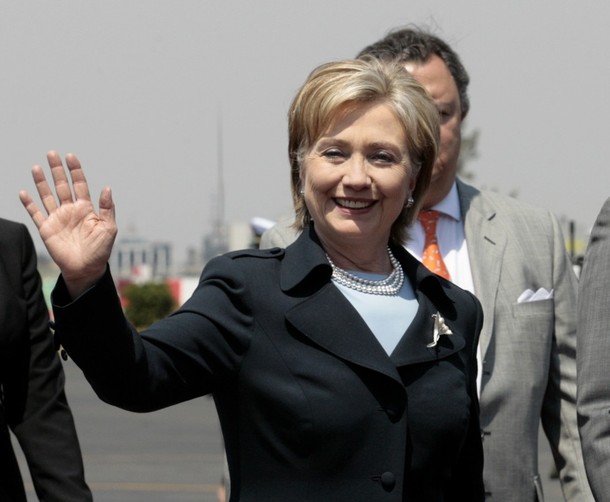
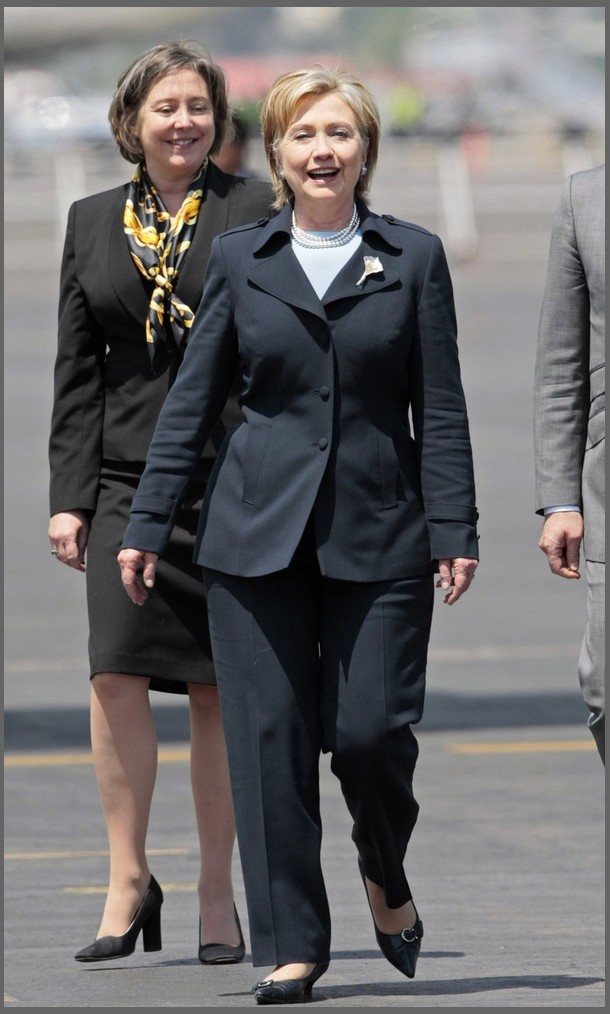
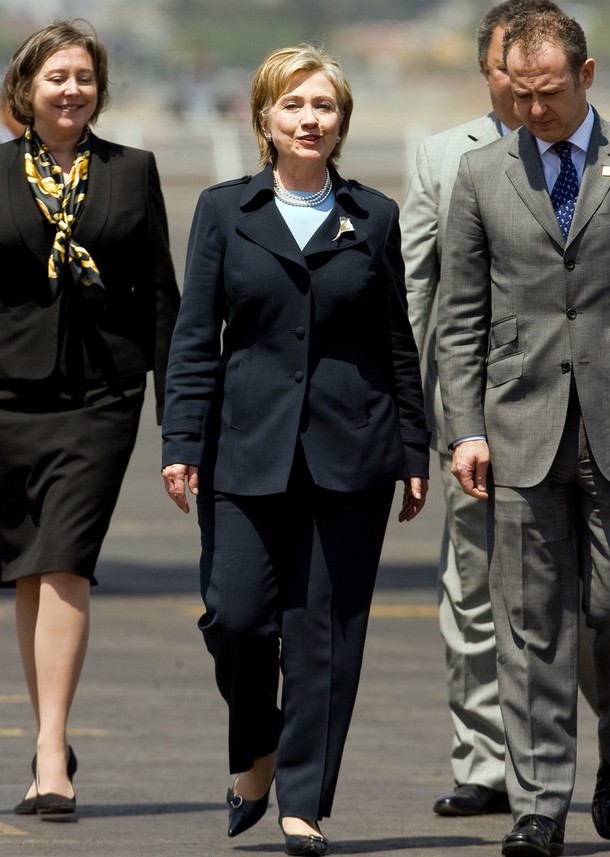
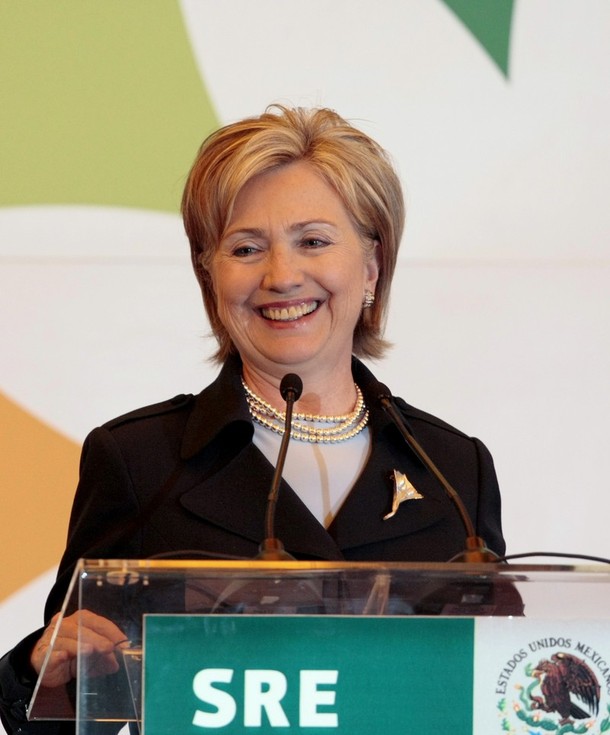
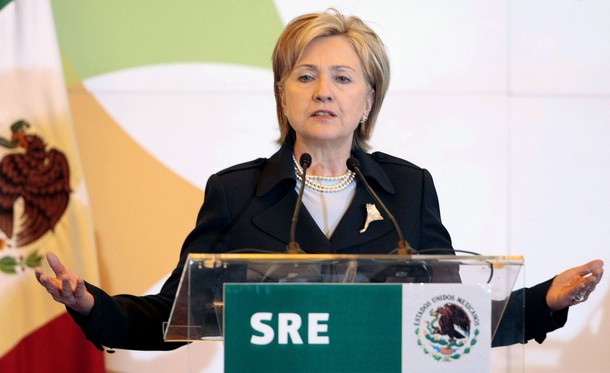
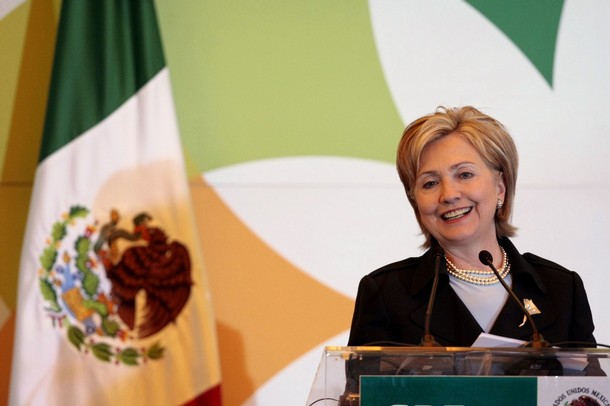
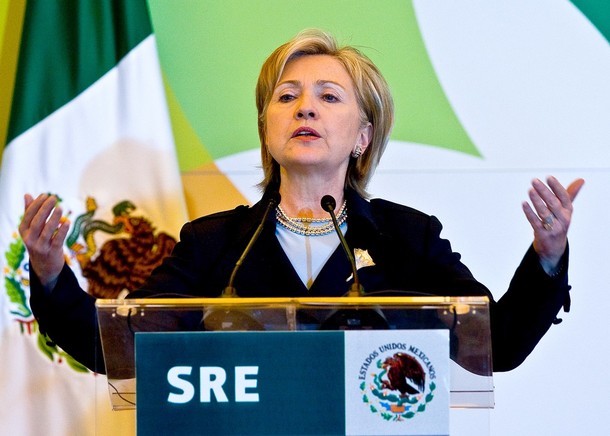
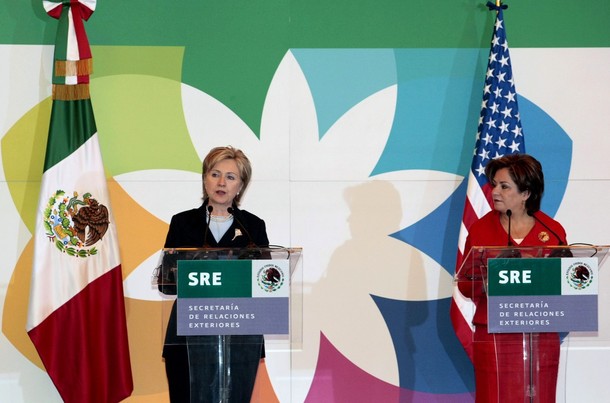
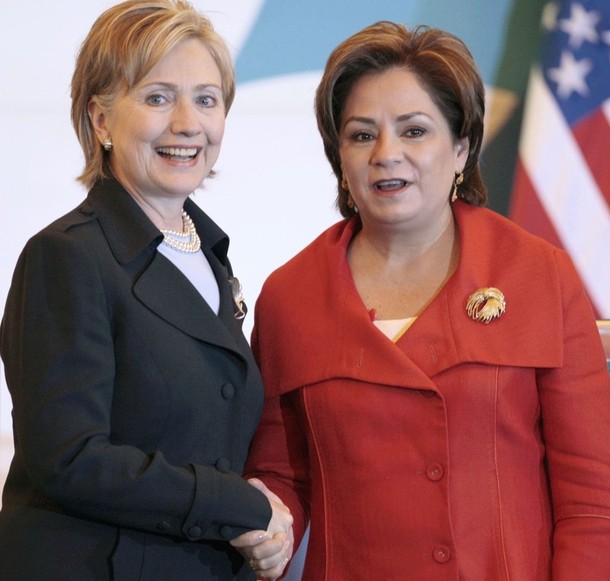
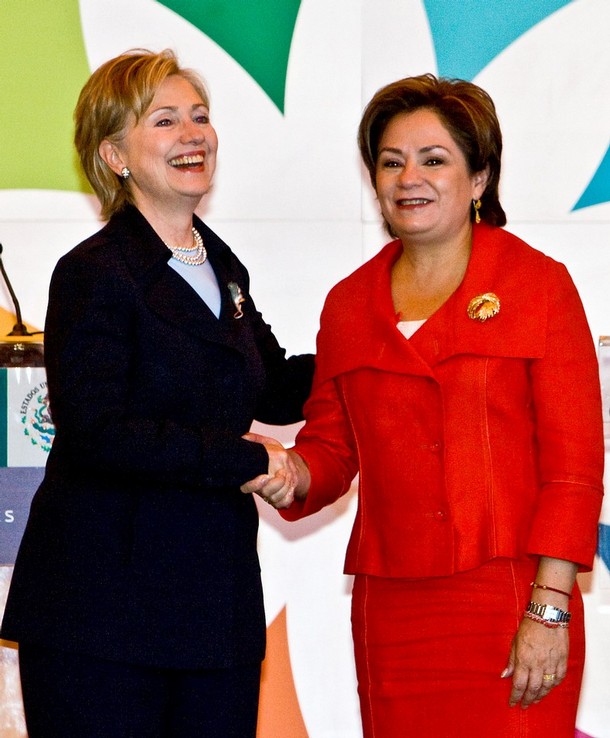
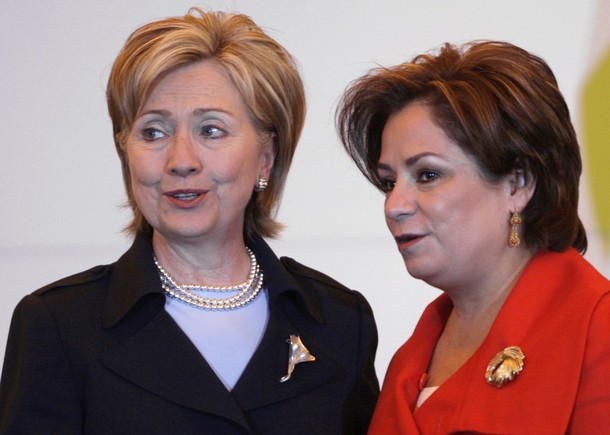
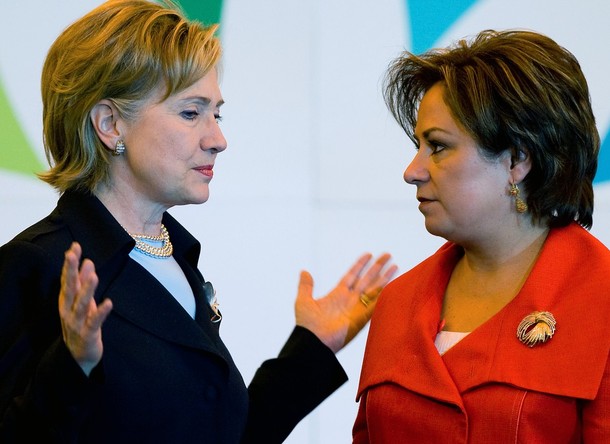
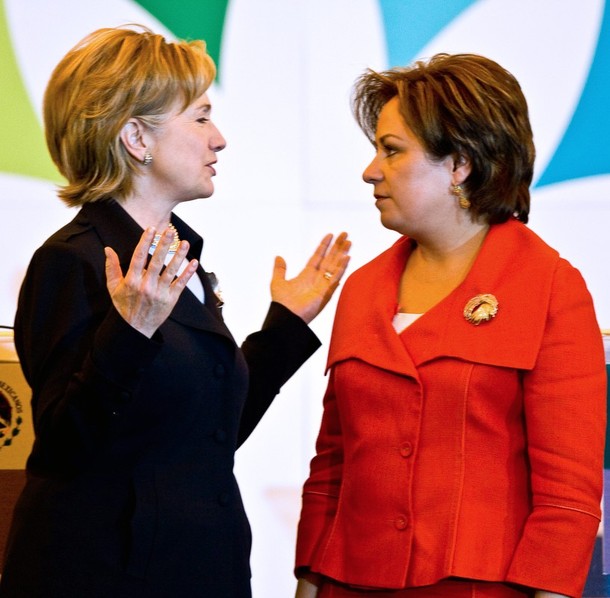
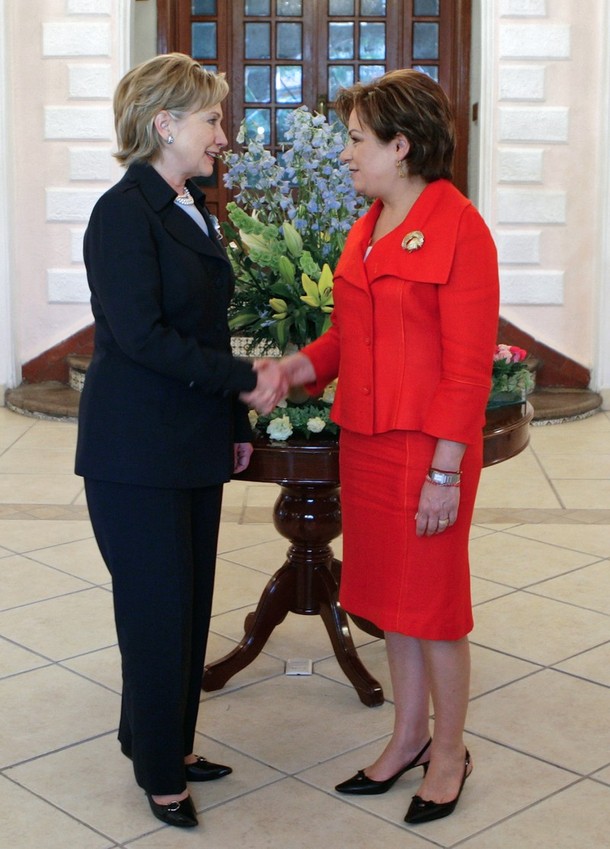
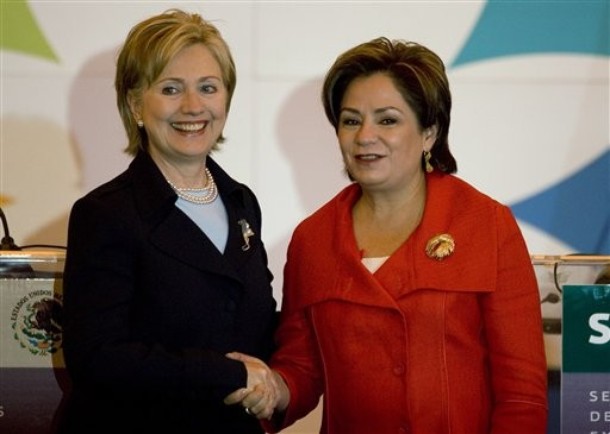
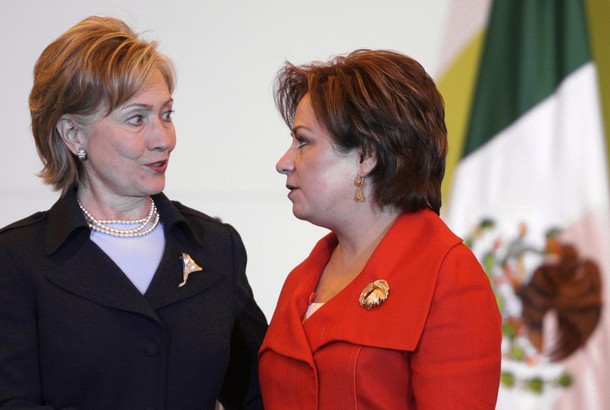
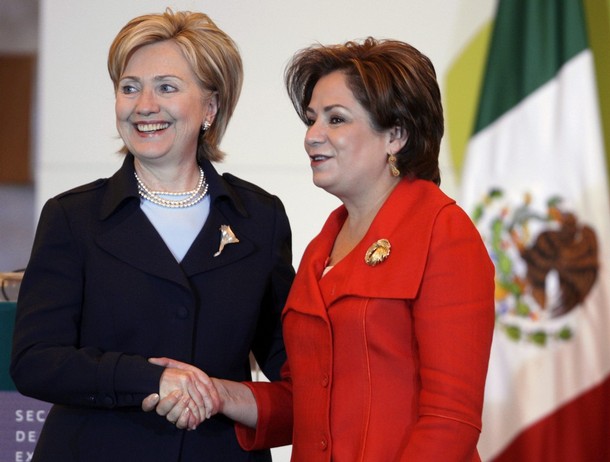
Hillary Clinton in Mexico with Women Leaders and Foreign Secretary Patricia Espinosa

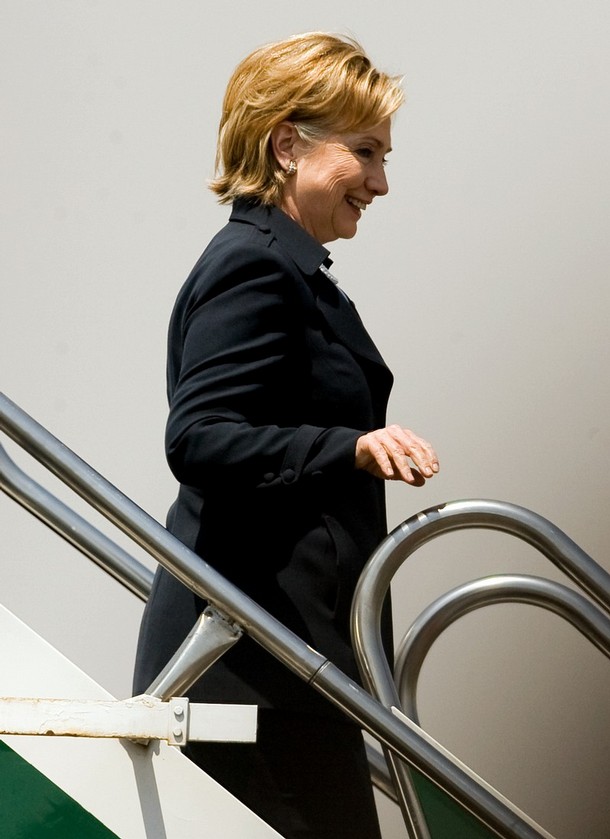
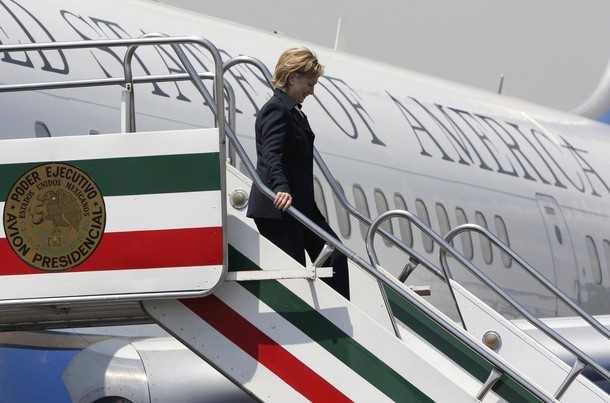
MEXICO-US-CLINTON MEXICO-US-CLINTON US Secretary of State Clinton arrives at Mexico's City airport U.S. Secretary of State Hillary Clinton greets journalists as she arrives at the international airport in Mexico City U.S. Secretary of State Hillary Clinton arrives at the international airport in Mexico City MEXICO-US-CLINTON

Remarks at the Women Leaders Dinner


Remarks
Hillary Rodham Clinton
Secretary of State
Mexico City, Mexico
March 25, 2009


SECRETARY CLINTON: Well, I want to thank all of you for gathering here this evening. I thank the Secretary for a very well-planned day that enabled us to discuss a broad range of issues and concerns. And I thank you Margarita for being here, for your kind words. And to all of you, I want to reaffirm how committed President Obama and I are to this relationship which we believe is strategic, comprehensive, broad, deep, and very personal.
We share a set of common values and experiences, we share a common space, and we share a common future. And it is our great hope that we will, over the course of the next years, demonstrate a capacity to work together, unparalleled in our past, to solve problems, but more importantly, to seize opportunities and build that better future.
I have a personal privilege in being the Secretary of State at this moment in our country’s history, and it is, for me, very special to be here in Mexico. I did want to come to Mexico as soon as I could. Some of you may have heard that my husband and I honeymooned in Mexico. We came back often to vacation in Mexico. He came back as President and I came as First Lady to Mexico. I’m a little worried that my Administration back in Washington may think that my coming to Mexico is not work, but pleasure; it always has been.
But today, I come both personally committed to our relationship, and carrying the message of a new Administration that feels so strongly about building that strong foundation on which we will stand together. And I especially appreciate the opportunity to meet with all of you. I hope we can have a real conversation, because I wanted not just to have an official dinner, but to hear what is on your minds, what we can do together, concerns that you have. This is a diverse group of very accomplished women. It has been a real commitment of mine to meet with women around the world, because I have learned a lot and I always feel that you learn more by listening than by talking.
So I want to again thank you for taking time out of your busy schedules to have such an early dinner. (Laughter.) And I look forward to returning with President Obama in just a few weeks, and then to – and doing the hard work to realize the promise that we all feel about the future. So let me raise a glass to the government and people of Mexico, to the democracy and promise of Mexico, and to the friendship and partnership between the United States and Mexico. Salud.
# # #


Remarks With Mexican Foreign Secretary Patricia Espinosa After Their Meeting


Remarks

Hillary Rodham Clinton
Secretary of State
Mexico City, Mexico
March 25, 2009


MODERATOR: (via interpreter.) Good afternoon to all of you. We have here with us today State Secretary of the United States, Mrs. Hillary Clinton, and the (inaudible) First Ministry of Mexico, Ambassador Patricia Espinosa. Both will be conveying an initial message right now, and then after that we shall go into the question-answer period.
FOREIGN MINISTER ESPINOSA: (via interpreter.) Good afternoon, friends, and the media. Before anything else, I would like to thank, in a very special fashion, State Secretary Hillary Clinton, for having accepted my invitation to visit Mexico. I welcome the fact that this is a meeting taking place a few weeks after she took office, Department of State of the United States.
Your presence in Mexico has a special importance, since this is the first trip to Latin America, a little before President Barack Obama will also be visiting Mexico. After a very intense agenda of activities in Mexico City today, Secretary Clinton will be traveling tomorrow to the city of Monterrey, where she -- where I will be having the pleasure of being with her. And I would also like to say that, as you know, today Secretary Clinton has made a courtesy visit to President Calderon, where they discussed multiple topics of the bilateral agendas; for instance, migration, trade, competitiveness, border development, and security. It was truly an extremely fruitful conversation; a very interesting conversation they held, and that’s the reason for our being delayed a few minutes. And we would like to thank you for your understanding, and thank you also for being here to be with us in this press conference.
In the dialogue we held this morning with Secretary Clinton, we have coincided on the importance of the topic related to migration, and we’ve also coincided that this is a key issue that unites our two countries. We are going to be working together. We’re going to be working together in the following years so that the migration phenomenon may be a phenomenon that will be benefiting both of our nations.
In highlighting our full respect for the United States legislation and the sovereign process of that country and the legislative process of that country, I told Secretary Clinton the concern of the Mexican Government due to the situation that our co-nationals are facing in the United States. And I also highlighted the importance that we give the legal framework of migration issues so that it will respond to the migration reality and the need to change the climate that Mexicans now live in the United States.
The bilateral agenda between Mexico and the United States is a very broad agenda, and in them, the economic issues have, of course, particular importance, especially today in this context of economic crisis at the international level. We’ve coincided as well in this environment on the need of concentrating our efforts on being able to have our regional competitiveness increase as a means to promote the well being of our respective countries. Here, I also wanted to highlight the will to work together, to work together so that we can accomplish conditions that will allow for the full compliance, commitment that we have taken upon ourselves in NAFTA, as countries of NAFTA, with certainty in each one of the different provisions, including the topic related to motor transportation. The border has been a key aspect, a key issue in our conversations. We’ve also expressed our willingness to invest with determination on border infrastructure in short, medium term, so that we can integrate, and thus be able to turn the border into a pull for competitiveness, to increase competitiveness between our two countries.
We also talked about the importance of cooperation and the maturity we have been able to get in our fight against organized crime, as well as the convenience and the importance of continuing, and in a more profound manner, the implementation of the Merida Initiative. We have said that the high-ranking level group of the Initiative that met for the first time in Washington last year will be holding this year as well another working session, if possible, if the agenda so allows it, with all the participants here in our country. And the different working groups, the coordination groups that are working on security issues, the groups we’ve been able to create greatly reflect the bilateral character of our focus based on the principle of co-responsibility. And later on, in a working session with the attendants in this Foreign Ministry and some members of the cabinet in terms of security issues, we’re going to go into a greater detailed discussion on this.
We also had the opportunity of talking about the world situation and we coincided on the role that our countries are now called to play in the multilateral fora in a particular manner, in the United Nations, and, of course, especially also now during our membership in the Security Council of the United Nations as non-permanent members.
And we also spoke about the participation of Mexico in the relevant fora; for instance, the case of G-20 and the G-8, G-5 dialogue. And in this sense, we also agreed to continue increasing our collaboration and dialogue within the framework of those fora. And Secretary Clinton will continue with a very intense agenda that shows her interests for Mexico, and the very broad gambit of issues that unite our two countries, in terms of education, for instance, culture, social development issues, entrepreneurial and the environment, of course.
This visit is and has been a -- it is, today, although she will still be with us in Mexico for approximately 24 more hours, a little bit over 24 more hours -- but it has already been, this visit, a very successful visit. And let me also say that the Governments of President Calderon and President Obama will coincide in the following four years, and that is why both governments, both administrations are determined to consolidate our relationship as a true, true partnership at the strategic level, a strategic partnership.
I would now like to give the floor to State Secretary Hillary Clinton, who does not require really any type of introduction, because she is one of the most important women of the political life of the United States, and also a very close friend of Mexico. Mrs. Clinton, you have the floor. Muchos Gracias.
SECRETARY CLINTON: Thank you very much, Secretary Espinosa. I appreciate that kind introduction, and I’m also grateful for your invitation to visit Mexico for my first stop in Latin America as Secretary of State.
The Secretary and I had a very productive conversation about a broad range of issues. As she has just described, we are looking forward to working together in the months ahead on many of these issues on behalf of our presidents and our countries.
President Calderon has demonstrated great courage and dedication in working to shape the future of our continent and our hemisphere. And I bring greetings from President Obama, who looks forward to coming himself to Mexico in just a few weeks time.
Our two nations know each other very well, and with good reason. This is one of the most important relationships that exists between any two countries in the world. We are part of the same family, we share this continent as our common home, and we will inhabit a common future. That is why the United States and Mexico need a strong and sustained partnership, one based on comprehensive engagement, greater balance, shared responsibility, and joint efforts to address hemispheric and global issues.
We need such a comprehensive agenda in order to make progress on the economy, on energy and climate change, on security, immigration, education, health, and other areas that are of great importance to our two countries and our two peoples. During this trip, we will be discussing many of these topics. And I am pleased to announce several measures that will help strengthen our partnership with Mexico and move us both closer to our shared goals.
First, the global financial crisis has reinforced how closely our economies are linked. If there was any doubt before, there should be none now. We rise and fall together. We know that commerce between our nations is and will be a crucial part of our economic recovery. I want to thank President Calderon, Secretary Espinosa, and the Government of Mexico for the important role that you are playing in helping to shape the G-20 agenda.
In order to facilitate legal trade and travel between our nations, the Administration has set aside $720 million dollars for modernizing border crossings. That money will help encourage commerce and travel by making the gateways between our countries more efficient.
I also want to speak to the issue of security.
Now, our relationship is much bigger than any issue, including this one. Yet the criminals and kingpins spreading violence are trying to corrode the foundations of law, order, friendship, and trust between us and that support our continent. They will fail. With bold leadership from President Calderon, we are working together to provide the people of our nations with the security they deserve. Under the Merida Initiative, a program conceived by Mexico and embraced by the United States, we have now committed hundreds of millions of dollars to training and equipping Mexican law enforcement, and strengthening Mexico’s judicial system and democratic institutions.
Part of being a good partner is being a good listener. The Mexican Government made clear to us its urgent need for additional helicopters to take on the drug traffickers, and we are responding. And I am pleased to announce that the Obama Administration, working closely with Congress, intends to provide more than $80 million in urgently needed funding for Blackhawk helicopters for Mexican law enforcement. These aircraft will help Mexican police respond aggressively and successfully to the threats coming from the cartels.
We are also announcing the creation of a new bilateral implementation office here in Mexico, where Mexican and U.S. officials will work together, side-by-side, to fight the drug traffickers and the violence which they spread. We realize that drug trafficking is a shared problem. I have discussed with the Secretary and with the President what the United States can do to reduce the demand for drugs in our own country, and to stop the flow of illegal guns across our border to Mexico. And I reported to them on the major steps that our government announced yesterday.
Coming to Mexico soon will be Secretary Napolitano and Attorney General Holder to discuss in greater detail what we will do to reduce gun smuggling from the United States to Mexico, and other measures including equipment and surveillance that will help address violence on both sides of the border.
We are confident that with the courageous efforts undertaken by President Calderon, the Government of Mexico, the military and police of Mexico, and the people of Mexico that the efforts undertaken to strengthen this country’s response, to stamp out corruption, to build strong intuitions, will succeed. And we will stand shoulder-to-shoulder with you as you undertake all of these actions.
Even as we focus on these urgent challenges, let us not forget that our relationship is far greater than any threat, and that our people share an unshakable bond. Mexico has supported the United States at many critical moments in our own history. I will never forget, and I want to thank the Government of Mexico and the people of Mexico, for the help you gave us after Katrina. The Mexican army was there to help provide food and support to people who had been evacuated from that terrible natural disaster.
I thank you for the help that you give on a regular basis, with wildfires in California or tornado damage or flooding in Texas. We have an ongoing, absolutely important, unbreakable bond, and that’s what I want to reiterate today.
This is a significant moment in the history of our continent. Yes, we do face many serious challenges, and we can’t just talk about them; we must act to meet them. But this is a moment of great opportunity. Tomorrow, I will be visiting a state-of-the-art clean energy plant in Monterrey, a plant that, frankly, is more advanced than most, if not all, of the plants we have in the United States. I will be witnessing the signing of agreements between the University of Texas and Universities here in Mexico to further and deepen our energy partnership. I will be meeting with indigenous students who are part of exchange programs here in Mexico, with families and institutions in the United States. So let us build on this cooperation, on comprehensive engagement, balance, and, yes, shared responsibility for a new century of cooperation and progress together that will unleash the boundless potential of the people of Mexico and the United States.
Thank you so much, Madame Secretary.
MODERATOR: (In Spanish.)
QUESTION: Madame Secretary, I’m going to ask several questions made by the press here, so I would just ask you to bear with me. First of all would be President Obama said yesterday that if the plan to secure the border fails, the U.S. is ready to take further steps. What are these further steps? Does that include a militarization of the border, or even a U.S. military presence in Mexico? That would be the first.
The second would be will the U.S. take any steps to prohibit the sales of automatic weapons to other countries, and is the Obama Administration ready to tackle the second amendment in the U.S.?
And finally, the third question would be about the helicopters. The Mexican Government has actually bought helicopters in France because of the delays faced with the Foreign Military Sales Program. Could you elaborate on that?
And finally – (laughter). Sorry, a lot of questions. The Department of Defense announced that it’s going to help the Mexican Department of Defense with $13 U.S. million dollars to liberate areas controlled by drug trafficking corporations here in Mexico. Do you believe that parts of Mexico are under control of the drug trafficking organizations? Thank you.
SECRETARY CLINTON: Well, thank you very much. We have made a commitment to assist the Government of Mexico in its struggle against the drug traffickers, and we have accepted that this is a co-responsibility. We know very well that the drug traffickers are motivated by the demand for illegal drugs in the United States, that they are armed by the transport of weapons from the United States to Mexico; and therefore, we see this as a responsibility to assist the Mexican Government and the Mexican people in defeating an enemy that is committing violence and disruption that is very harmful and which is something that all people of conscience should attempt to defeat.
What the President said is a shorthand for our commitment. We have not made any decisions, as was announced yesterday on National Guard along the border. We are working to provide more support for the Mexican military, the Mexican police, as well as other governmental institutions, and we will be guided by what the Mexican Government believes is working, what is appropriate, and how best we can proceed to support Mexico.
We believe that we have announced a plan to use every tool at our current disposal through administrative actions to track illegal guns, to arrest and punish those who are trafficking in illegal guns, to share more information with the Mexican Government so that they can also track and seize these guns. Obviously, I am someone who supported the assault weapons ban which was passed in 1994, but it was passed with an expiration date and it expired ten years later. I, as a senator, supported measures to try to reinstate it. Politically, that is a very big hurdle in our Congress. But there may be some approaches that could be acceptable, and we are exploring those.
Certainly, the export of assault weapons and illegal weapons is something that has grave consequences for Mexico. And we’re going to look at whatever is possible that we can do ourselves within the Administration, and we will explore with Congress other steps to take.
With respect to the helicopters, I am well aware that our long process of approval was cumbersome and challenging for the Mexican Government. We’re going to see what we can do to cut that time. We want to provide these helicopters to the Mexican Government. We think they are a necessary and important tool in the fight against the drug cartels and criminals. It’s also suggested to us we ought to look at this more generally, that it takes too long from a decision to delivery, and we’ll see what we can do to shorten that.
I believe that the fight against these drug cartels is something that the Mexican Government is making great progress in expanding and demonstrating the strength of the response, and I don’t believe that there are any ungovernable territories in Mexico. But I remember very well when we had such a crime wave 15, 20 years ago. There were many parts of cities in our country that people didn’t feel safe going to, that they didn’t feel safe leaving their homes. People felt imprisoned because of the criminals on the streets of America. So we know what it is to be intimidated by criminals. And we fought very hard to lower our crime rate, to disarm our criminals, to improve our policing, improve our judicial responses. And we see it as a similar struggle to what Mexico is now engaged in. So are there neighborhoods in Mexico where people are afraid to walk, as there were and are still even in my own country? Of course. But that’s why it’s important that we join together to defeat the violence and the criminal gangs so that people here in Mexico can feel safe in their own homes, their own neighborhoods, their businesses. And that’s what President Calderon and the government is attempting to achieve.
MR. WOOD: Next question is from Mary Beth Sheridan from The Washington Post.
QUESTION: Thank you. Secretary Espinosa, I was wondering if you could comment on – does Mexico – how does Mexico feel about the steps that the U.S. has announced? Does this meet your expectations or not? And a second question. You have rejected the idea of Mexico as a failed state. Are there any parts of Mexico where you would not feel comfortable taking Secretary Clinton? Thank you.
FOREIGN SECRETARY ESPINOSA: Well, first of all, I would like to stress that we are engaged in this really broad cooperation and the Merida Initiative has really meant a qualitative change in our cooperation in terms of the fight against drug trafficking and in general against organized crime. So – and we are very conscious that this is a process where each of us – and this is how the Merida Initiative was conceived – involves actions that each of us has to take on its own territory and many measures that we can take through cooperation that we can – the objective is really to strengthen the capacity, the capabilities of the Mexican state to face this common threat.
So in that sense, we recognize. And I have stated yesterday also in some press conferences that I had, the actions that were announced yesterday go very much along the line of the kind of cooperation that we have been trying to build upon. We have raised the issue of trafficking in arms from the north into Mexico many times. We have raised also the issue of bulk cash coming into Mexico and going into the hands of criminals.
So we are really – we recognize very much these efforts that are now being undertaken by U.S. authorities, and we are also looking forward to receiving Secretary Napolitano and the Attorney General in the coming days, where they will meet with their counterparts and where they will continue to go deeper into the consideration of all these issues and how we can improve. Of course, there’s always room for improvement. There is room for improvement here, there is room for improvement in the U.S., and there is room for improvement everywhere.
I have rejected also the idea that Mexico is a failed state, and I have stated that it is very clear for anybody who comes to this country, for any person who lives here, that this is a democratic country with strong institutions, with very strong leadership, where the citizens can really have a normal life every day. Of course, like in many parts of the world, and Secretary Clinton was just referring to some situations that were faced in U.S. cities, in some cities some time ago. As is normal, you have to be careful. You have to take precautions. You have to be very conscious of some risk and some possible situations that may arise. But absolutely, we are – I think there is no reason why anybody could say that Mexico is a failed state and that institutions are not working properly.
I would like Secretary Clinton to come very often to Mexico, and I would like to take her to many, many very beautiful places that we can share here in our country. Of course, there are some places where I would not take her, and I believe she would not take me to some places in her country, either. (Laughter.)
SECRETARY CLINTON: Well said, Madame Secretary. (Laughter.) Although I can’t resist saying, you know, my husband and I spent our honeymoon in Mexico, and we’ve come back many times on both personal and professional, official occasions. And I have such a deep regard and affection for Mexico that I am eagerly accepting the Secretary’s invitation to come back often. So that is one of the ways we’re going to deepen and broaden our cooperation.
FOREIGN SECRETARY ESPINOSA: Thank you.
MODERATOR: (In Spanish.)
QUESTION: Buenos tardes, Secretary Espinosa.
Secretary Clinton, I’ll try to be very brief. And I’m hoping you could give us some more insight or be more specific on the meeting and the conversations you had with President Felipe Calderon earlier today. And then also, I would like to know if you could give us the name of the new U.S. ambassador to Mexico – (laughter) – and when he will be coming.
And finally, considering the high expectations everybody has on this new Administration in the United States, could you send a message to undocumented Mexican migrants who are still seeing their human rights violated in the U.S. and who are still suffering or are victims of mistreat in the United States? Secretary Clinton, if you may.
SECRETARY CLINTON: Yes. We had a very broad, productive conversation with President Calderon. It covered certainly the economic situation that both of our countries are facing, our preparations for the G-20 meeting in London. President Calderon and the Mexican Government have been leaders in pushing for replenishment and reform of international financial institutions, like the IMF. We discussed energy and climate change, an area that both of our presidents have great interest in, and which we all know must be addressed. And I hope that there will be a concerted effort to pursue some of the ideas that President Calderon has presented that find a great amount of interest on the part of our Administration. And that will be on the agenda for the meetings between the two presidents.
We talked about the upcoming meeting. We’re very excited about it. I know that President Obama is looking forward to it. We talked about the Summit of the Americas that we will both be attending shortly after that meeting. And we certainly talked about the security issues, the Merida Initiative. It was a broad, open conversation, which I appreciated greatly.
Yes, we are going to be naming a new ambassador. We cannot do that on this trip, but there will certainly be an ambassador. And we’re very much looking forward to that, although I have to say, it’s been a real – a really positive experience for our chargé to be representing us leading up to this trip, and I appreciate her efforts.
And finally, with respect to immigration reform, President Obama remains committed to comprehensive immigration reform. It is and will be a high priority for him and his presidency. We are also taking some actions through administrative changes and looking at the situation that our Administration inherited. So we are certainly sensitive to and understanding of the great concern toward your co-nationals in the United States. We have long said that we are both a nation of immigrants and a nation of laws, and therefore we believe strongly that there have to be changes made, and we hope we’ll be able to pursue those in the coming months.
MR. WOOD: The last question is from Warren Strobel from McClatchy Newspapers.
QUESTION: Thank you very much. First for the foreign minister, you mentioned the trucking issue and NAFTA. Congress recently voted to cut off funds for the pilot trucking program. The Obama Administration signed that law. Are you worried about a rising tide of protectionism in the United States – a rising tide of protectionism in the United States as the U.S. goes through an economic recession?
And really quickly for Secretary Clinton, if she would entertain a question on another topic. There’s news today that North Korea has put a missile on the launch pad. I’m not asking you to confirm such a report, but do you see this launch now as inevitable, and what will the consequences for North Korea be?
Thank you very much.
FOREIGN SECRETARY ESPINOSA: Well, on the first question, I would like to say that a very broad consensus has evolved even from the Washington meeting of the G-20 in the sense that it is important to avoid protectionism, to not go into the temptation of protectionism, because this was – this proved not to be a good solution to the crisis in the ‘30s. There’s many reasons, but regarding a scenario of a big crisis like the one we’re facing, this was very clearly one of the reasons why recovery was so slow and it took such a long time.
(Via interpreter.) So in this respect for us (inaudible) Mexico (inaudible) conversation President Calderon and President Obama when they met in January. The issue of keeping (inaudible) need to avoid protectionist measures, which is an issue that has the utmost relevance. This issue which concerns us now (inaudible) problem is the problem that has been a typical problem among our countries. It has been present for a long time. It is not referring only to this point in particular. But here, what I think we should highlight is the fact that both governments have expressed a clear political will to work together in order to find a solution that will benefit both countries and that will allow us to comply with the obligations that we have accepted.
SECRETARY CLINTON: We are working very hard to achieve a resolution of this issue, and I appreciate the points that the Secretary made concerning the dangers of protectionism. I believe that she is accurate historically and it is certainly true today that we have to get the global economy moving, we’ve got to get jobs being created again, we have to get incomes rising. And so we are committed to working this through, and I have told the Secretary that.
With respect to North Korea, we have been absolutely clear the intention, as stated by the North Koreans, to launch a missile, for any purpose, is a provocative act which we believe violates Security Council Resolution 1718. We have made it very clear that the North Koreans pursue this pathway at a cost and with consequences to the Six-Party Talks, which we would like to see revived and moving forward as quickly as possible, and we intend to raise this violation of the Security Council resolution – if it goes forward – in the UN. And coincidentally, Mexico will be chairing the Security Council starting in April. We have a very broad agenda that we intend to work with. Issues like Haiti and others are very important to both of our countries. But this provocative action in violation of the United Nations mandate will not go unnoticed and there will be consequences.
Thank you.
# # #
Hillary Rodham Clinton US Secretary of State Clinton smiles during a news conference at the foreign ministry in Mexico City US Secretary of State Hillary Clinton speaks during a news conference at the foreign ministry in Mexico City US Secretary of State Clinton smiles during a news conference at the foreign ministry in Mexico City MEXICO-US-CLINTON US Secretary of State Clinton speaks during a news conference at the foreign ministry in Mexico City US Secretary of State Clinton shakes hands with Mexican Foreign Secretary Espinosa after a news conference in Mexico City US Secretary of State Clinton shakes hands with Mexican Foreign Secretary Espinosa after a news conference at the foreign ministry in Mexico City MEXICO-US-CLINTON-ESPINOZA US Secretary of State Clinton talks with Mexican Foreign Minister Espinosa after a news conference in Mexico City MEXICO-US-ESPINOZA-CLINTON MEXICO-US-ESPINOZA-CLINTON MEXICO-US-ESPINOZA-CLINTON MEXICO-US-ESPINOSA-CLINTON Hillary Rodham Clinton, Patricia Espinosa US Secretary of State Clinton talks with Mexican Foreign Minister Espinosa after a news conference in Mexico City US Secretary of State Clinton shakes hands with Mexican Foreign Minister Espinosa after a news conference in Mexico City