Friday, December 4, 2009

Video: Secretary Clinton's Message to Afghanistan

This video is distrbuted at state.gov in Urdu, Arabic, Dari, and Pashto.


Message to People of Afghanistan


Hillary Rodham Clinton
Secretary of State
Washington, DC
December 1, 2009

Videos: Arabic | Dari | Pashto | Urdu

Transcripts: Arabic | Dari | Pashto | Urdu

On Tuesday, President Obama presented an overview of our country’s strategy for engagement in Afghanistan and with Pakistan. This strategy is the product of broad consultation, including with many of our partners in Afghanistan. As President Obama described, the United States is committed to Afghanistan’s long-term security and stability. Together with our allies, we will pursue a coordinated military and civilian approach to strengthening Afghanistan’s government, promoting economic growth, and defeating the insurgents who threaten the stability of your country and the region.

As President Karzai begins his second term, we have a window of opportunity to work together as partners to improve Afghanistan’s government to make it more capable, accountable, and effective so it better serves you, the Afghan people. We seek to improve access to education and justice, to strengthen the rule of law and improve governance, and most importantly, to widen economic opportunity and increase jobs so people have the chance to support their families.

We want to help the Afghan people make the move from poppies to pomegranates so Afghanistan can regain its place as an agricultural leader in South Asia. We want to support Afghanistan’s efforts to provide for your own security. And we want to help Afghans disrupt, dismantle, and defeat the violent extremist groups that seek to transform Afghanistan into a safe haven for insurgents and terrorists.

We know that the Afghan people are the only ones who can defeat the insurgency once and for all, and you’re the only ones who can build a successful democracy that lasts. So the United States is committed to partnering with you, the people of Afghanistan, over the long term as you seek to achieve these goals and build a country that is safe and secure, where your children can live in peace, where families can plan for a better future, and where all people have the opportunity to make the most of your potential. We look forward to working with you for that better future.

Thank you very much.


Secretary Clinton's Opening Remarks Before the United States Senate Foreign Relations Committee


Afghanistan: Assessing The Road Ahead


Hillary Rodham Clinton
Secretary of State
Opening Remarks Before the United States Senate Foreign Relations Committee
Washington, DC
December 3, 2009

(9:30 a.m. EST)

Thank you very much, Chairman Kerry and Ranking Member Lugar, and to all the members of this Committee. It is an honor for me to be here to testify before you, and also to continue the dialogue. Both the Chairman and the Ranking Member’s statements, as would be expected, were extraordinarily thoughtful, raised a lot of the hard questions that we’re grappling with, and posed the challenges that we have to meet, both the Administration and the Congress together. And I want to thank the Committee for the constructive role that it has played in helping us to address the difficult issues raised in the region of the world that we are focused on today.

When President Obama addressed the cadets at West Point, he set forth both the rationale and the difficult choices that his policy represents. At the end of a very long and thoughtful process that consisted of 10 meetings with the President and his national security team and probably three times that many among the rest of us without the President, the President concluded that among a range of very difficult decisions, this is the best way to protect our nation now and in the future.

The extremists who have taken root in the border area of Pakistan and Afghanistan have attacked us before, they’ve attacked our allies, they are now attempting to destabilize, if not overthrow the Pakistani Government and take back enough control, if not the entire country of Afghanistan. We believe that if we allow Afghanistan to become a failed state, if we allow the extremists to have the same safe havens that they used before 2001, they will have a greater capacity to regroup and attack again, and also to continue to provide the leadership, the operational and logistical support that they currently provide to global extremism. We believe they could drag an entire region into chaos, and we know that based on the reports from our military and civilian leadership, the situation in Afghanistan is serious and worsening.

Now, I know we don’t want to go back in history and anchor our decision totally on what happened on September 11th, 2001. But I think it does have to be part of the national debate. The damage done with those attacks against our economic and military power centers was also an attack on my constituents, because at that time, I had the honor of serving as senator from New York. I witnessed the tragic consequences to the lives of thousands of innocent families, the damage done to the economy, and the damage to our sense of security. So I feel a personal responsibility to help protect our nation from such violence, and I entered into the very intense consultations we’ve been engaged in with that as my overriding goal, but without any preconceived notion of exactly the best way to meet that goal.

The case for action against al-Qaida and its allies has always been clear. But the United States’ course of action over the last eight years has not. The fog of another war obscured our focus. And while our attention was focused elsewhere, the Taliban regained momentum in Afghanistan and the extremist threat grew in Pakistan – a country, as you know well, with 175 million people, a nuclear arsenal, and more than its share of challenges. So it was against this backdrop that the President called for this careful, thorough review of our strategy.

Our objectives are clear. We will work with the Afghan and Pakistani governments to eliminate safe havens for those plotting against us, our allies, and our interests. We will work to find reliable partners in the region to help us stabilize it, which we think is fundamental to our national security. We will develop a long-term, sustainable relationship with Afghanistan and Pakistan so that we do not repeat the mistakes of the past, primarily our abandonment of that region. The duration of our military presence will be limited, but our civilian commitment must continue even as our troops begin coming home.

Now, accomplishing this mission and ensuring the safety of the American people is not easy. It does mean sending more civilians, troops, and assistance to Afghanistan and significantly expanding our civilian efforts in Pakistan, which we have begun to do under the leadership of the Chairman, the Ranking Member, and this Committee. We will be asking the young men and women who not only serve in the military, but are part of our civilian service team, to be taking great risks and facing extraordinary sacrifices. I want to assure the Committee that we will do everything we can to ensure that their sacrifices make our nation safer.

Now, the situation in Afghanistan and Pakistan is serious, but it is not, in my view, as negative as frequently portrayed in public. The beginning of President Karzai’s second term has opened a new window of opportunity. We obviously have real concerns about the influence of corrupt officials in the Afghan Government, and we will redouble our efforts to pursue them. But in his inauguration speech last month, I witnessed President Karzai call for a new compact with the Afghan people and the international community. He pledged to combat corruption, improve governance, and deliver. His words were long in coming, but they were certainly welcome. They now must be matched with action.

The Afghan people, the United States, and the international community must hold the Afghan Government accountable. We will help by working with our Afghan partners to strengthen institutions at every level. The President has outlined a timeframe for transition to Afghan responsibility. As he said in his speech, the additional American and international troops will allow us to accelerate our handing over of responsibility to Afghan forces as we begin to transfer our forces out of Afghanistan in July of 2011.

Just as we have done in Iraq, we will execute this transition responsibly, taking into account conditions on the ground. This is not a cliff; this is a transition. The timeframe for the transition provides a sense of urgency in working with the Afghan Government. But it should be clear to everyone that unlike the past, the United States and our allies will have an enduring commitment to Afghanistan. Our resolve in this fight is reflected in the commitment of troops since the President took office, and in the significant civilian commitment that will continue long after our combat forces begin to leave.

Our civilian effort is already bearing fruit. Civilian experts and advisors are helping to craft policy inside government ministries. We are engaged in a process of certifying those ministries that we feel confident in providing funding for, and we will not provide it if we cannot certify them. When our Marines went into Nawa this July, we had civilians on the ground with them to coordinate assistance the very next day. As our operations progress, our civ-mil coordination is growing even stronger. We are on the track to triple the number of civilian positions in Afghanistan to 974 by early next year. When we started, there were about 320. They had six-month rotations. Our checking of their duty roster showed that a lot of them didn’t spend more than 30 to 60 days inside of Afghanistan even though they had been assigned there. We have totally revamped how we are providing civilian assistance. And we believe that we are beginning to make a difference.

Each of these civilians leverage not only, on average, 10 partners from locally employed staff to experts with U.S.-funded NGOs, but what we’re finding most interestingly is they leverage expertise within the United States military. When you put an agricultural expert in – embedded in a battalion, and along with the commanding officer of that battalion, they go looking for soldiers with ranching and farming experience, we have a real force multiplier.

And when I was Kabul two weeks ago meeting with our civ-mil teams, those are exactly the kind of stories that I was told. And the military who are responsible for the clearing phase of our military operations told me repeatedly how important the civilian presence was. As one said to me, I’m happy to supply whatever support these valuable civilians need, and we need more of them. This strategy will make that possible.

Not only do we believe we have the right people to achieve our objectives, we believe we have a sound strategy. We’ll be delivering high-impact economic assistance and bolstering Afghanistan’s agricultural sector, the traditional core of the Afghan economy. A number of my former colleagues have talked with me in the last months about the importance of agriculture and how they tried for eight years to help create jobs, reduce the funding that the Taliban receives from poppy cultivation; in effect, draw insurgents off the battlefield by moving them from poppies to pomegranates. Well, we have taken that advice seriously.

We also will support an Afghan-led effort to open the door to those Taliban who are willing to renounce al-Qaida, abandon violence, and wish to reintegrate into Afghan society. We understand that some of those who fight with the insurgency do not do so out of ideology, theology or conviction, but frankly, due to coercion and money. The average Taliban fighter is – our information – receives two to three times the monthly salary than the average Afghan soldier or police officer.

Our regional diplomacy complements this political approach by seeking to mitigate external interference in Afghanistan and working to shift the calculus of neighboring countries, and that, of course, leads me to Pakistan. A strong, stable, democratic Pakistan must be a key partner for the United States and an ally in the fight against violent extremism. We’ve seen progress over this past year as people in Pakistan increasingly come to the view that we do share a common enemy. I heard that repeatedly during my recent visit. But we have a long way to go. We will significantly expand support intended to help develop the potential of Pakistan and its people, demonstrating a long-term commitment.

I spent three days in Pakistan last month and most commonly I heard over and over again, you left us before, will you do it again? You walked away. You left us holding the problem that you helped to create. We want to send a clear message, as the Kerry-Lugar-Berman legislation does, that we intend to be committed over the long term.

We will not be facing these challenges alone. We have 42 other troop contributing countries. Our NATO-ISAF allies have already made significant contributions. After this hearing, I will leave for Brussels to begin the process of securing additional Afghan commitments. Ambassador Holbrooke is already there consulting with our allies. We’ve had a very encouraging response in the conversations we’ve had thus far. And we’re looking beyond NATO to build the strongest, broadest possible global coalition. Japan just announced a $5 billion commitment to Afghanistan. We think other governments are beginning to recognize that this is a common fight against a common enemy.

So let me conclude where I began: We face a range of difficult choices, but the President’s plan represents the best way we know to protect our nation today and in the future. The task we face is as complex as any national security challenge in our lifetimes. We will not succeed if people view this effort as the responsibility of a single party, a single agency within our government, or a single country. We owe it to our troops and our civilians who will face these dangers to come together as Americans and come together with our allies and the international partners to help accomplish this mission.

I look forward, as always, to continuing to work with you to achieve that goal. Thank you.

Wednesday, December 2, 2009

Secretary Clinton's Interview with Katie Couric

This was my late night, so I missed this. I do not see a way at CBS to capture embed code, so here is the link to the video.

Interview With Katie Couric of CBS Evening News


Hillary Rodham Clinton
Secretary of State
Washington, DC
December 2, 2009

(As Aired)

QUESTION: After spending much of this day on Capitol Hill answering questions about the new strategy, Secretary of State Hillary Clinton answered some questions for us. We began with an issue that, as you’ve just heard, is troubling to some Afghans and members of Congress: Why start withdrawing U.S. troops just 18 months after the surge begins?

SECRETARY CLINTON: Well, I think there’s been considerable misunderstanding about what the President said and what he meant. He said last night that our goal is to begin transferring responsibility for security and hopefully being able to bring some of our troops home starting in July 2011. But this is going to be done in a responsible way and based on the conditions as they are assessed. And we want to send a message of urgency to the people and Government of Afghanistan and others that they have to be part of making sure that we go after al-Qaida and their allies, which include a lot of the Afghanistan Taliban.

QUESTION: So is this a not-so-subtle message to Hamid Karzai that he better step up to the plate because the U.S. will not be there forever?

SECRETARY CLINTON: Well, I think that this is a very clear message to President Karzai and to the rest of the Afghan leadership what has gone before hasn’t been as effective as it needed to be, and we want to have the Afghan attention focused in a way that will produce results.

QUESTION: Senator McCain told me last night that if U.S. troops leave Afghanistan, President Karzai will be leaving shortly thereafter or find himself probably assassinated. What’s your reaction to that?

SECRETARY CLINTON: Well, it’s a tough neighborhood they live in. President Karzai, who was one of the real stalwart heroes of the struggle against the Soviet Union and against the Taliban, and I think this is a new window of opportunity that he is ready to open in order to demonstrate leadership.

QUESTION: You made news recently when you called out the Pakistani Government for not being more aggressive against al-Qaida in that country. How can the U.S. put pressure on the Pakistani Government to go after senior leaders of al-Qaida who have reportedly found refuge there?

SECRETARY CLINTON: The Pakistani Government has taken some important steps over the course of this past year that they were not taking before this Administration came to office. They’ve gone after the Pakistani extremists who have attacked them, attacked their military headquarters, their intelligence headquarters, indiscriminately killed and maimed so many innocent people. The case we’ve been making to both the civilian and the military leadership of Pakistan is a simple one: There is no good terrorist, there is no terrorist that you can count on not to turn against you.

QUESTION: The price tag for sending these additional troops, $30 billion for the first year, how will you pay for it?

SECRETARY CLINTON: We inherited a pretty bad hand, Katie, but we’ve got some tough decisions ahead, and we have to step up and do it. It breaks my heart. I know that when my husband left office, we had a balanced budget and a surplus, and now to look where we are given everything that we’ve had to deal with, it’s not an easy position to be in. But I have a lot of confidence that we are taking on these problems. We’re not hiding from them. And we’re going to handle them. We’re Americans. We have to deal with both our economic security challenges and our national security challenges.

QUESTION: Secretary of State Hillary Clinton, thank you so much.

SECRETARY CLINTON: Great to talk to you, Katie. Thank you.

Video/Text: Secretary Clinton before The Senate Armed Services Committee

After appearing before the House Foreign Affairs Committee, the same team visited the Senate Armed Services Committee. Here are the Secretary's remarks. N.B. This is a committee on which she served in the Senate.


Administration's Strategy for Afghanistan and Pakistan


Hillary Rodham Clinton
Secretary of State
Opening Remarks Before the United States Senate Armed Services Committee
Washington, DC
December 2, 2009

(9:30 a.m. EST)

Chairman Levin, Senator McCain, members of the Committee, I am grateful for this opportunity to testify before so many former colleagues and friends. My experience on this Committee helped form my views on many of the issues facing our nation. And it’s a privilege to be here before you now in this different role.

Yesterday, President Obama presented the Administration’s strategy for Afghanistan and Pakistan. Today, Secretary Gates, Admiral Mullen, and I will all be providing you with additional details. But let me speak briefly at a more personal level about why we are making this commitment. Simply put, among a range of difficult choices, this is the best way to protect our nation now and in the future.

The extremists we are fighting in Afghanistan and Pakistan have attacked us and our allies before. If we allow them access to the very same safe havens they used before 2001, they will have a greater capacity to regroup and attack again. They could drag an entire region into chaos. Our civilian and military leaders in Afghanistan have reported that the situation is serious and worsening, and we agree.

In the aftermath of September 11th, I grieved with sons, daughters, husbands, wives whose loved ones were murdered. It was an attack on our country and an attack on the constituents I then represented. I witnessed the tragic consequences in the lives of thousands of innocent families and the damage done to our economy and our sense of security. So I feel a personal responsibility to help protect our nation from such violence.

The case for action against al-Qaida and its allies has always been clear, but the United States course of action over the last eight years has not. The fog of another war obscured our focus. And while our attention was focused elsewhere, the Taliban gained momentum in Afghanistan. And the extremist threat grew in Pakistan – a country with 175 million people, a nuclear arsenal, and more than its share of challenges.

It was against this backdrop that President Obama called for a careful, thorough review of the strategy. I was proud to be a part of that process, which questioned every assumption and took nothing for granted. And our objectives are clear: We will work with the Afghan and Pakistani governments to eliminate safe havens for those plotting to attack against us, our allies, and our interests; we will help to stabilize a region that we believe is fundamental to our national security; and we will develop a long-term, sustainable relationship with both Afghanistan and Pakistan so that we do not repeat the mistakes of the past. The duration of our military presence is not open-ended, but our civilian commitment must continue even as our troops begin eventually to come home.

Accomplishing this mission and ensuring the safety of the American people will not be easy. It will mean sending not only more troops, but more civilians and more assistance to Afghanistan, and significantly expanding our civilian efforts in Pakistan.

The men and women carrying out this military-civilian mission are not members of a list or items on a PowerPoint slide. They are our friends and neighbors, our sons and daughters, our brothers and sisters. And we will be asking them and the American people to make extraordinary sacrifices on behalf of our security. I want to assure this Committee that I know takes its oversight responsibility so seriously that we will do everything we can to make sure their sacrifices are honored and make our nation safer.

The situation in Afghanistan and Pakistan is serious, but it is not, in my view, as negative as frequently portrayed in public. And the beginning of President Karzai’s second term has opened a new window of opportunity. We have real concerns about the influence of corrupt officials in the Afghan Government, and we will continue to pursue them. But in his inauguration speech last week that I was privileged to attend, I witnessed President Karzai’s call for a new compact with his country. He pledged to combat corruption, improve governance, and deliver for the people of his country. His words were long in coming, but they were welcome. They must now be matched with action. The Afghan people, the United States, and the international community must hold the Afghan Government accountable for making good on these commitments. We will help by working to strengthen institutions at every level of Afghan society so we don’t leave chaos behind when our combat troops begin to depart.

The President has outlined a timeframe for transition to Afghan responsibility, something that President Karzai assumed would happen, and which we took as a very good sign of a renewed understanding of the necessity of Afghanization. That transition will begin in the summer of 2011, when we expect Afghan security forces and the Afghan Government will have the capacity to start assuming ownership for defending their own country. As the President has said, we will execute the transition responsibly, taking into account conditions on the ground. But we think a timeframe for such a transition will provide a sense of urgency in working with the Afghan Government.

It should be clear to everyone that unlike the past, the United States, our allies and partners have an enduring commitment to Afghanistan, Pakistan, and the region. So our resolve in this fight is reflected in the substantial commitment of troops and in the significant civilian commitment that will continue long after combat forces leave. That civilian effort is already bearing fruit. Civilian experts and advisors are helping to craft policy inside government ministries, providing development assistance in the field, and working in scores of other roles. When our Marines went into Nawa this July, we had civilians on the ground with them to coordinate assistance the next day. And as operations progress, our civil – our civ-mil coordination is growing even stronger.

We are on track to triple the number of civilian positions in Afghanistan to 974 by early next year. On average, each of these civilians leverages 10 partners, ranging from locally employed staff to experts with U.S.-funded NGOs. It’s a cliché to say we have our best people in this job – in these jobs, but it happens to be true. When I was in Kabul a few weeks ago, I met with an American colonel who told me that while he had thousands of outstanding soldiers under his command, none of them had the 40 years of agricultural experience of the USDA civilian serving alongside his battalion, or the rule of law and governance expertise of their civilian experts from the State Department. He told me: “I’m happy to supply whatever support these valuable civilians need. And we need more of them.” The President’s strategy will make that possible.

Not only do we have the right people to achieve our objectives; we also have a sound strategy. We will be delivering high-impact assistance and bolstering Afghanistan’s agricultural sector, the traditional core of the Afghan economy. This will create jobs, reduce the funding that the Taliban receives from poppy cultivation, and draw insurgents off of the battlefield. We will also support an Afghan-led effort to open the door to those Taliban who renounce al-Qaida, abandon violence, and want to reintegrate into Afghan society. We understand some of those who fight with the insurgency do not do so out of conviction, but due to coercion or money.

So, all Afghans should have the choice to pursue a better future if they do so peacefully, respect the basic human rights of their fellow citizens, and reintegrate into their society. Our regional diplomacy complements this approach by seeking to mitigate external interference in Afghanistan, and working to shift the calculus of neighboring countries from competition for influence to cooperation and economic integration.

We also believe a strong, stable, democratic Pakistan must be a key partner in the fight against violent extremism, and people in Pakistan are increasingly coming to view that we do share a common enemy. I heard this repeatedly during my recent visit. So our relationship needs to anchored in common goals of civilian rule, robust economic development, and the defeat of those who threaten Pakistan, Afghanistan, the United States, and the rest of the world.

We’ll significantly expand support intended for Pakistan to develop the potential of their people. We will do so by demonstrating a commitment to Pakistan that has been questioned by the Pakistanis in the past. And we will make sure that the people of Pakistan know that we wish to be their partner for the long term, and that we intend to do all that we can to bolster their futures. Now, we’re not going to be facing these challenges alone. We share this responsibility with governments around the world.

I will go to Brussels tomorrow to begin the process of securing additional alliance commitments of troops, trainers and resources. We expect Secretary General Rasmussen to have an announcement today about the progress we’re making in that effort. Ambassador Holbrooke, our Special Representative, is already there consulting with our allies. And we’re also asking the international community to expand its support to Pakistan. Our objectives are shared by people and governments across the world, and we are particularly reaching out to Muslims everywhere.

Let me conclude where I began. We face a range of difficult choices in Afghanistan and Pakistan, but the President’s plan represents the best way we know to protect our nation today and in the future. The task we face is as complex as any national security challenge in our lifetimes. We will not succeed if people view this effort as the responsibility of a single party, a single agency within our government, or a single country. We owe it to the troops and civilians who will face these dangers to come together as Americans, and come together with allies and international partners who are ready to step up and do more.

We have to accomplish this mission, and I look forward to working with you to help meet this challenge. Thank you all very much.

Video/Text: Secretary Clinton before House Foreign Affairs Committee

The Secretary spent a busy day on Capitol Hill with Defense Secretary Gates and Chair of the Joint Chiefs, Adm. Mike Mullen explaining Afghanistan strategy.


U.S. Strategy in Afghanistan


Hillary Rodham Clinton
Secretary of State
Opening Remarks Before the House Foreign Affairs Committee
Washington, DC
December 2, 2009

(1:50 p.m. EST)

Thank you very much, Mr. Chairman, Ranking Member, members of the Committee. I’m grateful for this opportunity to testify today, and I also want to acknowledge the leader of one of our very strong allies, the prime minister of Hungary, who the Chairman has recognized and to whom we show our appreciation.

Yesterday, President Obama presented the Administration’s strategy for Afghanistan and Pakistan. Today, we will be answering your questions and providing additional details. But let me speak briefly at a more personal level about why we are making this commitment. Simply put, among a range of difficult choices, we believe this is the best way to protect our nation now and in the future. The extremists we are fighting in Afghanistan and Pakistan have attacked us and our allies before. If we allow them access to the very same safe havens they used before 2001, they will have a greater capacity to regroup and attack again. They could drag an entire region into chaos.

Our civilian and military leaders in Afghanistan have reported that the situation is serious and worsening, and we agree. In the aftermath of September 11th, I grieved with sons, daughters, husbands and wives, those whose loved ones were murdered. It was an attack on our country. It was, at the time, an attack on my constituents. And I witnessed the tragic consequences in the lives of thousands of innocent families, the damage done to our economy, and our sense of security. So I feel a personal responsibility to help protect our nation from such violence.

The case for action against al-Qaida and its allies has always been clear, but the United States’ course of action over the last eight years has not. The fog of another war obscured our focus. And while our attention was focused elsewhere, the Taliban gained momentum in Afghanistan and the extremist threat grew in Pakistan, a country with 175 million people, a nuclear arsenal, and more than its share of challenges. It was against this backdrop that the President called for a careful, thorough review of our strategy. I was very proud to be a part of that process, and our objectives are clear.

We will work with the Afghan and Pakistani governments to eliminate safe havens for those plotting attacks against us, our allies, and our interests. We will help to stabilize a region that is fundamental to our national security. And we will develop long-term, sustainable relationships with both Afghanistan and Pakistan, so that we do not repeat the mistakes of the past. The duration of our military presence may be limited, but our civilian commitment must continue even as our troops will begin to come home.

Now, accomplishing this mission and ensuring the safety of the American people will not be easy. It will mean sending more civilians, more troops, and more assistance to Afghanistan, and significantly expanding our civilian efforts in Pakistan. And the men and women carrying out this mission, both civilian and military alike, are not just statistics on a PowerPoint slide. They are our friends and neighbors, our sons and daughters, our brothers and sisters, and we will be asking them and the American people who support them to make extraordinary sacrifices once again. I want to assure this Committee we will do everything they can to make sure their sacrifices make our nation safer.

The situation in Afghanistan and Pakistan is serious, but it is not, in my view, as negative as frequently portrayed in public. The beginning of President Karzai’s second term has opened a new window of opportunity. We do have real concerns about the influence of corrupt officials in the Afghan Government and we will continue to pursue them. But in his inauguration speech last month, which I attended, I witnessed President Karzai call for a new compact – a new compact with his country and a new compact with the international community. He pledged to continue to work with us and he pledged to combat corruption, improve governance, and deliver for the people of his country. His words were long in coming, but they were welcome. They now must be matched with action, and we intend to hold the Afghan Government accountable.

We will work with our Afghan partners to strengthen institutions at every level of society. The President has outlined a timeframe for transition to Afghan responsibility. As he said in his speech last evening, the additional American and international troops will allow us to accelerate handing over responsibility to Afghan forces and allow us to begin the transfer of our forces out of Afghanistan in July of 2011. Just as we have done in Iraq, we will execute this transition responsibly, taking into account conditions on the ground.

A timeframe for transition will provide a sense of urgency in working with the Afghan Government, but it should be clear to everyone that the United States, our allies, and our partners will have an enduring commitment, a civilian commitment to Afghanistan and Pakistan. Our resolve in this fight is reflected in the substantial new increase in troops, but also in the significant civilian surge that will also accompany it.

The civilian effort is bearing fruit. Civilian experts and advisors are helping to craft policy inside government ministries, providing development assistance in the field, and when our marines went into Nawa province this last July, we had civilians on the ground with them to coordinate assistance the very next day. As our operations progress, our civ-mil coordination will grow even stronger. We are on track to triple the number of civilian positions to 974 by early in January. On average, each of these civilians leverages 10 partners ranging from locally employed staff to experts with U.S.-funded NGOs.

It’s a cliché to say that we have our best people in these jobs, but it also happens to be true. When I was in Kabul a few weeks ago, I met with an American colonel who told me that while he had thousands of outstanding soldiers under his command, none of them had the 40 years of agricultural experience of the USDA civilians serving alongside his battalion, or the rule of law and governance expertise of the civilian experts from the State Department. The colonel said to me, “I’m happy to supply whatever support these valuable civilians need, and we need more of them.”

That is part of our strategy, our combined civilian-military strategy. We will be delivering high-impact economic assistance and bolstering the agricultural sector. We will be helping to support an Afghan-led effort to open the door to those Taliban who renounce al-Qaida, abandon violence, and want to reintegrate into society. We know that regional diplomacy is essential and it will complement our approach. I will be going to Brussels tomorrow to work with our allies to obtain additional commitments of troops and civilian aid.

We also know that a strong, stable democratic Pakistan is a necessity as a key partner in this effort. People in Pakistan are increasingly coming to the view that we do share a common enemy. I heard that repeatedly during my recent visit there. So we will significantly expand support to help develop the potential of the people of Pakistan, and we will do more to demonstrate to the Pakistani people that they must continue their efforts to weed out and defeat the Pakistani Taliban.

As we are moving forward with our international efforts, we have a great deal of commitment to troops, trainers, and resources that will be reported in the days and weeks ahead. Ambassador Holbrooke, our special representative, is already there consulting with our allies. And we are especially reaching out to Muslims everywhere to make clear that those who pervert a great religion do not represent it, and everyone has a stake in ensuring that they do not dominate the message and the narrative of what Islam stands for.

So let me conclude where I began: We face a range of difficult choices, but the President’s plan represents the best way we know to protect our nation today and tomorrow. The task is as complex as any national security challenge in our lifetimes. We will not succeed if people view this effort as the responsibility of a single party or a single agency within our government or a single country. We owe it to the troops and civilians who will face these dangers to come together as Americans, along with our allies and international partners, to accomplish this mission. I look forward to working with you to ensure that we do.

Thank you, Mr. Chairman.

Hillary Clinton's Media Interviews This Week

Hillary Rodham Clinton
-12/02/09  Interview With Brian Williams of NBC Nightly News;  Secretary of State Hillary Rodham Clinton; Washington, DC
-12/02/09  Interview With Katie Couric of CBS Evening News;  Secretary of State Hillary Rodham Clinton; Washington, DC
-12/01/09  Interview With Ibrahim Malick of Samaa TV;  Secretary of State Hillary Rodham Clinton; West Point; West Point, NY
-12/01/09  Interview With Sami Abraham of Geo TV;  Secretary of State Hillary Rodham Clinton; West Point Military Academy; West Point, NY

Tuesday, December 1, 2009

Afghanistan Speech: Photos and Text

The run-up to the speech, some scenes from West Point, and the text of the speech:


Leaving the White House: Secretary of State Hillary Clinton, Defense Secretary Robert Gates, and Joint Chiefs Chairman Mike Mullen


U.S. President Barack Obama steps off Marine One with Secretary of State Hillary Clinton and Secretary of Defense Robert Gates to board Air Force One at Andrews Air Force Base

Defense Secretary Gates and Secretary of State Clinton in the audience at West Point with cadets.

(L-R): U.S. Sen Jack Reed (D-RI) US commander General David Petraeus, U.S. Joint Chiefs Chairman Adm. Michael Mullen, Veterans Affairs Secretary retired U.S. Army General Eric K. Shinseki, Secretary Gates, Secretary Clinton.


Gen. Petraeus with Gen Shinseki, and Secretaries Gates and Clinton


Full Text: Obama's Afghan Strategy Speech

Speaking from West Point military academy, President Barack Obama outlined a new Afghanistan strategy that includes deploying 34,000 additional troops beginning in early 2010. Below is the full text of his remarks, as provided by the White House.
President Obama


PRESIDENT BARACK OBAMA: Good evening. To the United States Corps of Cadets, to the men and women of our armed services, and to my fellow Americans: I want to speak to you tonight about our effort in Afghanistan - the nature of our commitment there, the scope of our interests, and the strategy that my Administration will pursue to bring this war to a successful conclusion. It is an honor for me to do so here - at West Point - where so many men and women have prepared to stand up for our security, and to represent what is finest about our country.

To address these issues, it is important to recall why America and our allies were compelled to fight a war in Afghanistan in the first place. We did not ask for this fight. On September 11, 2001, nineteen men hijacked four airplanes and used them to murder nearly 3,000 people. They struck at our military and economic nerve centers. They took the lives of innocent men, women, and children without regard to their faith or race or station. Were it not for the heroic actions of the passengers on board one of those flights, they could have also struck at one of the great symbols of our democracy in Washington, and killed many more.

As we know, these men belonged to al Qaeda - a group of extremists who have distorted and defiled Islam, one of the world's great religions, to justify the slaughter of innocents. Al Qaeda's base of operations was in Afghanistan, where they were harbored by the Taliban - a ruthless, repressive and radical movement that seized control of that country after it was ravaged by years of Soviet occupation and civil war, and after the attention of America and our friends had turned elsewhere.

Just days after 9/11, Congress authorized the use of force against al Qaeda and those who harbored them - an authorization that continues to this day. The vote in the Senate was 98 to 0. The vote in the House was 420 to 1. For the first time in its history, the North Atlantic Treaty Organization invoked Article 5 - the commitment that says an attack on one member nation is an attack on all. And the United Nations Security Council endorsed the use of all necessary steps to respond to the 9/11 attacks. America, our allies and the world were acting as one to destroy al Qaeda's terrorist network, and to protect our common security.

Under the banner of this domestic unity and international legitimacy - and only after the Taliban refused to turn over Osama bin Laden - we sent our troops into Afghanistan. Within a matter of months, al Qaeda was scattered and many of its operatives were killed. The Taliban was driven from power and pushed back on its heels. A place that had known decades of fear now had reason to hope. At a conference convened by the UN, a provisional government was established under President Hamid Karzai. And an International Security Assistance Force was established to help bring a lasting peace to a war-torn country.

Then, in early 2003, the decision was made to wage a second war in Iraq. The wrenching debate over the Iraq War is well-known and need not be repeated here. It is enough to say that for the next six years, the Iraq War drew the dominant share of our troops, our resources, our diplomacy, and our national attention - and that the decision to go into Iraq caused substantial rifts between America and much of the world.

Today, after extraordinary costs, we are bringing the Iraq war to a responsible end. We will remove our combat brigades from Iraq by the end of next summer, and all of our troops by the end of 2011. That we are doing so is a testament to the character of our men and women in uniform. Thanks to their courage, grit and perseverance , we have given Iraqis a chance to shape their future, and we are successfully leaving Iraq to its people.

But while we have achieved hard-earned milestones in Iraq, the situation in Afghanistan has deteriorated. After escaping across the border into Pakistan in 2001 and 2002, al Qaeda's leadership established a safe-haven there. Although a legitimate government was elected by the Afghan people, it has been hampered by corruption, the drug trade, an under-developed economy, and insufficient Security Forces. Over the last several years, the Taliban has maintained common cause with al Qaeda, as they both seek an overthrow of the Afghan government. Gradually, the Taliban has begun to take control over swaths of Afghanistan, while engaging in increasingly brazen and devastating acts of terrorism against the Pakistani people.

Throughout this period, our troop levels in Afghanistan remained a fraction of what they were in Iraq. When I took office, we had just over 32,000 Americans serving in Afghanistan, compared to 160,000 in Iraq at the peak of the war. Commanders in Afghanistan repeatedly asked for support to deal with the reemergence of the Taliban, but these reinforcements did not arrive. That's why, shortly after taking office, I approved a long-standing request for more troops. After consultations with our allies, I then announced a strategy recognizing the fundamental connection between our war effort in Afghanistan, and the extremist safe-havens in Pakistan. I set a goal that was narrowly defined as disrupting, dismantling, and defeating al Qaeda and its extremist allies, and pledged to better coordinate our military and civilian effort.

Since then, we have made progress on some important objectives. High-ranking al Qaeda and Taliban leaders have been killed, and we have stepped up the pressure on al Qaeda world-wide. In Pakistan, that nation's Army has gone on its largest offensive in years. In Afghanistan, we and our allies prevented the Taliban from stopping a presidential election, and - although it was marred by fraud - that election produced a government that is consistent with Afghanistan's laws and Constitution.

Yet huge challenges remain. Afghanistan is not lost, but for several years it has moved backwards. There is no imminent threat of the government being overthrown, but the Taliban has gained momentum. Al Qaeda has not reemerged in Afghanistan in the same numbers as before 9/11, but they retain their safe-havens along the border. And our forces lack the full support they need to effectively train and partner with Afghan Security Forces and better secure the population. Our new Commander in Afghanistan - General McChrystal - has reported that the security situation is more serious than he anticipated. In short: the status quo is not sustainable.

As cadets, you volunteered for service during this time of danger. Some of you have fought in Afghanistan. Many will deploy there. As your Commander-in-Chief, I owe you a mission that is clearly defined, and worthy of your service. That is why, after the Afghan voting was completed, I insisted on a thorough review of our strategy. Let me be clear: there has never been an option before me that called for troop deployments before 2010, so there has been no delay or denial of resources necessary for the conduct of the war. Instead, the review has allowed me ask the hard questions, and to explore all of the different options along with my national security team, our military and civilian leadership in Afghanistan, and with our key partners. Given the stakes involved, I owed the American people - and our troops - no less.

This review is now complete. And as Commander-in-Chief, I have determined that it is in our vital national interest to send an additional 30,000 U.S. troops to Afghanistan. After 18 months, our troops will begin to come home. These are the resources that we need to seize the initiative, while building the Afghan capacity that can allow for a responsible transition of our forces out of Afghanistan.

I do not make this decision lightly. I opposed the war in Iraq precisely because I believe that we must exercise restraint in the use of military force, and always consider the long-term consequences of our actions. We have been at war for eight years, at enormous cost in lives and resources. Years of debate over Iraq and terrorism have left our unity on national security issues in tatters, and created a highly polarized and partisan backdrop for this effort. And having just experienced the worst economic crisis since the Great Depression, the American people are understandably focused on rebuilding our economy and putting people to work here at home.

Most of all, I know that this decision asks even more of you - a military that, along with your families, has already borne the heaviest of all burdens. As President, I have signed a letter of condolence to the family of each American who gives their life in these wars. I have read the letters from the parents and spouses of those who deployed. I have visited our courageous wounded warriors at Walter Reed. I have travelled to Dover to meet the flag-draped caskets of 18 Americans returning home to their final resting place. I see firsthand the terrible wages of war. If I did not think that the security of the United States and the safety of the American people were at stake in Afghanistan, I would gladly order every single one of our troops home tomorrow.

So no - I do not make this decision lightly. I make this decision because I am convinced that our security is at stake in Afghanistan and Pakistan. This is the epicenter of the violent extremism practiced by al Qaeda. It is from here that we were attacked on 9/11, and it is from here that new attacks are being plotted as I speak. This is no idle danger; no hypothetical threat. In the last few months alone, we have apprehended extremists within our borders who were sent here from the border region of Afghanistan and Pakistan to commit new acts of terror. This danger will only grow if the region slides backwards, and al Qaeda can operate with impunity. We must keep the pressure on al Qaeda, and to do that, we must increase the stability and capacity of our partners in the region.

Of course, this burden is not ours alone to bear. This is not just America's war. Since 9/11, al Qaeda's safe-havens have been the source of attacks against London and Amman and Bali. The people and governments of both Afghanistan and Pakistan are endangered. And the stakes are even higher within a nuclear-armed Pakistan, because we know that al Qaeda and other extremists seek nuclear weapons, and we have every reason to believe that they would use them.

These facts compel us to act along with our friends and allies. Our overarching goal remains the same: to disrupt, dismantle, and defeat al Qaeda in Afghanistan and Pakistan, and to prevent its capacity to threaten America and our allies in the future.

To meet that goal, we will pursue the following objectives within Afghanistan. We must deny al Qaeda a safe-haven. We must reverse the Taliban's momentum and deny it the ability to overthrow the government. And we must strengthen the capacity of Afghanistan's Security Forces and government, so that they can take lead responsibility for Afghanistan's future.

We will meet these objectives in three ways. First, we will pursue a military strategy that will break the Taliban's momentum and increase Afghanistan's capacity over the next 18 months.

The 30,000 additional troops that I am announcing tonight will deploy in the first part of 2010 - the fastest pace possible - so that they can target the insurgency and secure key population centers. They will increase our ability to train competent Afghan Security Forces, and to partner with them so that more Afghans can get into the fight. And they will help create the conditions for the United States to transfer responsibility to the Afghans.

Because this is an international effort, I have asked that our commitment be joined by contributions from our allies. Some have already provided additional troops, and we are confident that there will be further contributions in the days and weeks ahead. Our friends have fought and bled and died alongside us in Afghanistan. Now, we must come together to end this war successfully. For what's at stake is not simply a test of NATO's credibility - what's at stake is the security of our Allies, and the common security of the world.

Taken together, these additional American and international troops will allow us to accelerate handing over responsibility to Afghan forces, and allow us to begin the transfer of our forces out of Afghanistan in July of 2011. Just as we have done in Iraq, we will execute this transition responsibly, taking into account conditions on the ground. We will continue to advise and assist Afghanistan's Security Forces to ensure that they can succeed over the long haul. But it will be clear to the Afghan government - and, more importantly, to the Afghan people - that they will ultimately be responsible for their own country.

Second, we will work with our partners, the UN, and the Afghan people to pursue a more effective civilian strategy, so that the government can take advantage of improved security.

This effort must be based on performance. The days of providing a blank check are over. President Karzai's inauguration speech sent the right message about moving in a new direction. And going forward, we will be clear about what we expect from those who receive our assistance. We will support Afghan Ministries, Governors, and local leaders that combat corruption and deliver for the people. We expect those who are ineffective or corrupt to be held accountable. And we will also focus our assistance in areas - such as agriculture - that can make an immediate impact in the lives of the Afghan people.

The people of Afghanistan have endured violence for decades. They have been confronted with occupation - by the Soviet Union, and then by foreign al Qaeda fighters who used Afghan land for their own purposes. So tonight, I want the Afghan people to understand - America seeks an end to this era of war and suffering. We have no interest in occupying your country. We will support efforts by the Afghan government to open the door to those Taliban who abandon violence and respect the human rights of their fellow citizens. And we will seek a partnership with Afghanistan grounded in mutual respect - to isolate those who destroy; to strengthen those who build; to hasten the day when our troops will leave; and to forge a lasting friendship in which America is your partner, and never your patron.

Third, we will act with the full recognition that our success in Afghanistan is inextricably linked to our partnership with Pakistan.

We are in Afghanistan to prevent a cancer from once again spreading through that country. But this same cancer has also taken root in the border region of Pakistan. That is why we need a strategy that works on both sides of the border.

In the past, there have been those in Pakistan who have argued that the struggle against extremism is not their fight, and that Pakistan is better off doing little or seeking accommodation with those who use violence. But in recent years, as innocents have been killed from Karachi to Islamabad, it has become clear that it is the Pakistani people who are the most endangered by extremism. Public opinion has turned. The Pakistani Army has waged an offensive in Swat and South Waziristan. And there is no doubt that the United States and Pakistan share a common enemy.

In the past, we too often defined our relationship with Pakistan narrowly. Those days are over. Moving forward, we are committed to a partnership with Pakistan that is built on a foundation of mutual interests, mutual respect, and mutual trust. We will strengthen Pakistan's capacity to target those groups that threaten our countries, and have made it clear that we cannot tolerate a safe-haven for terrorists whose location is known, and whose intentions are clear. America is also providing substantial resources to support Pakistan's democracy and development. We are the largest international supporter for those Pakistanis displaced by the fighting. And going forward, the Pakistani people must know: America will remain a strong supporter of Pakistan's security and prosperity long after the guns have fallen silent, so that the great potential of its people can be unleashed.

These are the three core elements of our strategy: a military effort to create the conditions for a transition; a civilian surge that reinforces positive action; and an effective partnership with Pakistan.

I recognize that there are a range of concerns about our approach. So let me briefly address a few of the prominent arguments that I have heard, and which I take very seriously.

First, there are those who suggest that Afghanistan is another Vietnam. They argue that it cannot be stabilized, and we are better off cutting our losses and rapidly withdrawing. Yet this argument depends upon a false reading of history. Unlike Vietnam, we are joined by a broad coalition of 43 nations that recognizes the legitimacy of our action. Unlike Vietnam, we are not facing a broad-based popular insurgency. And most importantly, unlike Vietnam, the American people were viciously attacked from Afghanistan, and remain a target for those same extremists who are plotting along its border. To abandon this area now - and to rely only on efforts against al Qaeda from a distance - would significantly hamper our ability to keep the pressure on al Qaeda, and create an unacceptable risk of additional attacks on our homeland and our allies.

Second, there are those who acknowledge that we cannot leave Afghanistan in its current state, but suggest that we go forward with the troops that we have. But this would simply maintain a status quo in which we muddle through, and permit a slow deterioration of conditions there. It would ultimately prove more costly and prolong our stay in Afghanistan, because we would never be able to generate the conditions needed to train Afghan Security Forces and give them the space to take over.

Finally, there are those who oppose identifying a timeframe for our transition to Afghan responsibility. Indeed, some call for a more dramatic and open-ended escalation of our war effort - one that would commit us to a nation building project of up to a decade. I reject this course because it sets goals that are beyond what we can achieve at a reasonable cost, and what we need to achieve to secure our interests. Furthermore, the absence of a timeframe for transition would deny us any sense of urgency in working with the Afghan government. It must be clear that Afghans will have to take responsibility for their security, and that America has no interest in fighting an endless war in Afghanistan.

As President, I refuse to set goals that go beyond our responsibility, our means, our or interests. And I must weigh all of the challenges that our nation faces. I do not have the luxury of committing to just one. Indeed, I am mindful of the words of President Eisenhower, who - in discussing our national security - said, "Each proposal must be weighed in the light of a broader consideration: the need to maintain balance in and among national programs."

Over the past several years, we have lost that balance, and failed to appreciate the connection between our national security and our economy. In the wake of an economic crisis, too many of our friends and neighbors are out of work and struggle to pay the bills, and too many Americans are worried about the future facing our children. Meanwhile, competition within the global economy has grown more fierce. So we simply cannot afford to ignore the price of these wars.

All told, by the time I took office the cost of the wars in Iraq and Afghanistan approached a trillion dollars. Going forward, I am committed to addressing these costs openly and honestly. Our new approach in Afghanistan is likely to cost us roughly 30 billion dollars for the military this year, and I will work closely with Congress to address these costs as we work to bring down our deficit.

But as we end the war in Iraq and transition to Afghan responsibility, we must rebuild our strength here at home. Our prosperity provides a foundation for our power. It pays for our military. It underwrites our diplomacy. It taps the potential of our people, and allows investment in new industry. And it will allow us to compete in this century as successfully as we did in the last. That is why our troop commitment in Afghanistan cannot be open-ended - because the nation that I am most interested in building is our own.

Let me be clear: none of this will be easy. The struggle against violent extremism will not be finished quickly, and it extends well beyond Afghanistan and Pakistan. It will be an enduring test of our free society, and our leadership in the world. And unlike the great power conflicts and clear lines of division that defined the 20th century, our effort will involve disorderly regions and diffuse enemies.

So as a result, America will have to show our strength in the way that we end wars and prevent conflict. We will have to be nimble and precise in our use of military power. Where al Qaeda and its allies attempt to establish a foothold - whether in Somalia or Yemen or elsewhere - they must be confronted by growing pressure and strong partnerships.

And we cannot count on military might alone. We have to invest in our homeland security, because we cannot capture or kill every violent extremist abroad. We have to improve and better coordinate our intelligence, so that we stay one step ahead of shadowy networks.

We will have to take away the tools of mass destruction. That is why I have made it a central pillar of my foreign policy to secure loose nuclear materials from terrorists; to stop the spread of nuclear weapons; and to pursue the goal of a world without them. Because every nation must understand that true security will never come from an endless race for ever-more destructive weapons - true security will come for those who reject them.

We will have to use diplomacy, because no one nation can meet the challenges of an interconnected world acting alone. I have spent this year renewing our alliances and forging new partnerships. And we have forged a new beginning between America and the Muslim World - one that recognizes our mutual interest in breaking a cycle of conflict, and that promises a future in which those who kill innocents are isolated by those who stand up for peace and prosperity and human dignity.

Finally, we must draw on the strength of our values - for the challenges that we face may have changed, but the things that we believe in must not. That is why we must promote our values by living them at home - which is why I have prohibited torture and will close the prison at Guantanamo Bay. And we must make it clear to every man, woman and child around the world who lives under the dark cloud of tyranny that America will speak out on behalf of their human rights, and tend to the light of freedom, and justice, and opportunity, and respect for the dignity of all peoples. That is who we are. That is the moral source of America's authority.

Since the days of Franklin Roosevelt, and the service and sacrifice of our grandparents, our country has borne a special burden in global affairs. We have spilled American blood in many countries on multiple continents. We have spent our revenue to help others rebuild from rubble and develop their own economies. We have joined with others to develop an architecture of institutions - from the United Nations to NATO to the World Bank - that provide for the common security and prosperity of human beings.

We have not always been thanked for these efforts, and we have at times made mistakes. But more than any other nation, the United States of America has underwritten global security for over six decades - a time that, for all its problems, has seen walls come down, markets open, billions lifted from poverty, unparalleled scientific progress, and advancing frontiers of human liberty.

For unlike the great powers of old, we have not sought world domination. Our union was founded in resistance to oppression. We do not seek to occupy other nations. We will not claim another nation's resources or target other peoples because their faith or ethnicity is different from ours. What we have fought for - and what we continue to fight for - is a better future for our children and grandchildren, and we believe that their lives will be better if other peoples' children and grandchildren can live in freedom and access opportunity.

As a country, we are not as young - and perhaps not as innocent - as we were when Roosevelt was President. Yet we are still heirs to a noble struggle for freedom. Now we must summon all of our might and moral suasion to meet the challenges of a new age.

In the end, our security and leadership does not come solely from the strength of our arms. It derives from our people - from the workers and businesses who will rebuild our economy; from the entrepreneurs and researchers who will pioneer new industries; from the teachers that will educate our children, and the service of those who work in our communities at home; from the diplomats and Peace Corps volunteers who spread hope abroad; and from the men and women in uniform who are part of an unbroken line of sacrifice that has made government of the people, by the people, and for the people a reality on this Earth.

This vast and diverse citizenry will not always agree on every issue - nor should we. But I also know that we, as a country, cannot sustain our leadership nor navigate the momentous challenges of our time if we allow ourselves to be split asunder by the same rancor and cynicism and partisanship that has in recent times poisoned our national discourse.

It is easy to forget that when this war began, we were united - bound together by the fresh memory of a horrific attack, and by the determination to defend our homeland and the values we hold dear. I refuse to accept the notion that we cannot summon that unity again. I believe with every fiber of my being that we - as Americans - can still come together behind a common purpose. For our values are not simply words written into parchment - they are a creed that calls us together, and that has carried us through the darkest of storms as one nation, one people.

America - we are passing through a time of great trial. And the message that we send in the midst of these storms must be clear: that our cause is just, our resolve unwavering. We will go forward with the confidence that right makes might, and with the commitment to forge an America that is safer, a world that is more secure, and a future that represents not the deepest of fears but the highest of hopes. Thank you, God Bless you, God Bless our troops, and may God Bless the United States of America.

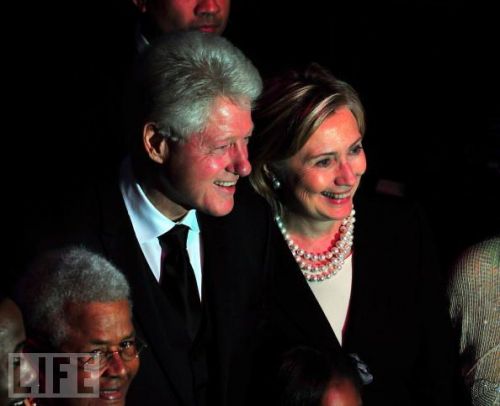
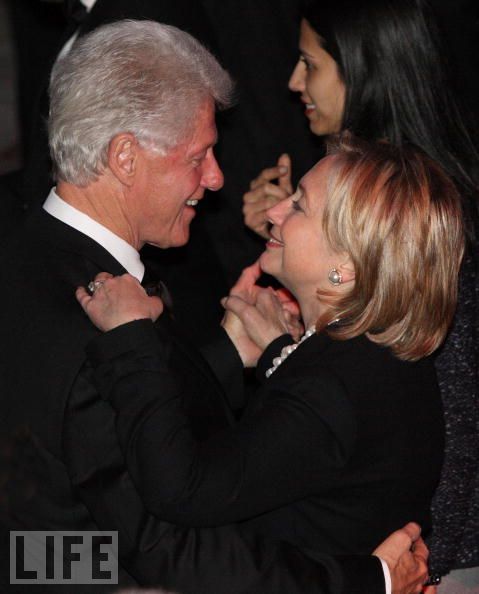
Bill and Hillary: Together in NYC

At the Amsterdam News' 100th Anniversary Gala last night, Bill and Hillary Clinton not only got to be together in the same place and at the same table, but they actually had a chance to have a little "date night" making for some mighty cute pictures.


Here are Hillary's remarks at this event.

Remarks At Amsterdam News Educational Fund 100th Anniversary


Hillary Rodham Clinton
Secretary of State
David H. Koch Theater, Lincoln Center
New York, NY
December 1, 2009

Nick, thank you so much. Thank you (inaudible) to Michelle (ph) and everyone who could be gathered at this wonderful event. (Inaudible) I’m just happy to (inaudible). (Applause.) Being with so many friends, with so many people, (inaudible) so grateful. And this is why I am so grateful. I am delighted to have you with us (inaudible) in celebrating the Amsterdam News and helping it to raise money for digitizing its records. This is one of the great archives (inaudible). (Applause.)

(Inaudible) here as well. Susan and Bill Tataum, (inaudible) all these wonderful (inaudible) and in their home, visiting Bill (inaudible) and speak with him. And like everyone here tonight who (inaudible), I was a recipient of all the (inaudible) and I feel better for it. I also know (inaudible).

(Inaudible) one of the most thoughtful, provocative, (inaudible) experiences that I ever had. (Inaudible) and I will always remember Bill’s (inaudible) and energy (inaudible). I also want to just say I think I (inaudible) with a lot of my friends (inaudible) and especially (inaudible). (Applause.)

(Inaudible) be there for you when (inaudible) that you so well deserve because (inaudible). (Applause.) (Inaudible) to raise money for a worthy cause and it’s a night of (inaudible) of American history. (Inaudible) and it’s especially exciting to be here to celebrate the 100th anniversary. Now, recently in Russia where journalists are harassed and (inaudible), in China where bloggers and internet (inaudible) face evermore (inaudible) censorship. And I’ve met with writers who’ve been (inaudible). They (inaudible) sit up and take notice and change their ways forever. (Inaudible) proud.

Thanks (inaudible). (Applause.)

Secretary Clinton's Remarks At Business Executives for National Security Gala

Here is an event from last night in NYC. I hope the Getty pictures become available soon. I will share them if they do. She was there with Bill, and they were very cute together. (Excuse my confusion, the picture is from one event and the remarks are from a different event both last night. But This is the only picture I have and those are the only remarks, so far.)


(These remarks were released by the State Department, but not by BPA. Just thought I would clarify that. Some other office sends these. The Bureau of Public Affairs should be renamed the Bureau of Clandestine Affairs since it seems their job it to keep the Secretary's schedule a State secret).)


Remarks At Business Executives for National Security Gala


Hillary Rodham Clinton
Secretary of State
Gotham Hall
New York, NY
December 1, 2009

Well, thank you very much and thanks to you, Joe, for your leadership, your dedication to country, your absolute commitment to doing all that you can to serve your fellow man and woman. Charlie, I don’t know what to say. You were getting close to talking about my favorite foods, my – I don’t think there’s anything left unsaid. But I am delighted and honored to be here with you. (Applause.)

It’s a real pleasure to join BENS tonight. I admire the work that you do. I’m grateful to follow in the footsteps of my esteemed colleagues, Secretary Gates and General Jones, with whom I have the privilege of working closely on a daily basis on the range of issues facing our country. I want to thank General Chuck Boyd, a former colleague from our time together on the Joint Forces Command Transformation Advisory Group, and I also want to recognize one of the predecessors in this extraordinary position as Secretary of State, Henry Kissinger, whom you will hear from later in the evening.

It is a special treat for me to be given an award named for President Eisenhower, because as you have just heard (inaudible) I’ve been in public service for four decades, and alive for a little longer than that. And the first president who was part of my understanding of our country was, of course, President Eisenhower, and he was someone who I looked at from afar as a child, who I studied as a young adult, and who I admire even more today. I think it’s fair to say that he helped to lead our country to recognize the nature of the threats that we faced in the years after World War II. And yet at the same time, he (inaudible) very profound level about the responsibilities we had in the new era of the postwar world, and how important it was to be constantly self-reflective and even self-critical about how we organized ourselves and how we went about the difficult business of protecting our national security, and exercising the responsibility that we had inherited from our victory in the war.

I think that his caution and his example are ones that we’d do well to look to today. And so I am deeply honored to receive an award named for him. I also had the pleasure of speaking at the annual Washington Forum in 2006 as a senator from New York. And although I may now view our national security from a different perch on the other end of Pennsylvania Avenue deep in Foggy Bottom, I am as committed today as I was then to helping to address the urgent concerns that we face. Although our threats may be different from those confronted in President Eisenhower’s time, we recognize that every generation and every era has the challenges that one must address, and although they may be different, they still threaten liberty, they threaten freedom, they threaten human rights, they threaten democracy, all of the values that our country has stood for and exemplified for so many years.

Those who are plotting to harm our nation may not fight under a single flag or stand together in a conventional army. They aren’t confined to one nation or one region, even. Their weapons include not only artillery, but also ideology. And so a strictly military response can only get us so far. We therefore need a more comprehensive strategy that confronts the extremists themselves as well as the political, economic, and social forces that help to fuel their extremism.

Tomorrow night, the President will address the nation from West Point. I will have the privilege of accompanying him there as Secretary of State after having visited before as a senator and as a First Lady to see the extraordinary young men and women who will be charged with the responsibility of protecting our nation and of fighting our wars. The President tomorrow night will explain the reasoning behind the decision that he will announce. He will demonstrate the resolve and the commitment that he feels and that we all support in taking on the continuing threat of those who not only are fighting to destabilize Afghanistan, but beyond that, Pakistan, the larger region, and continue to assault and threaten our own country, our interests, and our values.

We have seen in recent weeks that the stability of countries far away like Afghanistan and Pakistan is directly connected to our own national security. As long as countries like that struggle to control their borders, extend their sovereignty, the door is open to the bad actors who today are more empowered because of the tools of globalization, the instant communication, the weapons of such greater force and magnitude than what came before.

It’s imperative to look at the syndicate of terrorism that operates out of the border region between Afghanistan and Pakistan. If al-Qaida, which I view as being the head of the table of this syndicate of terrorism, succeeds in maintaining its safe haven in this region, and if the Taliban succeeds in controlling parts of these countries, then terrorists will continue to use that territory to plan future attacks on us, just as they did when they plotted their horrific attacks of September the 11th. We cannot let that happen. But preventing it requires a multipronged approach.

And although I will not go into the specifics of what the President will say tomorrow, let me just mention an area that is particularly applicable to those of you who are part of BENS, namely the civilian component of our mission. Our goals in Afghanistan include providing the government with the support that it needs to take full responsibility for its own country. That makes civilian efforts as vital as military operations and of longer duration. We have begun to elevate diplomacy and development alongside defense in our national security strategy, and we are certainly engaged in doing so in Afghanistan.

Development experts are working side by side with Afghan officials, with the private sector, and with our military personnel. When I was in Kabul last week, I was struck by the meeting that I had with the young men and women who are part of our integrated civilian military approach, sitting around the table at our Embassy and listening to a colonel talk about how critical it’s been to have a USDA agriculture expert embedded in their brigade, and how the rule of law expert, who was working on behalf of extending a system of justice so that the Taliban would not offer the only form of justice in Afghanistan, was helped by the JAG lawyers. And as I sat there listening, I realized how difficult it is to accomplish what we are pursuing, but how we have the very best that we could possibly put on the field, both in the military and civilian forces that we are sending in.

So when President Obama makes his speech tomorrow, he will, like all presidents before him, do what he can to explain to a country tired of eight years of conflict in Afghanistan, why it is imperative that we do all we can to succeed. This is the challenge that this Administration is willing to assume. But it’s not only in Afghanistan that we are attempting to confront and defeat the terrorist enemy. It is also in Pakistan where, after all, they have found safe haven and where we have a nuclear-armed country facing increasing challenges to its writ of authority.

We have made a commitment to provide more assistance to Pakistan that is going to be accountable and transparent, but which we hope sends a message to the people of Pakistan that there is a better future, and which holds the Government of Pakistan to a different standard than the one that it has met in the past, to try to provide for the energy needs, the education needs, the healthcare needs, economic development needs of that country.

In the State Department, we are engaged in the midst of the first ever Quadrennial Diplomacy and Development Review modeled after the QDR, the Quadrennial Defense Review, conducted by the Pentagon, where we are looking hard and testing every assumption about what works and what doesn’t work here in the 21st century. And it’s been quite an experience to really dig very deep into what diplomacy and development can and should mean in today’s world.

But one of the lessons that we have incorporated, which I believe very strongly, is that national security cannot be just the purview of our government. You understand that. National security is everyone’s business. So as we put together the tools that we want to use for smart power, we are looking at groups like BENS, we’re looking at nonprofits, universities, religious and cultural institutions, individual citizens, the full range of American talent, ingenuity, and commitment.

So BENS really is a cutting-edge example as to what can be done when the business community becomes involved in supporting our diplomatic and development efforts alongside our defense. As we work to create a world with more partners and fewer adversaries, we need you. We need your assistance in helping to build these global partnerships. We need your innovative ideas to create new jobs and industries to pursue the technologies, services, and opportunities that people around the world are yearning for, and which we believe can enhance and promote our security interests.

I want to thank you for the service that you have already offered. BENS members have helped coordinate the private sector response to natural disasters here at home. I would invite you to assist us in working to help mitigate natural disasters around the world. You’ve supported our efforts to secure and destroy nuclear, biological, and chemical weapons. You’ve strengthened our cyber security efforts, sharpened our ability to track terrorist financing, and helped to enhance our analysis of intelligence. Your work is critically important and it needs to be expanded.

Now, tonight, I’ve come to accept an award, but in months to come, I hope that we can find new ways of working closely together. We’ve already begun that work. U.S. shipping companies are taking steps to defend themselves and to defeat piracy off the coast of Somalia. U.S. tech companies are working with the Mexican Government, telecom companies, and NGOs to reduce narco-violence in Mexico. We’re sending a delegation of mobile banking experts to the Congo in the next few months. We’ve brought three tech delegations to Iraq, including a visit by Eric Schmidt, the CEO of Google, last week where he announced that Google would be digitizing the entire content of the Iraqi National Museum and launching an Iraqi Government YouTube channel to promote transparency and fight corruption. To meet the 21st century challenges, we have to use the 21st century tools. So we’re seeking to leverage your expertise and, to find in partnership with you, more creative and effective answers.

We have started a Global Partnership Initiative which convenes people and businesses. We are looking to not only showcase America at the Shanghai Expo, something that I think is very important, but also to ask every one of our regional bureaus for ways that we can look to business to engage more creatively.

In about 10 days, we will be hosting the first-ever Pakistani American diaspora community effort to create a nonprofit known as the American Pakistan Foundation, to collaborate on people-to-people exchanges, cultural diplomacy, and other advocacy to build a stronger partnership with the people of Pakistan.

So we have a lot of work to do, and we are looking to you for ideas and for help in order to meet the extraordinary range of demand that we face. President Eisenhower once said that “People, in the long run, are going to do more to promote peace than our governments.” And so I would ask you to think of the ways, even beyond what you’ve already done in BENS, to see how we can make that statement a reality.

I hope that after the President addresses the nation tomorrow, that regardless of party, regardless of ideology, we come together as a nation in support of our President, we give him the guidance and belief and conviction that every president needs from the people he leads. It is a difficult time, but it is not the only difficult time we have ever had. And despite the fact that maybe it feels more difficult because every single second is covered in the media, every piece of information can be conveyed instantaneously across the internet – so everything is known in a way that it wasn’t in President Eisenhower’s time.

But the fact is that it is still about our liberty, it is still about our freedom, it is still about our democracy, it is about who we are as a nation. And for 25 years, you have shown people who want to help keep our nation safe how they can contribute. And on behalf of this Administration, I want to say thank you, and God bless you, and God bless America. (Applause.)

State Department Bureau of Public Affairs Failure: The sequel

Dear Readers,

I shall attempt to find things the Secretary of State is doing today despite what you see below. Incredible!

Here is the Secretary's Daily schedule for today compliments of the above-mentioned BPA:

You are in:Under Secretary for Public Diplomacy and Public Affairs > Bureau of Public Affairs > Bureau of Public Affairs: Press Relations Office > Daily Appointments Schedule > 2009 > December


That's right! There's nothing there. Actually, I did not receive it because clearly there was nothing to send! Thanks, again, BPA: for nothing (literally)!

(It's getting awfully close to the end of the semester. That's a lot of Fs piling up!)

Another Honor for the Honorable Madame Secretary!

I am at the office and really do not have time to post, but I could not pass this up. Secretary Clinton is picking up yet another honor, and we really do have to begin talking seriously about a museum/library in her name to be located in Seneca Falls.


Newsflash: Secretary of State Hillary Rodham Clinton to be Honored by USGLC


Secretary of State Hillary Rodham Clinton to be Honored by USGLC
PR Newswire
Posted: 2009-12-01 08:30:00

Secretary to Share Her Vision for Elevating Development and Diplomacy

WASHINGTON, Dec. 1 /PRNewswire-USNewswire/ -- The U.S. Global Leadership Coalition will honor Secretary of State Hillary Rodham Clinton at its 2009 Tribute Dinner on December 7, 2009. Secretary Clinton will be sharing her vision for a U.S. foreign policy that elevates diplomacy and development to deal with the threats and challenges of the 21st century. The event will feature NBC News' Chief Foreign Affairs Correspondent Andrea Mitchell as Master of Ceremonies.


READ MORE>>>>